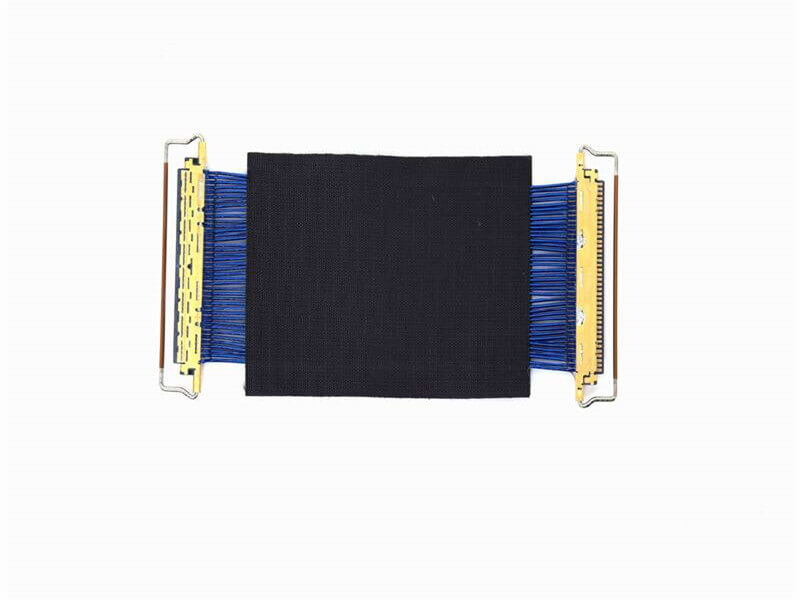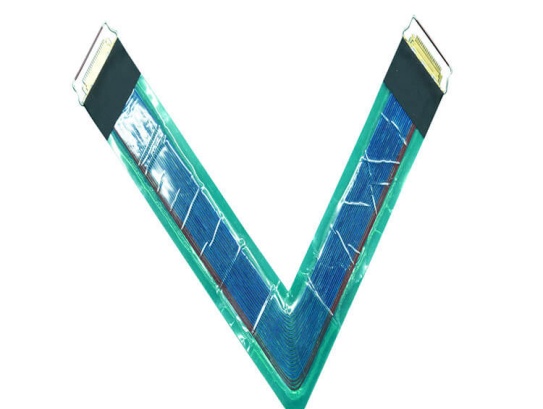

Micro Coaxial Cable factory-(FRS)

1.13mm micro coaxial cable - Micro Coaxial Cable factory-(FRS)

Micro Coaxial Cable factory-(FRS)

Micro coaxial cable Tag: 1.13mm micro coaxial cable

How to Measure the Impedance of a Micro Coaxial Cable

Measuring the impedance of a micro coaxial cable is essential for ensuring signal integrity in high-frequency applications like medical devices, aerospace systems, smartphones, and compact RF modules. Unlike larger coax, micro coax (like 0.81mm, 1.13mm, or 1.37mm diameter cables) presents unique challenges due to its tiny size. Here’s a reliable, step-by-step method using professional equipment:

Why Micro Coax is Different:

  • Extremely Small Conductors: Direct probe contact or clamping can easily deform the fragile center conductor and thin dielectric, invalidating the measurement.
  • Shield Vulnerability: Even gentle pressure can displace the braid or foil shield, altering its impedance characteristics.
  • Fixtures are Critical: Specialized test fixtures or connectors are almost always mandatory.

Equipment You’ll Need:

  1. Vector Network Analyzer (VNA): Essential for measuring complex impedance (magnitude and phase).
  2. Calibration Standards (Cal Kit): Precisely matched to the connectors you’ll use (e.g., SMA, 2.92mm, 1.85mm). Calibrate the VNA at the fixture planes.
  3. Test Fixtures (Crucial for Micro Coax):
    • Jig/Launch Fixtures: Designed with precision grooves or clamps to hold the micro coax perfectly aligned without crushing it. Examples include GGB’s Picoprobe Model 40A/67A series or custom jigs.
    • Micro-Coaxial Connectors: Cable assemblies terminated with precision micro-coaxial connectors compatible with your VNA ports.
    • RF Probes (e.g., Wafer Probes): Ground-Signal-Ground (GSG) or Ground-Signal (GS) probes with tip pitches matching the cable’s scale. Require extremely careful handling and specialized probe stations.
  4. Connectorization: Professionally soldering or crimping precision micro-coax connectors to the cable ends, providing stable VNA interfaces.
  5. Cable Preparation Tool: Sharp coax stripper specific to the exact cable size for clean, length-controlled access to center conductor and shield without nicking.

Step-by-Step Measurement Process:

  1. Prepare the Sample: Cut a clean length of micro coax. If using connectors, have them professionally installed per manufacturer specs. If using a jig/probe station, carefully prepare the cable ends: strip the jacket precisely to expose a controlled length of the shield, then carefully strip the dielectric to expose a controlled length of the center conductor, ensuring no deformation.
  2. Connect/Install in Fixture:
    • ​**(Connectors):** Connect directly to VNA Ports 1 and 2.
    • ​**(Jig):** Secure the prepared cable ends into the jig’s grooves or clamps following instructions. Crucial: Apply minimal pressure – just enough to ensure good electrical contact without deforming the cable structure.
    • ​**(Probes):** Carefully lower the probes onto the prepared center conductor and shield points on each end. Use microscope alignment. Apply minimum pressure for contact.
  3. VNA Calibration: Perform a full 2-port calibration (SOLT – Short, Open, Load, Thru) at the point of contact. This removes errors from VNA, cables (if any), and test fixture up to the cable interfaces.
    • For jigs/probes: Calibrate using standards mounted within the jig/probe station itself if possible, or directly at the probe tips.
    • For connectors: Calibrate at the connector end-face.
  4. Measure S-Parameters:
    • Set the VNA frequency range appropriate for your application (e.g., DC to 20+ GHz for many micro coax).
    • Ensure the VNA sweep covers the relevant frequencies for your application.
    • Measure the full 2-port S-parameters (S11, S21, S12, S22).
  5. Convert to Impedance (Z): Use the VNA’s built-in math functions:
    • S11 to Input Impedance (Port 1): Measure S11. Use the VNA’s S11 to Z function (or Smith Chart display). For a precise characteristic impedance (Z₀) measurement over a length, the method below is preferred.
    • Calculating Characteristic Impedance (Z₀) Directly (Best Method): For a section of uniform line (your cable), Z₀ = √(Z_short * Z_open). Measure the cable ​with the far end terminated:
      • Terminate the cable at Port 2 with a ​high-quality SHORT circuit. Measure the input impedance at Port 1 (Z_short).
      • Terminate the cable at Port 2 with a ​high-quality OPEN circuit. Measure the input impedance at Port 1 (Z_open).
      • Calculate: Z₀ = sqrt(Z_short * Z_open). Modern VNAs often automate this calculation as a complex result across frequency.
  6. Review Results: Look at the Smith Chart or the complex Z trace (Real & Imaginary parts) vs. Frequency.
    • Ideal Behavior: Z₀ should be relatively constant across the usable frequency range of the cable (specified by manufacturer). Real part should be near nominal (e.g., 50 Ohms), Imaginary part near 0 Ohms.
    • Deviations: Large spikes, dips, or significant changes in Real/Imag parts indicate potential measurement errors (poor calibration, fixture issue) or cable defects. Consistent offset may indicate nominal impedance differs from target.

Key Considerations & Tips:

  • Gentle Handling is Paramount: Micro coax measurement is an exercise in precision and care. Avoid any kinking, bending, or excessive force.
  • Fixtures Determine Accuracy: The quality and correct usage of your jig, probes, or connectors determine the accuracy more than the VNA itself. Invest in good fixtures or accurate termination.
  • Calibration is Sacred: Any calibration mistake ruins the measurement. Double-check standards and connections.
  • Length Matters: For Z₀ calculation via short/open method, the cable section needs to be long enough to provide a clear measurement but not so long that losses dominate at high frequencies.
  • Use Manufacturer Specs: Compare your measured Z₀ to the cable manufacturer’s specifications. Minor variations are normal, significant deviations suggest a problem.
  • Reference Plane: Be mindful of where the calibration reference plane is set. You want it right at the cable interface.
  • Alternative: TDR: Time Domain Reflectometry (TDR) with a sampling oscilloscope and suitable high-bandwidth fixture can measure impedance, but a VNA provides superior accuracy and frequency-domain insight for micro coax.

Conclusion:

Accurately measuring micro coax impedance requires specialized fixtures (jigs, probes, or precision connectors) and careful VNA calibration at the point of contact. Avoid direct clamping or probing of the fragile cable body. Prepare cable ends meticulously. Use the ​short/open termination method with your VNA’s S-parameter measurements and the calculation Z₀ = sqrt(Z_short * Z_open) for the most reliable determination of characteristic impedance across frequency. Precision, care, and good calibration are the keys to success. Always cross-reference your results with the cable manufacturer’s data sheet for your specific part number.

In satellite communications—where signals travel across thousands of kilometers of space and face extreme environmental stress—micro-coaxial cables (micro-coax) serve as critical “neural links.” Unlike standard coaxial cables, their miniaturized design, low signal loss, and robust performance make them indispensable for connecting on-board satellite components, linking ground station equipment, and ensuring reliable data transmission between space and Earth. For engineers, procurement teams, and system integrators working in satellite projects, understanding the unique value and technical .

Read more →

Introduction In today’s high-frequency electronic applications, flexible coaxial cables with superior shielding performance have become critical components for signal integrity. These specialized cables combine exceptional EMI/RFI protection with unmatched flexibility, making them ideal for aerospace, medical equipment, 5G infrastructure, and industrial automation systems. Key Features of High-Shielding Coaxial Cables Triple-Layer Shielding Technology Braided copper outer layer (95% coverage minimum) Aluminum foil intermediate layer Conductive polymer inner layer Typical atte.

Read more →

In the harsh and complex marine and offshore environments, reliable communication is crucial for safety, operations, and coordination. Coaxial cables play a vital role in ensuring seamless signal transmission in these settings. This article will provide practical information on coaxial cables for marine and offshore communications, helping you solve related problems. Why Coaxial Cables Are Essential for Marine and Offshore Communications Marine and offshore areas are filled with challenges like saltwater corrosion, extreme temperatures, strong vibrations, and electromagnetic interference. Coaxia.

Read more →

In the relentless drive for smaller, faster, and more powerful electronics, a silent hero quietly enables success: the ​micro coaxial cable. These miniature marvels are far more than just tiny wires; they are the ​critical arteries carrying the lifeblood of high-frequency signals that power the features we demand. As devices shrink while packing unprecedented functionality, micro coax cables provide the ​essential connectivity solution. Why Micro Coax for Modern Electronics? The Core Advantages: ​Shielding Supremacy: Their defining feature is the precise coaxial structure – a central condu.

Read more →

As a silver plated micro coaxial cable manufacturer, we are introducing our new 0.4 mm OD micro coaxial cable series, engineered to meet the demanding requirements of high-density medical devices. This new series addresses the industry’s need for smaller, more reliable cables that maintain signal integrity in the most challenging medical applications. The Growing Demand for Miniaturization in Medical Devices The trend toward miniaturization in medical technology is driven by the need for less invasive procedures, improved patient comfort, and more compact equipment. This evolution places s.

Read more →

Choosing the right cable for your project can be confusing, especially when faced with terms like “micro coaxial” and “standard coaxial.” While both transmit signals efficiently, they serve very different purposes. Understanding their key differences is crucial for making the right choice. Let’s break it down clearly. What is Coaxial Cable? (The Core Concept) Both types share the same fundamental design, often called “coax”: ​Center Conductor: Carries the main electrical signal. ​Dielectric Insulator: Surrounds the center conductor, maintaining it.

Read more →

Can't find what you're looking for?

Our customer support team is ready to assist you with any questions or concerns.

Search FAQs

Popular Tags

More Products

Our factory offers high-quality products at competitive prices

High-Speed Data Micro-Coax

High-Speed Data Micro-Coax

IntroductionIn today’s fast-paced digital world, reliable and high-speed data transmission is critical for industries ranging from telecommunications to aerospace. Enter ​High-Speed Data Micro-Coax—a cutting-edge miniature coaxial cable e.

I-PEX Micro Coaxial Cable

I-PEX Micro Coaxial Cable

Overview of I-PEX Micro Coaxial Cable Connectors I-PEX is a global leader in micro coaxial cable solutions, specializing in high-performance IPEX micro coax connectors and micro coaxial cable assemblies. These products are designed for.

Contact Us Micro Coaxial Cable factory-(FRS).


Feel free to reach out to us for any inquiries or orders

Call Us

Have a question? Give us a call!

+8618818785005

Email Us

Send us an email and we'll get back to you soon.

sales@custom-cable-assemblies.com
       
Home Products Contact