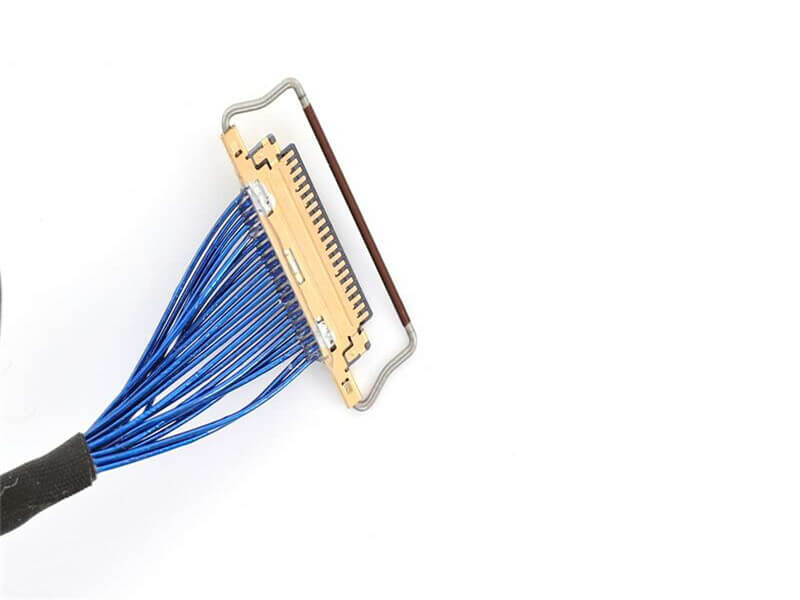
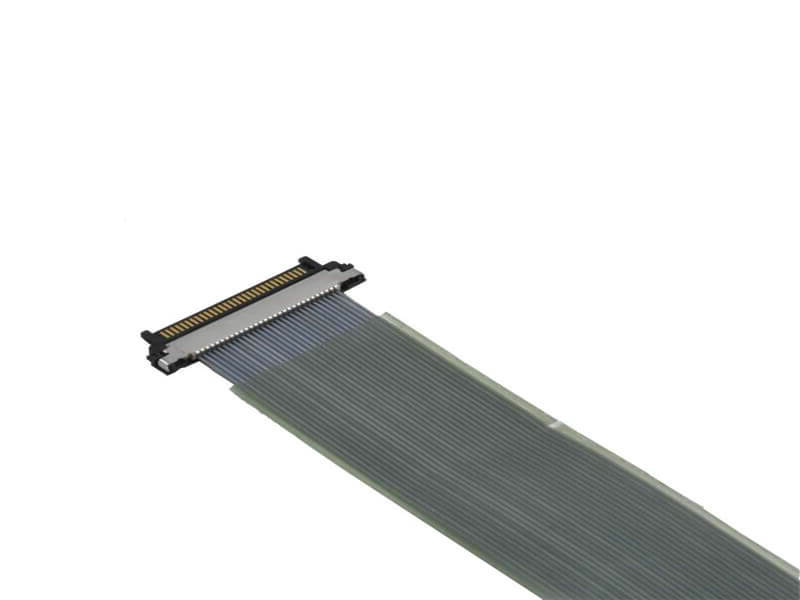
As electronic devices shrink and data rates skyrocket, engineers face a critical question: Does micro coaxial cable support higher frequencies than traditional coaxial cable?
The short answer is yes. While traditional coaxial cables remain the workhorse for long-distance RF distribution, micro coaxial cableis engineered specifically to handle the extreme demands of modern high-frequency applications, ranging from 5G mmWave to high-resolution automotive radar.
This article breaks down the technical reasons why micro coax outperforms its larger counterparts in high-frequency environments, helping you make the right choice for your next design.
Understanding the Basics: Micro vs. Traditional Coaxial Cable
Before diving into frequency limits, it is essential to understand the structural differences.
Traditional Coaxial Cable (e.g., RG-58, RG-6):These cables typically range from 2.8mm to over 10mm in diameter. They are designed for durability, weather resistance, and low attenuation over long distances (meters to kilometers).
Micro Coaxial Cable:With diameters often smaller than 1.0mm (sometimes as small as 0.2mm), these cables are designed for internal device connectivity. They prioritize high-density routingand signal integrityover distance.
Frequency Showdown: The Numbers
The most significant differentiator is the upper frequency limit.
Traditional Coaxial Cable Frequency Limits
Most standard flexible coaxial cables (like the RG series) begin to struggle as frequencies exceed 3 GHz to 6 GHz.
The Issue:As frequency increases, the signal tends to travel only on the outer surface of the conductor (the “skin effect”). In thicker cables, this increases effective resistance and signal loss (attenuation). Furthermore, traditional cables are prone to higher dielectric losses at microwave frequencies .
Micro Coaxial Cable Frequency Limits
Micro coaxial cableis designed to mitigate these high-frequency losses.
The Capability:High-performance micro coax can support frequencies ranging from DC up to 110 GHzor even higher in specialized applications.
Why it wins:The reduced diameter minimizes the impact of the skin effect, and the use of precision dielectrics ensures stable performance in the GHz and mmWave spectrum .
Key Takeaway:If your application operates in the Sub-6GHz, mmWave (24GHz+), or high-speed data (PCIe, USB4)range, micro coaxial cable is the superior choice.
Why Micro Coax Excels at High Frequencies
The ability to support higher frequencies isn’t magic—it’s physics and material science. Here are the three core reasons micro coax outperforms traditional cables at high speeds.
1. Advanced Dielectric Materials
Traditional cables often use solid polyethylene (PE) or foam PE, which have higher dielectric constants and loss tangents.
Micro coaxial cablesutilize advanced fluoropolymers like PTFE (Teflon), FEP, or expanded PTFE. These materials offer:
Lower Dielectric Constant:Allows signals to travel faster.
Lower Dissipation Factor:Significantly reduces signal loss (attenuation) at high frequencies .
2. Precision Impedance Control
At high frequencies, even minor variations in the distance between the center conductor and the shield can cause impedance mismatches, leading to signal reflection (Return Loss).
Micro Coax:Manufactured with extremely tight tolerances (often ±1% for 50Ω or 75Ω impedance). This ensures maximum power transfer and signal integrity in sensitive circuits like 5G antenna feedsor medical imaging sensors.
3. Superior Shielding in Compact Spaces
High-frequency signals are prone to radiating electromagnetic interference (EMI).
Micro Coax:Features multi-layer shielding, often combining foil and high-density braid in a much thinner profile. This provides exceptional shielding effectiveness (often >100dB) against external noise, which is critical in dense electronic environments like smartphones or laptops .
Application Comparison: Where Each Cable Wins
Choosing the right cable is about matching the tool to the job. Here is a quick guide for engineers and procurement specialists.
5G & mmWave Systems:Connecting phased-array antennas to transceivers.
Automotive ADAS:Linking radar sensors and cameras where space is limited.
Medical Devices:Endoscopes and wearable monitors requiring high-fidelity data.
High-Speed Computing:Internal links for servers and high-res display interfaces .
When to Choose Traditional Coaxial Cable
CATV & Broadband:Distributing video and internet over long distances.
Base Station Jumper Cables:Connecting antennas to radio units outdoors.
Test & Measurement:General-purpose lab equipment where ruggedness is key .
Conclusion: The Future is Miniaturized
So, does micro coaxial cable support higher frequencies? Absolutely.While traditional coaxial cable remains the king of long-distance transmission, micro coaxial cableis the undisputed champion of high-frequency, space-constrained applications.
By leveraging low-loss dielectrics and precision engineering, micro coax ensures that your high-speed signals arrive clean and intact, even in the most compact designs.
Are you designing for the next generation of high-frequency electronics?Contact our engineering team today to find the perfect micro coaxial cable solution for your project.
FAQ: Micro Coaxial Cable Frequency Performance
1. What is the maximum frequency for micro coaxial cable?
High-end micro coaxial cables can support frequencies up to 110 GHzor more, making them suitable for cutting-edge radar and 6G research applications .
2. Is micro coaxial cable better for 5G?
Yes, particularly for mmWave 5G(24GHz+). The low loss and small size of micro coax make it ideal for connecting compact 5G modules and antennas .
3. Can I replace traditional RG cables with micro coax?
Only if the distance is short (typically under 1-2 meters). For long runs ( > 10 meters), traditional low-loss coaxial cables or fiber optics are usually more effective due to lower attenuation over distance .
In the high-stakes environment of modern surgery, the endoscope serves as the surgeon’s eyes. As medical technology shifts toward 4K and even 8K resolution, the demand for flawless image transmission has never been higher. While the camera sensor often gets the glory, the micro coaxial cableis the unsung hero working silently inside the insertion tube.
For B2B buyers, procurement specialists, and design engineers, understanding the role of these miniature cables is essential. A failure here doesn’t just mean a fuzzy screen; it can mean a missed diagnosis or a prolonged surgery.
This article explores why micro coaxial cableis the critical link for endoscope image quality and what specifications you should prioritize when sourcing components.
The Physics of Pixels: Why Size and Signal Matter
Endoscopic procedures require navigating tight, twisting anatomical pathways. This creates a unique engineering paradox: you need to fit high-bandwidth data lines into a space often narrower than a drinking straw, all while maintaining signal integrity.
1. High-Density Interconnects for HD Imaging
As endoscopes evolved from standard definition to High Definition (HD) and 4K, the volume of data generated by the CMOS sensor skyrocketed. Traditional twisted-pair cables often struggle with the high-frequency signals required for HD video over any meaningful distance.
Micro coaxial cablesolves this by offering a controlled impedance (typically 50 Ohm) that minimizes signal reflection and loss. This ensures that the high-frequency video signals reach the processor without degradation, preserving the sharpness and contrast of the image.
2. Space Optimization
With diameters often ranging from 0.22mm to 0.8mm, these cables allow engineers to bundle multiple channels (video, light, power) into a single, ultra-thin harness. This compact design is vital for reducing the overall diameter of the endoscope insertion tube, leading to less invasive procedures and faster patient recovery times.
The Enemy of Clarity: Electromagnetic Interference (EMI)
Operating rooms are noisy environments. Electrosurgical units (ESUs), motors, and other imaging equipment generate significant electromagnetic interference. If left unshielded, this noise can appear as “snow” or static on the endoscopic monitor, obscuring the surgical site.
Superior Shielding Effectiveness
The coaxial design—featuring a central conductor surrounded by an insulating layer and a braided or foil outer conductor—provides a natural Faraday cage. This structure confines the electromagnetic field to the dielectric, preventing external noise from corrupting the video signal and stopping the endoscope’s signal from interfering with other sensitive equipment.
For critical applications, many manufacturers utilize double-shielded designs (foil + braid) to achieve shielding effectiveness of >100dB, ensuring a pristine image even when the endoscope is operating alongside high-power surgical tools.
Mechanical Reliability: Flexibility vs. Durability
An endoscope is a dynamic instrument. It is constantly bent, twisted, and torqued during a procedure. A cable that breaks after a few dozen procedures is a liability.
Withstanding Dynamic Stress
Micro coaxial cablesdesigned for medical use are engineered to withstand extreme mechanical stress. High-quality cables can endure hundreds of thousands of bending cycles (often tested at a 90° bend radius) without suffering conductor fatigue or shielding failure.
Material Matters
The choice of jacket material is crucial for longevity. Fluoropolymers like FEP (Fluorinated Ethylene Propylene)and PFA (Perfluoroalkoxy alkane)are standard in the industry because they offer:
Low Friction:Essential for smooth insertion and withdrawal.
High Heat Resistance:Withstanding autoclave sterilization (up to 200°C).
Chemical Resistance:Surviving repeated exposure to cleaning agents and disinfectants.
Key Specifications to Evaluate
When sourcing micro coaxial cablefor your next endoscopic project, look beyond the basic dimensions. Here are the technical parameters that separate premium components from the rest:
Parameter
Why It Matters
Ideal Specification
Impedance
Ensures signal integrity and prevents reflection.
50Ω ± 2Ω or 75Ω (depending on system)
Attenuation
Measures signal loss over distance. Lower is better.
< 50 dB/100m @ 1 GHz (varies by diameter)
Shielding
Protects against EMI/RFI.
Double Shield (Foil + Braid)
Bend Radius
Determines flexibility and durability.
Dynamic: 5x Cable Diameter / Static: 2x
Biocompatibility
Safety for patient contact.
ISO 10993 / USP Class VI compliant jackets
The Future: 3D and Chip-on-Tip Endoscopy
The role of micro coaxial cableis expanding. With the rise of 3D endoscopy and “chip-on-tip” technologies (where the image sensor is placed directly at the distal tip), the demand for even finer, high-performance cabling is accelerating. These applications require cables that can handle higher data rates while occupying even less real estate, pushing the boundaries of miniaturization.
Conclusion
The image quality of an endoscope is not solely defined by its lens or sensor. The micro coaxial cableacts as the vital pipeline, determining whether the surgeon sees a clear, high-definition view or a noisy, unreliable image.
For engineers and procurement managers, investing in high-specification micro coaxial solutions is not just a technical choice—it is a commitment to patient safety and surgical precision. By prioritizing low attenuation, superior EMI shielding, and proven mechanical durability, you ensure that your medical devices perform flawlessly when it matters most.
The short answer is yes. As the automotive industry transitions from simple sensors to high-definition perception systems, Micro Coaxial Cable (Micro Coax) has evolved from a niche component into a mission-critical backbone for SerDes (Serializer/Deserializer) architectures.
With the rise of 4K/8K cameras, LiDAR, and high-resolution infotainment, the demand for bandwidth has skyrocketed. Traditional wiring struggles to keep pace with the electromagnetic noise and data hunger of modern vehicles. This guide breaks down why Micro Coax is the preferred solution for automotive SerDes, where to use it, and how to avoid costly implementation errors.
What is Micro Coaxial Cable in the Context of Automotive SerDes?
In automotive engineering, “Micro Coaxial Cable” refers to ultra-thin coaxial cables (typically 0.3mm to 1.0mm in diameter) designed specifically for high-frequency signal transmission. Unlike bulky traditional coaxial cables, these are engineered to fit into the tight confines of side-view mirrors, door panels, and compact ECUs .
When paired with SerDes technology, the goal is simple: transmit massive amounts of raw data (video, radar points, point clouds) over a single cable with extreme low latency and zero compression artifacts.
Core Architecture
Center Conductor:Usually silver-plated copper, optimized for high-frequency conductivity.
Dielectric Insulation:Low-loss materials (like FEP or PTFE) to maintain signal velocity.
Shielding:A combination of foil wrap and braided mesh to block EMI/RFI.
Jacket:Automotive-grade thermoplastics resistant to oil, chemicals, and abrasion .
Key Performance Parameters You Need to Specify
To ensure your SerDes link doesn’t fail during EMC testing, you must look beyond basic wire gauges. Here are the critical specs for automotive Micro Coax:
Parameter
Typical Spec Range
Why It Matters for SerDes
Impedance
50Ω(Standard)
Ensures maximum power transfer and minimizes signal reflection.
Attenuation
< 1.5 dB/m @ 1 GHz
Determines the maximum cable length before signal degradation occurs.
Operating Temp
-40°C to +105°C/+125°C
Essential for under-hood or direct-sunlight exposure areas.
Shielding Eff.
> 70 dB
Crucial for rejecting noise from EV powertrains and ignition systems.
Bend Radius
3x – 5x Cable Diameter
Prevents internal damage during installation in tight spaces.
Top 4 Automotive Applications for Micro Coax
Micro Coax isn’t just for “connecting things”; it is the enabler for safety-critical and high-comfort features.
1. High-Definition Surround View Cameras
Modern ADAS requires 2MP to 8MP cameras. Micro Coax supports the high bandwidth needed for uncompressed video streams from side mirrors or grille-mounted cameras, ensuring clear images for object detection algorithms .
2. Centralized Infotainment Displays
As instrument clusters merge with central consoles, data rates hit 10Gbps+. Micro Coax provides the necessary bandwidth for 4K video while keeping EMI low enough not to interfere with nearby GPS or cellular antennas .
3. LiDAR and Radar Modules
LiDAR generates massive point-cloud data. Micro Coax offers the precise impedance control required to maintain signal integrity between the rotating sensor head and the stationary processing unit .
4. High-Speed Sensor Fusion
When fusing data from multiple sensors (Camera + Radar), timing is everything. The low latency of coaxial physical layers ensures synchronous data arrival at the domain controller .
Micro Coax vs. Shielded Twisted Pair (STP): Which to Choose?
While STP (Shielded Twisted Pair) is cheaper, Micro Coax often wins on performance. Here is the practical breakdown:
EMI Immunity (Winner: Micro Coax):Vehicles are noisy environments (EV inverters, spark plugs). Micro Coax’s 360-degree shield blocks interference far better than STP, reducing bit error rates .
Distance Capability (Winner: Micro Coax):For SerDes links longer than 10-15 meters, Micro Coax maintains signal integrity better than STP, which suffers from higher attenuation at high frequencies .
Weight & Space (Winner: Micro Coax):Paradoxically, thinner coaxial cables can save up to 50% in weight and bulkcompared to thicker, multi-core STP cables, helping meet lightweighting goals .
Cost (Winner: STP):Raw material cost is lower for copper pairs. Use STP only if your data rate is moderate (< 3Gbps) and distance is short.
Implementation Guide: Wiring & Installation Tips
Selecting the right cable is only half the battle. Poor installation ruins performance. Follow these rules:
1. Manage the Bend Radius Strictly
Micro Coax is fragile. Never bend tighter than 3x the cable diameter.A kinked cable changes the impedance locally, creating a “bottleneck” that reflects signals back to the source, causing data corruption .
2. Grounding is Non-Negotiable
The shield mustbe grounded at both ends (Source and Sink) to drain induced currents. Ensure your connectors (like FAKRA or Mini-FAKRA) make full 360-degree contact with the cable shield .
3. Route Away from Power Lines
Even with excellent shielding, keep high-speed data cables at least 50mm awayfrom high-current power cables (e.g., battery feeds, motor phases) to prevent inductive coupling .
4. Choose the Right Connector Ecosystem
Don’t mix brands arbitrarily. Ensure compatibility between the cable, the crimp tool, and the connector (e.g., Rosenberger H-MTD, TE Connectivity, or I-PEX). A mismatch here is the #1 cause of field failures .
Common Pitfalls to Avoid (The “Don’ts”)
Don’t ignore temperature derating:A cable rated for 105°C might fail at 125°C near an exhaust manifold. Always check the derating curveprovided by the manufacturer .
Don’t skimp on testing:Always perform a TDR (Time Domain Reflectometry)test on prototypes. It reveals impedance discontinuities that visual inspection misses .
Don’t forget chemical resistance:Standard PVC jackets degrade when exposed to automatic transmission fluid or brake fluid. Insist on LSZH (Low Smoke Zero Halogen) or specialized automotive-grade polymers .
Summary & Expert Recommendation
Micro Coaxial Cable is not just suitable for automotive SerDes; it is currently the most robust solutionfor high-bandwidth, safety-critical applications.
If your design involves high-resolution imaging (>2MP), operates in a high-EMI environment (EV/Hybrid), or requires cable runs exceeding 10 meters, Micro Coax is the superior choice despite the slightly higher unit cost. It guarantees the signal integrity that STP cannot reliably deliver.
Actionable Next Step:
Before committing to a mass production run, request sample test reports(VSWR, Return Loss, and Attenuation curves) from your cable supplier. Verify that the cable meets the specific frequency requirements of your chosen SerDes chipset (e.g., GMSL2 or FPD-Link III) to ensure a stable, interference-free connection.
If you are designing next-generation hardware, you know the drill: consumers want devices thinner than a credit card, yet they demand 8K video streams and blazing-fast data transfers. Cramming high-frequency performance into a shrinking chassis is the ultimate engineering headache. Enter the Micro Coaxial Cable. It isn’t just a “smaller” wire; it is a precision-engineered solution bridging the gap between bulky traditional cables and fragile FFC (Flat Flexible Cable).
This guide cuts through the marketing fluff to give you the technical specs, real-world applications, and critical selection criteria you need to make informed sourcing decisions.
1. Decoding the Tech: What Exactly Is It?
At its core, a Micro Coaxial Cable retains the classic coaxial architecture—Center Conductor →Dielectric Insulation →Shield →Jacket—but shrunk down to microscopic precision.
While standard coaxial cables (like RG174 or RG316) typically hover around 2.0mm to 3.0mm in diameter, micro coax enters the realm of 0.2mm to 1.37mm. To put that in perspective, some variants are finer than a human hair. This extreme miniaturization allows engineers to route high-speed signals through spaces where traditional round cables simply cannot go .
Key Technical Specifications:
Impedance:Most commonly 50Ω (for RF/Data) or 75Ω (for Video), though 45Ω variants exist for specific MIPI applications .
Conductor Size:Typically ranges from 30 AWG down to 50 AWG.
Shielding:High-density braiding or spiral wrapping (often silver-plated copper) to maintain signal integrity in tight quarters .
2. Micro Coax vs. Standard Coax: The Critical Differences
Thinking of swapping your standard RG316 for a micro version? Hold on. The difference isn’t just size; it’s physics. Here is how they stack up:
Feature
Standard Coaxial Cable
Micro Coaxial Cable
Diameter
2.0mm – 10mm+
0.2mm – 1.5mm
Primary Use
Base stations, CCTV, Antennas
Internal device wiring (Phones, Drones)
Flexibility
Moderate (can be stiff)
Extreme (high-strand count)
Frequency
Excellent for long distances
Optimized for short-reach, high-speed
Termination
Crimp/Solder (Standard tools)
Laser strip / Micro-weld (Specialized)
Why the price gap?
Micro coaxial cables are significantly more expensive to manufacture. Creating a consistent dielectric layer on a 44AWG wire requires precision extrusion equipment and rigorous quality control. Furthermore, terminating these cables requires laser stripping and micro-welding—processes that standard cable shops often cannot handle .
3. Where It Actually Works: Top 5 Applications
Micro coax shines where space is tight, weight matters, and signal noise is unacceptable.
1. Medical Electronics (Endoscopy & Imaging)
This is arguably the most demanding application. In disposable endoscopes or catheter-based sensors, the cable must navigate tight anatomical curves without breaking. Micro coax provides the necessary flexibility and EMI shielding to transmit clear diagnostic images without adding bulk to the probe .
2. Consumer Electronics (Smartphones & Laptops)
As bezels shrink, the distance between the camera module and the motherboard gets smaller, but the data rate (MIPI/D-PHY) goes up. Micro coax replaces FFC in flagship phones because it handles high-frequency interference better, ensuring your selfies don’t come with static .
3. Automotive ADAS & LiDAR
Modern cars are packed with cameras and radar. These sensors generate massive amounts of data that must travel through a vibrating, temperature-fluctuating engine bay. Micro coax offers the thermal stability (up to 200°C) and vibration resistance required for automotive grade reliability .
4. Drones & Robotics
Weight is flight time. Replacing heavier standard cables with micro coax saves grams that translate directly into longer battery life. Additionally, the high-flex life of stranded micro conductors ensures the cable won’t fail after thousands of gimbal movements .
5. Wearable Tech
Smartwatches and AR glasses have zero room for error. The cable connects the mainboard to the display or biometric sensors, often requiring complex 3D routing inside the casing .
4. The Buyer’s Checklist: How to Select the Right Spec
Don’t just buy based on diameter. To avoid costly redesigns, evaluate these four parameters:
1. AWG and Current Carrying Capacity
Thinner wires mean higher DC resistance. If you are powering a device andtransmitting data, verify the current rating. A 42AWG wire has very little copper; pushing too much current will cause voltage drop or heat generation .
2. Dielectric Material
The insulator dictates performance.
FEP/PFA:The industry standard. Offers excellent electrical properties and heat resistance (up to 200°C) .
Polyimide:Used when extreme thinness is the only priority, though it may have slightly higher dielectric loss.
3. Shielding Coverage
For high-speed video (MIPI CSI-2), look for shielding coverage of 90% or higher. Spiral shields offer better flexibility than braids, making them ideal for moving parts like hinges or robotic arms .
4. Connector Compatibility
Micro coax is useless without the right mate. Ensure your cable spec matches the pitch of your connector (e.g., I-PEX MHF series or custom board-to-board connectors). An impedance mismatch at the connector interface will ruin your signal integrity faster than a bad cable will .
5. Avoid These 3 Costly Mistakes
Even seasoned engineers stumble here. Watch out for these pitfalls:
The “Thinner is Better” Fallacy:Just because you canuse 44AWG doesn’t mean you should. Over-specifying thinness leads to brittle wires that snap during assembly. Always balance flexibility needs against mechanical robustness .
Ignoring Bend Radius:Micro coax is flexible, but it has limits. A sharp 90-degree bend can deform the dielectric, changing the impedance locally and causing signal reflections. Use strain relief or guide channels in your mechanical design .
Mismatched Impedance:Mixing a 50Ω cable with a 75Ω system (or vice versa) creates standing waves. Always double-check your source and load impedance before finalizing the BOM.
Summary
Micro Coaxial Cable is the unsung hero of modern miniaturization, solving the critical challenge of delivering high-speed data in confined spaces. While it demands a higher budget and specialized manufacturing partners compared to standard cabling, the payoff in signal integrity and space savings is undeniable.
Your Action Plan:Define your frequency requirements first, select the thickest AWG that physically fits your envelope to ensure durability, and partner with a supplier who understands precision termination.
Introduction: The Unseen Backbone of Ultra-High Definition
As we transition from the crisp clarity of 4K to the immersive hyper-realism of 8K, the engineering challenges behind the screen become exponentially complex. We often focus on the panel technology itself, but the true enabler of these resolutions lies in the intricate pathways delivering the data. When dealing with pixel densities that are four times that of 4K, the margin for error in signal transmission shrinks to near zero. This is where the Micro Coaxial Cableemerges not just as a component, but as the critical lifeline for high-speed data integrity.
For engineers, manufacturers, and quality assurance professionals, understanding the role of micro coaxial cables in display module testing and certification is non-negotiable. This article delves deep into the technical labyrinth of 4K and 8K transmission, exploring how these ultra-fine cables navigate the physical limits of high-frequency signals to meet stringent global certification standards .
The Physics of High-Speed Transmission: Why Micro Coax?
To understand the necessity of micro coaxial cables, one must first appreciate the sheer volume of data involved in 8K resolution. An 8K display (7680 × 4320 pixels) operating at 60Hz generates a massive bandwidth requirement. Traditional cables struggle here due to skin effect and dielectric losses, which distort signals at gigahertz frequencies.
1. Structural Integrity in Miniature
A micro coaxial cable is essentially a masterpiece of miniaturization. It retains the fundamental structure of a standard coaxial cable—center conductor, dielectric insulator, outer conductor (shield), and jacket—but scaled down to diameters often ranging from 0.18mm to 0.81mm .
This structure provides a controlled impedance environment (typically 50Ω or 75Ω), which is crucial for preventing signal reflections. Unlike twisted pair cables, where the distance between conductors can vary slightly, the coaxial geometry ensures a uniform electromagnetic field, resulting in superior signal integrity (SI) .
2. Superior Shielding Effectiveness
In the noisy environment of modern electronics, Electromagnetic Interference (EMI) is the enemy of high-resolution video. Micro coaxial cables utilize advanced shielding techniques, often combining silver-plated copper braids with aluminum foil. This multi-layered approach creates a Faraday cage-like effect, isolating the high-speed video signal from external noise and preventing crosstalk between adjacent channels .
Critical Specifications for 4K/8K Module Testing
When qualifying a display module, the cable connecting the driver board to the panel (often referred to as the “internal jumper”) acts as the bottleneck. Testing protocols must verify several key parameters to ensure the cable can handle 4K/8K payloads.
1. Insertion Loss and Attenuation
At frequencies exceeding 10 GHz, signal attenuation becomes a primary concern. Insertion Loss (IL) measures the reduction in signal power as it travels through the cable. For 8K applications utilizing protocols like V-by-One HS or eDP (Embedded DisplayPort), the cable must exhibit minimal loss across the entire frequency spectrum. Even a minor deviation can result in “sparkles” or color shifts on the display .
2. Return Loss and Impedance Matching
Return Loss (RL) indicates how much signal is reflected back toward the source due to impedance mismatches. A mismatch can occur at the connector interface or due to manufacturing inconsistencies in the cable diameter. For 4K/8K testing, maintaining a strict Voltage Standing Wave Ratio (VSWR) is mandatory to ensure energy is fully transferred to the display panel .
3. Skew Management in Differential Pairs
High-speed video interfaces use differential signaling (e.g., LVDS or MIPI D-PHY/C-PHY). It is imperative that the positive and negative lines within a pair have identical electrical lengths. Any disparity, known as skew, causes the eye diagram to close, increasing the Bit Error Rate (BER). Precision manufacturing ensures that the micro coaxial pairs are matched within picoseconds .
Navigating the Certification Labyrinth
Certification is the final gatekeeper ensuring that a 4K or 8K display module is market-ready. The Micro Coaxial Cableplays a pivotal role in passing these rigorous evaluations.
1. Compliance with International Standards (IEC, HDMI, VESA)
IEC 61196:This is the gold standard for coaxial communication cables. Compliance ensures the cable meets specific electrical and mechanical benchmarks. Testing labs utilize Vector Network Analyzers (VNAs) to sweep the frequency range and validate performance against IEC 61196 limits .
HDMI 2.1 / DisplayPort 2.1:To carry 8K@60Hz signals, the cable infrastructure must support bandwidths up to 48Gbps. Certification bodies check for compliance with these protocols, ensuring the micro coaxial cable does not bottleneck the data rate .
2. Environmental Stress Testing
A display module isn’t just tested in a pristine lab; it must survive the real world. Certification processes include:
Thermal Cycling:Exposing the cable to extreme temperature fluctuations to check for solder joint integrity and dielectric stability.
Flex Life Testing:Simulating the opening and closing of a laptop lid thousands of times to ensure the micro coaxial cable does not fatigue or crack.
Humidity and Corrosion:Ensuring the shielding and conductors resist oxidation over the product’s lifespan .
Engineering Challenges: Overcoming the “Skin Effect” and Miniaturization
Designing a micro coaxial cable for next-gen displays is a balancing act between physics and mechanics.
The Skin Effect Challenge
As frequency increases, electrical current tends to flow only on the surface (skin) of the conductor. This increases the effective resistance and attenuation. To combat this, high-end micro coaxial cables utilize silver-plated copper alloys. Silver offers superior conductivity on the surface layer, mitigating the skin effect and preserving signal strength for 8K transmission .
Balancing Flexibility and Performance
A thinner cable (e.g., 0.18mm) offers incredible flexibility for routing inside ultra-thin tablets or foldable phones. However, reducing the diameter reduces the cross-sectional area of the conductor, increasing DC resistance. Engineers must optimize the dielectric material (using foamed PTFE or FEP) to lower the dielectric constant (Dk), allowing for thinner walls without sacrificing insulation or increasing capacitance .
Practical Selection Guide: Choosing the Right Cable for Your Module
Selecting the appropriate micro coaxial cable is a strategic decision that impacts the final product’s performance and cost. Here is a comparative look at common configurations:
Feature
Standard Micro Coax (e.g., 0.4mm)
Ultra-Fine Micro Coax (e.g., 0.18mm)
Double-Shielded Micro Coax
Primary Application
Standard 4K Laptops, Monitors
Foldable Phones, AR/VR Headsets
Medical Imaging, Automotive Displays
Max Resolution Support
Up to 4K @ 120Hz
4K @ 60Hz / Entry-level 8K
8K @ 60Hz / High Bandwidth
Shielding Type
Single Layer (Foil/Braid)
Single Layer (Foil)
Dual Layer (Foil + Braid)
Flexibility
High
Extreme
Moderate (Stiffer)
EMI Immunity
Good
Fair (requires careful layout)
Excellent
Cost Implication
Lower
Medium
Higher
Key Takeaway:For standard 4K/8K monitors, a standard pitch (0.4mm or 0.5mm) double-shielded cable is usually the safest bet for reliability. For compact consumer electronics, the trade-off between the ultra-fine 0.18mm cable’s flexibility and its signal reach must be carefully calculated .
Future Outlook: Preparing for 16K and Beyond
The evolution does not stop at 8K. As the industry whispers of 16K resolution and beyond, the demands on interconnects will intensify. We anticipate the rise of:
Lower Loss Dielectrics:Moving beyond standard fluoropolymers to advanced engineered materials with near-zero Dk.
Active Cables:Integrating redriver or retimer chips directly into the micro coaxial assembly to regenerate signals over longer distances without degradation.
Hybrid Solutions:Combining power and high-speed data within the same micro-coaxial architecture to reduce the total number of cables required in a device .
Conclusion
In the ecosystem of ultra-high-definition display modules, the Micro Coaxial Cableis far more than a simple conduit; it is the guardian of signal integrity. From navigating the complexities of impedance matching to passing the rigorous gauntlet of international certification standards, the quality of this cable dictates the visual experience of the end-user.
By prioritizing precision manufacturing, adhering to IEC standards, and understanding the nuanced electrical requirements of 4K and 8K protocols, engineers can ensure their display modules not only function but excel in the competitive landscape of high-resolution technology .
Stay ahead in RF design with the latest 2026 micro coaxial cable series, now available for download with full technical data and custom length options.
🚀 Introduction: A New Standard for High-Frequency Interconnects
As wireless systems evolve towards 5G-Advanced, 6G, satellite internet, and high-speed test equipment, the industry demands smaller, more flexible, and higher-performing RF interconnects. In response, leading manufacturers have introduced their 2026 micro coaxial cable series, featuring a complete datasheet for easy design-in and support for custom lengthmanufacturing.
For engineers, this means faster prototyping, reduced sourcing complexity, and greater flexibility to meet the precise routing and impedance requirements of modern electronic devices.
💡 Core Product: 2026 Micro Coaxial Cable Series
This new series is engineered for high-density, high-frequency applicationswhere both electrical performance and mechanical flexibility are critical. It is suitable for environments up to 18 GHz and beyond, depending on the specific model.
Wide Frequency Range: DC to 18 GHz (varies by model).
Low Insertion Loss: Optimized for minimal signal degradation in compact systems.
Excellent Return Loss: High-quality shielding ensures signal integrity.
Flexible Construction: Small bend radius for routing in tight spaces.
Rugged Mechanical Design: Durable outer jacket for reliable performance in demanding applications.
Engineers can now download the 2026 micro coaxial cable datasheetto access detailed electrical, mechanical, and environmental specifications, simplifying component selection and system integration.
✅ Key Advantages & Engineering Value
Comprehensive Datasheet for Faster Design The 2026 datasheet provides immediate access to critical parameters like impedance, attenuation, VSWR, power handling, and environmental ratings. This allows engineers to simulate and validate designs before prototyping, reducing development cycles.
Custom Lengths for Optimal System Layout Eliminate the need for on-site cutting and potential performance loss. The ability to order custom-length micro coaxial cablesensures a perfect fit for your equipment, whether it’s for dense PCB routing, internal module connections, or complex test fixtures.
Stable High-Frequency Performance Built with precision-extruded dielectrics and high-quality shielding, these cables maintain stable impedance and low loss, which is vital for multi-gigabit data transmission and high-resolution signal integrity.
Factory-Quality Assurance Professionally manufactured and tested assemblies ensure consistent quality and reliable performance, especially for industries where failure is not an option.
🎯 Key Application Areas
5G & Wireless Infrastructure: Ideal for base station jumpers, DAS, and antenna feeder systems where space is limited and performance is critical.
Test & Measurement: Perfect as test leads and interconnects for high-frequency lab equipment, spectrum analyzers, and communication testers.
Medical & Healthcare: Suitable for imaging systems, patient monitoring, and diagnostic devices that require high reliability in compact, sterile environments.
Aerospace & Defense: Meets the demand for lightweight, high-reliability RF links in radar, avionics, and other mission-critical systems.
High-Density Electronics: Used in test boards, communication systems, and other devices that require precise, low-loss interconnects in limited spaces.
🏭 RFS: A Legacy of RF Excellence
With decades of experience, RFSis a global leader in RF and microwave cable technology. Their vertically integrated manufacturing ensures full control over quality and performance, from raw materials to the final product.
RFS’s engineering team works closely with customers to provide application-specific solutions, including custom lengthconfigurations and tailored cable assemblies. Their proven track record in delivering high-performance RF infrastructure solutions makes them a trusted partner for demanding projects worldwide.
📥 Download the 2026 Datasheet & Get a Custom Quote
The 2026 micro coaxial cable datasheetis now available for download. It includes detailed specifications to support your design process.
To discuss your project requirements and explore custom length options, contact an RFS representative or authorized distributor today.
Visit the RFS official website or contact your local RFS sales office to download the 2026 micro coaxial cable datasheet and request a custom quote.
In today’s digital age, high-speed data transmission has become a core demand for industries ranging from telecommunications and security monitoring to data centers and aerospace. Whether it is 5G base station signal backhaul, 4K/8K high-definition video streaming, or real-time large-data interaction in industrial Internet, the stability and efficiency of data transmission directly determine operational performance. Our coaxial cable is engineered to address these critical needs, providing a reliable solution for high-speed data transfer.
1. Core Technical Features Supporting High-Speed Transmissio.
IntroductionThe rapid evolution of augmented reality (AR) and virtual reality (VR) headsets is pushing hardware components to their limits. One critical yet often overlooked element is the micro-coaxial cable, a tiny but vital part responsible for transmitting high-speed data between the headset’s display, sensors, and processing unit. As next-gen AR/VR devices demand higher resolutions, faster refresh rates, and lower latency, understanding bandwidth requirements for micro-coaxial cables becomes essential. This article breaks down the technical challenges, explains why bandwidth matters, and h.
Forget the shiny new toys for a moment – fiber optics and 5G rightfully grab headlines, but when building the complex nervous system of a smart city, a veteran technology plays a surprisingly vital and enduring role: coaxial cable.
Often perceived as “old tech,” modern coaxial cable (coax) brings unique strengths to the smart city table, offering reliability, bandwidth, and cost-effectiveness that make it indispensable, especially in retrofitting existing infrastructure or deploying specific services rapidly. Let’s explore how coax integrates into the smart city fabric.
Why Co.
Attention all our valued customers and partners! Our factory hereby announces a price adjustment for coaxial cables, which will take effect from [specific date]. This adjustment is of great significance to your procurement plans, so please pay close attention.
Specific Price Adjustment Details
The price adjustment covers multiple models of our coaxial cables. For model A, the price will increase by [X]% compared to the original price. Model B will see a price rise of [Y]%, while model C will have a [Z]% increase. These adjustments are based on the comprehensive consideration of various factors, .
The global transition toward smart grids is revolutionizing how we generate, distribute, and consume utilities. At the heart of this transformation are Advanced Metering Infrastructure (AMI) systems, commonly known as smart metering systems. These systems provide a two-way flow of information between utility providers and consumers, enabling real-time monitoring, dynamic pricing, outage management, and enhanced operational efficiency.
While much attention is given to the smart meters themselves and the data analytics software, the physical infrastructure that carries this critical data is often ove.
Micro-coaxial cables, the unsung heroes of our hyper-connected world, are vital for transmitting high-frequency signals in smartphones, medical devices, aerospace systems, and countless other advanced technologies. While their performance enables modern life, the environmental footprint of their production deserves critical attention. Understanding this impact is key to driving innovation towards a more sustainable electronics industry.
1. Resource Extraction and Raw Material Pressures
Mined Metals: Micro-coax relies heavily on mined metals like copper (conductor), gold or silver (plating for .
Overview of I-PEX Micro Coaxial Cable Connectors
I-PEX is a global leader in micro coaxial cable solutions, specializing in high-performance IPEX micro coax connectors and micro coaxial cable assemblies. These products are designed for.
KEL’s Micro Coaxial Cable solutions are at the forefront of modern electronic connectivity, offering exceptional performance in high-speed data transmission, miniaturization, and reliability. These connectors are integral to various.
Contact Us Micro Coaxial Cable factory-(FRS).
Feel free to reach out to us for any inquiries or orders