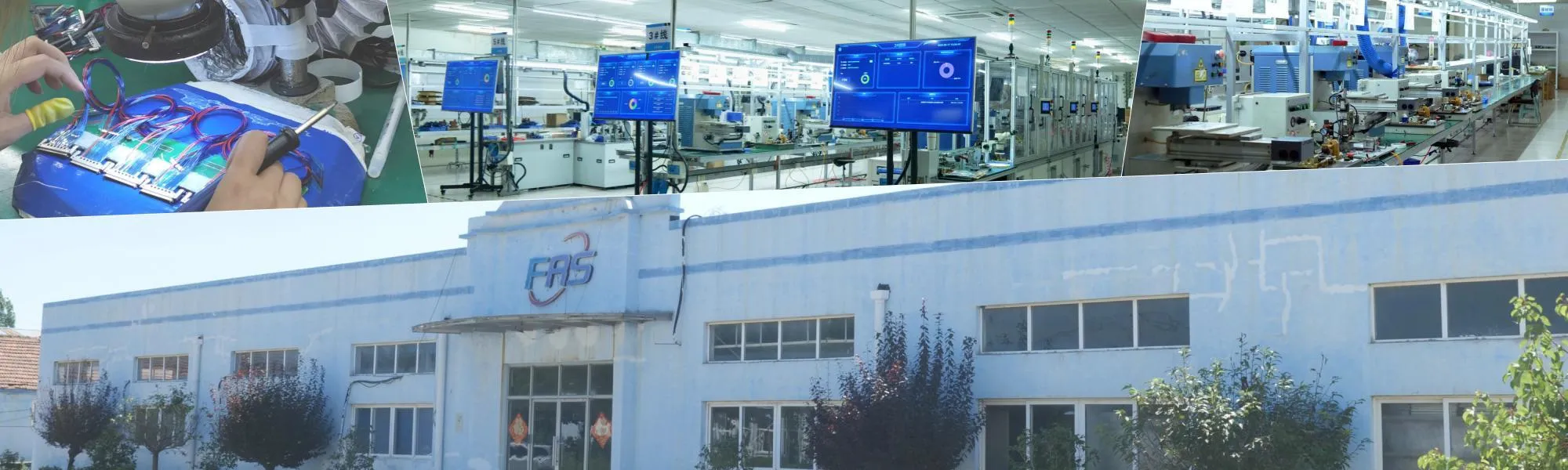
Micro Coaxial Cable factory-(FRS)
As we transition from the crisp clarity of 4K to the immersive hyper-realism of 8K, the engineering challenges behind the screen become exponentially complex. We often focus on the panel technology itself, but the true enabler of these resolutions lies in the intricate pathways delivering the data. When dealing with pixel densities that are four times that of 4K, the margin for error in signal transmission shrinks to near zero. This is where the Micro Coaxial Cableemerges not just as a component, but as the critical lifeline for high-speed data integrity.
For engineers, manufacturers, and quality assurance professionals, understanding the role of micro coaxial cables in display module testing and certification is non-negotiable. This article delves deep into the technical labyrinth of 4K and 8K transmission, exploring how these ultra-fine cables navigate the physical limits of high-frequency signals to meet stringent global certification standards .
To understand the necessity of micro coaxial cables, one must first appreciate the sheer volume of data involved in 8K resolution. An 8K display (7680 × 4320 pixels) operating at 60Hz generates a massive bandwidth requirement. Traditional cables struggle here due to skin effect and dielectric losses, which distort signals at gigahertz frequencies.
A micro coaxial cable is essentially a masterpiece of miniaturization. It retains the fundamental structure of a standard coaxial cable—center conductor, dielectric insulator, outer conductor (shield), and jacket—but scaled down to diameters often ranging from 0.18mm to 0.81mm .
This structure provides a controlled impedance environment (typically 50Ω or 75Ω), which is crucial for preventing signal reflections. Unlike twisted pair cables, where the distance between conductors can vary slightly, the coaxial geometry ensures a uniform electromagnetic field, resulting in superior signal integrity (SI) .
In the noisy environment of modern electronics, Electromagnetic Interference (EMI) is the enemy of high-resolution video. Micro coaxial cables utilize advanced shielding techniques, often combining silver-plated copper braids with aluminum foil. This multi-layered approach creates a Faraday cage-like effect, isolating the high-speed video signal from external noise and preventing crosstalk between adjacent channels .
When qualifying a display module, the cable connecting the driver board to the panel (often referred to as the “internal jumper”) acts as the bottleneck. Testing protocols must verify several key parameters to ensure the cable can handle 4K/8K payloads.
At frequencies exceeding 10 GHz, signal attenuation becomes a primary concern. Insertion Loss (IL) measures the reduction in signal power as it travels through the cable. For 8K applications utilizing protocols like V-by-One HS or eDP (Embedded DisplayPort), the cable must exhibit minimal loss across the entire frequency spectrum. Even a minor deviation can result in “sparkles” or color shifts on the display .
Return Loss (RL) indicates how much signal is reflected back toward the source due to impedance mismatches. A mismatch can occur at the connector interface or due to manufacturing inconsistencies in the cable diameter. For 4K/8K testing, maintaining a strict Voltage Standing Wave Ratio (VSWR) is mandatory to ensure energy is fully transferred to the display panel .
High-speed video interfaces use differential signaling (e.g., LVDS or MIPI D-PHY/C-PHY). It is imperative that the positive and negative lines within a pair have identical electrical lengths. Any disparity, known as skew, causes the eye diagram to close, increasing the Bit Error Rate (BER). Precision manufacturing ensures that the micro coaxial pairs are matched within picoseconds .
Certification is the final gatekeeper ensuring that a 4K or 8K display module is market-ready. The Micro Coaxial Cableplays a pivotal role in passing these rigorous evaluations.
A display module isn’t just tested in a pristine lab; it must survive the real world. Certification processes include:
Designing a micro coaxial cable for next-gen displays is a balancing act between physics and mechanics.
As frequency increases, electrical current tends to flow only on the surface (skin) of the conductor. This increases the effective resistance and attenuation. To combat this, high-end micro coaxial cables utilize silver-plated copper alloys. Silver offers superior conductivity on the surface layer, mitigating the skin effect and preserving signal strength for 8K transmission .
A thinner cable (e.g., 0.18mm) offers incredible flexibility for routing inside ultra-thin tablets or foldable phones. However, reducing the diameter reduces the cross-sectional area of the conductor, increasing DC resistance. Engineers must optimize the dielectric material (using foamed PTFE or FEP) to lower the dielectric constant (Dk), allowing for thinner walls without sacrificing insulation or increasing capacitance .
Selecting the appropriate micro coaxial cable is a strategic decision that impacts the final product’s performance and cost. Here is a comparative look at common configurations:
| Feature | Standard Micro Coax (e.g., 0.4mm) | Ultra-Fine Micro Coax (e.g., 0.18mm) | Double-Shielded Micro Coax |
|---|---|---|---|
| Primary Application | Standard 4K Laptops, Monitors | Foldable Phones, AR/VR Headsets | Medical Imaging, Automotive Displays |
| Max Resolution Support | Up to 4K @ 120Hz | 4K @ 60Hz / Entry-level 8K | 8K @ 60Hz / High Bandwidth |
| Shielding Type | Single Layer (Foil/Braid) | Single Layer (Foil) | Dual Layer (Foil + Braid) |
| Flexibility | High | Extreme | Moderate (Stiffer) |
| EMI Immunity | Good | Fair (requires careful layout) | Excellent |
| Cost Implication | Lower | Medium | Higher |
Key Takeaway:For standard 4K/8K monitors, a standard pitch (0.4mm or 0.5mm) double-shielded cable is usually the safest bet for reliability. For compact consumer electronics, the trade-off between the ultra-fine 0.18mm cable’s flexibility and its signal reach must be carefully calculated .
The evolution does not stop at 8K. As the industry whispers of 16K resolution and beyond, the demands on interconnects will intensify. We anticipate the rise of:
In the ecosystem of ultra-high-definition display modules, the Micro Coaxial Cableis far more than a simple conduit; it is the guardian of signal integrity. From navigating the complexities of impedance matching to passing the rigorous gauntlet of international certification standards, the quality of this cable dictates the visual experience of the end-user.
By prioritizing precision manufacturing, adhering to IEC standards, and understanding the nuanced electrical requirements of 4K and 8K protocols, engineers can ensure their display modules not only function but excel in the competitive landscape of high-resolution technology .
Our factory offers high-quality products at competitive prices
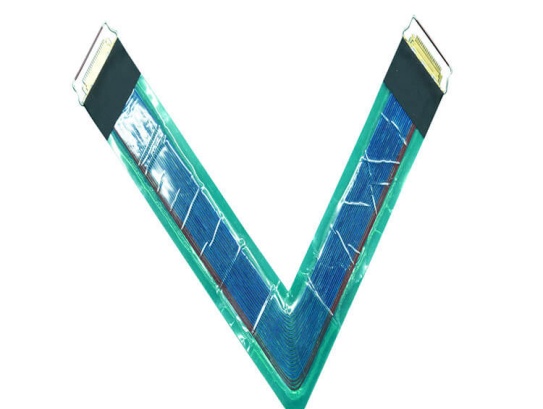
IntroductionThe High-Temperature Resistant Micro-Coaxial Cable is a cutting-edge connectivity solution engineered to deliver exceptional performance in extreme thermal environments. Combining precision engineering with advanced mate.
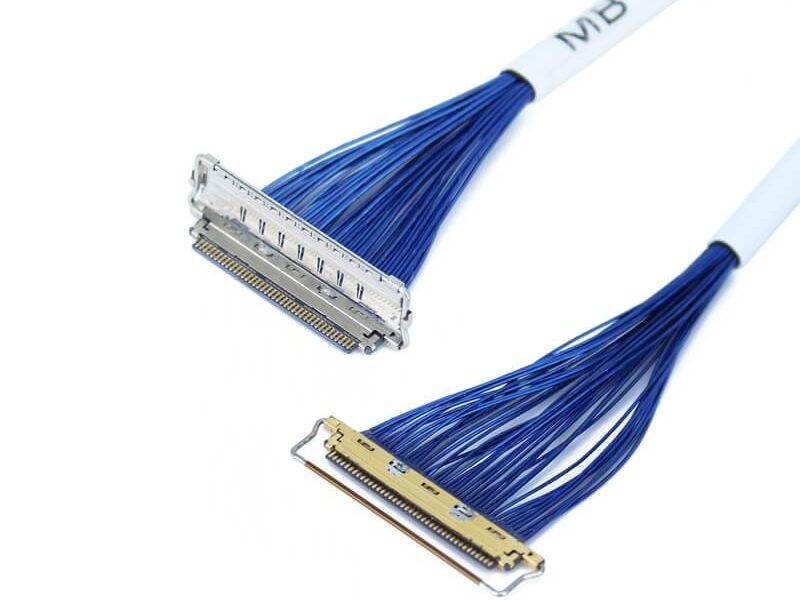
In LVDS (Low Voltage Differential Signaling) display systems, Micro-coaxial Cable (also referred to as Micro Coax Cable) stands out as an optimal solution for high-resolution, high-reliability signal transmission. Designed to meet the str.
Feel free to reach out to us for any inquiries or orders