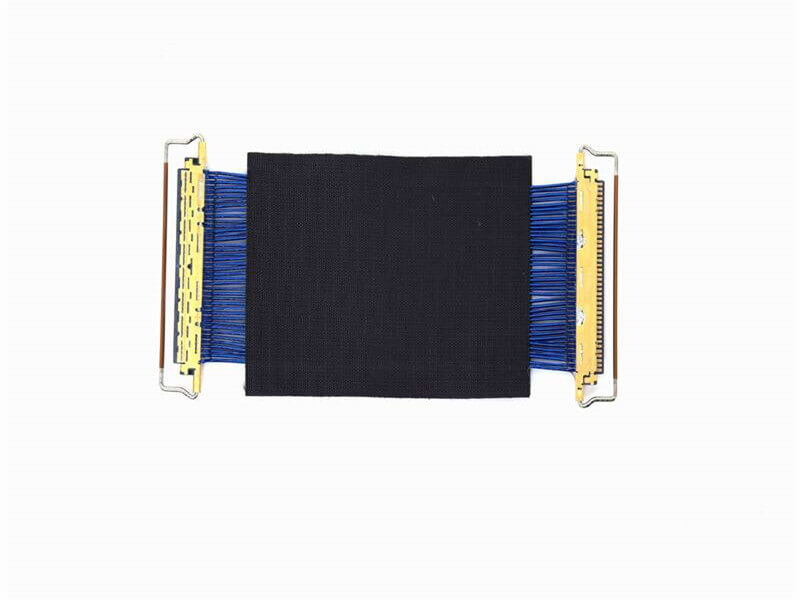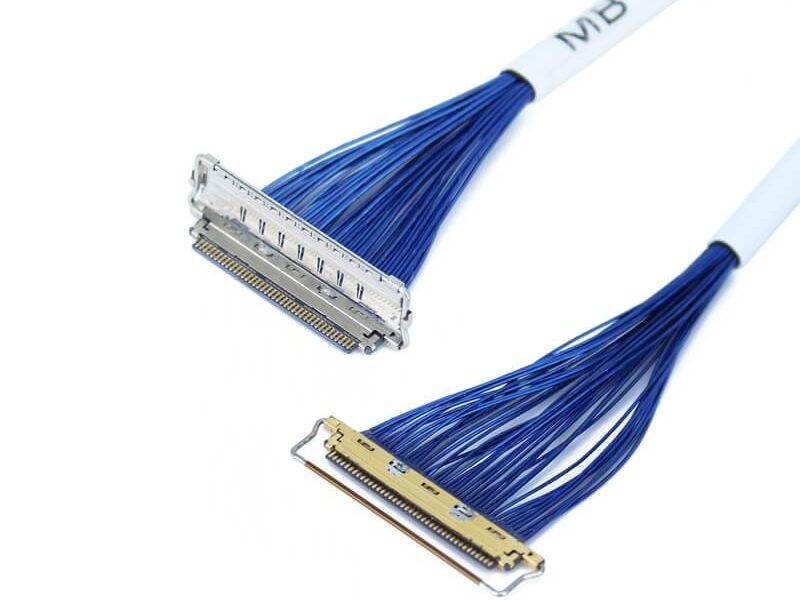

Micro Coaxial Cable factory-(FRS)

8K HDMI micro coaxial cable - Micro Coaxial Cable factory-(FRS)

Micro Coaxial Cable factory-(FRS)

Micro coaxial cable Tag: 8K HDMI micro coaxial cable

Micro-Coaxial Cables in 8K HDMI 2.1: Why Thinner Is Better

The pursuit of breathtaking 8K resolution through HDMI 2.1 brings a technical challenge: moving massive amounts of data (up to 48Gbps) reliably from your player or console to your display. Traditional HDMI cables often rely on thicker copper conductors to handle this bandwidth, leading to bulky, inflexible constructions. Enter the innovative solution: ​micro-coaxial cables. Here’s why their thinner profile isn’t just convenient – it’s technically superior for high-performance 8K AV setups.

1. Enhanced High-Frequency Performance (The Physics Bit Simplified):

  • Signal Integrity Champion: 8K/60Hz and beyond demand transmitting signals at extremely high frequencies (over 12 GHz for 48Gbps). Thicker conductors in conventional cables struggle more with signal loss (attenuation) and distortion at these frequencies due to the “skin effect” – where signal travels mostly near the conductor’s surface. Micro-coaxial design uses multiple, individually shielded, ultra-thin coaxial pairs.
  • Reduced Skin Effect Impact: By using thinner central conductors for each signal pair, micro-coaxial cables effectively maximize the surface-area-to-volume ratio compared to a single thick wire carrying the same data. This significantly minimizes losses caused by the skin effect at those critical high frequencies, allowing cleaner signals to travel further.

2. Superior Flexibility and Practicality:

  • Effortless Installation & Routing: Anyone wrestling with a thick, stiff HDMI cable behind an entertainment center or trying to run it discreetly through conduit or wall cavities appreciates this immediately. Micro-coaxial HDMI cables are remarkably flexible and pliable.
  • Clean Aesthetics: Achieving that sought-after “clean look” with minimal cable clutter is far easier. Thinner cables bend more naturally around tight corners and lie flatter against walls or under carpets.
  • Compatibility with Ports and Spaces: Modern slim-profile devices often have tightly packed ports. A thinner cable plug and cable body make it easier to plug into these ports, especially side-mounted ones, and reduces stress on both the cable and device connectors. They also fit better in cable management sleeves and raceways.

3. Active Technology Enabled:

  • Powering Intelligence: Ultra-high bandwidth over longer distances requires active components. The thin, efficient design of micro-coaxial cables integrates easily with the small electronics needed for active signal boosting and conditioning directly within the cable assembly (often near the connectors). These active chips compensate for signal loss, ensuring robust 48Gbps performance even over runs of 3 meters or more – where passive thicker cables often fail.

4. Optimized Shielding and Crosstalk Mitigation:

  • Dual Shield Strategy: Micro-coaxial cables inherently feature individual shielding around each differential signal pair (the tiny coaxial elements). This provides excellent isolation between pairs, drastically reducing crosstalk (signal interference).
  • Overall Protection: This individual pair shielding is then wrapped by an overall foil or braid shield protecting the entire bundle from external electromagnetic interference (EMI) and radio-frequency interference (RFI). This multi-layer approach ensures signal purity critical for uncompressed 8K, HDR, and VRR.

5. Future-Proofing and Reliability:

  • Proven Performance: Micro-coaxial technology is rigorously tested to meet and exceed the stringent HDMI 2.1 certification requirements for Ultra High Speed HDMI Cable bandwidth (48Gbps), including protocols like Dynamic HDR, eARC, and VRR.
  • Build Quality: High-quality micro-coaxial cables use durable yet flexible polymer materials for the outer jacket and internal insulation. The precision engineering of the tiny coaxial pairs ensures consistent performance and longevity when handled correctly.

Choosing the Right Micro-Coaxial HDMI Cable:

  • Certification is Crucial: Look for the official “Ultra High Speed HDMI” certification label. This guarantees rigorous testing to HDMI Forum standards for 48Gbps performance. Don’t settle for uncertified claims of “8K support.”
  • Build Quality Matters: While thin, feel the cable. It shouldn’t feel flimsy. The connectors should be robust metal, typically with a durable braided nylon outer jacket for additional protection and flexibility. Check for well-molded strain reliefs at the plug ends.
  • Understand “Active” Needs: For runs longer than ~3 meters, ensure the cable incorporates active technology. Check the product description; it might mention an integrated chipset or use the term “active.”

In Conclusion:

Micro-coaxial technology represents a significant advancement for HDMI 2.1 cabling. Moving beyond simply making wires thicker, it leverages sophisticated engineering to deliver the necessary 48Gbps bandwidth for flawless 8K experiences in a form factor that excels where it matters most: superior high-frequency signal integrity, outstanding flexibility for easy installation and a clean look, effective shielding against interference, and compatibility with modern slim devices and active components. When selecting a cable for your cutting-edge 8K setup, choosing a certified, well-built Ultra High Speed HDMI cable using micro-coaxial construction isn’t just opting for thinness – it’s choosing optimized performance and future-proof reliability.


Keywords naturally integrated: Micro-Coaxial Cable, 8K HDMI, HDMI 2.1, Ultra High Speed HDMI, 48Gbps, High Bandwidth, Skin Effect, Signal Integrity, Flexibility, Cable Management, Active Cable, HDMI Certification, Signal Loss, Attenuation, Crosstalk, EMI/RFI Shielding, Thin HDMI, High-Frequency Performance, 8K Resolution, AV Setup, Clean Installation.

In the rapidly evolving landscape of electronic components, micro-coaxial cables stand as a critical backbone for high-speed data transmission, signal integrity, and miniaturized device connectivity. As industries like consumer electronics, automotive, medical devices, and industrial automation push toward smaller, more durable, and high-performance systems, the demand for specialized micro-coaxial cables has never been higher. Among these specialized variants, micro-coaxial cables with abrasion resistance have emerged as a game-changer, addressing the persistent challenge of cable degradation due to .

Read more →

Coaxial cables are indispensable components in numerous systems, ranging from communication networks to home entertainment setups, as they play a vital role in transmitting signals stably and efficiently. To ensure their long-term reliable performance, our factory has summarized a set of practical maintenance tips. Daily Inspection Daily visual inspections are the first line of defense. Check the cable sheath for cracks, cuts, or signs of wear, especially at connection points and bends. These damages can expose the inner conductors to moisture, dust, and other external factors, affecting signal .

Read more →

Ever looked at a blurry X-ray or a fuzzy ultrasound and worried about accurate diagnosis? In the high-stakes world of medical imaging, ​clarity is crucial. One unsung hero powering this precision is the ​micro-coaxial cable. These tiny cables are the hidden arteries carrying the lifeblood of diagnostic information within critical devices. But how do they actually make our scans sharper and diagnoses more reliable? Miniature Engineering, Massive Impact: What are Micro-Coaxial Cables? Think of a coaxial cable, like the one connecting your TV, but shrunk dramatically and engineered for extreme perf.

Read more →

In the intricate world of scientific research equipment, coaxial cables play a pivotal role. These cables are not just ordinary connectors; they are the lifelines that ensure seamless data transfer, precise signal transmission, and reliable operation of a wide range of research apparatus. Applications in Scientific Research Electrophysiology Experiments Coaxial cables, particularly those with BNC connectors, are commonly used in electrophysiology equipment within research laboratories. In neurophysiology experiments, for example, where sensitive recordings of electrical signals from neurons a.

Read more →

In the era of Industry 4.0, smart manufacturing has become the core driver of industrial upgrading, relying on advanced technologies such as the Internet of Things (IoT), artificial intelligence (AI), and automation to realize efficient, precise, and intelligent production processes. At the heart of this transformation lies the need for reliable, high-performance connectivity solutions that can transmit large volumes of data quickly and accurately in complex industrial environments. Micro-Coaxial Cables, with their unique structural and performance advantages, have emerged as a critical component in e.

Read more →

As the telecom industry marches toward 6G—targeting terabit-per-second data rates, sub-millisecond latency, and 100x higher connection density than 5G—every component in the network ecosystem faces unprecedented demands. Among these, micro-coaxial cables (micro-coax) emerge as a critical yet underrecognized enabler, addressing 6G’s unique challenges in high-frequency transmission, space-constrained design, and seamless integration across air, land, and sea networks. Their ability to balance speed, miniaturization, and reliability positions them as indispensable for translating 6G’s theoretical potenti.

Read more →

Can't find what you're looking for?

Our customer support team is ready to assist you with any questions or concerns.

Search FAQs

Popular Tags

More Products

Our factory offers high-quality products at competitive prices

Micro Coaxial Cable

Micro Coaxial Cable

Micro Coaxial Cable: High-Quality Solutions for Precision Applications Micro coaxial cables are essential components in high-performance electronic applications, providing reliable signal transmission in compact and flexible designs. A.

LVDS Micro Coaxial Cable

LVDS Micro Coaxial Cable

In LVDS (Low Voltage Differential Signaling) display systems, Micro-coaxial Cable (also referred to as Micro Coax Cable) stands out as an optimal solution for high-resolution, high-reliability signal transmission. Designed to meet the str.

Contact Us Micro Coaxial Cable factory-(FRS).


Feel free to reach out to us for any inquiries or orders

Call Us

Have a question? Give us a call!

+8618818785005

Email Us

Send us an email and we'll get back to you soon.

sales@custom-cable-assemblies.com
       
Home Products Contact