What Is Micro Coaxial Cable Soldering Service and When Do You Need It? - Micro Coaxial Cable factory-(FRS)
Micro Coaxial Cable factory-(FRS)
INFO
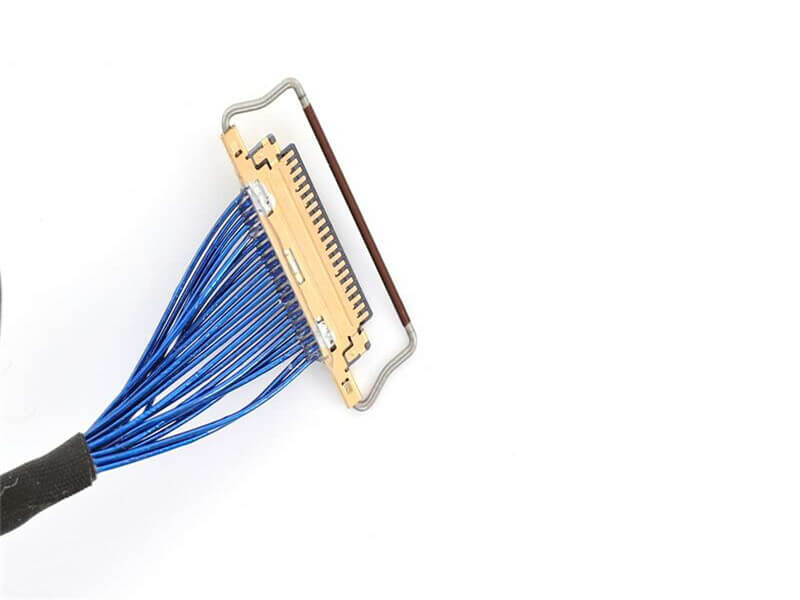
Micro coaxial cable soldering service is a specialized capability that joins ultra‑fine coaxial conductors to connectors or PCB pads with precise impedance control, mechanical reliability, and high‑frequency signal integrity. It is widely used wherever space is constrained yet data rates and EMI performance are critical, such as AR/VR headsets, medical endoscopes, high‑speed camera links, 5G and mmWave modules, and automotive ADASsystems. Typical micro coax cables range from about 0.3–1.13 mmin outer diameter, with some high‑density interconnects using even smaller profiles. These dimensions, combined with stringent impedance and shielding requirements, make professional soldering and process control essential
Why This Service Exists and Who Needs It
•Miniaturization and density: Devices pack more channels into smaller volumes. Micro coax assemblies with fine pitch connectors (e.g., board‑to‑board links, FPC transitions) require repeatable, high‑yield solder joints that preserve signal quality.
•High‑frequency performance: As data rates climb into the multi‑gigabit and mmWave bands, even tiny impedance mismatches or parasitic effects can degrade eye diagrams, increase jitter, or cause EMI susceptibility.
•Mechanical reliability: Wearables, hinges, and robotic systems endure dynamic bendingand vibration. Solder joints must survive assembly, handling, and long‑term use without cracking or intermittent failures.
•EMI control: Dense electronics need robust shielding strategies (braid + foil, dual shields) and clean terminations to prevent leakage and coupling in tightly packed assemblies.
•Medical and automotive compliance: Applications in these fields often require validated materials, process traceability, and environmental qualification to meet ISO 13485or IATF 16949expectations12.
When to Use Micro Coaxial Soldering Instead of Crimping or Board‑to‑Board Connectors
•Ultra‑low profile or custom transitions: When connectors are too large or the geometry is non‑standard, direct soldering to pads or flex circuits preserves space and electrical performance.
•High‑speed differential pairs (e.g., LVDS, eDP, USB 3.x, HDMI): Soldering with controlled impedance and minimal pad/land stubs reduces reflections and skew.
•Dynamic flex or hinge zones: Soldered strain‑relieved transitions can outperform connectors that are prone to wear or intermittent contact under repeated motion.
•Repair and rework: Damaged connectors or misrouted channels can be restored with precision soldering rather than full re‑layout.
•Prototyping and low‑volume production: Fast iteration and custom geometries are easier to achieve with skilled hand or semi‑automated soldering than with tooling‑intensive connector solutions.
How the Service Is Delivered
•Requirements definition: Clarify the operating environment (static/dynamic), signal type (analog/digital/differential), frequency range, allowable loss, minimum bend radius, and life targets (bend cycles, mating cycles).
•Cable and connector selection: Choose micro coax (e.g., 0.3–1.13 mm OD), shielding configuration (braid + foil), and connector family (e.g., I‑PEX/MHF/U.FL/SMPM/MMCX). Ensure the connector interface matches the system’s impedance and mechanical envelope.
•Process design: Define pad geometry, solder alloy/flux, thermal profile, and strain‑relief method (anchor stubs, adhesive, overmolding). Use precision tools (micro‑tweezers, microscopes, thermal controls) to manage heat input and prevent collateral damage.
•Pilot build and verification: Build a small batch, then measure insertion loss, return loss, and VSWRacross the operating band. Perform mechanical tests (bend, pull, vibration) and, where applicable, environmental stress screening.
•Iteration and scale‑up: Refine pad/land dimensions, shielding layout, and solder process to hit the target electrical and mechanical specs, then move to volume production with documented controls12.
Key Specifications and Acceptance Criteria
Parameter
Why It Matters
Typical Targets or Notes
Impedance tolerance
Maintains signal integrity and reduces reflections
High‑speed links often target ±5 Ωor tighter; some high‑end processes control to ±2 Ω
Shielding coverage
Suppresses EMI and controls crosstalk
Dynamic applications benefit from braid + foil ≥90%coverage
Insertion loss
Limits rise time degradation and jitter
Verify over the full bandwidth; e.g., one medical case achieved ≤0.3 dB @ 6 GHz
Return loss / VSWR
Indicates impedance match quality
Tight control across frequency bands; validate with vector network analysis
Bend radius
Prevents conductor/insulation damage
Use conservative ratios (e.g., multiples of OD); follow cable spec
Dynamic bend life
Ensures reliability in moving mechanisms
Target based on use case; e.g., wrist‑worn devices may need >100kcycles
Pull strength
Withstands assembly and service loads
Example acceptance: IPEX‑style solder joints ≥5 N
Environmental
Confirms survivability
Validate across temperature, humidity, and vibrationper application needs
These targets are not universal defaults; they should be set by the application’s frequency, loss budget, and mechanical constraints, then verified by measurement
Common Pitfalls and How to Avoid Them
•Impedance discontinuities: Long pads, poor pad‑to‑trace transitions, or solder fillets that extend beyond the conductor can create reflections. Use grounded coplanar waveguides, keep pad extensions short, and control solder volume.
•Excessive heat: High thermal mass or prolonged dwell can damage insulation, delaminate pads, or shift dielectric properties. Use low‑residue flux, thermal shunts, and step‑graded heating.
•Insufficient strain relief: Repeated flex or vibration can crack solder joints. Implement anchor stubs, adhesive, or overmolding at the solder transition.
•Inadequate shielding: Poor shield termination or coverage leads to EMI susceptibility. Ensure continuous shield transfer to the connector backshell or ground plane.
•EMI/ground loops: Floating shields or shared returns can cause common‑mode noise. Tie shields to a single, low‑impedance groundat one defined point.
•Over‑tight bend radius: Bending too close to the connector or solder joint can cause microcracks. Respect the cable’s rated minimum bend radius throughout the routing path.
•Skipping validation: Relying only on datasheets is risky. Always measure IL/RL/VSWRand qualify mechanical life under real use conditions12.
Real‑World Examples
•Wearable device: A smartwatch suffered signal attenuation after repeated flexing. Redesigning the shield layer and optimizing solder‑joint stress distributionenabled the cable to pass 200,000 dynamic bend cycles, clearing the path to mass production.
•Medical endoscope: With only 0.8 mminternal space and a need for >10,000flex cycles, engineers selected a 0.48 mm ODmicro coax with ultra‑thin insulation and silver‑plated conductors. Iterative prototyping achieved ≤0.3 dB @ 6 GHzinsertion loss, supporting CEapproval.
•Cost and lead‑time optimization: An endoscopic handle originally used an imported cable at 85/unit∗∗with∗∗12‑week∗∗leadtime.Byre‑engineeringtheconductor/insulationandterminationfor∗∗2.4GHz∗∗operation,theBOMdroppedto∗∗32/unitand lead time to 3 weeks, enabling market expansion12.
Choosing the Right Partner
•Engineering depth: Look for teams that can translate mechanical constraints into impedance‑controlled layoutsand EMI‑aware routing.
•Process control: Ask about vision alignment, laser stripping, controlled thermal profiles, and in‑process metrologyfor consistent, repeatable results.
•Test capability: Ensure they can provide VSWR/IL/RLdata, eye diagrams (where applicable), and mechanical/thermal test reports.
•Materials and compliance: Verify flux compatibility, halogen‑freeoptions, and, for regulated industries, ISO 13485/IATF 16949alignment.
•Scalability: Confirm they can support NPI to volumewith clear change controland traceabilitymechanisms12.
Deliverables to Request
•Stack‑up and pad/land design: Including ground references, anti‑pad dimensions, and keep‑out regions.
•Impedance and loss budget: Frequency‑dependent IL/RL targets and margins.
•3D routing and bend‑radius plan: Showing how the cable transitions through the mechanical path.
•Test plan: List of electrical, mechanical, and environmental tests with acceptance criteria.
•Sample and validation report: With measured data, photos of joints, and any failure analysis.
•Pilot‑to‑production plan: Timeline, inspection points, and change‑order process.
Frequently Asked Questions
•Can micro coax be soldered by hand?Yes, for prototyping and low‑volume work, with microscopes, fine‑tip tools, and thermal control. High‑volume or high‑frequency projects benefit from semi‑automated or automated platforms to improve consistency.
•What’s the difference between micro coax soldering and crimping?Soldering provides a direct metal‑to‑metal bond with excellent high‑frequency performance and design flexibility. Crimping is faster and cost‑effective for robust, standardized connections but offers less control over impedance and is less suited to ultra‑fine geometries.
•How do I know if my solder joint is good?Beyond visual inspection, measure IL/RL/VSWRacross the operating band and perform mechanical pull/bend tests. High‑magnification inspection and, if needed, cross‑sections can reveal voids or cracks.
•What frequencies are we talking about?Micro coax assemblies are used from sub‑GHzvideo links to multi‑GHzdata links. Some automotive mini‑coax standards now target frequencies up to 20 GHz, reflecting the push toward higher bandwidth in ADAS and infotainment9.
Conclusion
Micro coaxial cable soldering service is not just a manual skill—it is a systems engineering discipline that balances impedance control, EMI mitigation, and mechanical reliabilitywithin extremely tight spatial envelopes. Whether you are building a 6 GHzmedical imaging link, a wearablewith thousands of flex cycles, or an automotive cameraharness, the right service partner will help you translate mechanical constraints into electrical performance, verify results with data, and scale reliably to production. Use the specification checklist and examples above as a practical guide to scope your next project and avoid costly rework
Micro coaxial cable soldering service is a specialized capability that joins ultra‑fine coaxial conductors to connectors or PCB pads with precise impedance control, mechanical reliability, and high‑frequency signal integrity. It is wide...
Micro coaxial cable is a critical component for high-frequency, high-density connections in modern electronics. This guide answers common questions and provides a practical roadmap for selecting the right cable for your application.
...
In the realm of test and measurement (T&M), precision is non-negotiable. Whether calibrating radar systems, validating 5G components, or analyzing signal integrity in aerospace applications, the accuracy of results hinges on every l...
In the era of miniaturization, electronic devices are becoming increasingly compact while demanding higher performance—from wearable fitness trackers and medical implants to aerospace sensors and industrial IoT modules. At the heart of ...
In the relentless pursuit of higher bandwidth, lower latency, and greater density within modern data centers, the choice of cabling infrastructure is paramount. While fiber optics dominate for longer distances, within the racks and betw...
The dream of a quantum internet – enabling ultra-secure communication, powerful distributed quantum computing, and unprecedented scientific discovery – is rapidly taking shape. While quantum processors and photonics capture headli...
A coaxial cable is a type of cable widely used in communication and data transmission. Its core structure consists of four concentric layers:Central Conductor: Typically a single or stranded copper wire for transmitting electrical sig...
Ever wondered how long it takes for your high-speed digital signal or precise RF pulse to travel down a tiny micro coaxial cable? That travel time is called propagation delay, and it’s a critical factor in timing-sensitive applic...
In industrial settings, data centers, and even residential electrical systems, managing a network of cables can quickly become a tangled challenge. Without clear identification, tracing a specific cable, troubleshooting issues, or perfo...
Coaxial cable assemblies are widely used in telecommunications, broadcast, and industrial applications for their ability to transmit high-frequency signals with minimal interference. However, poor signal quality—such as signal loss, noi...
The short answer is yes—coaxial cable assemblies can function in low-temperature environments, but their reliability and performance depend entirely on material selection, structural design, and compliance with low-temperature stan...
In recent years, our factory has achieved a significant reduction in the production cost of coaxial cables through a series of targeted measures. These efforts not only enhance our market competitiveness but also bring tangible benefits...
The answer is yes—coaxial cable assemblies are indispensable components in industrial robots, playing a critical role in ensuring stable, high-precision signal transmission that directly impacts the robots’ performance, accuracy, a...
Micro coaxial cable terminations are the unsung heroes of modern electronics, enabling high-speed data transfer in everything from smartphones to medical devices. Yet, their tiny size makes them highly vulnerable to oxidation, leading ...
Micro coaxial cable assemblies are vital for high-frequency signal transmission in devices like smartphones, medical imaging equipment, automotive radar, and 5G test gear. However, obtaining a precise price quotation online can be chall...
Why this cable matters now
PCI Express 6.0 raises the per‑lane signaling rate to 64 GT/susing PAM4modulation and lightweight FEC/FLIT, which doubles effective bandwidth while demanding much tighter channel and connector performance t...
In the realm of electrical engineering and communication systems, the need to interface different types of transmission lines is a common challenge. Among the most prevalent scenarios is the conversion between coaxial cables and twisted...
Coaxial cables are indispensable in modern communication, security surveillance, and broadcast systems, enabling stable signal transmission in homes, enterprises, and industrial sites. As manufacturers expand globally—penetrating market...
Coaxial cable is a fundamental component for transmitting high-frequency electrical signals with minimal interference. It consists of four layers sharing a common axis: a center conductor, a dielectric insulator, a metallic shield, and ...
Micro coaxial cables are tiny yet powerful components that play a critical role in modern technology. Their compact size, durability, and ability to transmit high-frequency signals make them indispensable in many industries. If you’re w...
In the high-precision world of manufacturing micro-coaxial cables for critical applications (5G, medical devices, aerospace, consumer electronics), every millimeter counts. These cables, often incorporating expensive materials like silv...
In the digital age, the demand for high-speed data transmission has become insatiable. Modern networks, whether in data centers, offices, or homes, rely heavily on efficient data transfer to support a wide range of applications, from cl...
Coaxial cables are indispensable components in numerous systems, ranging from communication networks to home entertainment setups, as they play a vital role in transmitting signals stably and efficiently. To ensure their long-term relia...
We are thrilled to announce that our factory’s coaxial cable has been shortlisted for the Top 10 Products in the industry. This recognition is a testament to our commitment to quality, innovation, and meeting the diverse needs of ...
Passive Intermodulation (PIM) has long been a critical challenge in high-frequency communication systems, where even minute unwanted signals can disrupt signal integrity and degrade network performance. Micro-coaxial cables, widely used...
Forget the shiny new toys for a moment – fiber optics and 5G rightfully grab headlines, but when building the complex nervous system of a smart city, a veteran technology plays a surprisingly vital and enduring role: coaxial cable.
...
In the world of concert sound systems, achieving high – quality audio reproduction is of utmost importance. One crucial component that plays a significant role in ensuring excellent sound transmission is the coaxial cable.
Unde...
Introduction to Micro-Coaxial Cables in 6G TechnologyMicro-coaxial cables are emerging as critical components in 6G communication systems, enabling high-speed data transfer, ultra-low latency, and reliable connectivity. As 6G networks a...
In the era of miniaturized electronics and high-frequency communication, the demand for efficient signal transmission in confined spaces has reached unprecedented heights. Whether you are designing the next-generation 5G antenna module,...
In an era where reliable signal transmission and safety are paramount across industries, coaxial cable manufacturers have prioritized advancements in safety performance. This article explores the latest upgrades in coaxial cable technol...
Introduction
In today’s high-frequency electronic applications, flexible coaxial cables with superior shielding performance have become critical components for signal integrity. These specialized cables combine exceptional EMI/...
Coaxial cables are the unsung heroes of countless signal transmission systems, from cable television and satellite communications to security cameras and radio frequency (RF) networks. These cables are designed to carry high-frequency s...
Tired of replacing delicate micro-coaxial cables far sooner than expected? A breakthrough in materials science is delivering unprecedented resilience, potentially quadrupling the usable life of these critical components. Discover ...
In the realm of modern connectivity, long-distance cable runs are a fundamental aspect of various industries, from telecommunications and networking to audio-visual setups. However, as signals travel over extended cable lengths, they en...
In the era of rapid development of 5G communication, satellite navigation, and high – speed data transmission, coaxial cables, as the core medium for signal transmission, face increasingly strict requirements for high – freq...
Imagine intricate electronic devices shrinking further, medical implants becoming smarter, and 5G networks reaching new heights of performance. At the heart of this miniaturization revolution lies a critical challenge: creating inc...
Introduction: The Battlefield Connectivity Imperative
Modern warfare demands unprecedented mobility from soldiers, who routinely carry 15+ kg of electronic gear. Traditional coaxial cables force critical compromises between durabili...
Introduction
Particle accelerators, the giant “microscopes” used in physics research and medical applications, rely on an unsung hero: micro-coaxial cables. These specialized cables, often thinner than a pencil lead, form...
In the vast world of underwater connectivity, coaxial cables play a pivotal role in ensuring seamless submarine communications. This article will explore the importance, functionality, and considerations of coaxial cables in submarine c...
In the era of smart manufacturing, industrial automation systems demand components that balance miniaturization, high performance, and durability. Micro-coaxial cables (often abbreviated as micro-coax) have emerged as a critical solutio...
Overview of I-PEX Micro Coaxial Cable Connectors
I-PEX is a global leader in micro coaxial cable solutions, specializing in high-performance IPEX micro coax connectors and micro coaxial cable assemblies. These products are designed for.
Meta Description: Discover our premium Flexible Micro-Coaxial Assemblies—engineered for high-frequency signal integrity, durability, and versatility in aerospace, medical, telecom, and robotics applications.
What Are Flexible .
Contact Us Micro Coaxial Cable factory-(FRS).
Feel free to reach out to us for any inquiries or orders