Micro-Coaxial vs. Twinaxial: Which Performs Better in Data Centers - Micro Coaxial Cable factory-(FRS)
Micro Coaxial Cable factory-(FRS)
INFO
In the relentless pursuit of higher bandwidth, lower latency, and greater density within modern data centers, the choice of cabling infrastructure is paramount. While fiber optics dominate for longer distances, within the racks and between adjacent equipment, high-speed copper cabling remains a critical workhorse. Two technologies often vie for supremacy in these high-stakes, short-reach applications: Micro-Coaxial (Micro-Coax) and Twinaxial (Twinax). But which one truly delivers superior performance for today’s demanding data center environments? Let’s dive deep into the technical nuances and practical realities.
Understanding the Contenders
Micro-Coaxial Cable (Micro-Coax):
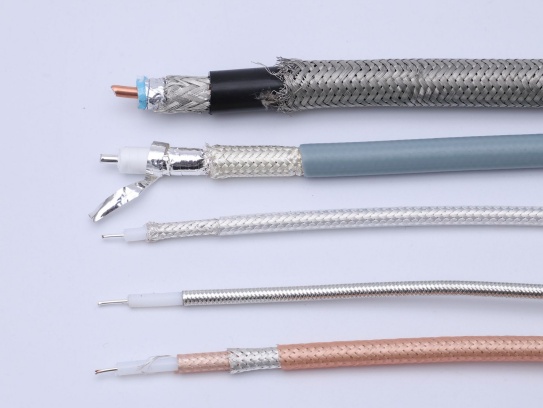
Construction: Think of it as a scaled-down version of traditional coaxial cable. Each signal conductor is individually shielded within its own dielectric insulator and metallic braid/shield. Multiple of these individually shielded pairs (or single conductors) are bundled together within an overall jacket.
Key Principle: Each signal path is electromagnetically isolated from its neighbors by its dedicated shield. This provides excellent protection against crosstalk (signal interference between adjacent wires) and Electromagnetic Interference (EMI) from external sources.
Common Uses: Historically used in InfiniBand (SDR, DDR, QDR), high-density internal server/storage interconnects, and some legacy high-speed applications. Requires complex, shielded connectors.
Twinaxial Cable (Twinax):
Construction: Features two central signal conductors (typically twisted together, though sometimes parallel), surrounded by a single, shared dielectric insulator, and then a single, shared metallic shield and overall jacket. It’s fundamentally a shielded twisted pair.
Key Principle: Relies on differential signaling. The two conductors carry equal but opposite polarity signals. Noise induced on the pair tends to affect both conductors equally, and the receiving device cancels out this common-mode noise. The shared shield provides protection against external EMI.
Common Uses: The dominant standard for high-speed direct-attach copper (DAC) cables (SFP+, QSFP+, QSFP28, QSFP56, QSFP-DD, OSFP, etc.) used for Ethernet (10G, 25G, 40G, 100G, 200G, 400G), InfiniBand (EDR, HDR, NDR), and Fibre Channel. Also used for Serial-Attached SCSI (SAS).
The Performance Showdown: Key Factors for Data Centers
Signal Integrity & Bandwidth:
Micro-Coax: Excellent individual shielding provides very high inherent immunity to crosstalk and external EMI. This allows for potentially very high bandwidth over short distances. However, achieving tight impedance control and managing skew (timing differences between signals in a parallel bus) across multiple individual coax lines can be challenging at ultra-high speeds (e.g., 400G+ per lane).
Twinax: Differential signaling is exceptionally effective at rejecting common-mode noise (including some crosstalk) and is the standard for modern high-speed serial communication. Manufacturing techniques for twinax have matured significantly, allowing for excellent impedance control and low skew, enabling reliable operation at speeds of 56 Gbps (PAM4) per lane (112 Gbps PAM4 emerging) and beyond over distances of 3-5 meters. Edge:Twinax (for practical, scalable ultra-high speeds using differential signaling).
Crosstalk & EMI Immunity:
Micro-Coax: Superior individual shielding offers the best possible isolation between signals and strong defense against external EMI. This is a significant advantage in extremely dense, noisy environments.
Twinax: Good EMI immunity due to the overall shield. Crosstalk between different twinax pairs/cables is managed by the shield and cable design. Within the pair, differential signaling inherently rejects noise coupled equally onto both conductors. However, very close proximity of many high-speed twinax cables can present challenges. Edge:Micro-Coax (theoretical advantage in isolation), but Twinax is proven sufficient for standard data center densities with good design.
Flexibility, Bend Radius & Density:
Micro-Coax: Can be quite stiff due to the multiple layers of shielding and dielectric around each conductor. This often results in a larger minimum bend radius, making cable management in tight spaces more difficult. Bundles can be bulky.
Twinax: Generally more flexible than equivalent micro-coax bundles, allowing for tighter bend radii. This is crucial for high-density patching in top-of-rack (ToR) switches and server panels. Twinax DAC cables are specifically designed for sleek, high-density connectors. Edge:Twinax (Clear winner for cable management and port density).
Cost & Manufacturability:
Micro-Coax: More complex construction (multiple shields, dielectrics) typically makes it more expensive per unit length than twinax. Termination can also be more complex and costly.
Twinax: Relatively simpler construction (shared dielectric and shield) translates to lower material and manufacturing costs. High-volume production of DAC cables has driven costs down significantly. Termination is well-established. Edge:Twinax (Significant cost advantage, especially at scale).
Power Delivery (Power over Cable):
Micro-Coax: Not typically designed or used for combined power and high-speed data delivery over the same cable.
Twinax: Emerging standards like Power over Cable (PoC) leverage twinax DAC cables to deliver significant DC power (up to 15W or more per port) alongside high-speed data. This simplifies cabling for power-hungry devices like Active Optical Cables (AOCs) or specific accelerators directly from the switch. Edge:Twinax (Enabling new, simplified power/data delivery models).
Micro-Coax vs. Twinax: Quick Comparison Table
Feature
Micro-Coaxial (Micro-Coax)
Twinaxial (Twinax)
Edge
Construction
Individual shielded conductors per signal
Two conductors (twisted/parallel), shared shield
–
Shielding
Individual per conductor (Excellent isolation)
Single overall shield (Good isolation)
Micro-Coax
Signaling
Often single-ended (can be diff)
Differential (Standard)
Twinax
Bandwidth
Very High (Theoretically)
Very High (56G+ PAM4 per lane proven)
Twinax (Pract)
Crosstalk
Excellent (Individual shields)
Good (Managed by shield + diff signaling)
Micro-Coax
EMI Immunity
Excellent
Good
Micro-Coax
Flexibility
Stiffer, Larger Bend Radius
More Flexible, Tighter Bend Radius
Twinax
Density
Lower (Bulky bundles, complex connectors)
Higher (Sleek DAC cables, high-port connectors)
Twinax
Cost
Higher (Complex construction)
Lower (Simpler, high-volume production)
Twinax
Power Delivery
Not typical
Supported (Power over Cable – PoC)
Twinax
Primary Use
Legacy High-Speed, Internal Links
DACs (Ethernet, IB, FC), SAS, High-Speed Links
Twinax
Where Each Excels in the Modern Data Center
Twinaxial (Twinax) is the Undisputed Champion for:
Direct-Attach Copper (DAC) Cables: Connecting switches to servers, switches to storage, or switches to switches within the same rack or adjacent racks (1m to 5m, sometimes 7m).
Legacy High-Speed Systems: Older InfiniBand implementations or proprietary systems designed around micro-coax.
Extreme EMI Environments: Situations where the absolute highest level of individual signal isolation is non-negotiable (less common in standard data centers).
Specific Internal Board-to-Board Links: Within specialized equipment where its shielding properties are paramount and flexibility is less critical.
The Verdict: Twinaxial Reigns Supreme for Data Center Performance
While micro-coaxial cable offers impressive individual signal isolation, the practical advantages of twinaxial cable make it the superior and dominant performer in the vast majority of modern data center scenarios.
Twinax delivers the necessary performance: Its mature implementation of differential signaling over shielded twisted pairs provides excellent signal integrity, bandwidth, and noise immunity for speeds exceeding 400G over standard rack distances.
Twinax enables density and agility: Its flexibility and compatibility with high-density DAC connectors are essential for managing the complex cabling in today’s packed racks.
Twinax is cost-effective: Lower manufacturing costs translate directly to significant savings, especially at scale.
Twinax drives innovation: Features like Power over Cable (PoC) demonstrate its adaptability to evolving data center needs.
Micro coaxial cables power critical connections in electronics – from tiny medical devices to high-speed camera sensors and aerospace systems. Their small size and delicate inner conductor make them vulnerable. Without proper strain re...
In the demanding world of high-frequency electronics, where signals operate at microwave and millimeter-wave frequencies (often extending to 40 GHz and beyond), phase stability transcends mere performance metrics – it becomes a cr...
Automotive display systems—from instrument clusters to pillar‑to‑pillar 4K/8Kpanoramic displays and HUDs—depend on high‑speed, low‑loss interconnects that survive the vehicle’s harsh environment. An automotive‑grade micro coaxial cable ...
IntroductionMicro-coaxial cables are critical for high-frequency signal transmission, but their performance varies significantly across materials, shielding designs, and manufacturing tolerances. Selecting the optimal cable demands a d...
Q: What’s the typical capacitance per foot for micro coaxial cables?
A: There isn’t one single “typical” value applicable to all micro coaxial cables. However, for common thin micro coax cables like RG178 or s...
Micro-coaxial cables are the unsung heroes of modern electronics, carrying high-frequency signals in devices like cameras, drones, medical equipment, and complex AV setups. But they’re incredibly delicate. One wrong bend can creat...
In the era of miniaturization, electronic devices are becoming increasingly compact while demanding higher performance—from wearable fitness trackers and medical implants to aerospace sensors and industrial IoT modules. At the heart of ...
Micro coaxial cables are the unsung heroes of modern electronics, carrying critical high-frequency signals within our smartphones, medical devices, aerospace systems, and countless other compact applications. While their miniature size ...
Choosing the right micro coaxial cable is critical for the success and reliability of your compact electronic designs. When space is tight and signals need to be routed precisely, the decision often boils down to Rigid Micro Coaxial (S...
Coaxial cables have long been a cornerstone in signal transmission systems, but their performance at low frequencies (typically below 1 MHz) often faces unique challenges that can compromise signal integrity. In applications such as ind...
Why Micro Coaxial Cable Maintenance MattersMicro coax cables (typically 0.5mm to 2mm in diameter) are prone to wear and tear due to their thin conductors and shielding layers. Neglecting maintenance can lead to:
Signal degradation...
That flicker in your CCTV image. That frustrating “No Signal” message popping up randomly. Intermittent signal loss plagues many micro-coaxial CCTV systems. Unlike a constant failure, these random dropouts are notoriously di...
Coaxial cable assemblies are critical for transmitting high-frequency signals in applications like telecommunications, satellite TV, and industrial automation. Poor installation can lead to signal attenuation, interference, or even comp...
The answer to whether coaxial cable assemblies can be used in home theater systems is a resounding “yes.” In fact, coaxial cable assemblies have long been a reliable and practical choice for various connections within home t...
Micro-coaxial cables (“micro-coax”) are the unsung heroes of modern electronics, carrying high-frequency signals critical for everything from 5G phones and medical devices to drones and high-speed data links. But their tiny ...
Coaxial cable assemblies are critical components in a wide range of industries, including telecommunications, aerospace, defense, medical equipment, and consumer electronics. Their performance directly impacts the reliability, signal in...
For B2B buyers in 5G, aerospace, industrial IoT, and medical device industries, finding a reliable micro coaxial cable factory is more than a procurement task—it’s a critical step to avoiding costly project delays, signal integrity fail...
Coaxial cable assemblies are the backbone of high-frequency communication systems, enabling reliable signal transmission in applications ranging from telecommunications and aerospace to medical devices and industrial automation. Their a...
Coaxial cable assemblies are widely used in signal transmission systems, such as TV antennas, satellite receivers, and communication equipment. A damaged connector can cause signal loss, interference, or even complete transmission failu...
In today’s interconnected world, where cables power everything from data centers to industrial facilities, organized cable identification is more than just a matter of neatness—it’s a cornerstone of efficient operations, safety, and cos...
Bend Radius Challenges in 5G/6G InfrastructureA. Massive MIMO AntennasModern 5G base stations use 64–256 antenna elements to enable beamforming. Micro-coaxial cables route signals between transceivers and radiating elements, but ti...
Coaxial cables are widely used in home and office setups for transmitting TV signals, internet data, and more. To ensure a neat and efficient connection, wall plates and jacks play a crucial role in coaxial cable termination. This artic...
In military operations, reliable communication can make the difference between mission success and failure. Military-grade communication systems demand components that can withstand extreme conditions while delivering consistent perform...
The hinge is both the marvel and the mechanical nightmare of foldable smartphones. It enables the transformative experience of a device that shifts from phone to tablet, but it also presents a unique engineering challenge: how to reliab...
As global demand for high-speed data transmission grows—driven by 5G network expansions, data center upgrades, and smart home device proliferation—coaxial cable manufacturers face recurring “peak demand” periods. These peaks...
In the world of concert sound systems, achieving high – quality audio reproduction is of utmost importance. One crucial component that plays a significant role in ensuring excellent sound transmission is the coaxial cable.
Unde...
n an era defined by lightning-fast connectivity and shrinking electronic devices, micro coaxial cables have emerged as unsung heroes powering the seamless flow of data. These miniature yet mighty cables are engineered to meet the escala...
In the rapidly evolving landscape of high‑frequency signal transmission, the micro coaxial cable has emerged as a critical component for industries that demand precision, reliability, and miniaturization. From the depths of aerospace sy...
Virtual Reality (VR) promises unparalleled immersion, transporting users to meticulously crafted digital worlds. Yet, the magic can quickly shatter if the visuals stutter, lag, or lack clarity. Delivering the massive amounts of high-fid...
RF cable assemblies are critical components in telecom infrastructure, enabling reliable signal transmission across networks. From 5G base stations to data centers, these assemblies connect antennas, transceivers, and other equipment, d...
Stay ahead in RF design with the latest 2026 micro coaxial cable series, now available for download with full technical data and custom length options.
🚀 Introduction: A New Standard for High-Frequency Interconnects
As wireles...
In the world of theater, sound is not just an accessory—it’s a storytelling tool that breathes life into performances. A single note from a violin, a whispered line from an actor, or the roar of a crowd in a musical number must reach ev...
In the fast-paced world of live event production, from concerts and sports matches to conferences and theater shows, reliable signal transmission is the backbone of a successful event. Among the various cables used, coaxial cable stands...
Structural Advantages for Medical UseThe core architecture of micro-coaxial cables—comprising a central conductor, dielectric insulation, shielding layer, and protective jacket—is optimized for medical environments:
Miniaturizati...
In the complex and ever – changing landscape of modern industry, coaxial cables serve as the vital lifelines of communication and signal transmission. Whether in the harsh offshore oil platforms, the humid and hot chemical plants,...
Introduction to SMA and MCX ConnectorsSMA (SubMiniature version A) and MCX (Micro Coaxial) connectors are widely used in RF and high-frequency applications, including telecommunications, aerospace, and IoT devices. These connectors ensu...
On August 24, 2025, the Coaxial Cable Supplier Cooperation Meeting was successfully held at the Shanghai International Conference Center. The event gathered over 50 domestic and international coaxial cable suppliers, as well as represen...
Proper installation of a coaxial cable is essential to ensure optimal performance, whether it’s for your TV, internet, or other communication systems. A well-installed coaxial cable can minimize signal loss, reduce interference, a...
In the era of smart manufacturing, industrial automation systems demand components that balance miniaturization, high performance, and durability. Micro-coaxial cables (often abbreviated as micro-coax) have emerged as a critical solutio...
Meta Description: Discover premium RF micro coaxial cables engineered for high-frequency signal transmission in compact devices. Explore specs, applications, and benefits for telecom, medical, and aerospace industries.
.
Meta Description: Discover the advanced features and benefits of Industrial Micro-Coaxial Wiring—engineered for precision, durability, and high-speed signal transmission in industrial environments.
What is Industrial Micro-Co.
Contact Us Micro Coaxial Cable factory-(FRS).
Feel free to reach out to us for any inquiries or orders