What Is Automotive Grade Micro Coaxial Cable for Display System and How Does It Work - Micro Coaxial Cable factory-(FRS)
Micro Coaxial Cable factory-(FRS)
INFO
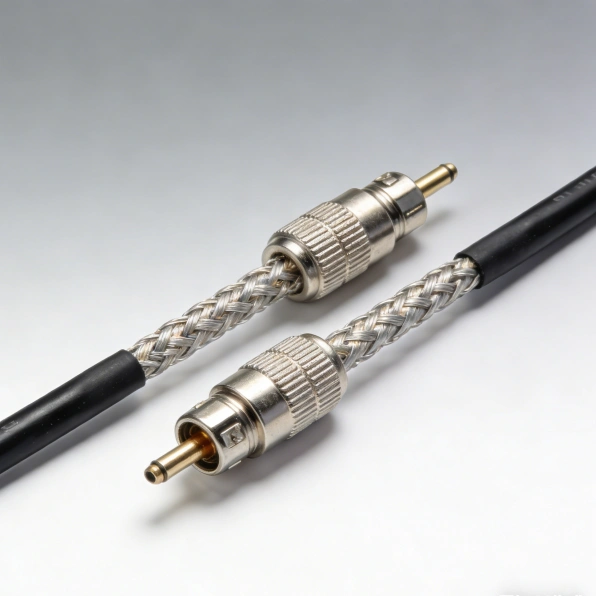
Automotive display systems—from instrument clusters to pillar‑to‑pillar 4K/8Kpanoramic displays and HUDs—depend on high‑speed, low‑loss interconnects that survive the vehicle’s harsh environment. An automotive‑grade micro coaxial cable is a miniaturized, shielded transmission line built to carry video SERDES data (and sometimes power) through tight spaces with stable 50 Ωcharacteristic impedance, robust EMI performance, and deterministic loss over temperature and flex. Unlike consumer HDMI/DP, which are bulky for automotive use, these cables are designed for the automotive ecosystem: small diameter, high density, sealed interfaces, and tolerance to vibration, temperature, and EMC. Typical SERDES families like FPD‑Link IIIand GMSLuse coax or shielded twisted‑pair (STP) to move video, control, and even power over a single cable, enabling long runs and simplified harnessing in modern cockpits.
How It Works in a Display System
A display link starts at the source SoC/TCON serializer, which encodes video and control into a high‑speed serial stream. Over a micro coax, the signal travels to the display’s deserializer (DES), which recovers the video and back‑channel data. The cable’s job is to preserve eye opening and timing: its characteristic impedance must match the driver/receiver (nominally 50 Ωfor coax), and the assembly must minimize reflections (return loss), attenuation (insertion loss), and mode conversion (differential‑to‑common‑mode). Many automotive SERDES also implement Power‑over‑Coax (PoC), where a bias tee/filter network on each end superimposes DC power on the coax while isolating it from high‑speed data using frequency‑domain separation (FDM). Typical practice places data in higher bands (e.g., tens to hundreds of MHz and up) and control/return on lower bands (a few MHz), with inductors and capacitors forming a passive filter that presents high impedance to the data path while passing DC. This reduces线束 weight and connector count while maintaining signal integrity.
Key Electrical and Mechanical Parameters
Impedance and return loss: Coax is typically 50 Ω(differential pairs are 100 Ω); connectors and the transition region can introduce small mismatches, so both cable and connector must be specified for low return loss across the operating band.
Insertion loss and usable bandwidth: Loss rises with frequency (skin effect and dielectric loss); a given cable length has a usable bandwidth before the eye degrades. As a rule of thumb from published data, a 15‑mcoax may have about 3 GHzusable bandwidth supporting data rates up to roughly 6 Gbps, while a 10‑mshielded twisted‑quad (STQ) may reach about 2.5 GHzand ~5 Gbps. Designers size the channel (cable, equalization, and protocol margin) to keep the equalizer within its linear region.
Mode conversion and symmetry: In differential links, intra‑pair skew and amplitude imbalance cause mode conversion, which degrades SNR; high‑quality assemblies keep mode conversion well below insertion loss (by 10 dB or more).
Crosstalk: In multi‑pair or multi‑coax harnesses, far‑end and near‑end crosstalk rise with frequency; connectors and routing must control coupling.
In‑line connectors and harnessing: Each mated connector adds mismatch and loss; more in‑line connectors mean more return‑loss ripple and insertion‑loss variation. Harness routing, strain relief, and retention features are critical for automotive life.
Environmental: Automotive cables and connectors must withstand wide temperature swings, vibration, and flex. Qualification includes temperature cycling and mechanical stress to ensure stable performance over the vehicle’s lifetime.
Connector and Ecosystem Options
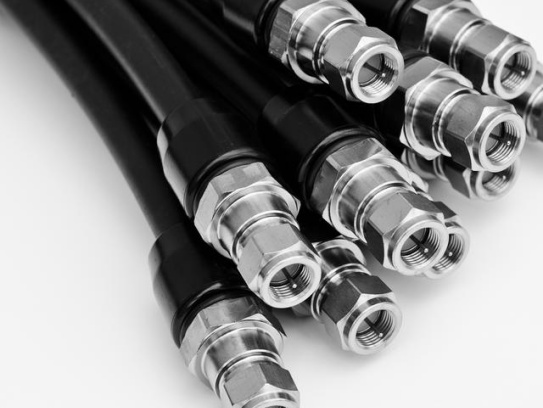
FAKRA and mini‑FAKRA (HFM): Widely used for automotive video/RF. Mini‑FAKRA (HFM) offers higher density and performance, with some solutions rated up to 20 GHzand multi‑port footprints that reduce PCB edge usage by up to 48%, suitable for high‑resolution displays and multi‑camera links.
GMSL coax ecosystem: GMSL1does not include PoC; GMSL2/GMSL3add integrated PoC, supporting data rates up to 12 Gb/sper cable for camera/display links across the vehicle.
FPD‑Link III coax: Supports single‑ended coax topologies with FAKRAconnectors for video and control; systems can run 4 Gbps and beyonddepending on cable quality, equalization, and length.
High‑speed miniature coax families: Vendor solutions such as TE’s MATE‑AXand IMS MCA/MCAHtarget ~9–20 GHzperformance in compact footprints for next‑gen displays and high‑bandwidth links.
Design note: Always impedance‑match the entire channel—cable, connector, and PCB launch—and verify return loss, insertion loss, and crosstalk jointly with the SERDES’ equalization capabilities.
Design Guidelines and Trade‑offs
Choose the right medium and topology: For very high bandwidth over longer runs, coax often wins; for dense, lower‑bandwidth links, shielded twisted‑pair (e.g., STQ/HSD) can be more economical. Match the medium to the SERDES family and target data rate.
Impedance control and connector discipline: Maintain 50 Ω(coax) end‑to‑end; minimize un‑twisting or shield removal at connectors; follow vendor layout/launch geometry to suppress return loss spikes.
Loss budgeting: Start with insertion‑loss vs. frequency data for the candidate cable, add connector loss and equalizer limits, then back‑calculate the maximum data rate and required equalization. Use the rule of thumb that a 15‑mcoax is roughly limited to ~6 Gbps, and a 10‑mSTQ to ~5 Gbps, adjusting for your specific cable and equalizer.
Symmetry and skew: Control pair geometry, length, and dielectric consistency to suppress mode conversion; measure intra‑pair skew during prototyping.
EMI and crosstalk: Use twisted‑pair or shielded quads where appropriate; separate high‑speed lanes; favor connectors with low crosstalk and robust shielding.
PoC design: Size bias inductors for the required DC current without saturating; keep the filter’s high‑frequency impedance high (e.g., >1 kΩ) to avoid loading the 50 Ωdata path; follow the SERDES’ reference filter topologies and frequency plan.
Environmental qualification: Plan for temperature cycling, vibration, and flex; qualify the complete harness, not just the raw cable.
Real‑World Examples and Data Rates
Pillar‑to‑pillar ultra‑wide displays: A 45–60‑inch, 7680 × 2160display can require roughly 28 Gbpsaggregate link bandwidth. Coax‑based SERDES (e.g., GMSL) are commonly used to carry such high data rates across instrument and display zones within the vehicle.
Typical link budgets: Coax SERDES links in the 4–12 Gbpsclass are common for in‑vehicle video; FPD‑Link III systems can exceed 4 Gbpsdepending on equalization and length.
Mini‑FAKRA/HFM for displays: High‑density, high‑frequency mini‑FAKRA systems (e.g., up to 20 GHz) are used where many high‑resolution video paths must be routed through compact, sealed connectors and PCB footprints.
Troubleshooting and Validation
Eye diagram and BER: Validate at the maximum operating temperature and minimum supply; check that the equalizer can compensate the cable’s loss slope without running out of margin.
Return loss and TDR: Use TDR to pinpoint impedance bumps at connectors, splices, or routing transitions; fix geometry or connector choice if return‑loss violations occur.
Mode conversion and skew: Measure differential‑to‑common‑mode conversion; if excessive, re‑route to equalize lengths, improve symmetry, or add common‑mode chokes at the receiver.
Crosstalk: Separate high‑speed lanes and avoid routing parallel to noisy sources; verify near‑end/far‑end crosstalk against spec at the highest frequency of interest.
PoC integrity: Check DC bias delivered to the remote module under load; verify that the bias filter does not degrade the data eye or create excessive common‑mode noise.
When to Choose Micro Coax vs. STP or Other Media
Choose micro coax when you need:
Deterministic, repeatable 50 Ωtransmission with excellent EMI control in a small diameter.
Longer runs than typical twisted‑pair at multi‑gigabit data rates.
Support for PoCin a single‑cable solution.
Sealed, robust interfaces for under‑hood or high‑vibration zones.
Choose shielded twisted‑pair (STQ/HSD) when:
You prioritize harness flexibility and density for medium‑bandwidth links.
The channel length is moderate and the SERDES/equalizer can close the link within your BOM budget.
Choose other media (e.g., Ethernet, optical) for specific cases: Ethernet for control/data aggregation, fiber for ultra‑long runs or extreme EMI environments—but video SERDES over coax remains dominant for in‑vehicle display interconnects due to maturity, cost, and integration.
The question of whether coaxial cable assemblies are resistant to water and moisture does not have a simple “yes” or “no” answer. Their resistance largely depends on design, materials, and manufacturing processes...
Define Transmission RequirementsFrequency & Bandwidth: Choose cables based on signal type and frequency range. For example:High-frequency signals (e.g., 5G, mmWave radar): Requires cables supporting 40 GHz or higher16.Digi...
Coaxial cables have played a pivotal role in the evolution of network communication systems. Among them, Thicknet (Thick coaxial cable) and Thinnet (Thin coaxial cable) were widely used in early Ethernet implementations, particularl...
In the realm of structured cable systems, patch panels serve as the critical junction points that streamline connectivity, enhance manageability, and ensure scalability. These devices act as centralized hubs, enabling the organized inte...
Intermittent signal problems in micro coaxial cable systems are the bane of engineers and technicians. One moment the signal is pristine, the next it’s dropping packets, flickering, or full of noise – only to inexplicably return t...
In the modern landscape of medical facilities, industrial testing labs, and research centers, the demand for reliable and high-performance cable management systems has never been greater. Among the critical components in these environme...
5G technology promises incredible speed, massive capacity, and ultra-low latency. To deliver on this promise, especially for mid-band and crucially for high-band (millimeter wave or mmWave) frequencies, network operators are deploying v...
Coaxial cable assemblies are widely used in signal transmission systems, such as TV antennas, satellite receivers, and communication equipment. A damaged connector can cause signal loss, interference, or even complete transmission failu...
Coaxial cable is a fundamental component for transmitting high-frequency electrical signals with minimal interference. It consists of four layers sharing a common axis: a center conductor, a dielectric insulator, a metallic shield, and ...
Medical imaging devices like MRI scanners, ultrasound machines, CT scanners, and endoscopic cameras are the eyes and ears of modern medicine. They capture incredibly detailed information about the human body, often relying on faint elec...
Introduction:That dreaded moment: you notice interference in your video signal, crackling in your audio, or a complete drop in your network connection. Upon inspection, you find a nick, tear, or exposed wire in the outer shielding of yo...
Choosing the perfect micro coaxial cable can feel overwhelming with so many options available. But fear not! Selecting the right one is crucial for ensuring your electronic devices or systems perform reliably. This guide breaks down the...
The maximum transmission distance of micro coaxial cables depends on factors such as cable specifications, signal types, and environmental conditions. Below is a structured analysis based on industry data and testing results:
...
Coaxial cable assemblies are the “nerve system” of audio/video (AV) equipment—they directly determine signal integrity, which in turn impacts picture clarity (e.g., avoiding ghosting or pixelation) and sound fidelity (e.g., ...
The race towards practical quantum computing hinges on overcoming immense technical hurdles. Among the most critical is the challenge of reliably controlling and measuring fragile quantum bits (qubits), the fundamental units of quantum ...
Micro coaxial cables are the tiny workhorses connecting high-speed data in devices like cameras, drones, medical equipment, and sophisticated electronics. While they seem fragile, proper storage significantly extends their lifespan, sav...
Key Specifications of Coaxial CablesUnderstanding the technical specifications of coaxial cables ensures optimal performance for your application. Here are the critical parameters:
Impedance
50 Ohm: Ideal for high-power trans...
Underwater robotics, encompassing Remotely Operated Vehicles (ROVs), Autonomous Underwater Vehicles (AUVs), and other subsea systems, rely heavily on transmitting critical data and power. Whether it’s high-definition video from a ...
Medical devices are critical tools where performance, reliability, and patient safety are non-negotiable. As these devices become increasingly sophisticated, smaller, and more portable, the components within them must keep pace. Micro c...
In the era of smart mobility, precision agriculture, and advanced aerospace systems, satellite navigation has become the backbone of countless critical applications. From guiding commercial aircraft to optimizing farm machinery routes, ...
In the realm of modern connectivity, long-distance cable runs are a fundamental aspect of various industries, from telecommunications and networking to audio-visual setups. However, as signals travel over extended cable lengths, they en...
Why Recycling Matters Now
As global e-waste reaches record levels, the telecom and electronics industries are prioritizing micro-coaxial cable recycling. These thin, high-frequency cables (used in 5G networks, medical devices, and ae...
For those in the market for coaxial cables, the warranty period is undoubtedly a crucial factor. It serves as a direct guarantee for your post-purchase rights and interests, providing a safety net when unexpected issues arise with the p...
The global rollout of 5G technology has ushered in a new era of connectivity, demanding unprecedented levels of speed, latency reduction, and network flexibility. At the core of this transformation lies the 5G cloud Radio Access Network...
Microwave links play a pivotal role in modern communication systems, enabling high-speed data transmission across long distances without the need for physical fiber-optic cables or terrestrial wiring. From telecommunications networks an...
Introduction
Micro-coaxial cables have become the backbone of modern high-frequency signal transmission, from medical devices to 5G networks. Since 2000, shielding techniques have undergone revolutionary changes to meet escalating de...
With the continuous advancement of communication technology, the application scenarios of coaxial cables are becoming more and more extensive, and higher requirements are put forward for their installation quality. In response to the ne...
In industries ranging from power transmission to telecommunications, coaxial cables are often exposed to high – voltage environments. A passed high – voltage resistance test is not just a routine certification; it is a criti...
For enterprises that rely heavily on coaxial cables, prolonged delivery time can bring about a series of troubles, such as delayed projects and increased costs. However, the recent logistics reform has brought good news to the industry,...
In the world of broadcasting, nothing frustrates listeners or viewers more than a distorted signal. Interference can ruin the entire experience, whether it’s static on a radio, pixelation on a TV, or dropped audio in a live stream. Achi...
In advanced medical devices, from high-frequency ultrasound probes to surgical robots, a single compromised signal can impact diagnostic accuracy or procedural safety. This is why leading OEMs prioritize micro coax cable for medical dev...
In high-resolution camera modules, displays, and embedded vision systems, the MIPI (Mobile Industry Processor Interface) has become the de facto standard for camera (CSI-2) and display (DSI) interconnects. As resolutions, frame rates, a...
In high-resolution camera modules, where every 0.01 mm counts, the choice of interconnect is critical. The AWG42 micro coaxial cableis a proven solution for transmitting high-frequency video and control signals in ultra-compact spaces. ...
In the era of miniaturized electronics and high-frequency communication, the demand for efficient signal transmission in confined spaces has reached unprecedented heights. Whether you are designing the next-generation 5G antenna module,...
Neural recording technology has revolutionized our understanding of the brain’s complex functions, enabling breakthroughs in neuroscience research, clinical diagnostics, and neuroprosthetics. At the heart of this technology lies a criti...
In the dynamic world of stadiums and arenas, where thousands gather to cheer for their favorite teams or enjoy live performances, a seamless audio-visual (AV) experience is non-negotiable. From giant video screens displaying instant rep...
In the field of electronic measurement, where precision and signal integrity are paramount, micro-coaxial cables have emerged as a critical component. Unlike standard coaxial cables, these miniature versions are engineered to deliver ex...
What Defines a Coaxial Cable?A coaxial cable (“coax”) has a concentric layered design that ensures signal integrity:
Central Conductor: A solid or stranded copper core for signal transmission.Dielectric Insulator: Surrounds th...
When sourcing a 0.3mm diameter micro coaxial cable supplier, the right partner can significantly impact your product’s signal integrity, reliability, and time-to-market. This guide provides a practical roadmap for B2B buyers, cove...
1. Introduction to Micro-Coaxial Cables
1.1 What Are Micro-Coaxial Cables?
Micro-coaxial cables are compact, high-frequency transmission lines designed for precision signal delivery in space-constrained environments. Comprising a ...
Meta Description: Discover the advanced features and benefits of Industrial Micro-Coaxial Wiring—engineered for precision, durability, and high-speed signal transmission in industrial environments.
What is Industrial Micro-Co.
IntroductionIn today’s fast-paced digital world, reliable and high-speed data transmission is critical for industries ranging from telecommunications to aerospace. Enter High-Speed Data Micro-Coax—a cutting-edge miniature coaxial cable e.
Contact Us Micro Coaxial Cable factory-(FRS).
Feel free to reach out to us for any inquiries or orders