How to choose the right micro coaxial cable for your application - Micro Coaxial Cable factory-(FRS)
Micro Coaxial Cable factory-(FRS)
INFO
Choosing the perfect micro coaxial cable can feel overwhelming with so many options available. But fear not! Selecting the right one is crucial for ensuring your electronic devices or systems perform reliably. This guide breaks down the key factors in simple terms, helping you make an informed decision tailored to your specific needs.
1. Frequency is King: Match Your Signal Speed
Why it matters: Micro coax cables are designed to carry signals efficiently at specific frequency ranges. Using a cable rated for lower frequencies than your signal requires leads to significant signal loss (attenuation) and distortion.
Action: Identify the highest frequency your application will transmit. Look for cables where the specified frequency range comfortably exceeds your maximum operating frequency. Don’t just match it – give yourself some headroom (e.g., 20-30% higher).
2. Impedance: The Crucial Matchmaker
Why it matters: Impedance is like the cable’s electrical “resistance” to the signal flow. For maximum power transfer and minimal signal reflections (which cause distortion), the cable’s impedance must match the impedance of both the source device (transmitter) and the destination device (receiver).
Action: Determine the required impedance. The two most common standards are:
50 Ohms: Widely used in data communications, RF, test equipment, and wireless systems (like WiFi, cellular).
75 Ohms: Standard for video signals (like CCTV, HDTV, SDI), cable TV (CATV), and satellite TV.
Check your device specifications to confirm the required impedance. Never mix 50 Ohm and 75 Ohm components/cables without specific impedance-matching adapters (which add loss and complexity).
3. Signal Loss (Attenuation): Keep Your Signal Strong
Why it matters: All cables lose signal strength over distance and at higher frequencies. This loss is measured in decibels per unit length (dB/m or dB/100ft). Excessive loss means your signal might be too weak at the receiver end, causing errors or failure.
Action:
Know your acceptable loss budget. Consider the sensitivity of your receiver and the minimum signal strength it needs.
Check attenuation specs: Look at the cable’s attenuation rating at your operating frequency. Lower dB values are better.
Consider length: Loss accumulates with distance. For longer runs, you’ll need a cable with inherently lower attenuation. Sometimes a slightly thicker cable (though less flexible) offers significantly lower loss.
4. Shielding: Your Defense Against Interference
Why it matters: Electronic noise from motors, power lines, radio transmitters, and other cables can interfere with your signal. Good shielding acts like armor, protecting the delicate inner signal conductor.
Action: Evaluate the electromagnetic interference (EMI) and radio frequency interference (RFI) levels in your environment.
High-Noise Environments (Industrial, Automotive, Medical): Opt for cables with robust shielding, such as double or triple shielding (e.g., foil + braid combinations). Look for high shielding effectiveness (dB) ratings.
Low-Noise Environments (Consumer Electronics, Short Runs): Single-layer shielding (foil or braid) might suffice, offering a good balance of protection and flexibility/cost.
5. Size and Flexibility: Fit and Function
Why it matters: Micro coax is prized for its small size, but you need the right diameter and bendability for your application.
Size (Diameter): Needs to fit within connectors, enclosures, and cable pathways. Common micro coax diameters range from around 0.8mm to 2mm or slightly larger.
Flexibility: Critical for applications involving movement (robotic arms, hinges, wearable tech) or tight bends in confined spaces.
Action:
Measure: Know the space constraints and minimum bend radius required.
Flex Needs: For dynamic flexing (constant movement), choose cables specifically designed and tested for high flex cycles. For static or minimal bending applications, standard flexibility might be okay. Thinner cables are generally more flexible but may have higher loss or less shielding.
6. Connectors: The Essential Link
Why it matters: The cable is useless without the right connectors to plug into your devices. Connectors must match the cable’s impedance and be compatible with the ports on your equipment.
Action:
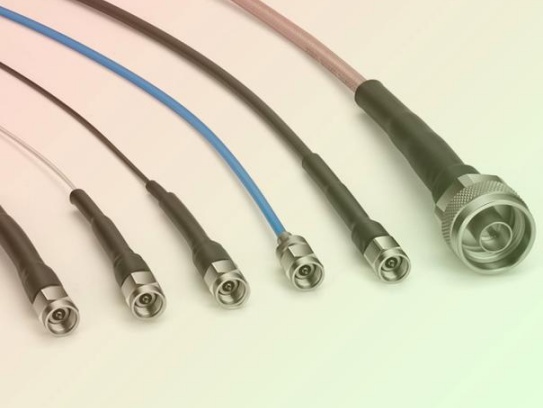
Identify: Know the exact connector type required on both ends (e.g., SMA, MCX, MMCX, SMP, U.FL/IPEX, Hirose U.FL). Pay attention to gender (plug or jack) and configuration (straight, right-angle).
Termination: Ensure the cable is terminated with the correct connectors. You can buy pre-terminated cables or purchase cable and connectors separately for custom assembly (requires specialized tools and skills).
7. Environmental Factors: Where Will It Live?
Why it matters: The operating environment significantly impacts cable choice.
Action: Consider:
Temperature Range: Will the cable be exposed to extreme heat (near engines) or cold (outdoor equipment)? Choose a cable rated for your temperature extremes.
Chemicals/Oils: In automotive, industrial, or medical settings, resistance to fluids might be critical. Look for specific jacketing materials (e.g., specialized PVC, Teflon).
Abrasion/Mechanical Stress: Will the cable rub against surfaces or be subject to crushing? Choose a cable with a tough outer jacket.
UV Exposure (Outdoors): Standard PVC jackets degrade in sunlight. Use cables with UV-resistant jackets (often identifiable by a black color).
Putting It All Together: Your Selection Checklist
Frequency: Max operating frequency? Choose cable rated higher.
Impedance: 50 Ohm or 75 Ohm? Match your devices!
Loss: Acceptable loss at your frequency? Consider cable length.
Consult Datasheets: Always refer to the manufacturer’s detailed specifications for the specific cable model.
Request Samples: If possible, get samples to test fit, flexibility, and performance in your actual application before committing to a large order.
Consider the Source: Choose reputable manufacturers and suppliers known for quality and consistency. Good technical support is invaluable.
Cost vs. Performance: Balance your performance requirements with budget constraints. Don’t over-spec, but never compromise on critical parameters like impedance matching or sufficient shielding for your environment.
By systematically evaluating these factors against your application’s specific demands, you’ll be well-equipped to select the optimal micro coaxial cable, ensuring reliable signal transmission and the success of your project.
In the world of signal transmission, the Signal-to-Noise Ratio (SNR) of coaxial cable assemblies is a critical metric that directly determines the clarity, reliability, and performance of data or radio frequency (RF) signals. Simply put...
The underground mining environment is one of the harshest on Earth, where communication systems are subjected to extreme conditions that test the limits of engineering. From relentless moisture and corrosive dust to sudden temperature f...
In the world of modern connectivity, coaxial cables play a crucial role in transmitting audio, video, and data signals. Whether it’s for your home entertainment system, internet connection, or security cameras, a damaged coaxial c...
Coaxial cable assemblies are essential components in various industries, from telecommunications and aerospace to medical equipment and consumer electronics. When purchasing them online, comparing prices is a crucial step to ensure you ...
In the fast-paced world of telecommunications, where network stability, bandwidth capacity, and signal integrity directly impact user experience and business operations, leading telecom companies are increasingly selective about their i...
Key Differences Between Flexible and Rigid Micro Coax CablesParameter Flexible Micro Coax Rigid Micro CoaxBend Radius 5–10x cable diameter (e.g., 5 mm for 1 mm cable) Fixed shape; no bendingAttenuation Slightly higher due to...
In the complex web of modern electronics and communication systems, signal integrity is the backbone of reliable performance. From the data centers powering global networks to the medical devices monitoring vital signs, and from aerospa...
In the vast expanse of modern satellite communications, where signals need to traverse incredible distances with utmost precision, micro – coaxial cables have emerged as a crucial component. These cables, smaller in diameter compa...
In the realm of signal transmission, shielded coaxial cable assemblies stand out as a reliable and high-performance solution across various industries. Unlike unshielded alternatives, these assemblies integrate a protective shielding la...
The maximum transmission distance of micro coaxial cables depends on factors such as cable specifications, signal types, and environmental conditions. Below is a structured analysis based on industry data and testing results:
...
In the highly competitive coaxial cable market, after – sales service has gradually become a key factor for enterprises to gain an advantage. However, the traditional after – sales service system has exposed many shortcoming...
IntroductionMicro-coaxial cables are widely used for high-frequency signal transmission due to their compact size and shielding capabilities. However, interference remains a persistent challenge, leading to data corruption, latency, an...
Micro-coaxial cables (micro-coax) – those thin, often less than 3mm diameter cables – are the unsung heroes powering critical video, RF, and data signals in drones, cameras, medical devices, and countless electronics. But their delicate...
Micro coaxial cables – the tiny heroes powering high-speed signals in our electronics – are constantly evolving. As devices become more compact, powerful, and connected, these essential interconnects face new demands. Let’s explor...
As data centers push toward 400G/800G and even 1.6T interconnects, traditional PCB traces and bulky coax are no longer sufficient. Signal integrity micro coaxial cable assemblies have emerged as a critical enabler for maintaining perfor...
Working with micro coaxial cables (common in electronics, drones, cameras, medical devices, and communications) requires precision tools due to their tiny size and delicate construction. Using the wrong tools can easily damage the cable...
In the field of microwave testing, the performance of transmission components directly determines the accuracy and reliability of test results. Among these components, micro-coaxial cables stand out as a critical link, playing an irrepl...
Coaxial cable assemblies are critical components in RF (Radio Frequency) communication systems, including wireless base stations, satellite terminals, radar systems, test equipment, and industrial IoT devices. Their performance directly...
In industrial settings, data centers, and even residential electrical systems, managing a network of cables can quickly become a tangled challenge. Without clear identification, tracing a specific cable, troubleshooting issues, or perfo...
Medical imaging devices like MRI scanners, ultrasound machines, CT scanners, and endoscopic cameras are the eyes and ears of modern medicine. They capture incredibly detailed information about the human body, often relying on faint elec...
Micro-coaxial cables, the unsung heroes of our hyper-connected world, are vital for transmitting high-frequency signals in smartphones, medical devices, aerospace systems, and countless other advanced technologies. While their performan...
The Challenge with Traditional Micro-Coaxial Connectors
Micro-coaxial cables (often called “micro-coax”) are essential for high-frequency signal transmission in electronics, medical devices, and telecommunications. Howeve...
In high-density electronic devices, a custom micro coaxial wire harnessis often the critical link for high-speed, high-frequency signal transmission. Its reliability directly impacts equipment performance and lifespan. This article prov...
In the complex and high-stakes world of military operations, precision targeting is a cornerstone of mission success. Whether it’s a sniper engaging a distant threat, a drone identifying a strategic objective, or an armored vehicle lock...
Forget bulky cables and signal dropouts. If you’re navigating the rapidly evolving landscape of factory automation – deploying robotics, vision systems, or complex sensor networks – you’ve likely encountered the critica...
Hypersonic vehicles – flying faster than Mach 5, blistering through the atmosphere – represent the cutting edge of aerospace technology. But behind the sleek exteriors and powerful engines lies a critical, often overlooked challenge: re...
With the continuous advancement of communication technology, the application scenarios of coaxial cables are becoming more and more extensive, and higher requirements are put forward for their installation quality. In response to the ne...
In the era of angstrom-scale semiconductors and exploding data demands, SerDes (Serializer/Deserializer) technology stands as the backbone of high-speed connectivity for enterprise computing, AI, HPC, and hyperscale data centers. As ind...
In the realm of modern communication and electronic systems, coaxial cables stand as vital components, facilitating the transmission of signals in various applications such as television, internet, and radio. However, these cables are h...
Bend Radius Challenges in 5G/6G InfrastructureA. Massive MIMO AntennasModern 5G base stations use 64–256 antenna elements to enable beamforming. Micro-coaxial cables route signals between transceivers and radiating elements, but ti...
In today’s digital age, a stable and high-quality network connection is essential for both daily life and work. Coaxial cables, with their excellent signal transmission performance and anti-interference capabilities, remain a popular ch...
Introduction: The Unseen Backbone of Ultra-High Definition
As we transition from the crisp clarity of 4K to the immersive hyper-realism of 8K, the engineering challenges behind the screen become exponentially complex. We often focus ...
In the world of high-speed connectivity, the demand for smaller, faster, and more reliable components is relentless. As devices shrink and frequencies climb, the standard coaxial cable often becomes a bottleneck. This is where the Custo...
In the ever-evolving landscape of radar technology, every component plays a pivotal role in determining the system’s efficiency, accuracy, and range. Among these components, coaxial cables stand out as a linchpin for seamless oper...
In modern technology, micro coaxial cables are vital for seamless data transmission and signal integrity. With their concentric design, they handle high-frequency signals with low loss and interference. As tech advances, their demand su...
Ever experienced frustrating video lag during an important video call? Watched pixelation ruin a live sports stream? Or encountered mysterious errors in high-tech medical equipment? Often, the unseen culprit lies in the cables strugglin...
We are thrilled to announce that our factory’s coaxial cable has been shortlisted for the Top 10 Products in the industry. This recognition is a testament to our commitment to quality, innovation, and meeting the diverse needs of ...
In the ever-evolving landscape of modern communication, coaxial cable stands as an indispensable pillar, facilitating the seamless transmission of signals across a vast array of applications. From television broadcasting to high-speed i...
OverviewMicro-Coax for HD Video is a cutting-edge coaxial cable engineered to deliver uncompromised high-definition video quality across professional and industrial applications. Designed for reliability, precision, and versatility,.
H1: Precision Instrument Micro-Coax – Engineered for Critical Signal Integrity
Meta Description: Discover Precision Instrument Micro-Coax: Miniature coaxial cable solution optimized for high-frequency signal transmissio.
Contact Us Micro Coaxial Cable factory-(FRS).
Feel free to reach out to us for any inquiries or orders