
Micro Coaxial Cable factory-(FRS)

50Ω Coaxial Cables - Micro Coaxial Cable factory-(FRS)

Micro Coaxial Cable factory-(FRS)

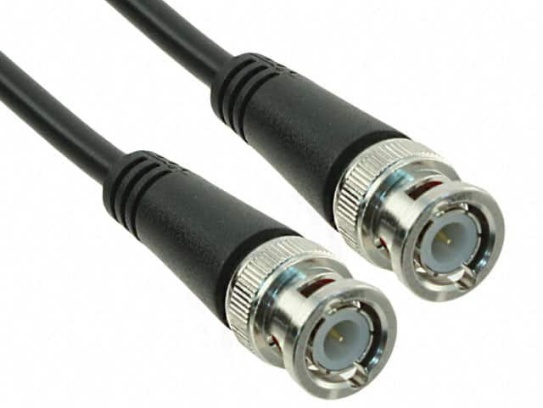
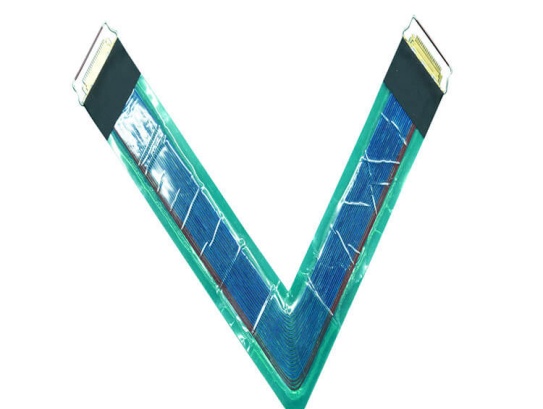
Micro coaxial cable Tag: 50Ω Coaxial Cables

Understanding Coaxial Cable Impedance and Its Importance

In the world of electronics and telecommunications, coaxial cables play a pivotal role in transmitting signals. One of the most crucial aspects of coaxial cables is their impedance. Understanding coaxial cable impedance is essential for ensuring optimal signal transmission, minimizing signal loss, and preventing interference. This article will delve deep into the concept of coaxial cable impedance, its importance, and how it impacts various applications.

What is Coaxial Cable Impedance?

Coaxial cable impedance, also known as characteristic impedance, is the resistance that a coaxial cable presents to an electrical signal. It is a measure of the opposition that the cable offers to the flow of current. The impedance of a coaxial cable is determined by its physical characteristics, such as the diameter of the inner conductor, the diameter of the outer conductor, and the dielectric constant of the insulating material between the two conductors.

Mathematically, the characteristic impedance (Z0) of a coaxial cable can be calculated using the following formula:\( Z_0 = \frac{138}{\sqrt{\epsilon_r}} \log_{10}(\frac{D}{d}) \)

where:

  • \( \epsilon_r \) is the relative permittivity (dielectric constant) of the insulating material
  • \( D \) is the inner diameter of the outer conductor
  • \( d \) is the diameter of the inner conductor

The impedance of a coaxial cable is typically expressed in ohms (Ω). The two most common impedance values for coaxial cables are 50Ω and 75Ω, although other values are also available for specific applications.

Importance of Coaxial Cable Impedance

1. Signal Transmission Efficiency

The impedance of a coaxial cable plays a crucial role in determining the efficiency of signal transmission. When a signal is transmitted through a coaxial cable, it encounters resistance due to the impedance of the cable. If the impedance of the cable is not properly matched to the impedance of the source and the load, a portion of the signal will be reflected back towards the source, resulting in signal loss and reduced transmission efficiency.

To ensure maximum power transfer and minimize signal reflection, it is essential to match the impedance of the coaxial cable to the impedance of the source and the load. This is known as impedance matching. In most cases, the source and the load are designed to have an impedance of 50Ω or 75Ω, which corresponds to the standard impedance values of coaxial cables. By using a coaxial cable with the appropriate impedance, the signal can be transmitted with minimal loss, ensuring clear and reliable communication.

2. Minimizing Interference

Another important aspect of coaxial cable impedance is its ability to minimize interference. Coaxial cables are designed to shield the signal from external electromagnetic interference (EMI) and radio frequency interference (RFI). The outer conductor of the coaxial cable acts as a shield, preventing external signals from entering the cable and interfering with the transmitted signal.

However, if the impedance of the coaxial cable is not properly matched, it can create an imbalance in the shielding, allowing external interference to penetrate the cable and disrupt the signal. By ensuring that the impedance of the coaxial cable is correctly matched, the shielding effectiveness can be maximized, reducing the risk of interference and improving the overall signal quality.

3. Compatibility with Equipment

Coaxial cable impedance is also important for ensuring compatibility with various electronic devices and equipment. Most electronic devices, such as televisions, antennas, and cable modems, are designed to work with coaxial cables that have a specific impedance. Using a coaxial cable with the wrong impedance can result in poor signal quality, loss of functionality, or even damage to the equipment.

For example, in a cable television system, the coaxial cable connecting the cable box to the television must have an impedance of 75Ω. If a 50Ω coaxial cable is used instead, the signal quality may be degraded, resulting in a fuzzy picture or poor sound. Similarly, in a radio frequency (RF) communication system, the coaxial cable connecting the transmitter to the antenna must have an impedance of 50Ω to ensure efficient power transfer and optimal signal transmission.

Types of Coaxial Cable Impedance

1. 50Ω Coaxial Cables

50Ω coaxial cables are the most commonly used type of coaxial cable in RF and microwave applications. They are designed to provide a good balance between power handling capacity and signal attenuation. 50Ω coaxial cables are typically used in applications where high power levels are involved, such as in transmitters, antennas, and RF test equipment.

The 50Ω impedance standard was developed based on a compromise between two important factors: minimizing signal attenuation and maximizing power handling capacity. At 50Ω, coaxial cables can handle relatively high power levels without significant signal loss, making them suitable for a wide range of applications.

2. 75Ω Coaxial Cables

75Ω coaxial cables are primarily used in video and audio applications, such as cable television, satellite television, and audio/video interconnects. They are designed to provide low signal attenuation and good impedance matching for these types of applications.

The 75Ω impedance standard was developed specifically for video applications, where the goal is to transmit high-quality video signals with minimal distortion. 75Ω coaxial cables are able to achieve this by having a lower impedance, which helps to reduce signal reflections and improve the overall signal quality.

3. Other Impedance Values

In addition to 50Ω and 75Ω, coaxial cables are also available in other impedance values for specific applications. For example, 93Ω coaxial cables are commonly used in Ethernet networking applications, where they provide a good balance between signal integrity and cable length.

Other impedance values, such as 25Ω, 100Ω, and 125Ω, are also available for specialized applications, such as in military and aerospace systems, where unique requirements may dictate the use of non-standard impedance coaxial cables.

Measuring Coaxial Cable Impedance

Measuring the impedance of a coaxial cable is an important step in ensuring its proper performance. There are several methods that can be used to measure coaxial cable impedance, including:

1. Time Domain Reflectometry (TDR)

Time Domain Reflectometry (TDR) is a widely used technique for measuring the impedance of coaxial cables. TDR works by sending a short electrical pulse down the cable and measuring the time it takes for the pulse to reflect back from any impedance discontinuities in the cable.

By analyzing the shape and amplitude of the reflected pulse, the TDR can determine the location and magnitude of any impedance mismatches in the cable. This information can then be used to identify and correct any problems with the cable, such as damaged connectors or improper cable termination.

2. Vector Network Analyzer (VNA)

A Vector Network Analyzer (VNA) is another powerful tool for measuring the impedance of coaxial cables. A VNA is a sophisticated instrument that can measure the complex impedance of a device over a wide range of frequencies.

To measure the impedance of a coaxial cable using a VNA, the cable is connected to the VNA’s test ports, and the VNA sends a series of test signals down the cable. The VNA then measures the reflection and transmission of the signals at the cable’s input and output ports, respectively. By analyzing these measurements, the VNA can calculate the complex impedance of the cable at each frequency.

3. Impedance Bridge

An impedance bridge is a simple and inexpensive device that can be used to measure the impedance of a coaxial cable. An impedance bridge works by comparing the impedance of the cable to a known reference impedance.

To measure the impedance of a coaxial cable using an impedance bridge, the cable is connected to one side of the bridge, and a known reference impedance is connected to the other side. The bridge then balances the two impedances by adjusting a variable resistor or capacitor. By measuring the value of the variable component, the impedance of the cable can be determined.

Conclusion

In conclusion, coaxial cable impedance is a critical parameter that plays a crucial role in ensuring optimal signal transmission, minimizing interference, and ensuring compatibility with various electronic devices. Understanding the concept of coaxial cable impedance, its importance, and how to measure it is essential for anyone working with coaxial cables in the fields of electronics, telecommunications, and RF engineering.

By using coaxial cables with the appropriate impedance and ensuring proper impedance matching, signal transmission efficiency can be maximized, interference can be minimized, and the overall performance of the system can be improved. Whether you are designing a cable television system, a wireless communication network, or a RF test setup, paying attention to coaxial cable impedance is key to achieving reliable and high-quality signal transmission.

In advanced medical devices, from high-frequency ultrasound probes to surgical robots, a single compromised signal can impact diagnostic accuracy or procedural safety. This is why leading OEMs prioritize micro coax cable for medical devices | FDA approvedsolutions that combine compact design, biocompatibility, and EMI shielding for uncompromised reliability. This article explores the engineering, regulatory, and application layers of these cables, providing the in-depth detail that experienced engineers and sourcing professionals seek. What is a Micro Coax Cable? A micro coax cable is an.

Read more →

If you’re setting up a satellite dish, having the right wiring kit can make all the difference. A satellite dish wiring kit with premium cables isn’t just an add-on—it’s a key part of ensuring reliable signal, clear reception, and long-term performance. Let’s break down why these kits matter, what they include, and how to choose the best one for your needs. Why Premium Cables Matter in Satellite Wiring Satellite signals are delicate. Weak or interference-prone cables can lead to pixelated TV, dropped channels, or slow internet (if you’re using satellite for data). Premium cables solve these issu.

Read more →

The insatiable demand for bandwidth – driven by 4K/8K streaming, cloud gaming, smart homes, and the proliferation of connected devices – pushes network operators to constantly innovate. While pure Fiber-to-the-Home (FTTH) often grabs headlines, a powerful and pragmatic alternative is gaining significant traction: ​Hybrid Fiber/Micro-Coaxial (HFC Evolution) solutions. This blend leverages the best of optical fiber and advanced coaxial cable technology, often termed ​Fiber Deep Architectures, delivering next-generation broadband speeds and capabilities faster and more cost-effectively than a full fiber .

Read more →

In high-speed, high-density electronic devices, the quality of interconnection often determines the final performance. Micro coaxial cable bulk supplyis no longer just a commodity; it is a critical factor for ensuring stable signal transmission, EMI resistance, and design flexibility. As a professional micro coaxial cable manufacturer, we provide factory-direct micro coaxial cable bulk orderswith high quality and competitive pricing, along with full customization for length, impedance, and shielding to meet your specific application needs. Why Source Micro Coaxial Cable in Bulk from a Factory?.

Read more →

Neural recording technology has revolutionized our understanding of the brain’s complex functions, enabling breakthroughs in neuroscience research, clinical diagnostics, and neuroprosthetics. At the heart of this technology lies a critical component: micro-coaxial cables. Unlike conventional cables, these ultra-miniature transmission lines are engineered to meet the unique demands of neural interfaces—delivering high-fidelity signal transmission, biocompatibility, and mechanical flexibility in constrained biological environments. The Unique Demands of Neural Recording on Micro-Coaxial Cables Neu.

Read more →

In the realm of utility infrastructure, underground direct burial cables stand as a critical component, offering a reliable and space-efficient alternative to overhead lines. Designed to withstand harsh environmental conditions while delivering consistent power or data transmission, these cables require careful planning, selection, and implementation to ensure long-term performance. This article explores key considerations and practical solutions for utilities leveraging underground direct burial cable systems. Design Considerations for Optimal Performance The success of a direct burial cable sy.

Read more →

Can't find what you're looking for?

Our customer support team is ready to assist you with any questions or concerns.

Search FAQs

Popular Tags

More Products

Our factory offers high-quality products at competitive prices

High-Speed Data Micro-Coax

High-Speed Data Micro-Coax

IntroductionIn today’s fast-paced digital world, reliable and high-speed data transmission is critical for industries ranging from telecommunications to aerospace. Enter ​High-Speed Data Micro-Coax—a cutting-edge miniature coaxial cable e.

High-Temperature Resistant Micro-Coaxial Cable

High-Temperature Resistant Micro-Coaxial Cable

IntroductionThe ​High-Temperature Resistant Micro-Coaxial Cable is a cutting-edge connectivity solution engineered to deliver exceptional performance in extreme thermal environments. Combining precision engineering with advanced mate.

Contact Us Micro Coaxial Cable factory-(FRS).


Feel free to reach out to us for any inquiries or orders

Call Us

Have a question? Give us a call!

+8618818785005

Email Us

Send us an email and we'll get back to you soon.

sales@custom-cable-assemblies.com
       
Home Products Contact