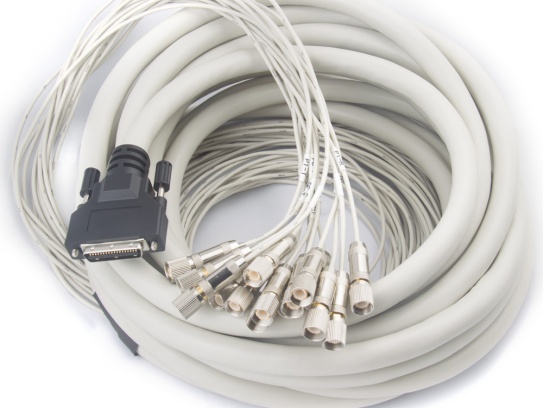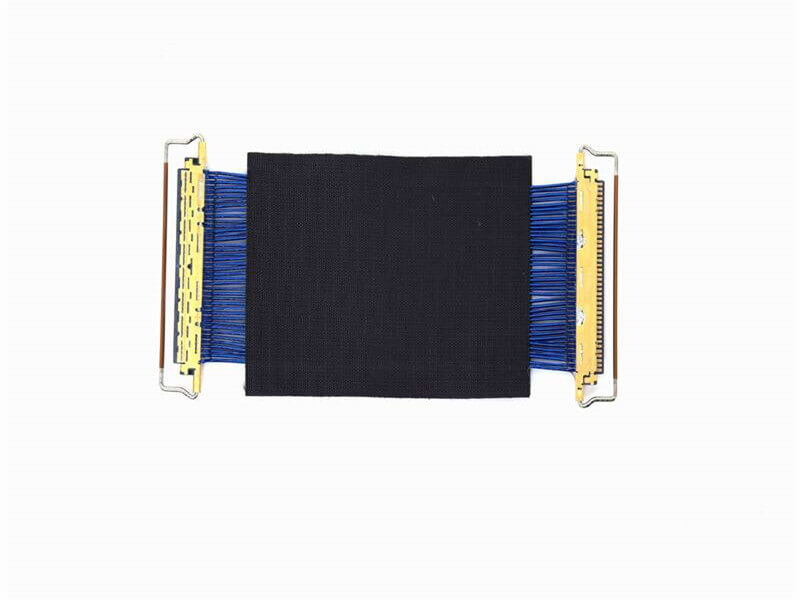

Micro Coaxial Cable factory-(FRS)

5G/6G & Telecommunications - Micro Coaxial Cable factory-(FRS)

Micro Coaxial Cable factory-(FRS)

Micro coaxial cable Tag: 5G/6G & Telecommunications

What Are the Latest Innovations in Micro Coaxial Cable Technology?

Micro coaxial cables, those incredibly thin cables thinner than a human hair in many cases, are the unsung heroes enabling the high-speed, compact electronics we rely on daily. From 5G smartphones and advanced medical imaging to military drones and next-gen automotive sensors, pushing the limits requires constant innovation in this crucial technology. Here’s a look at the most exciting recent advancements:

  1. Squeezing Even Smaller: Ultra-Micro Designs (<= 0.40mm Outer Diameter):
    • The Innovation: Pushing beyond the common 0.81mm and 0.50mm diameters, leading manufacturers now offer ultra-micro coax reaching diameters of ​0.40mm, 0.32mm, and even below 0.25mm.
    • The Value: This extreme miniaturization is vital for increasingly dense circuit boards and tiny devices like wearable medical sensors, minimally invasive surgical tools, micro-drones, and micro-cameras, freeing up critical space without sacrificing signal integrity.
  2. Boosting Bandwidth for Blazing Speeds:
    • The Innovation: Refinements in dielectric materials (the insulation around the center conductor) and conductor design are enabling significantly ​higher operational frequencies, often exceeding 50 GHz and even reaching 70 GHz+. This translates directly to enormous data transfer rates suitable for uncompressed video, high-resolution sensors, and beyond-5G applications.
    • The Value: Supports the massive bandwidth demands of emerging tech like autonomous vehicles (lidar/radar sensors), 6G communications infrastructure, high-definition endoscopes, and ultra-high-resolution AR/VR headsets. More data can flow reliably through these tiny cables.
  3. Taming Signal Loss: Advanced Dielectrics & Shielding:
    • The Innovation: Development of new ​ultra-low-loss dielectric materials (e.g., enhanced fluoropolymers, optimized foams) minimizes attenuation (signal degradation) at high frequencies. Simultaneously, improved ​shielding effectiveness using multi-layer or novel braiding/foil combinations combats electromagnetic interference (EMI) in noisy environments.
    • The Value: Ensures signals remain strong, clear, and free from external noise over longer distances or in complex systems. Critical for reliable performance in medical diagnostics equipment (MRI), aerospace/defense electronics, and densely packed data centers.
  4. Precision Engineering: Extreme Stability & Phase Matching:
    • The Innovation: Achieving unprecedented levels of ​phase stability (consistency in signal timing) and ​skew matching (ensuring signals traveling down paired cables arrive at exactly the same time) over varying temperatures and flexing conditions.
    • The Value: Essential for the accuracy of phased-array radar systems, high-resolution digital imaging sensors, ultra-high-speed differential signaling in test & measurement equipment, and satellite communications where timing precision is non-negotiable.
  5. Built Tougher: Enhanced Durability & Flexibility:
    • The Innovation: Use of stronger yet still highly flexible outer jackets and specialized conductor coatings designed to withstand ​extreme temperatures, chemicals, repeated flexing, and vibrations. Improvements in cable termination methods also enhance robustness at connection points.
    • The Value: Increases reliability in harsh environments like automotive under-the-hood applications, industrial robotics, downhole drilling equipment, and military field deployments. Cables last longer and perform consistently despite demanding conditions.
  6. Faster Assembly & Integration: Optimized Termination Solutions:
    • The Innovation: Development of new connector designs, solder-less connection methods, and automated stripping/crimping processes specifically tailored for handling ultra-fine micro coax. This reduces complexity and cost while improving yield in high-volume manufacturing.
    • The Value: Speeds up production of devices using these cables, making advanced medical probes, complex camera assemblies, and sophisticated aerospace systems more feasible and cost-effective to produce.

Where These Innovations Matter Most:

  • Medical Technology: Enabling smaller, higher-resolution endoscopes, catheters, implants, and diagnostic probes.
  • 5G/6G & Telecommunications: Packing more antennas into compact base stations, beamforming modules, and backhaul connections requiring massive bandwidth in small spaces.
  • Automotive & Autonomous Driving: Connecting high-resolution cameras, complex radar/lidar sensors, and infotainment systems within constrained vehicle spaces.
  • Aerospace & Defense: Essential for compact avionics, UAVs (drones), surveillance systems, and satellite payloads demanding reliability, light weight, and high performance.
  • Consumer Electronics: Allowing thinner, lighter smartphones, laptops, and AR/VR headsets with advanced camera modules and high-speed data transfer.
  • Industrial Robotics & Test Equipment: Providing durable, high-bandwidth connections within articulated robot arms and precision measurement instruments.

In Conclusion:

The latest innovations in micro coaxial cable technology are focused on achieving the seemingly impossible: carrying more data, at higher speeds, through even smaller cables, while simultaneously increasing durability, signal integrity, and ease of assembly. These advancements are not just incremental; they are unlocking new possibilities across high-tech industries, enabling the next generation of smaller, faster, and more powerful electronic devices that shape our future. When looking for reliable micro coax solutions, prioritize manufacturers known for cutting-edge materials science, precision engineering, and proven performance in demanding applications.

The relentless demand for higher bandwidth, faster data transfer, and miniaturized electronics has placed immense pressure on manufacturers of micro-coaxial cables. These tiny, high-performance cables are the critical arteries for signals in smartphones, medical devices, aerospace systems, and high-speed networks. Meeting stringent specifications for impedance control, signal integrity, attenuation, and durability, at scale and cost-effectively, presents significant challenges. This is where AI manufacturing is transforming the landscape, delivering unprecedented optimization throughout the micro-coax.

Read more →

Introduction In semiconductor manufacturing, testing is where billion-dollar investments either prove successful or fail. Ultra-precise micro-coaxial cables serve as the nervous system of these critical testing procedures, ensuring accurate signal transmission between test equipment and microscopic chip circuits. 3 Key Reasons for Precision Cables 1. Handling High-Frequency Signals Modern chips operate at GHz frequencies (5G/6G, AI processors). Standard cables cause: Signal distortion (>3dB loss ruins measurements) Phase inaccuracies (critical for timing-sensitive chips) Impedanc.

Read more →

Coaxial cables are the backbone of many communication systems, from home internet setups to industrial networking and broadcasting. Ensuring their signal integrity is crucial for maintaining reliable data transmission, minimizing interference, and avoiding costly downtime. But how do you effectively test a coaxial cable to confirm it’s performing at its best? In this guide, we’ll walk through the key steps, tools, and techniques to test coaxial cable signal integrity, helping you diagnose issues and keep your systems running smoothly. Why Signal Integrity Matters for Coaxial Cables Before diving.

Read more →

The global smart grid market is projected to reach USD 42.56 billion by 2032, driven by the urgent need for energy efficiency, renewable integration, and real-time grid management. At the core of this transformation lies a critical yet often overlooked component: micro-coaxial cables. These compact, high-performance interconnects are redefining how smart grids transmit data, enabling the reliability and precision required for modern power systems. Unlike traditional cables, micro-coaxial designs address the unique challenges of smart grids—from limited installation space to extreme environmental condi.

Read more →

‌Technical Foundations of Coaxial Cables in Surveillance‌‌A. Cable Types and Specifications‌Surveillance systems primarily use ‌RG-59‌, ‌RG-6‌, and ‌RG-11‌ coaxial cables, differentiated by their impedance, shielding, and bandwidth: Type Impedance Bandwidth Max Distance (Unamplified) Common Use CaseRG-59 75 Ω 1 GHz 250 m (720p) Short-range analog CCTVRG-6 75 Ω 3 GHz 500 m (1080p) HD-TVI/AHD systemsRG-11 75 Ω 3 GHz 800 m (4K) Long-range or high-resolution‌B. Signal Transmission Technologies‌‌Analog CCTV‌: Traditional baseband video (NTSC/PAL) over RG-59, supporting resolutions up to 720×576 pix.

Read more →

Key Parameters Defining Transmission Performance‌‌1.1 Frequency Range and Bandwidth‌Micro-coaxial cables are optimized for high-frequency signal transmission, typically supporting frequencies from ‌DC to 40 GHz‌ or higher. Their bandwidth depends on: ‌Conductor Design‌: Solid or stranded copper cores (often silver-plated) reduce skin effect losses at high frequencies.‌Dielectric Material‌: Low-loss insulators like ‌PTFE‌ (εr ≈ 2.1) or ‌foamed polyethylene‌ minimize signal attenuation.For example, ultra-miniature cables (0.3 mm diameter) used in 5G mmWave applications maintain a bandwidth of ‌50 G.

Read more →

Can't find what you're looking for?

Our customer support team is ready to assist you with any questions or concerns.

Search FAQs

Popular Tags

More Products

Our factory offers high-quality products at competitive prices

Flexible Micro-Coaxial Assemblies

Flexible Micro-Coaxial Assemblies

Meta Description: Discover our premium Flexible Micro-Coaxial Assemblies—engineered for high-frequency signal integrity, durability, and versatility in aerospace, medical, telecom, and robotics applications. What Are Flexible .

Micro Coaxial Cable

Micro Coaxial Cable

Micro Coaxial Cable: High-Quality Solutions for Precision Applications Micro coaxial cables are essential components in high-performance electronic applications, providing reliable signal transmission in compact and flexible designs. A.

Contact Us Micro Coaxial Cable factory-(FRS).


Feel free to reach out to us for any inquiries or orders

Call Us

Have a question? Give us a call!

+8618818785005

Email Us

Send us an email and we'll get back to you soon.

sales@custom-cable-assemblies.com
       
Home Products Contact