What is high temperature resistant micro coaxial cable for aerospace - Micro Coaxial Cable factory-(FRS)
Micro Coaxial Cable factory-(FRS)
INFO
When designing cable systems for aircraft, satellites, and spacecraft, engineers often search for information on “high temperature resistant micro coaxial cable for aerospace”. This article explains what these cables are, why they are critical, and what to consider when selecting a factory for custom manufacturing.
What Is a High Temperature Resistant Micro Coaxial Cable?
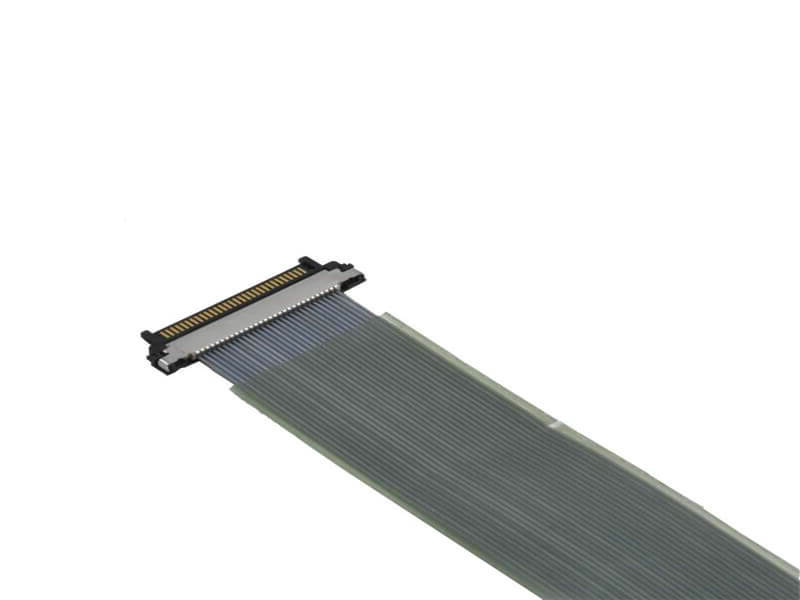
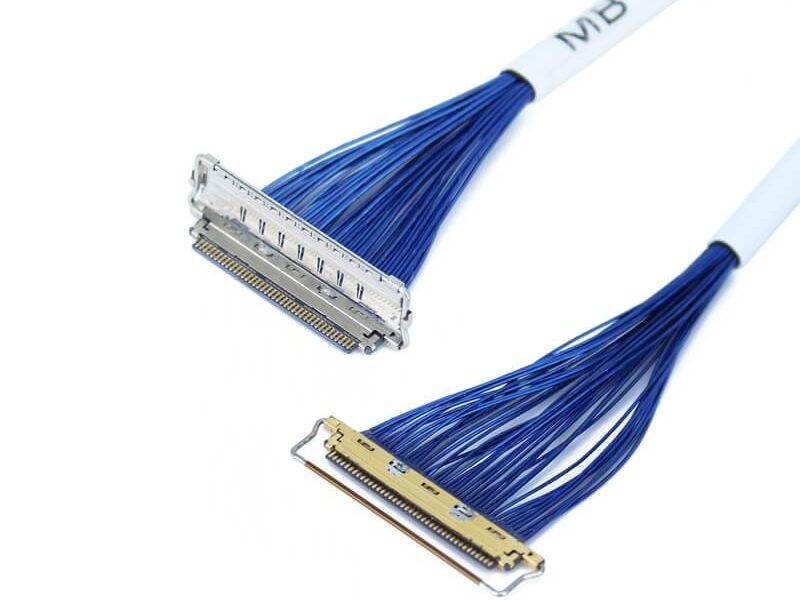
A high temperature resistant micro coaxial cableis a very small-diameter coaxial cable. It is engineered to maintain stable electrical performance in high-temperature environments, such as those found in aerospace, defense, and high-temperature industrial applications.
Key characteristics include:
Small Size: Typically uses very fine conductors, such as 36–50 AWG or smaller.
High-Temperature Materials: Employs fluoropolymers like PTFE, FEP, PFA, or ETFE for insulation and jacketing, which can withstand temperatures from 150°C to over 250°C.
Rugged Construction: Features a center conductor, dielectric, shield, and outer jacket to protect signal integrity in harsh conditions.
Why Use Micro Coaxial Cables in Aerospace?
Aerospace systems present a perfect storm of challenges that make robust cable design essential:
Extreme Temperatures: Components on or near engines, in avionics bays, or on re-entry vehicles can experience wide temperature swings, from -65 °C in shadow to over 200 °C in direct heat.
High Vibration and Mechanical Stress: Cables must be flexible and durable enough to withstand constant vibration and handling during launch and flight without signal degradation.
Tight Space and Weight Constraints: Aircraft and satellites demand high-density, lightweight cable assemblies to reduce overall weight, which improves fuel efficiency and payload capacity.
Harsh Environments: Exposure to jet fuel, hydraulic fluid, ozone, and high-intensity UV radiation requires cables with excellent chemical resistance and long-term aging performance.
As a result, coaxial cables for aerospace must be small, lightweight, flexible, and capable of reliable operation for many years in environments that would quickly degrade ordinary cables.
Key High-Temperature Materials
The performance of these cables hinges on their materials. Here are the primary options:
Material
Max. Operating Temp.
Key Features & Applications
PTFE(Polytetrafluoroethylene)
~260 °C
The workhorse for high-temp cables. Offers a low dielectric constant and stable performance. Used in MIL-W-16878 and MIL-W-22759 type cables.
FEP(Fluorinated Ethylene Propylene)
~200 °C
Easier to process and more flexible than PTFE. Its foamed version is used in lightweight microwave coaxial cables for aircraft.
PFA(Perfluoroalkoxy)
250 °C+
Combines high-temperature resilience with toughness and chemical resistance. Suitable for space and downhole applications.
ETFE / ECTFE
150–200 °C
Offers good mechanical toughness and flame resistance, making it suitable for cable jackets in confined spaces.
PEEK™ / ULTEM®
250 °C+
High-performance engineering thermoplastics for extreme environments, such as engine nacelles or high-temperature sensors.
The cable’s overall temperature rating is determined by the lowest-rated materialin its construction.
Construction & Performance Features
A high-temperature micro coaxial cable for aerospace is built for reliability and performance.
Typical Construction
Inner Conductor: Silver-plated or tinned copper, or high-strength alloys, in fine gauges (e.g., 36–50 AWG).
Dielectric: Solid or foamed PTFE, FEP, or PFA. Foamed dielectrics reduce weight and signal loss.
Shield: A braided layer of silver-plated or tinned copper, sometimes combined with an aluminum foil for 360° coverage.
Jacket: A fluoropolymer like PTFE, FEP, or PFA, chosen for its chemical resistance and low smoke properties.
Electrical & Mechanical Performance
Impedance: Most common are 50 Ω and 75 Ω, with tight tolerances for high-frequency digital and RF signals.
Operating Temperature: A typical range is −65 °C to +200 °C, with some designs rated for 260 °C or higher.
Frequency Range: Performance varies from a few GHz for general avionics to 18 GHz, 40 GHz, or even 70 GHz for specialized space-qualified cables.
Shielding Effectiveness: High shielding (e.g., >90 dB) is required to minimize electromagnetic interference (EMI) in densely packed systems.
Flexibility & Durability: Cables must be highly flexible with a small bend radius and resistant to vibration and flexing, especially for moving parts like control surfaces and robotic arms.
Key Standards and Specifications
Aerospace cables must meet stringent standards. When sourcing from a high temperature resistant micro coaxial cable factory, you will encounter specifications such as:
Aerospace Standards:
EN / PREN 4604-004: A European standard for 50 Ω, 200 °C, high-immunity micro coaxial cables (Type WS) used in signal transmission.
MIL-STD / MIL-C / MIL-W: U.S. military standards for high-temperature coaxial cables, such as MIL-W-16878 and MIL-W-22759.
UL / CSA Standards:
UL Style 10871: A standard for micro flex coaxial cables with PFA insulation, rated for −55 °C to +250 °C.
Application-Specific Standards:
DO-160: Environmental Conditions and Test Procedures for Airborne Equipment.
NASA / ESA Standards: Specific requirements for space applications, including outgassing and atomic oxygen resistance.
A qualified factory should be able to manufacture cables that meet these standards or provide test data to prove equivalent performance.
Aerospace Applications
These cables are used in a wide range of aerospace systems:
Aircraft Avionics & Flight Control: Connect radar, satellite comms, and flight control systems.
Spacecraft & Satellites: Used for RF downlinks, inter-stage comms, and internal data buses on satellites and launch vehicles.
High-Temperature Industrial Systems: Applied in ground-based simulators, test rigs, and industrial heating equipment that mirror aerospace conditions.
Medical & Test Equipment: Technologies developed for aerospace are also used in high-end medical and test gear that requires high reliability and performance.
Working with a Specialized Factory
Choosing the right high temperature resistant micro coaxial cable factoryis critical. Here are key considerations:
Technical Expertise: The factory should have a proven track record in high-temperature, high-frequency micro coaxial cables and understand relevant standards (EN 4604-004, MIL-STD, UL).
Material Know-How: They must be able to select and process the correct high-temp materials (PTFE, FEP, PFA, etc.) for your specific temperature range and application.
Advanced Manufacturing: Look for capabilities like fine-wire drawing (to 46–50 AWG), precision extrusion, and laser外径检测 to ensure consistent quality and performance.
Quality & Certifications: Certifications like ISO 9001, ISO 13485 (medical), and a robust quality management system are essential. The factory should provide test reports (VSWR, attenuation, etc.) for every batch.
Customization & Testing: The factory should offer design support and testing services, including environmental, mechanical, and EMI/EMC tests, to validate the final product.
FRS: Your Partner in High-Performance Cable Solutions
At FRS, we specialize in the design and manufacturing of high temperature resistant micro coaxial cablesfor aerospace and other mission-critical applications.
Our expertise includes:
Deep Material Knowledge: We expertly select and process PTFE, FEP, PFA, and other high-performance insulations and jackets to meet your exact thermal and electrical requirements.
Precision Manufacturing: Our advanced production lines are optimized for fine-wire coaxial cables (36–50 AWG and beyond), ensuring consistent quality for every meter produced.
Rigorous Quality Control: We adhere to strict quality control protocols and can provide comprehensive test data to meet the most demanding aerospace standards.
Whether you need a standard high-temp micro coax or a fully custom cable assembly, FRS is your reliable partner. Contact our engineering team todayto discuss your project requirements and discover how we can help you achieve reliable performance in the most extreme environments.
Automotive electronics—from advanced driver-assistance systems (ADAS) and infotainment to powertrain controls—rely on coaxial cable assemblies to transmit high-frequency signals reliably. Unlike consumer electronics, automotive environm...
Coaxial cable assemblies are critical in applications like telecommunications, industrial automation, and aerospace, where faulty parts can disrupt entire systems. Finding the right replacement parts requires precision—here’s a step-by-...
In the world of electrical and networking installations, coaxial cables play a crucial role. They are widely used in applications such as cable television, satellite TV, CCTV systems, and high – speed internet connections. When it...
Meta Description: Struggling to choose between micro and standard coax? Compare size, bandwidth, and costs for wearables, IoT, and drones.Article Content:IntroductionAs devices shrink, engineers debate: micro coaxial (0.81mm) or st...
Bulk micro coaxial cable is a high‑frequency, ultra‑fine coaxial cable sold by the reel or in large spools, as opposed to pre‑assembled single‑ended cables. It is a key interconnect solution for today’s compact, high‑performance consume...
In high-speed, high-density electronic systems, micro coaxial cable assembliesare the critical link that ensures clean, reliable signal transmission. When these assemblies are precision engineered, they become a strategic advantage for ...
Micro coaxial cables are the unsung heroes of modern military electronics. Packing powerful signal capabilities into an ultra-thin profile, they’re essential for everything from missile guidance systems and radar to ruggedized com...
Coaxial cables are widely used in communication systems, but their performance varies significantly depending on whether they are designed for baseband or broadband transmission.
IntroductionCoaxial cables are categorized into two t...
Micro-coaxial cables are essential for transmitting high-frequency signals in devices like routers, TVs, and medical equipment. When these cables get damaged, choosing the right repair method—soldering or compression connectors—ca...
When designing or troubleshooting RF (Radio Frequency) systems, the choice between 50Ω and 75Ω micro-coaxial cables often sparks confusion. While both are widely used in electronics and telecommunications, their performance ...
Choosing the right insulation material is critical when designing or selecting micro coaxial cables, especially for demanding RF (radio frequency) and microwave applications. Polytetrafluoroethylene (PTFE) and fluorinated ethylene propy...
Ordering bulk quantities of coaxial cable assemblies is a critical process that directly impacts project timelines, budget efficiency, and overall performance of electronic systems. Whether you’re sourcing for telecommunications, aerosp...
In the demanding world of high-frequency electronics, where signals operate at microwave and millimeter-wave frequencies (often extending to 40 GHz and beyond), phase stability transcends mere performance metrics – it becomes a cr...
Micro coaxial cables are critical components in high-frequency applications such as medical devices, aerospace systems, telecommunications, and robotics. Their compact design and precision engineering make them highly susceptible to dam...
Coaxial cable assemblies are critical components in RF (Radio Frequency) communication systems, including wireless base stations, satellite terminals, radar systems, test equipment, and industrial IoT devices. Their performance directly...
Micro coaxial cables are essential in modern electronics, enabling high-frequency signal transmission in compact devices from smartphones to satellites. However, their performance and longevity are heavily influenced by temperature. Und...
The question of whether coaxial cable assemblies are compatible with fiber optic systems is a common one among engineers, IT professionals, and system integrators tasked with building or upgrading communication networks. In short, coaxi...
Micro coaxial cables are essential for high-frequency signal transmission in compact applications like medical devices, aerospace systems, wearables, and 5G infrastructure. The jacket (outer insulation) is critical for performance...
In the era of smart mobility, precision agriculture, and advanced aerospace systems, satellite navigation has become the backbone of countless critical applications. From guiding commercial aircraft to optimizing farm machinery routes, ...
In the fast-paced world of telecommunications, broadcasting, and industrial connectivity, coaxial cables remain the backbone of reliable signal transmission. As a leading Coaxial Cables factory with over a decade of expertise,...
Coaxial cable assemblies are critical components in telecommunications, aerospace, automotive electronics, and industrial control systems. As global environmental regulations tighten and market demand for sustainable products grows, obt...
The rapid evolution of 5G technology has brought about a paradigm shift in wireless communication, with Multiple-Input Multiple-Output (MIMO) technology standing as a cornerstone for achieving the high data rates, low latency, and massi...
In the intricate network of railway signaling systems, coaxial cables play a pivotal role. They are the unsung heroes that ensure seamless communication, reliable data transfer, and ultimately, the safety and efficiency of train operati...
The demanding environments of oil and gas pipelines require technology that doesn’t just perform, but does so safely and reliably, especially under extreme conditions. Among the unsung heroes ensuring data integrity and vital comm...
Selecting the right micro coaxial cable manufactureris a critical decision for B2B procurement managers and design engineers. The wrong choice can lead to signal integrity issues, premature component failure, and budget overruns. This g...
Introduction
As electronic devices shrink while power demands increase, thermal management in micro-coaxial systems becomes critical. This article explores three cutting-edge solutions preventing overheating in 5G antennas, medical l...
Against the backdrop of rising demand for stable signal transmission solutions in sectors such as 5G base station construction, residential security networking, and industrial data transmission, a series of targeted sales promotion acti...
The coaxial cable, with its concentric conductor-dielectric-shield-jacket structure, has been a cornerstone for RF, video, and broadband transmission for decades. As we enter 2026, the industry is undergoing a significant shift. While t...
Last week, a highly anticipated online Q&A session on coaxial cables was successfully held, attracting hundreds of industry professionals, DIY enthusiasts, and individuals seeking to upgrade their home networks. The session featured...
In the competitive landscape of the coaxial cable industry, customer satisfaction stands as the cornerstone of business success. For coaxial cable customers, encountering issues with products or services can be frustrating, and the way ...
In the world of broadcasting, nothing frustrates listeners or viewers more than a distorted signal. Interference can ruin the entire experience, whether it’s static on a radio, pixelation on a TV, or dropped audio in a live stream. Achi...
As the coaxial cable industry undergoes rapid transformation driven by 5G deployment, industrial automation, and smart city initiatives, dealers are facing unprecedented challenges—from navigating technical upgrades like low-loss LDPE m...
IntroductionArctic research stations face extreme cold, where temperatures plummet below -50°C. Standard electronics often fail under such conditions, disrupting critical data collection. To solve this, scientists now rely on cold-resis...
Coaxial cables remain a cornerstone of high-frequency signal transmission in industries ranging from telecommunications to broadcasting and security systems. Their ability to minimize interference and maintain signal integrity makes the...
In the rapidly evolving landscape of advanced electronics, the demand for high-performance connectivity solutions has never been greater. Among the key components driving this demand, Micro-Coaxial Cables stand out as critical enablers,...
The relentless drive towards smaller, lighter, and more capable military systems places immense pressure on every component – especially the critical infrastructure connecting them: cables. Enter the spotlight: Battlefield-Ready Micro-...
Why Low-Loss Matters
In professional audio setups, signal integrity is everything. Low-loss coaxial cables minimize signal degradation over long distances, preserving high-frequency response and reducing noise. These cables feature:
...
The global rollout of 5G technology has ushered in a new era of connectivity, demanding unprecedented levels of speed, latency reduction, and network flexibility. At the core of this transformation lies the 5G cloud Radio Access Network...
KEL’s Micro Coaxial Cable solutions are at the forefront of modern electronic connectivity, offering exceptional performance in high-speed data transmission, miniaturization, and reliability. These connectors are integral to various.
In LVDS (Low Voltage Differential Signaling) display systems, Micro-coaxial Cable (also referred to as Micro Coax Cable) stands out as an optimal solution for high-resolution, high-reliability signal transmission. Designed to meet the str.
Contact Us Micro Coaxial Cable factory-(FRS).
Feel free to reach out to us for any inquiries or orders