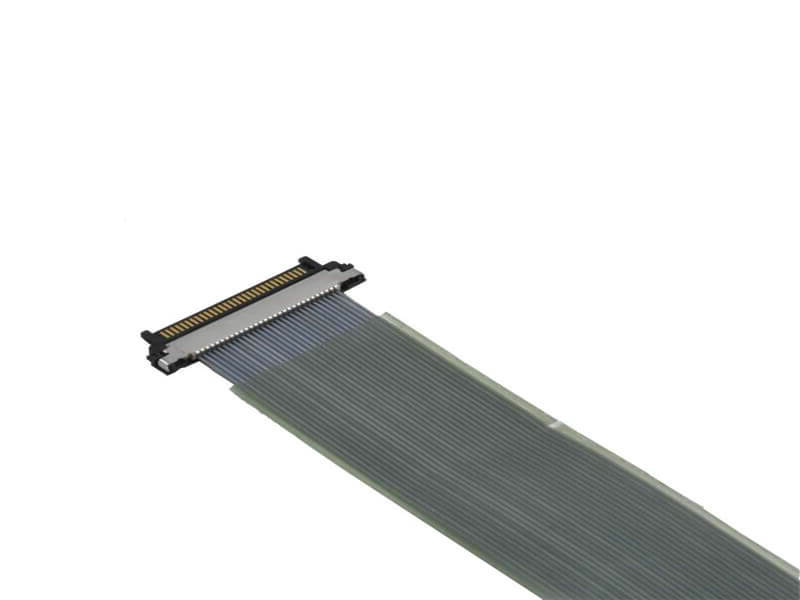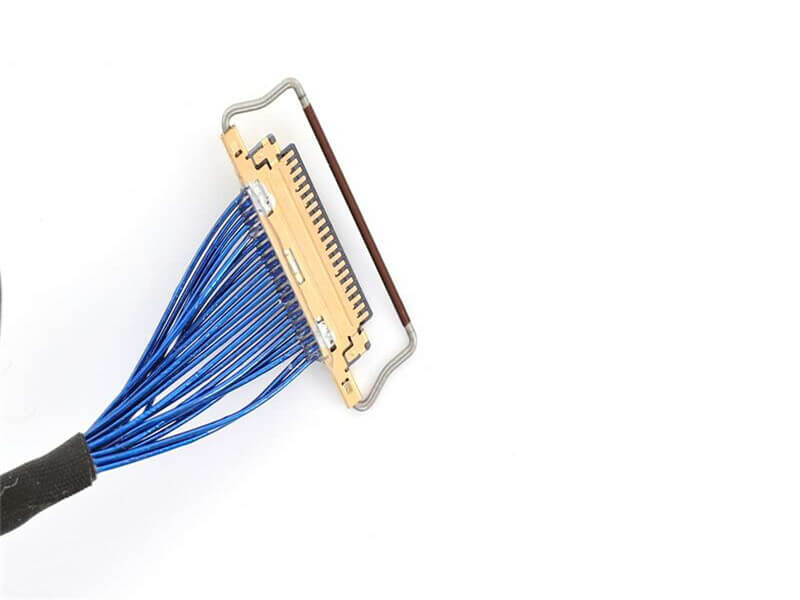

Micro Coaxial Cable factory-(FRS)

3D Printed Micro Coaxial Cable Connectors - Micro Coaxial Cable factory-(FRS)

Micro Coaxial Cable factory-(FRS)

Micro coaxial cable Tag: 3D Printed Micro Coaxial Cable Connectors

The Commercial Future of 3D Printed Micro Coaxial Cable Connectors

Imagine intricate electronic devices shrinking further, medical implants becoming smarter, and 5G networks reaching new heights of performance. At the heart of this miniaturization revolution lies a critical challenge: creating incredibly small, high-performance connectors like micro coaxial cable connectors. Traditional manufacturing methods often hit a wall here. That’s where 3D printing steps in, poised to reshape this specialized market with significant commercial potential.

What’s the Problem with Tiny Connectors?

Micro coaxial connectors are essential for transmitting high-frequency signals (like those in your phone or MRI machine) within tightly packed electronics. Making them conventionally involves painstaking machining, intricate assembly, and costly tooling – especially difficult and expensive for complex, miniature designs needed in cutting-edge tech. This limits speed, flexibility, and pushes costs up, particularly for small-batch prototypes or highly specialized components.

Why 3D Printing is a Game-Changer for Micro Coax

  • Freedom to Design: 3D printing builds parts layer-by-layer, creating internal channels and complex geometries impossible with milling or molding. Imagine connectors perfectly shaped for your specific device, optimizing signal flow and saving space.
  • Rapid Prototyping & Customization: Need a new connector design fast? 3D printing can turn digital models into physical prototypes in hours or days, not weeks. Perfect for iterative testing or creating unique connectors for specialized medical or aerospace equipment without massive upfront tooling costs.
  • Lightweight & Consolidation: 3D printing can create connector bodies that are lighter than metal equivalents. It can even combine multiple connector parts into a single, integrated piece (part consolidation), simplifying assembly, reducing potential signal loss points, and boosting reliability.
  • On-Demand & Low-Volume Production: Eliminating expensive molds makes it economically feasible to produce small batches of specialized micro coax connectors, supporting niche applications or bridge production before full-scale manufacturing.

Where Will We See 3D Printed Micro Coax Connectors?

  • Next-Gen Electronics: Smartphones, wearables (think AR/VR headsets), and laptops demand ever-smaller, high-performance internal connections. 3D printing enables the complex, space-saving designs needed.
  • Medical Technology Breakthroughs: Miniature sensors, imaging catheters, and neurostimulators rely on tiny, reliable signal transmission. 3D printing’s ability to create customized, biocompatible connector housings is transformative for minimally invasive procedures and patient care.
  • Pushing 5G/6G Further: Higher frequencies in advanced telecom require connectors with exceptionally precise geometry to prevent signal degradation. 3D printing offers the accuracy needed for millimeter-wave components and integrated antenna interfaces.
  • High-Performance Defense & Aerospace: Radar systems, communication satellites, and UAVs benefit from lightweight, complex, and high-frequency connectors optimized for specific applications, achievable through additive manufacturing.

Hurdles on the Path to Commercialization:

  • Material Science: Finding conductive materials (especially metal pastes/composites for the crucial inner conductor) that reliably match the conductivity, durability, and high-frequency performance of traditional metals like gold or copper plating and print well remains an active challenge.
  • Precision & Surface Quality: Achieving the micron-level smoothness required inside the connector for optimal signal transmission (low insertion loss) can be difficult with some 3D printing processes. Post-processing might be needed.
  • Speed & Scaling Up: While ideal for prototypes and small batches, current printing speeds need significant improvement for high-volume, cost-competitive mass production compared to established methods like injection molding (for plastics) or precision machining (for metals).
  • Standards & Certification: Rigorous testing and industry-wide standards for the performance, reliability, and longevity of 3D printed RF connectors (especially for mission-critical uses) need wider development and adoption. Building market trust is essential.
  • Cost Balance: The cost equation needs to favor 3D printing over alternatives. While it saves on tooling, material and machine costs per part must become more competitive for larger volumes.

The Bright Commercial Outlook

Despite these challenges, the ​commercial potential is vast and growing. The drivers are powerful:

  • Demand for Miniaturization: Electronics keep shrinking.
  • Customization Needs: Medical and specialized industrial markets need bespoke solutions.
  • Rapid Tech Evolution: Faster prototyping is crucial for innovation speed.

Who’s Leading the Charge?

Both innovative startups (like Nano Dimension focusing on electronics printing) and industrial giants (like HPSiemens, and Stratasys) are investing heavily. Materials companies are developing advanced conductive filaments and specialized polymers for high frequencies. Expect accelerating progress in ​conductive materials, ​multi-material printing (combining conductors and insulators seamlessly), and ​dedicated printers for electronics components.

The Bottom Line for Your Business

While mass-produced, standardized connectors will likely stick with traditional methods for the foreseeable future, ​3D printing is set to dominate specific high-value segments:

  1. Prototyping & R&D: Accelerating the design of next-gen devices.
  2. Low-Volume & Custom Connectors: Serving medical, aerospace, defense, and specialized industrial needs profitably.
  3. Highly Complex/Integrated Designs: Where traditional methods simply fail.
  4. On-Demand Replacement Parts: For legacy systems or reducing inventory.

Finding Reliable Solutions:

  • Industry Reports: MarketsandMarkets, SmarTech Analysis, IDTechEx publish detailed reports on additive manufacturing for electronics and RF components.
  • Leading Manufacturers: Investigate offerings from Nano Dimension (DragonFly system), Optomec (Aerosol Jet), and Materialise. Major printing companies (HP, Stratasys) often have specialized materials/processes.
  • Material Suppliers: Explore offerings from companies like DuPont, Henkel (Loctite), and BASF designed for conductive/functional printing.
  • Conferences: Events like IMAPS (International Microelectronics Assembly and Packaging Society) and the IEEE Electronic Components and Technology Conference (ECTC) feature cutting-edge research and applications.
  • University Research: Top institutions often publish advancements in materials and printing techniques for RF applications.

The commercial future of 3D printed micro coaxial cable connectors is incredibly promising. It’s a key enabling technology for achieving smaller, smarter, and more capable electronic devices across critical industries. As materials and processes mature, 3D printing will unlock unprecedented levels of design freedom and manufacturing agility in the high-frequency connector market, moving beyond niche applications into broader commercialization within the next 5-10 years. The revolution in miniaturization is being built, layer by intricate layer.

‌Fundamentals of Bend Radius in Micro-Coaxial Cables‌‌A. Definition of Bend Radius‌The ‌minimum bend radius‌ (MBR) is the smallest allowable curvature a cable can withstand without permanent deformation or electrical performance degradation. It is typically expressed as a multiple of the cable’s outer diameter (OD): MBR=k×OD(where k=3 to 10, depending on construction)‌B. Structural Vulnerabilities‌‌Conductor Distortion‌: Bending compresses the inner conductor and stretches the outer shield, disrupting the coaxial geometry.‌Dielectric Stress‌: PTFE or foam dielectric materials may crack under repe.

Read more →

The hinge is both the marvel and the mechanical nightmare of foldable smartphones. It enables the transformative experience of a device that shifts from phone to tablet, but it also presents a unique engineering challenge: how to reliably transmit high-speed data and power signals across thousands of bending cycles. The solution lies deep within the hinge assembly, often overlooked but absolutely critical – ​micro-coaxial cables. The Hinge Challenge: More Than Just Mechanics While the physical mechanism allowing smooth folding captures attention, the real magic happens electronically. Every time.

Read more →

In today’s interconnected world, the demand for reliable and high-performance communication infrastructure is paramount. Coaxial cables, as a critical component in transmitting audio, video, and data signals, must adhere to strict international quality standards to ensure seamless operation across various applications. Our coaxial cable stands out in the market for its unwavering commitment to meeting and exceeding these standards, providing customers with a product they can trust. International quality standards for coaxial cables, such as those set by the International Electrotechnical Comm.

Read more →

The demanding environments of oil and gas pipelines require technology that doesn’t just perform, but does so safely and reliably, especially under extreme conditions. Among the unsung heroes ensuring data integrity and vital communication within these critical infrastructures are ​flame-retardant micro-coaxial cables. Understanding why these specialized cables are indispensable helps make informed decisions for pipeline safety and efficiency. Why Flame Retardancy is Non-Negotiable ​Hazardous Locations: Oil and gas pipelines often traverse or are located within Class I, Division 1 or Divi.

Read more →

If you’re working with RF (radio frequency) systems, antennas, or small-scale electronics, chances are you’ve encountered ​RG-174 micro-coaxial cables. These thin, flexible cables are popular for their low loss and durability in tight spaces, making them ideal for applications like GPS devices, Wi-Fi antennas, CCTV systems, and automotive electronics. However, terminating RG-174 cables properly is critical to maintaining signal integrity and preventing interference. In this SEO-optimized guide, you’ll learn ​how to terminate RG-174 coaxial cables like a pro, with clear steps, essential tools, .

Read more →

Coaxial cable assemblies are the backbone of countless industries, from telecommunications and aerospace to medical equipment and industrial manufacturing. They transmit high-frequency signals with minimal loss, making them indispensable for critical operations. However, like any mechanical or electrical component, coaxial cable assemblies can degrade or fail over time due to factors such as physical damage, environmental wear, connector issues, or signal degradation. When a failure occurs, businesses and technicians are faced with a critical decision: repair the existing assembly or replace it entire.

Read more →

Can't find what you're looking for?

Our customer support team is ready to assist you with any questions or concerns.

Search FAQs

Popular Tags

More Products

Our factory offers high-quality products at competitive prices

KEL Micro Coaxial Cable

KEL Micro Coaxial Cable

KEL’s Micro Coaxial Cable solutions are at the forefront of modern electronic connectivity, offering exceptional performance in high-speed data transmission, miniaturization, and reliability. These connectors are integral to various.

I-PEX Micro Coaxial Cable

I-PEX Micro Coaxial Cable

Overview of I-PEX Micro Coaxial Cable Connectors I-PEX is a global leader in micro coaxial cable solutions, specializing in high-performance IPEX micro coax connectors and micro coaxial cable assemblies. These products are designed for.

Contact Us Micro Coaxial Cable factory-(FRS).


Feel free to reach out to us for any inquiries or orders

Call Us

Have a question? Give us a call!

+8618818785005

Email Us

Send us an email and we'll get back to you soon.

sales@custom-cable-assemblies.com
       
Home Products Contact