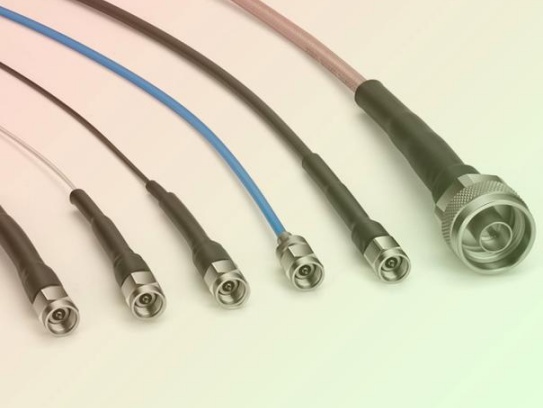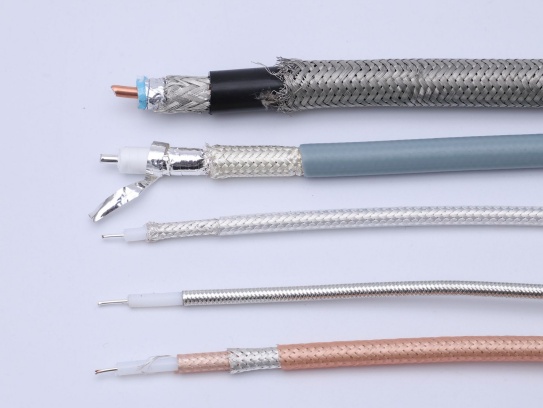

HD video is characterized by its high resolution, vivid colors, and smooth motion. To achieve this level of quality, a large amount of data needs to be transmitted accurately from the source (such as a Blu – ray player, camera, or computer) to the display device (like a TV, monitor, or projector). Any degradation in the signal during transmission can result in a variety of issues, including pixelation, color distortion, and lag. Low – loss signal transmission wires are designed to minimize these problems. They are engineered to maintain the integrity of the video signal as it travels ov.
Read more →Coaxial cables have been a cornerstone of wired communication systems for decades, prized for their ability to transmit high-frequency signals with minimal interference. From broadcasting and telecommunications to military and aerospace applications, their unique design ensures reliable performance in demanding environments. Structural Advantages and Signal IntegrityThe coaxial cable’s layered construction is fundamental to its transmission properties: Central Conductor: A solid or stranded copper core (or aluminum alloy) carries the electrical signal.Dielectric Insulator: Surrounds the c.
Read more →Forget the shiny new toys for a moment – fiber optics and 5G rightfully grab headlines, but when building the complex nervous system of a smart city, a veteran technology plays a surprisingly vital and enduring role: coaxial cable. Often perceived as “old tech,” modern coaxial cable (coax) brings unique strengths to the smart city table, offering reliability, bandwidth, and cost-effectiveness that make it indispensable, especially in retrofitting existing infrastructure or deploying specific services rapidly. Let’s explore how coax integrates into the smart city fabric. Why Co.
Read more →Introduction The miniaturization of electronic devices demands precision in micro-coaxial cable design, where traditional methods face bottlenecks in efficiency and performance prediction. AI-powered tools are revolutionizing this niche by solving three critical pain points: signal integrity optimization, manufacturing cost reduction, and rapid prototyping. Key AI Applications and Benefits 1. Predictive Modeling for Signal Loss Mitigation AI algorithms (e.g., neural networks trained on S-parameter datasets) can simulate electromagnetic behavior under varying frequencies with 95%+ accuracy,.
Read more →Introduction Modern airport security scanners rely on ultra-precise signal transmission to detect threats, from concealed weapons to explosive materials. At the heart of this technology lies an unsung hero: micro-coaxial cables. These miniature yet robust cables enhance scanner performance by ensuring high-speed data transfer, minimal interference, and durability under constant use. Key Benefits of Micro-Coaxial Cables in Security Scanners 1. Superior Signal Integrity Micro-coaxial cables feature shielded designs that reduce electromagnetic interference (EMI), critical for scanners operati.
Read more →In high-density electronic devices, a custom micro coaxial wire harnessis often the critical link for high-speed, high-frequency signal transmission. Its reliability directly impacts equipment performance and lifespan. This article provides practical guidance on after-sales technical support and daily maintenance, drawing from real-world engineering experience. 🔧 Common After-Sales Issues & Solutions 1. Signal Quality Degradation Symptoms: Increased noise, image flickering, reduced transmission distance, or unstable data rates. Common Causes & Solutions: Connector Issues: Poo.
Read more →Can't find what you're looking for?
Our customer support team is ready to assist you with any questions or concerns.
Search FAQs
Related Articles
How to choose Coaxial Cable Assemblies for audio/video equipment?
Coaxial cable assemblies are the “nerve system” of audio/video (AV) equipment—they directly determine signal integrity, which .
Our Coaxial Cable Supports Long – Distance Transmission
In the rapidly evolving fields of medical imaging, industrial non – destructive testing, and scientific research, ultrasound technol.
What Is a Micro Coaxial Cable Termination Solution and How Does It Improve Signal Integrity
In high-speed, high-density electronic systems, the micro coaxial cableis the workhorse that carries critical RF, high-speed digital, and .
Characteristics of Micro Coaxial Cables
Micro coaxial cables are miniaturized coaxial cables distinguished by the following key features: 1. Compact Structure with Multi-Layer S.
How to Test the Durability of Coaxial Cable Assemblies
Coaxial cable assemblies (CCAs) are critical in industries like telecommunications, aerospace, and industrial automation, where they must .
Hybrid Cables: Integrating Fiber Optics with Micro-Coaxial Conductors – The Future of High-Performance Connectivity
In the relentless pursuit of faster data transfer, higher bandwidth, and more efficient power delivery within complex systems, a revolutio.