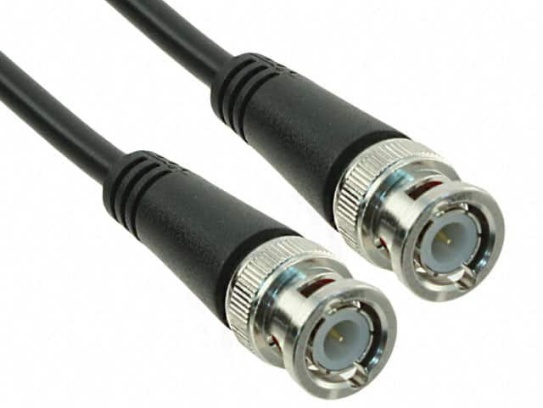

Micro Coaxial Cable factory-(FRS)

Amplifiers and Repeaters - Micro Coaxial Cable factory-(FRS)

Micro Coaxial Cable factory-(FRS)

Micro coaxial cable Tag: Amplifiers and Repeaters

Amplifiers and Repeaters for Signal Strength

In today’s interconnected world, reliable signal strength is the backbone of seamless communication, whether it’s for mobile networks, Wi-Fi, or long-distance radio transmissions. Weak signals can lead to dropped calls, slow data speeds, and interrupted connections, frustrating users and hindering productivity. This is where amplifiers and repeaters step in as essential tools to boost and extend signal coverage.

Amplifiers

An amplifier is a device designed to increase the amplitude of a signal. It takes a weak input signal and boosts its power, making it stronger and capable of traveling longer distances or penetrating obstacles more effectively.

Amplifiers work by using electronic components such as transistors to take the input signal and multiply its strength. They preserve the original signal’s characteristics while enhancing its power. It’s important to note that amplifiers also amplify any noise present in the input signal, so they are best used in situations where the signal-to-noise ratio is already relatively good.

[Amplifier Product Picture: 500*500px, showing a compact amplifier with various ports for connecting different signal sources and outputs, with clear labels on the ports]

Repeaters

A repeater, on the other hand, is a device that receives a weak or degraded signal, cleans it up, and then retransmits it at a higher power level. Unlike amplifiers, repeaters not only boost the signal but also regenerate it, reducing the noise that may have accumulated during transmission.

Repeaters operate by receiving the incoming signal, which may have lost strength due to distance or interference, processing it to remove noise and distortion, and then retransmitting a fresh, strong signal. This allows the signal to travel much further than it would without the repeater. Repeaters are particularly useful in extending the range of communication systems, such as in large buildings, rural areas, or along long communication lines.

[Repeater Product Picture: 500*500px, depicting a repeater installed outdoors, perhaps on a pole, with antennas for receiving and transmitting signals, showing its ability to work in external environments]

Key Differences Between Amplifiers and Repeaters

While both amplifiers and repeaters aim to improve signal strength, there are some crucial differences between them. Amplifiers simply boost the signal, including any noise, whereas repeaters regenerate the signal, reducing noise. This makes repeaters more effective in scenarios where the signal has been significantly degraded by noise or interference.

Another difference is in their application range. Amplifiers are often used in shorter-range setups where the signal just needs a little boost, such as in home Wi-Fi networks to improve coverage in a specific room. Repeaters, on the other hand, are ideal for longer-range applications, like extending the reach of a mobile network in a remote area.

Applications of Amplifiers and Repeaters

Amplifiers find applications in various fields. In audio systems, they are used to boost the sound signal to drive speakers. In television systems, they help strengthen the signal from the antenna to the TV, ensuring a clear picture. In mobile phone networks, small amplifiers can be used in homes or offices to improve indoor signal strength.

Repeaters are widely used in telecommunications. They are essential in extending the range of cellular networks, allowing signals to reach areas that would otherwise be out of range. In Wi-Fi networks, repeaters help expand coverage in large homes, offices, or outdoor spaces. They are also used in fiber optic communication systems to regenerate signals that have weakened over long distances.

Choosing the Right Device

When deciding between an amplifier and a repeater, several factors need to be considered. The first is the extent of signal degradation. If the signal is weak but relatively clean, an amplifier may be sufficient. If the signal is noisy or has traveled a long distance, a repeater is a better choice.

The type of signal is also important. Some amplifiers and repeaters are designed specifically for radio frequency signals, while others work with Wi-Fi or cellular signals. It’s essential to choose a device that is compatible with the type of signal you need to boost.

Coverage area is another factor. Amplifiers are suitable for small areas where a signal boost is needed, while repeaters can cover larger areas and extend the signal over longer distances.

FRS Brand Factory

When it comes to reliable amplifiers and repeaters, FRS brand factory stands out. With years of experience in the industry, FRS is committed to producing high-quality devices that meet the diverse needs of users. Whether you need an amplifier for your home Wi-Fi or a repeater to extend cellular coverage in a rural area, FRS has you covered. Their products are designed with advanced technology to ensure optimal performance, durability, and ease of use. Trust FRS to enhance your signal strength and enjoy seamless communication.

In an era dominated by digital connectivity, coaxial lines serve as the backbone of numerous critical systems, from cable television and high-speed internet to security cameras and satellite communications. These lines are designed to transmit high-frequency signals with minimal loss, but they are also vulnerable to one of the most underestimated threats in the electrical world: power surges. A single surge can disrupt services, damage expensive equipment, and even compromise entire networks. This is where surge protectors for coaxial lines become indispensable. In this comprehensive guide, we will ex.

Read more →

In today’s interconnected world, the demand for reliable and high-performance communication infrastructure is paramount. Coaxial cables, as a critical component in transmitting audio, video, and data signals, must adhere to strict international quality standards to ensure seamless operation across various applications. Our coaxial cable stands out in the market for its unwavering commitment to meeting and exceeding these standards, providing customers with a product they can trust. International quality standards for coaxial cables, such as those set by the International Electrotechnical Comm.

Read more →

In the realm of electronic connections, coaxial cables with gold-plated connectors stand out for their enhanced conductivity, playing a vital role in numerous applications. Coaxial cables have a unique structure that enables them to transmit high-frequency signals efficiently. They consist of an inner conductor, which is usually made of copper, responsible for carrying the electrical signal. Surrounding the inner conductor is an insulating layer, typically made of materials like polyethylene, that keeps the inner conductor isolated from the outer components. Next comes the outer conductor, which ca.

Read more →

In today’s high-density, high-frequency electronic designs, selecting the right interconnect solution is crucial. When space is tight and signal integrity matters, engineers increasingly turn to Micro Coaxial Cable. At FRS, we specialize in manufacturing and supplying high-quality 50Ω micro coaxial cables designed for satellite, RF, and antenna applications. With a minimum order quantity (MOQ) as low as 50 pieces, optional high-temperature ratings, and fast global shipping, our cables offer both performance and flexibility for prototyping and volume production. What Is a Micro Coaxial Cable? .

Read more →

In the ever-evolving landscape of electronics, the integration of flexible printed circuits (FPCs) with micro-coaxial cable technology has emerged as a game-changer. This innovative combination brings together the best of both worlds, offering enhanced performance, flexibility, and reliability for a wide range of applications. Understanding Flexible Printed Circuits Flexible printed circuits, as the name implies, are highly flexible and lightweight circuit boards. They are typically made from materials such as polyimide or polyester films, which provide excellent durability and flexibility. FPCs.

Read more →

Against the backdrop of rising demand for stable signal transmission solutions in sectors such as 5G base station construction, residential security networking, and industrial data transmission, a series of targeted sales promotion activities for coaxial cables have officially kicked off. This promotion aims to provide cost-effective signal transmission products for enterprises and project purchasers while ensuring the reliability and performance of the cables. 1. Core Preferential Policies 1.1 Bulk Purchase Discounts Purchasers who place orders for coaxial cables with a total length of 1,000.

Read more →

Can't find what you're looking for?

Our customer support team is ready to assist you with any questions or concerns.

Search FAQs

Popular Tags

More Products

Our factory offers high-quality products at competitive prices

High-Speed Data Micro-Coax

High-Speed Data Micro-Coax

IntroductionIn today’s fast-paced digital world, reliable and high-speed data transmission is critical for industries ranging from telecommunications to aerospace. Enter ​High-Speed Data Micro-Coax—a cutting-edge miniature coaxial cable e.

High-Temperature Resistant Micro-Coaxial Cable

High-Temperature Resistant Micro-Coaxial Cable

IntroductionThe ​High-Temperature Resistant Micro-Coaxial Cable is a cutting-edge connectivity solution engineered to deliver exceptional performance in extreme thermal environments. Combining precision engineering with advanced mate.

Contact Us Micro Coaxial Cable factory-(FRS).


Feel free to reach out to us for any inquiries or orders

Call Us

Have a question? Give us a call!

+8618818785005

Email Us

Send us an email and we'll get back to you soon.

sales@custom-cable-assemblies.com
       
Home Products Contact