
Micro Coaxial Cable factory-(FRS)

40GHz MICRO-COAX CABLES - Micro Coaxial Cable factory-(FRS)

Micro Coaxial Cable factory-(FRS)

Micro coaxial cable Tag: 40GHz MICRO-COAX CABLES

HIGH-FREQUENCY 40GHz MICRO-COAX CABLES: YOUR ULTIMATE GUIDE TO TINY WIRES FOR HUGE SIGNALS

Imagine reliably transmitting vast amounts of data for blazing-fast 5G speeds, guiding radar beams with pinpoint accuracy, or feeding signals to sensitive test equipment – all through a wire barely thicker than a human hair. That’s the power of ​high-frequency 40GHz micro-coaxial cable, the unsung hero enabling modern high-speed electronics.

What EXACTLY is a 40GHz Micro-Coax Cable?

At its heart, ​micro-coaxial (micro-coax) cable is a miniature version of standard coaxial cable, familiar from TV or internet connections. However, ​40GHz micro-coax is engineered specifically to carry radio frequency (RF) signals operating up to a staggering 40 billion cycles per second (40 Gigahertz).

Think of it as an ultra-precise pipeline for RF energy:

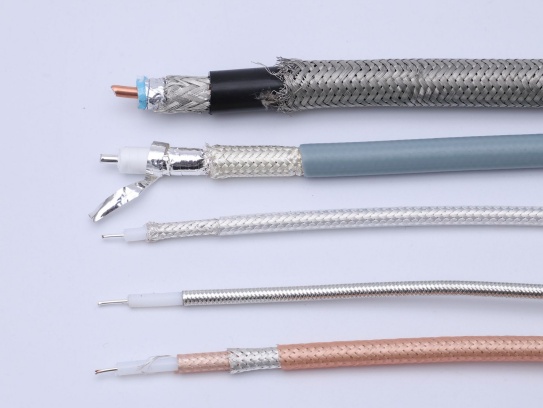
  1. Tiny Center Conductor: A minuscule wire (often solid or stranded silver-plated copper) carries the core signal. Diameters can range from 0.04mm (AWG 54) to 0.3mm (AWG 38), much finer than standard cables.
  2. Precision Insulation: A specialized dielectric material (like FEP or PE foam) surrounds the center conductor. Its exact dimensions and properties are crucial for controlling signal speed and loss.
  3. Multi-Layer Shielding: Fine-woven shields, often two layers or more (e.g., silver-plated copper braid + aluminum foil), tightly enclose the dielectric. This prevents interference and keeps the signal inside the cable, minimizing leakage and maintaining signal integrity.
  4. Ultra-Thin Outer Jacket: A protective outer layer shields the delicate inner structure during handling, routing, and use.

[Insert Image 1: Highly magnified cutaway diagram of a micro-coax cable, clearly labeling the Center Conductor, Dielectric, Shields, and Jacket]

Why Use Ultra-High Frequency 40GHz Micro-Coax? Where Does It Shine?

While standard coaxial cables falter, ​40GHz micro-coax excels in demanding, high-bandwidth applications:

  1. Next-Gen Connectivity:
    • 5G & 6G mmWave: Connecting antennas, base station components, and test equipment handling massive data streams in the 24-40GHz+ spectrum.
    • Satellite Communications: Ground station equipment and satellite payloads requiring compact, high-performance RF links.
  2. High-Frequency Test & Measurement:
    • Vector Network Analyzers (VNAs): Essential for calibration (cal kits) and connecting devices under test (DUTs) to measure performance up to 40GHz accurately.
    • Signal Analyzers & Generators: Low-loss interconnections for precise signal characterization and generation.
  3. Advanced Defense & Aerospace:
    • Radar Systems: Connecting phased array antenna elements and components requiring precise signal timing at high frequencies.
    • Electronic Warfare (EW): Jammer systems and sensitive receivers needing tiny, flexible, high-performance signal paths.
    • Avionics: Intra-system communications and sensor connections in space-constrained aircraft/spacecraft.
  4. Medical Technology (High-End):
    • MRI Systems: Interconnections within dense arrays.
    • Surgical Devices/Probes: Where flexibility and signal integrity are critical at high frequencies.

[Insert Image 2: A close-up photo showing micro-coax cables (thin, colored jackets) connected to test ports on a Vector Network Analyzer (VNA).]

The Critical Edge: Advantages of 40GHz Micro-Coax Cables

Why choose micro-coax over other solutions at these frequencies?

  1. Extremely Low Signal Loss (Attenuation): Crucial at high frequencies. Micro-coax maintains signal strength much better than larger cables or alternatives like PCB traces operating far above 10GHz. Low loss means reliable data transmission over short runs and accurate measurements.
  2. Excellent Shielding & Signal Integrity: Tight shielding minimizes interference from outside noise and reduces unwanted signal leakage. This preserves the fidelity of complex modulation schemes used in 5G, radar, and testing.
  3. Precise Phase Stability: Essential for radar beamforming and sensitive measurements. Micro-coax maintains consistent signal timing and phase relationships better than many alternatives at 40GHz.
  4. Minimal Size & Flexibility: The tiny diameter and flexible construction allow routing in incredibly dense electronic assemblies, tight spaces within instruments, and applications where size/weight matter (like aerospace).
  5. Controlled Impedance: Standardized to 50 Ohms (or sometimes 75 Ohms), ensuring signal compatibility with test equipment and RF components without harmful reflections.

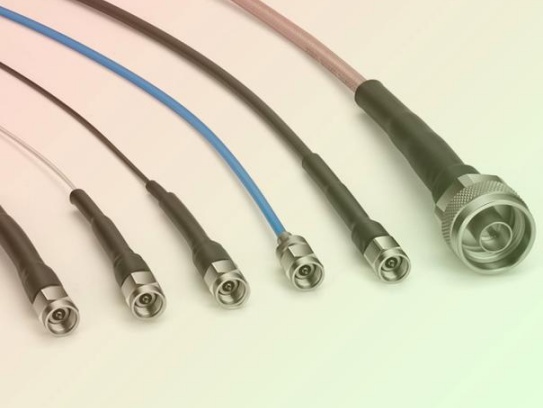
[Insert Image 3: Visual comparison: Place several strands of standard RG-58 cable (approx. 5mm thick) next to multiple strands of micro-coax (< 1mm thick).]

Choosing the RIGHT 40GHz Micro-Coax: Key Considerations

Not all micro-coax is identical. Selecting the optimal one requires weighing these factors:

  1. Frequency Range: Must be rated to cover your highest operating frequency (e.g., well beyond 40GHz if needed). Don’t operate near its maximum limit.
  2. Attenuation (Loss): Look for the lowest dB/meter figure at your operating frequency. Lower is always better for signal integrity.
  3. Shielding Effectiveness: More shield layers generally mean better noise immunity and lower leakage. Look for “Tri-Shield” options for critical applications.
  4. Phase Stability & Consistency: Vital for phased array systems and precise measurements. Check vendor data on phase performance.
  5. Flexibility/Life: Consider how much bending and flexing the cable will endure. Some jackets offer superior crush resistance.
  6. Termination Compatibility: Ensure the cable is compatible with the required connectors (SMA, 2.92mm, 2.4mm, 1.85mm are common for 40GHz) and vendor termination processes/recommendations.
  7. Phase Matching: For arrays, cables may need to be precisely matched in electrical length. Check availability.

Trusted Sources: Where to Find Quality 40GHz Micro-Coax

High-frequency micro-coax requires specialized manufacturing. Leading brands include:

  • Huber+Suhner: Renowned for Supran® series.
  • Times Microwave (LMR® Ultra Flex Micro): Known for LMR® standard coaxial lines.
  • Micro-Coax (UT Series, Flexx™ Series): A dedicated micro-coax leader.
  • Molex (RF Solutions): Offers high-performance micro-coaxial cables.

Always source from reputable manufacturers or authorized distributors who provide detailed specifications and test data to guarantee performance.

Beyond the Basics: Essential FAQs

  • Q: How delicate are these cables?
    • A: They are sensitive! Avoid sharp bends (respect the minimum bend radius!), crushing, kinking, and excessive flexing. Careful handling during termination and installation is vital.
  • Q: Can I terminate them myself?
    • A: It’s highly challenging without specialized tools and experience. Termination requires micro-machining skills. Most users purchase pre-terminated assemblies from manufacturers or certified technicians.
  • Q: What is VSWR, and why does it matter?
    • A: Voltage Standing Wave Ratio (VSWR) measures how efficiently power transfers. Low VSWR (close to 1:1) is critical at 40GHz to avoid signal reflections damaging equipment or distorting measurements. Quality micro-coax ensures excellent VSWR.
  • Q: Are there alternatives?
    • A: Waveguides handle high power but are bulky and inflexible. PCB traces are useful for integrated chipsets but suffer high losses well before 40GHz. Micro-coax offers the best balance of performance, flexibility, and size for interconnect at mmWave frequencies.

Conclusion: The Unsung Heroes of the mmWave World

High-frequency 40GHz micro-coaxial cables are fundamental enabling components in the world of cutting-edge wireless communications, radar, testing, and aerospace. Their ability to transport enormous amounts of data with minimal loss and high integrity within incredibly confined spaces makes them indispensable. By understanding their construction, critical advantages like ultra-low loss and precise phase stability, and key selection criteria, engineers and procurement specialists can ensure they utilize the right cable to achieve the demanding performance required by today’s most advanced technologies.

Need Expert Guidance?
Ready to Optimize Your Next Project?
Consult directly with leading micro-coax manufacturers (Huber+Suhner, Micro-Coax, Times Microwave, Molex) to discuss your specific 40GHz requirements and request detailed specifications or samples.

[Insert Image 4: Close-up of a precision micro-coaxial cable assembly terminated with a 2.92mm connector, highlighting the intricate solder beads.]

Unlock the potential of your mmWave designs – start with the right micro-coax foundation.

In the demanding arenas of defense, aerospace, and industrial applications, ​reliability isn’t optional – it’s mission-critical. Equipment deployed on battlefields, aboard aircraft, within satellites, or on rugged factory floors must perform flawlessly under punishing conditions. When it comes to transmitting vital signals and power, ​Military-Grade Micro-Coaxial Cables represent the pinnacle of resilience, explicitly designed to ​withstand extreme environments where standard cables would rapidly fail. This article explores why these specialized cables are the indispensable backb.

Read more →

IntroductionArctic research stations operate in one of Earth’s harshest environments, where temperatures plummet below -50°C. To maintain critical communication and data transmission, these stations rely on cold-resistant micro-coaxial technology—a specialized cabling solution engineered for extreme conditions. Key Applications in Arctic Stations Signal Integrity in Extreme ColdTraditional coaxial cables fail in subzero temperatures due to material brittleness and signal loss. Micro-coaxial cables with PTFE (Teflon) insulation and nickel-plated conductors resist cracking, ensuring uninterrupted.

Read more →

‌Abstract‌Shielding effectiveness (SE) is a critical metric for evaluating the performance of micro-coaxial cables in high-frequency and high-interference environments. IntroductionMicro-coaxial cables are widely used in 5G communications, medical devices, and aerospace systems where electromagnetic interference (EMI) can severely degrade signal integrity. Shielding structures play a pivotal role in isolating the inner conductor from external noise and preventing signal leakage. This article compares three common shielding configurations—single, double, and triple layers—to determine their effecti.

Read more →

Coaxial cables are the backbone of many communication systems, from home internet setups to industrial networking and broadcasting. Ensuring their signal integrity is crucial for maintaining reliable data transmission, minimizing interference, and avoiding costly downtime. But how do you effectively test a coaxial cable to confirm it’s performing at its best? In this guide, we’ll walk through the key steps, tools, and techniques to test coaxial cable signal integrity, helping you diagnose issues and keep your systems running smoothly. Why Signal Integrity Matters for Coaxial Cables Before diving.

Read more →

The relentless drive towards smaller, faster, and more powerful electronic devices isn’t just about packing more computing power into your pocket. It’s also placing immense pressure on the unsung heroes within these devices: the cables that carry critical signals. As gadgets shrink from smartphones and wearables to advanced medical implants and autonomous vehicle sensors, traditional wiring solutions often fall short. This is where ​micro-coaxial cable innovation is stepping up, driven directly by the powerful force of ​miniaturization trends. Why Miniaturization Demands Better Cab.

Read more →

Modern vehicles are evolving into complex networks of sensors and high-speed data links. At the heart of this transformation is the anti-interference micro coaxial cable, a critical component for ensuring the reliable operation of Advanced Driver Assistance Systems (ADAS). This article explores the stringent demands of this application and why a RoHS/REACH-compliant solution is essential for the global automotive market. 🚗 The Critical Role of Micro Coaxial Cables in ADAS ADAS relies on a multitude of sensors—cameras, radars, LiDAR, and ultrasonic sensors—to perceive the vehicle’s envi.

Read more →

Can't find what you're looking for?

Our customer support team is ready to assist you with any questions or concerns.

Search FAQs

Popular Tags

More Products

Our factory offers high-quality products at competitive prices

Precision Instrument Micro-Coax

Precision Instrument Micro-Coax

H1: Precision Instrument Micro-Coax – Engineered for Critical Signal Integrity Meta Description: Discover Precision Instrument Micro-Coax: Miniature coaxial cable solution optimized for high-frequency signal transmissio.

RF Micro Coaxial Cable

RF Micro Coaxial Cable

Meta Description: Discover premium ​RF micro coaxial cables engineered for high-frequency signal transmission in compact devices. Explore specs, applications, and benefits for telecom, medical, and aerospace industries. ​.

Contact Us Micro Coaxial Cable factory-(FRS).


Feel free to reach out to us for any inquiries or orders

Call Us

Have a question? Give us a call!

+8618818785005

Email Us

Send us an email and we'll get back to you soon.

sales@custom-cable-assemblies.com
       
Home Products Contact