Micro Coaxial Cable factory-(FRS)

90Ω micro coaxial cable for MIPI interface - Micro Coaxial Cable factory-(FRS)

Micro Coaxial Cable factory-(FRS)

Micro coaxial cable Tag: 90Ω micro coaxial cable for MIPI interface

What is a 90Ω micro coaxial cable and why it’s used for MIPI DSI/CSI‑2 links

Introduction

MIPI interfaces—MIPI DSIfor displays and MIPI CSI‑2for cameras—are now the default high‑speed, low‑power links in mobile, embedded, and automotive vision. Designers often encounter the term 90Ω micro coaxial cablewhen routing high‑speed differential pairs in compact systems. This article explains what 90Ω micro coax is, why it is (and is not) used for MIPI, how it compares with other common MIPI interconnects, and how to choose and validate it for reliable operation.

MIPI DSI and CSI‑2 at a glance

MIPI is organized in layers: CSI‑2defines the camera data/control packet protocol, while DSIdoes the same for displays. The physical layer in widespread use is D‑PHY, a source‑synchronous, differential interface that supports multiple lanes and operates in high‑speed (HS) and low‑power (LP) modes. Typical D‑PHY implementations target up to 1.5 Gbps per lanein CSI‑2 use cases, with some devices and controllers supporting higher data rates. A key point for interconnect is that D‑PHY specifies 100Ω differential impedancefor its high‑speed differential pairs. This 100Ω target is fundamental when selecting cables, connectors, and PCB traces for MIPI links

What a 90Ω micro coaxial cable is

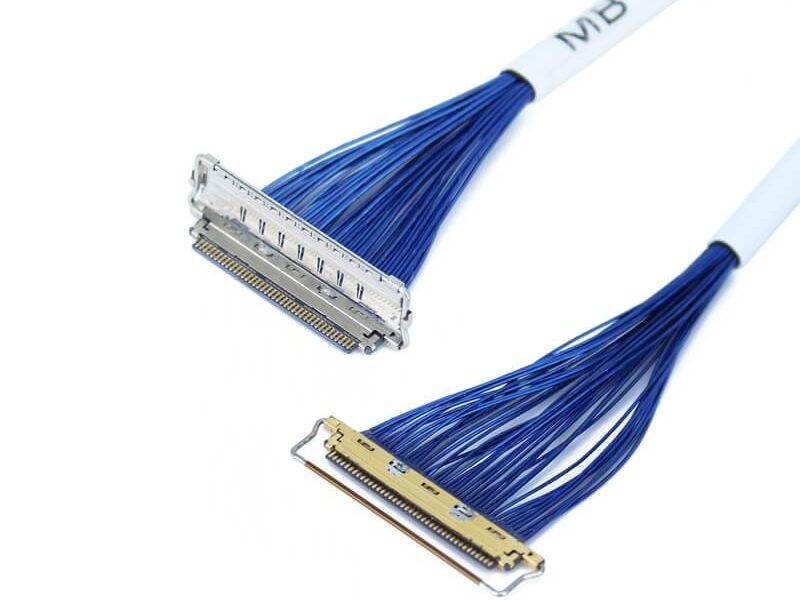
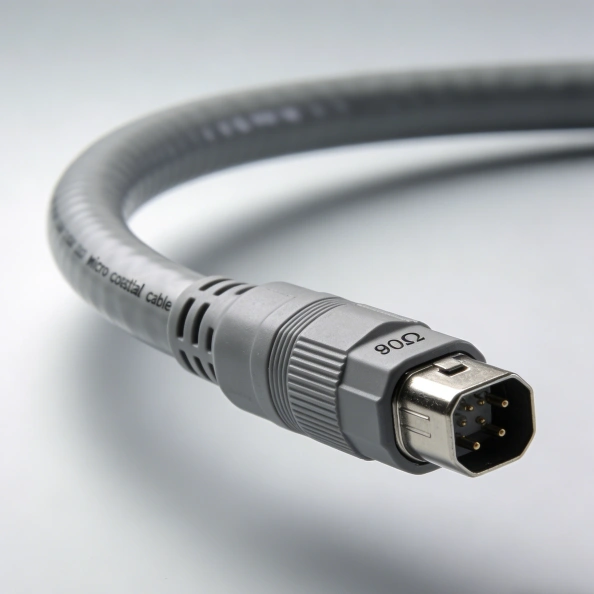
A micro coaxial cable is a very small‑diameter, fully shielded twisted pair (in this case, one differential pair) with controlled characteristic impedance. The “90Ω” figure refers to the cable’s differential impedance, which is determined by conductor geometry, dielectric constant, and shielding. In the consumer electronics ecosystem, 90Ω micro coax is widely used for LVDS/DisplayPortand some USBhigh‑speed links, where the 90Ω differential standard applies. It is common to see 90Ω-rated micro coax assemblies with very fine conductors (e.g., 40 AWG) and dual‑layer shielding for EMI control. These attributes make 90Ω micro coax attractive when routing dense, high‑speed differential pairs in thin, tight spaces

Why 90Ω micro coax is generally not used for native MIPI DSI/CSI‑2

MIPI D‑PHY’s electrical specification calls for 100Ω differentialterminations. Using 90Ω micro coax for native MIPI links creates a 10Ω (10%) impedance mismatch, which increases differential return loss, raises reflections, and can degrade eye opening and jitter margins—especially at multi‑gigabit‑per‑lane speeds. For this reason, native MIPI designs typically use 100Ω‑controlledPCB traces and cable/connector systems (FPC, micro‑coax rated at 100Ω, or other 100Ω differential links). In practice, you will see 90Ω micro coax used for LVDS/DPcamera or display links, while MIPI links stick to 100Ωsystems or, when distance extension is needed, to alternative long‑reach SerDes standards

When you might still see 90Ω micro coax near MIPI systems

In complex products, 90Ω micro coax sometimes appears in “parallel” high‑speed lanes that are not MIPI D‑PHY but share the same connector/cable routing. Examples include LVDS/DisplayPortdisplay paths, USB 3.xSuperSpeed links, or other differential standards that truly require 90Ω. It is critical in such cases to keep these 90Ω lanes electrically and mechanically isolated from MIPI 100Ω pairs to avoid crosstalk and mode conversion. Always match the connector footprint and impedanceto the actual standard in use; do not assume interchangeability between 90Ω and 100Ω systems

How to extend MIPI beyond short FPC lengths

If the goal is longer reach rather than a specific 90Ω target, the industry offers robust, standardized options:

  • FPD‑Link IIIand GMSLSerDes bridges convert MIPI CSI‑2/DSI to serialized links over coaxial or STP, enabling 10–15 mcable runs with high immunity and low latency. Examples include TI’s DS90UB941AS‑Q1for DSI→FPD‑Link III, and Analog Devices’ MAX9295D(GMSL2 serializer) paired with MAX9290(GMSL deserializer) for CSI‑2 over 50Ω coax or 100Ω STPwith lengths exceeding 15 m. These solutions are widely used in automotive and embedded vision for long‑cable camera/display interconnects61112.
  • •For native MIPI over flexible interconnects without SerDes, practical experience shows that keeping FPC lengths under ~300 mm at 1.5 Gbps per lane(and shorter at higher rates) is advisable to maintain signal integrity. When longer flex is unavoidable, consider re‑timers/redrivers, better FPC materials/stack‑ups, or move to a coax‑based SerDesapproach7.
  • •Emerging long‑reach MIPI physical layers such as MIPI A‑PHYtarget multi‑meter links with high bandwidth and are standardized for automotive and industrial use. If your system needs both long distance and native MIPI semantics, A‑PHY is worth evaluating7.

Selecting the right interconnect for your MIPI link

  • •Match the impedanceto the standard: use 100Ω differentialfor MIPI D‑PHY (CSI‑2/DSI). If you are using LVDS/DP/USB 3.x, use 90Ω differential. Do not mix 90Ω and 100Ω on the same differential pair.
  • •Choose the right connector family and pitchfor your channel count and space. Many MIPI camera/display modules use I‑PEX Micro‑Coaxor similar fine‑pitch connectors; ensure the connector’s differential impedance and footprint are specified for your target standard.
  • •Control return loss and insertion loss: work with your supplier to verify differential impedance (TDR), insertion loss vs. frequency, and shielding effectiveness. For very high data rates or long lengths, prefer double‑shieldedmicro coax and robust connector shielding.
  • •Plan for mechanical strain reliefand flex lifeif the cable will be routed through hinges or moving parts. Micro coax is more fragile than FPC; consider strain‑relief brackets and service loops.
  • •When in doubt between FPC vs. micro coax, prefer FPC for very short, dense links (lower cost, easier routing), and micro coax when you need better EMI control, controlled impedance in a tight bundle, or a transition to a longer‑reach SerDes path9.

Validation checklist for MIPI links using coaxial or FPC interconnects

  • •Perform TDRon the differential pairs to confirm you are within ±10%of the target impedance (100Ω for MIPI).
  • •Measure IL/RLacross the operating bandwidth (e.g., up to several GHz) to ensure the cable/connector loss budget leaves sufficient eye margin at your chosen lane rateand lane count.
  • •Validate EMI/EMCwith near‑field scans and compliance tests; ensure shields are continuous and connector ground returns are solid.
  • •For long flex or high‑speed designs, use eye‑diagrammeasurements (with appropriate compliance fixtures) and protocol‑level stress tests (frame drops, line errors) under worst‑case temperature and voltage.
  • •If you are extending beyond native MIPI range, budget for SerDes equalization(Tx pre‑emphasis, Rx CTLE/DFE) and verify link stability with real‑world cable samples and connectors.

Putting it all together

A 90Ω micro coaxial cableis an excellent choice for standards that specify 90Ω differential impedance, such as LVDS/DisplayPort/USB 3.x, and it offers superb EMI control and mechanical flexibility in compact designs. For native MIPI DSI/CSI‑2, stick with 100Ω differentialinterconnects to meet the D‑PHY specification and preserve signal integrity. When your system demands longer cable reachesthan MIPI can natively support, adopt a coax‑based SerDessolution (FPD‑Link III, GMSL, or A‑PHY), which are purpose‑built for multi‑meter links with high reliability. Understanding the impedance, standard, and reach requirements of your specific interface—and validating with the right measurements—will ensure a robust, high‑performance interconnect for both cameras and displays

Ever experienced frustrating video lag during an important video call? Watched pixelation ruin a live sports stream? Or encountered mysterious errors in high-tech medical equipment? Often, the unseen culprit lies in the cables struggling to handle the high-frequency signals powering our digital world. As signals push into gigahertz (GHz) territory for faster data transfer in 5G phones, advanced WiFi, medical imaging, and autonomous vehicles, traditional wiring methods simply hit a wall. This is where ​micro-coaxial cables emerge as the quiet revolutionaries, solving critical transmission chall.

Read more →

As display resolutions, refresh rates, and color depths continue to climb, the demand for stable, high-bandwidth video transmission has never been greater. For many OEMs and system integrators, the micro coaxial cable for DisplayPort high bandwidthapplications has become a critical component in ensuring signal integrity, design flexibility, and long-term reliability. This article provides an in-depth look at why micro coaxial cables are essential for high-bandwidth DisplayPort, the technical challenges involved, and how to select the right cable for your next-generation display or computing project.

Read more →

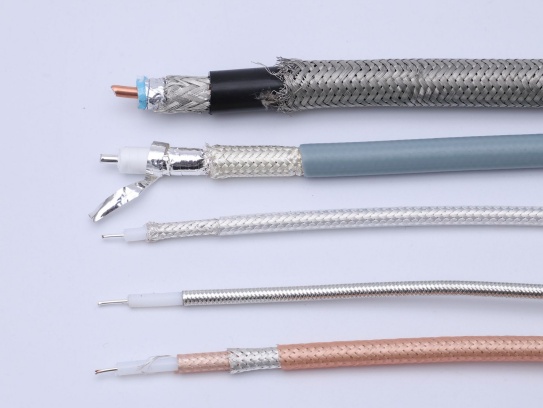
What Defines a Coaxial Cable?‌A coaxial cable (“coax”) has a concentric layered design that ensures signal integrity: ‌Central Conductor‌: A solid or stranded copper core for signal transmission.‌Dielectric Insulator‌: Surrounds the conductor, maintaining impedance (typically 50Ω or 75Ω).‌Metallic Shielding‌: Braided copper or aluminum foil to block electromagnetic interference (EMI).‌Outer Jacket‌: Protective PVC or thermoplastic layer.‌Examples‌: RG-6 (TV/internet), LMR-400 (RF systems), semi-rigid coax (aerospace). ‌2. What Are Non-Coaxial Cables?‌Non-coaxial cables lack the concentric shie.

Read more →

The manufacturing of coaxial cables involves complex processes with inherent risks, from high-voltage testing to mechanical operations. As industry regulations tighten and technological advancements emerge, manufacturers are adopting comprehensive safety protocols to protect workers and ensure compliance. This article outlines critical safety measures being strengthened across the production chain. Addressing Electrical Hazards High-voltage dielectric testing, a standard procedure to verify insulation integrity, poses significant risks due to charge accumulation in coaxial cables. These cables a.

Read more →

Coaxial cables are indispensable in high-speed data transmission, industrial automation, and telecommunications infrastructure—their performance directly determines the reliability of end-use systems. However, traditional coaxial cable supplier evaluation systems have long been plagued by critical flaws: overreliance on static quality audits, neglect of dynamic delivery flexibility, and disconnection between cost analysis and long-term value. These gaps often lead to supply chain disruptions, inconsistent product quality, and missed opportunities for cost optimization. To solve these pain points, an i.

Read more →

‌Technical Foundations of Coaxial Cables in Surveillance‌‌A. Cable Types and Specifications‌Surveillance systems primarily use ‌RG-59‌, ‌RG-6‌, and ‌RG-11‌ coaxial cables, differentiated by their impedance, shielding, and bandwidth: Type Impedance Bandwidth Max Distance (Unamplified) Common Use CaseRG-59 75 Ω 1 GHz 250 m (720p) Short-range analog CCTVRG-6 75 Ω 3 GHz 500 m (1080p) HD-TVI/AHD systemsRG-11 75 Ω 3 GHz 800 m (4K) Long-range or high-resolution‌B. Signal Transmission Technologies‌‌Analog CCTV‌: Traditional baseband video (NTSC/PAL) over RG-59, supporting resolutions up to 720×576 pix.

Read more →

Can't find what you're looking for?

Our customer support team is ready to assist you with any questions or concerns.

Search FAQs

Popular Tags

More Products

Our factory offers high-quality products at competitive prices

Precision Instrument Micro-Coax

Precision Instrument Micro-Coax

H1: Precision Instrument Micro-Coax – Engineered for Critical Signal Integrity Meta Description: Discover Precision Instrument Micro-Coax: Miniature coaxial cable solution optimized for high-frequency signal transmissio.

I-PEX Micro Coaxial Cable

I-PEX Micro Coaxial Cable

Overview of I-PEX Micro Coaxial Cable Connectors I-PEX is a global leader in micro coaxial cable solutions, specializing in high-performance IPEX micro coax connectors and micro coaxial cable assemblies. These products are designed for.

Contact Us Micro Coaxial Cable factory-(FRS).


Feel free to reach out to us for any inquiries or orders

Call Us

Have a question? Give us a call!

+8618818785005

Email Us

Send us an email and we'll get back to you soon.

sales@custom-cable-assemblies.com
       
Home Products Contact