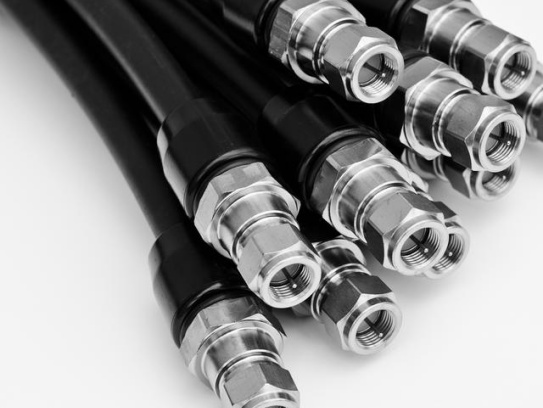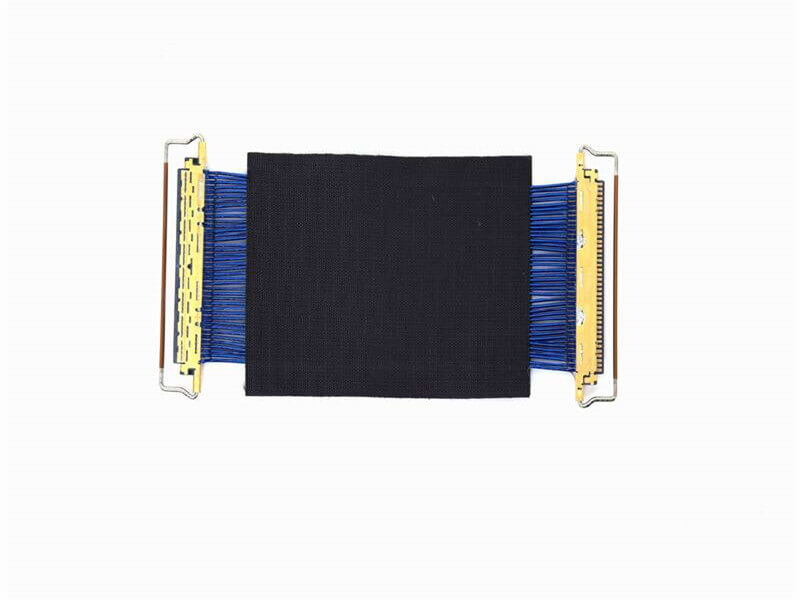

In the rapidly evolving landscape of electronic components, micro-coaxial cables stand as a critical backbone for high-speed data transmission, signal integrity, and miniaturized device connectivity. As industries like consumer electronics, automotive, medical devices, and industrial automation push toward smaller, more durable, and high-performance systems, the demand for specialized micro-coaxial cables has never been higher. Among these specialized variants, micro-coaxial cables with abrasion resistance have emerged as a game-changer, addressing the persistent challenge of cable degradation due to .
Read more →Compact Structure and Precision EngineeringMicro coaxial cables are distinguished by their miniature size, typically with outer diameters ranging from 0.25 mm to 2 mm. Despite their small footprint, they maintain a layered structure similar to standard coaxial cables: Inner Conductor: A thin, high-purity copper or silver-plated copper core ensures low resistance and efficient signal transmission.Dielectric Insulation: A lightweight, low-loss material (e.g., PTFE or foamed polyethylene) surrounds the conductor, providing electrical insulation and minimizing signal attenuation.Shielding Layer.
Read more →The successful completion of the Environmental Impact Assessment (EIA) for coaxial cable systems marks a pivotal advancement in the telecommunications industry’s journey toward sustainability. This assessment, conducted in alignment with international standards such as IEC 61196-1-200:2022 and T/CCSA 255-2019, evaluates the entire lifecycle of coaxial cables—from raw material extraction to end-of-life disposal—to ensure compliance with stringent environmental regulations. By addressing critical concerns like resource consumption, pollution control, and circular economy principles, this achie.
Read more →As a micro coaxial cable manufacturer, we frequently receive inquiries about signal loss in miniature cable assemblies. This is a critical issue, as these assemblies are used in high-frequency, high-density applications where even minor losses can significantly impact system performance. This article provides a practical guide to identifying and resolving signal loss issues, combining theoretical knowledge with actionable manufacturing and application insights. 🔍 Understanding Signal Loss in Micro Coaxial Cables Signal loss, or attenuation, is the reduction in signal power as it travels thro.
Read more →In response to the increasingly diverse and specialized needs of various industries for coaxial cables, our factory is proud to officially launch a comprehensive coaxial cable customization service. This service aims to provide tailored solutions to meet the unique requirements of our customers, ensuring that the coaxial cables they use are perfectly suited to their specific applications. Our customization service covers a wide range of aspects. In terms of specifications, we can customize coaxial cables with different impedances, such as 50 ohms and 75 ohms, to adapt to various communication and t.
Read more →Introduction Particle accelerators, the giant “microscopes” used in physics research and medical applications, rely on an unsung hero: micro-coaxial cables. These specialized cables, often thinner than a pencil lead, form the nervous system of accelerators by transmitting high-frequency signals with minimal interference. Key Functions Signal Integrity at High Frequencies Carry control signals (typically 1-18 GHz) for precise magnet operation Maintain signal quality over long distances in accelerator tunnels Beam Monitoring Connect beam position monitors (BPMs) to diagno.
Read more →Can't find what you're looking for?
Our customer support team is ready to assist you with any questions or concerns.
Search FAQs
Related Articles
How to select Coaxial Cable Assemblies for industrial control systems
Industrial control systems (ICS) are the backbone of modern manufacturing, energy, transportation, and infrastructure sectors, relying hea.
Bulk Ethernet and Coaxial Cable Bundles for Installers
When installers embark on large – scale projects, having the right cabling solutions is paramount. Bulk Ethernet and coaxial cable b.
What factors affect the performance of Coaxial Cable Assemblies
Coaxial Cable Assemblies (CCAs) are critical components in countless systems—from consumer electronics (e.g., TV antennas, Wi-Fi routers) .
What Is Micro Coaxial Cable and Where Can I Download Its Datasheet?
Micro coaxial cable (or micro-coax) is a type of coaxial cable with an extremely small diameter, designed to carry high-frequency or high-.
Methods for Aging Detection in Micro Coaxial Cables
Electrical Performance Degradation AnalysisA. Insertion Loss and Return Loss MonitoringBaseline vs. Aged Comparison: Frequency .
Hirose DF36 Micro Coaxial Cable Assembly FAQs
Product overview and where it’s used The Hirose DF36is a 0.4 mm pitch, vertical-matingmicro-coaxial cable connector family built for u.