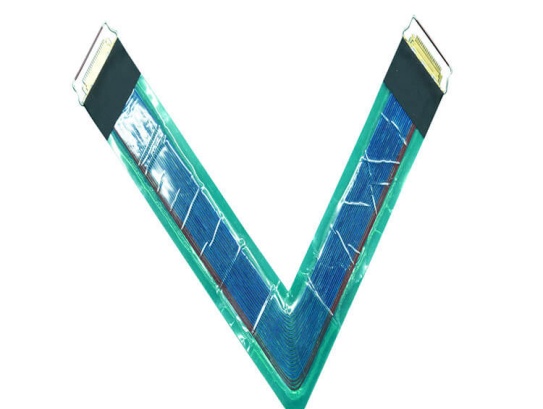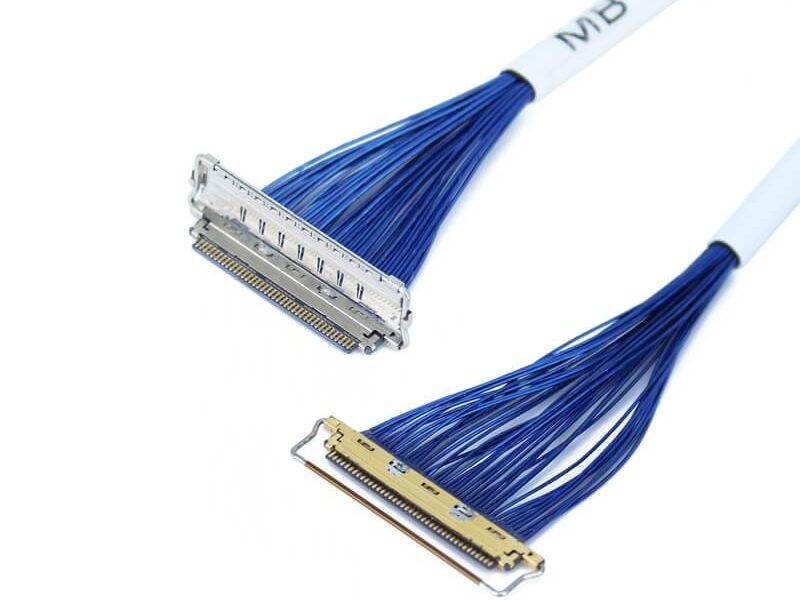

A significant milestone has been reached in our factory’s history as we proudly announce the successful mass production of our high – performance coaxial cables. This achievement is not just a result of months of hard work but also a testament to our commitment to technological innovation, quality control, and meeting the ever – growing demands of the market. Technological Breakthroughs Paving the Way The journey to mass production was filled with challenges, and overcoming them required significant technological breakthroughs. One of the key areas we focused on was the materia.
Read more →Structure and Material CompositionSemi-rigid coaxial cables are defined by their robust, unyielding construction: Inner Conductor: Made of high-purity copper or silver-plated copper for optimal conductivity.Dielectric Layer: A solid polytetrafluoroethylene (PTFE) or extruded foam dielectric ensures minimal signal loss and stable impedance.Outer Conductor: A seamless tubular shield of solid copper (or aluminum) provides exceptional shielding effectiveness (typically >100 dB). Unlike braided shields, this solid-metal outer layer eliminates gaps, ensuring near-perfect EMI/RFI protection.O.
Read more →Micro coaxial cables are increasingly vital in modern high-frequency and high-speed applications due to their unique structural and performance characteristics. Below are their key advantages: 1. High Bandwidth and Efficient Data TransmissionMicro coaxial cables excel in high-bandwidth applications, such as 5G networks and data centers, where they support ultra-fast data transfer rates exceeding 100 Gbps2. Their multi-core design (e.g., eight-core configurations) enables simultaneous transmission of multiple signals, optimizing efficiency in high-definition video streaming and real-time data pro.
Read more →Military-grade micro-coaxial cables are critical components in defense systems, aerospace technology, and advanced communication networks. At the heart of their performance lies the dielectric material, which ensures signal integrity, durability, and resistance to extreme conditions. This article explores the most common dielectric materials used in military-grade micro-coaxial cables, their properties, and why they matter for high-stakes applications. Why Dielectric Materials Matter in Military-Grade Cables Dielectric materials are non-conductive substances placed between the inner conduc.
Read more →1. Physical Dimensions and FlexibilityStandard Coaxial CablesDiameter: Typically range from 4 mm to 25 mm (e.g., RG-6: 6.9 mm, RG-11: 10.3 mm).Construction: Rigid or semi-rigid design with thicker insulation and shielding layers.Flexibility: Limited bending capability due to larger size and stiffer materials.Micro Coaxial CablesDiameter: Ultra-thin, often between 0.5 mm to 2.2 mm.Construction: Optimized for miniaturization, using advanced materials like fluoropolymer insulation.Flexibility: Highly flexible, designed to fit in compact spaces (e.g., smartphone cameras, endoscopes).Key.
Read more →In industries ranging from power transmission to telecommunications, coaxial cables are often exposed to high – voltage environments. A passed high – voltage resistance test is not just a routine certification; it is a critical guarantee that the cable can operate stably, safely, and durably under demanding conditions. For engineers, procurement teams, and end – users searching for this topic, understanding the value of this test result and its practical implications is key to making informed decisions about cable selection and system reliability. Key Standards Guiding the High &#.
Read more →Can't find what you're looking for?
Our customer support team is ready to assist you with any questions or concerns.
Search FAQs
Related Articles
Coaxial Cable
A coaxial cable is a type of cable widely used in communication and data transmission. Its core structure consists of four concentric laye.
Can Micro Coaxial Cables Be Used for High-Frequency Applications
High-frequency applications, such as telecommunications, medical devices, and aerospace systems, demand cables that can transmit signals w.
Our Coaxial Cable Adopted in Mining Communication
The underground mining environment is one of the harshest on Earth, where communication systems are subjected to extreme conditions that t.
Unveiling the Power: Micro Coaxial Cable Vibration Resistance Capabilities
Introduction: Precision in Motion Demands Resilience In the intricate dance of modern electronics, where devices vibrate on factory flo.
Coaxial Cable Quality Inspection Process Strengthened
Coaxial cables are indispensable in telecommunications, broadcasting, and aerospace, where even minor quality flaws can lead to signal los.
How to Identify Counterfeit Micro Coaxial Cable Connectors (MHF4/U.FL, etc.)
Counterfeit micro coaxial connectors (commonly types like MHF4, U.FL, SMP, MCX) pose a significant threat to electronic device performance.