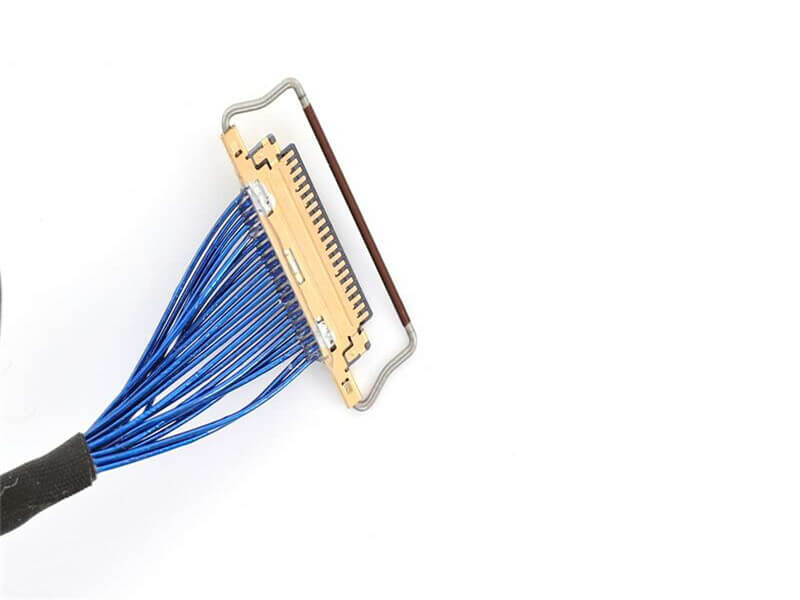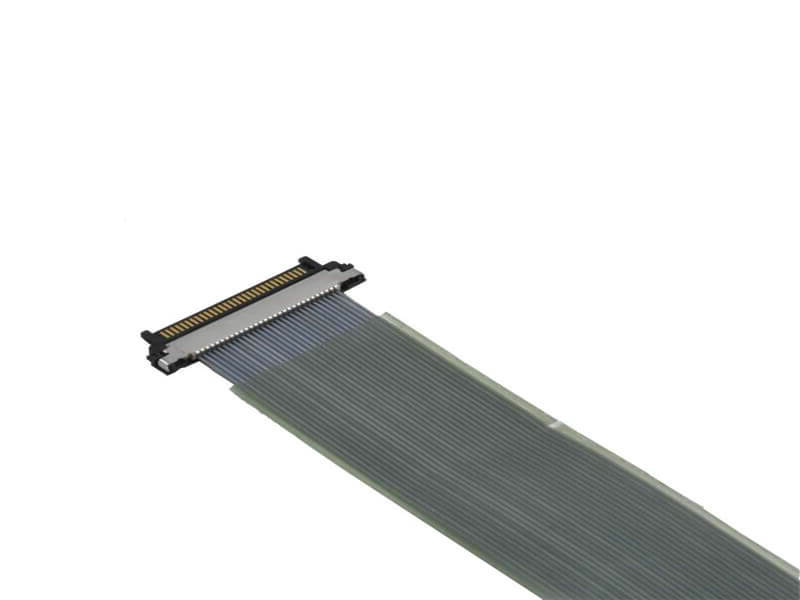

In the ever-evolving landscape of technological advancements, the demand for more reliable and durable electronic components is constantly on the rise. Among these, micro-coaxial cables play a crucial role in various industries, from telecommunications and consumer electronics to aerospace and automotive. In recent years, a significant breakthrough has been made with the development of new polymer compounds, which have proven to greatly enhance the durability of micro-coaxial cables. Micro-coaxial cables are designed to transmit high-frequency electrical signals with minimal loss and interference. .
Read more →The relentless hum, the powerful thuds, the constant tremors – heavy machinery operates in a world dominated by vibration. While essential for demanding industrial tasks, this vibration poses a silent, pervasive threat to the intricate nervous system of your equipment: its cables, particularly delicate micro-coaxial cables. These vital lifelines transmit critical signals for data, control, instrumentation, and communication. Yet, when subjected to the harsh vibration common in mining equipment, large presses, generators, CNC machines, or agricultural machinery, standard cable clamps fall tragical.
Read more →The demand for miniaturized, high-frequency electronics in applications like 5G, medical implants, and aerospace systems has driven the development of ultra-thin micro-coaxial conductors. However, a critical challenge in these tiny cables is the skin effect—a phenomenon that degrades signal integrity at high frequencies. This article explains how the skin effect impacts ultra-thin micro-coaxial conductors, why it matters, and actionable strategies to mitigate its effects for engineers and designers. What Is the Skin Effect? The skin effect refers to the tendency of alternating current (AC).
Read more →The question of whether coaxial cable assemblies can be used in high-pressure environments is a critical one for industries ranging from oil and gas to marine exploration, aerospace, and industrial manufacturing. The short answer is yes—but with specific design, material, and testing considerations tailored to the unique challenges of high-pressure environments. High-pressure environments, which typically refer to settings where pressure exceeds standard atmospheric pressure (14.7 psi or 1 bar) by significant margins, demand components that can maintain structural integrity, electrical performance, an.
Read more →In the era of angstrom-scale semiconductors and exploding data demands, SerDes (Serializer/Deserializer) technology stands as the backbone of high-speed connectivity for enterprise computing, AI, HPC, and hyperscale data centers. As industries race to adopt next-generation protocols like PCIe Gen6 and 224GbE, the need for reliable, high-performance transmission media has never been more critical—and more challenging. The bottleneck? Traditional micro coaxial cables and parallel bus designs struggle to keep pace with the 56Gbps PAM4 data rates required by modern SerDes architectures. Issues like sig.
Read more →Marine communication serves as the unshakable lifeline for safe and efficient maritime operations. It connects vessels to onshore control centers, coordinates navigation paths to avoid collisions, enables real – time data sharing between crew members, and ensures rapid response in emergency situations. Behind this seamless communication network, there is a component that is often underestimated but plays a crucial role: coaxial cables. Specifically designed for the harsh and unpredictable marine environment, our Coaxial Cable Used in Marine Communication is built to tackle challenges that ordina.
Read more →Can't find what you're looking for?
Our customer support team is ready to assist you with any questions or concerns.
Search FAQs
Related Articles
How to order bulk quantities of Coaxial Cable Assemblies
Ordering bulk quantities of coaxial cable assemblies is a critical process that directly impacts project timelines, budget efficiency, and.
Hybrid Cables: Integrating Fiber Optics with Micro-Coaxial Conductors – The Future of High-Performance Connectivity
In the relentless pursuit of faster data transfer, higher bandwidth, and more efficient power delivery within complex systems, a revolutio.
Coaxial Cable for Augmented Reality Systems: Your Hidden Connection Hero
Forget floating holograms – real-world Augmented Reality (AR) experiences demand rock-solid connections. While wireless tech grabs headlin.
How to Protect Coaxial Cable Assemblies from Corrosion
Coaxial cable assemblies are critical components in telecommunications, aerospace, industrial automation, and consumer electronics, transm.
What are Coaxial Cable Assemblies and how do they work?
In the modern world of signal transmission, where reliable and high-quality data, audio, and video transfer are essential across countless.
Can Coaxial Cable Assemblies be recycled after use?
The short answer is yes, coaxial cable assemblies can be recycled after use—but the process requires careful handling due to their composi.