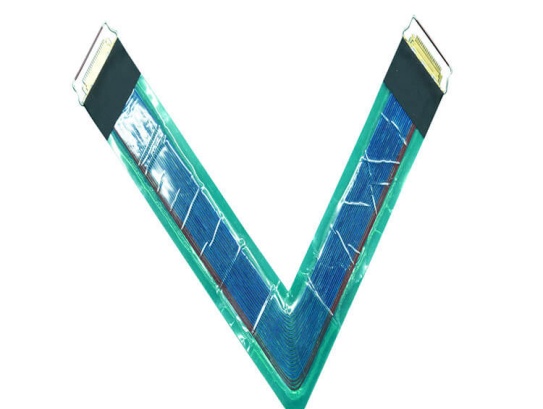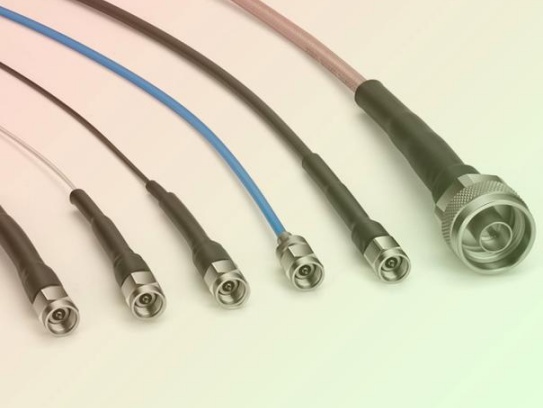

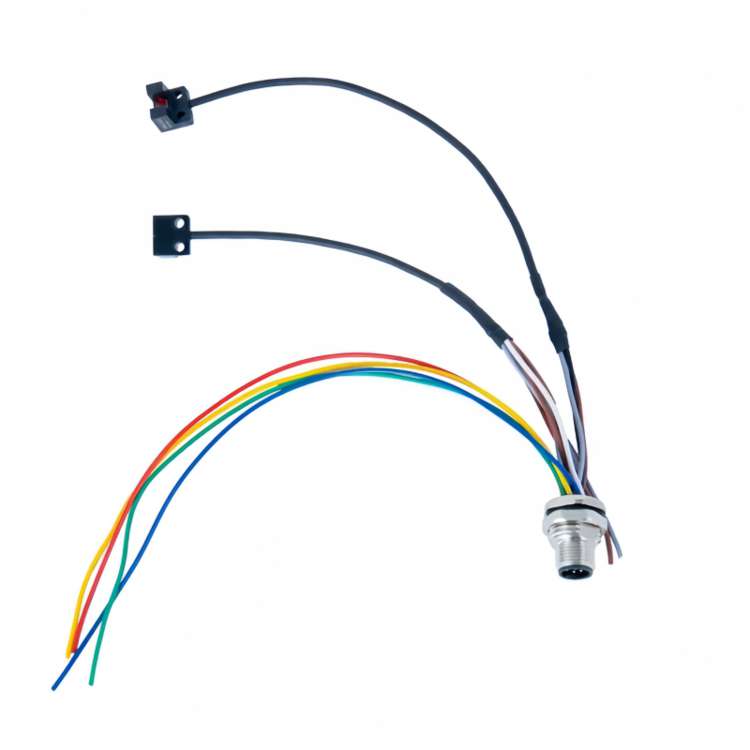
In the demanding arenas of defense, aerospace, and industrial applications, reliability isn’t optional – it’s mission-critical. Equipment deployed on battlefields, aboard aircraft, within satellites, or on rugged factory floors must perform flawlessly under punishing conditions. When it comes to transmitting vital signals and power, Military-Grade Micro-Coaxial Cables represent the pinnacle of resilience, explicitly designed to withstand extreme environments where standard cables would rapidly fail. This article explores why these specialized cables are the indispensable backb.
Read more →Imagine a future where downloading full HD movies takes seconds, complex brain scans happen in real-time, and next-gen technologies like AI and the metaverse flow without a stutter. The key? Unleashing unprecedented speed and bandwidth capabilities in our data cables. Yet, copper, the backbone of our current data highways, is hitting its physical limits. The solution may lie in a wonder material: graphene. Groundbreaking research in graphene-based micro-coaxial cables promises to smash existing speed barriers, offering a glimpse into a transformative future for global connectivity. Why Our C.
Read more →Bend Radius Challenges in 5G/6G InfrastructureA. Massive MIMO AntennasModern 5G base stations use 64–256 antenna elements to enable beamforming. Micro-coaxial cables route signals between transceivers and radiating elements, but tight bends near the antenna face can distort phase alignment. Critical Parameters:Phase Stability: <1° variation per 90° bend at 28 GHz (n257 band).Insertion Loss: <0.2 dB/cm at 39 GHz (n260 band).Case Study: Ericsson’s AIR 6488 antenna uses 1.2mm cables with a 5× OD bend radius (6mm), achieving ±2° phase consistency across 64 channels.B. mmWave FR2 De.
Read more →In the world of concert sound systems, achieving high – quality audio reproduction is of utmost importance. One crucial component that plays a significant role in ensuring excellent sound transmission is the coaxial cable. Understanding Coaxial Cables Coaxial cables are designed with a unique structure. They consist of a central conductor, which is typically a copper wire. This central conductor is surrounded by an insulating layer, often made of materials like polyethylene. Over the insulation, there is a braided or solid outer conductor, usually made of copper or aluminum, which provides.
Read more →In the field of coaxial cable applications, whether it is for communication, broadcasting, or other industries, reliable after-sales service is crucial for users. Recently, good news has come: the coaxial cable after-sales service hotline has been fully upgraded, aiming to provide users with more efficient, comprehensive, and high-quality service experience. The upgraded after-sales service hotline has made significant improvements in response speed. In the past, users might have to wait for a long time when calling the hotline, especially during peak periods. But now, with the optimization of the .
Read more →Micro coaxial cables are increasingly vital in modern high-frequency and high-speed applications due to their unique structural and performance characteristics. Below are their key advantages: 1. High Bandwidth and Efficient Data TransmissionMicro coaxial cables excel in high-bandwidth applications, such as 5G networks and data centers, where they support ultra-fast data transfer rates exceeding 100 Gbps2. Their multi-core design (e.g., eight-core configurations) enables simultaneous transmission of multiple signals, optimizing efficiency in high-definition video streaming and real-time data pro.
Read more →Can't find what you're looking for?
Our customer support team is ready to assist you with any questions or concerns.
Search FAQs
Related Articles
Micro-Coaxial Cables in Edge Computing: Your Secret Weapon for Latency Reduction
Introduction: The Need for Speed at the Edge Edge computing is revolutionizing how we process data. By bringing computation closer to w.
What Are the Military Specifications for Micro Coaxial Cables?
Micro coaxial cables are the unsung heroes of modern military electronics. Packing powerful signal capabilities into an ultra-thin profile.
How to protect Coaxial Cable Assemblies from physical damage
Coaxial cable assemblies are critical for reliable signal transmission in industries like telecommunications, aerospace, and industrial au.
Best Practices for Routing Micro-Coaxial Cables in Tight Spaces
Routing micro-coaxial cables in tight spaces is a common challenge in modern electronics, aerospace, medical devices, and robotics. These .
Characteristics of Micro Coaxial Cables
Micro coaxial cables are miniaturized coaxial cables distinguished by the following key features: 1. Compact Structure with Multi-Layer S.
What is Low-Loss Phase-Stable Micro-Coaxial Cable?
Confused by technical jargon like “low-loss phase-stable micro-coaxial cable”? You’re not alone. This specialized c.