
Micro Coaxial Cable factory-(FRS)
Overview and definition
Ultra-fine micro coaxial cable with a nominal 0.25 mm outer diameter (OD)is a miniature coaxial interconnect built to carry high‑speed, high‑frequency signals in extremely space‑constrained environments. It preserves the classic coaxial stack—center conductor, dielectric, shield, and jacket—but scales it down so the overall diameter is about the thickness of a human hair. In practice, “micro coax” refers to cables with ODs typically below 1 mm, and 0.25 mm variants are widely used where size, impedance control, and EMI performance must all be optimized. Commercial examples include 50 Ω micro coax in 0.25 mm ODPFA‑insulated constructions for medical probes and industrial inspection, reflecting the maturity of this class of cable in demanding applications.
Structure and how it works
A 0.25 mm OD micro coax transmits signals through a controlled electromagnetic field confined between the center conductor and the surrounding shield. The center conductor carries the signal; the dielectric (commonly PFA) fixes the geometry and dielectric constant to stabilize characteristic impedance(frequently 50 Ω, though some systems use 45 Ω); the shield (often a tinned copper spiralor braid/foil combination) provides high shielding effectiveness and defines the return path; the outer jacket (here, PFA) adds mechanical robustness and chemical resistance. This structure inherently suppresses EMI/EMCand minimizes crosstalk, enabling multi‑gigabit per second links in compact assemblies. In high‑speed image links such as MIPI CSI‑2or LVDS, each micro coax channel is individually shielded, which improves EMI performance versus unshielded FPC while maintaining precise impedance and clean eye diagrams.
Key specifications and typical performance
Representative datasheet values for a 0.25 mm OD, 50 Ω micro coax show how the structure translates into real‑world performance:
| Parameter | Typical value | Notes |
|---|---|---|
| Outer diameter | 0.25 mm | Compact profile for dense routing |
| Impedance | 50 Ω | Common for high‑speed single‑ended/differential links |
| Capacitance | 110.2 pF/m | Low capacitance helps high‑speed edges |
| Velocity of propagation | 70% | Relative to c; affects timing and delay |
| Attenuation | 1 dB/m @ 10 MHz | Low‑frequency loss; scales with frequency |
| Operating temperature | −70 °C to +150 °C | Wide range for harsh environments |
| Shielding | Tinned copper spiral | Good flexibility and shielding |
| Jacket/insulation | PFA | High‑temperature, low‑loss dielectric |
These figures illustrate why 0.25 mm OD micro coax is favored in medical probes, inspection gear, and other small‑form, high‑integrity links: low capacitance and stable impedance combine with excellent shielding in a tiny cross‑section.
Common applications
Design considerations and trade‑offs
Sourcing and availability
0.25 mm OD micro coax is available as off‑the‑shelf components and as custom micro‑coax cable assemblies. For example, Alpha Wireoffers a 50 Ω, 0.25 mmOD micro coax (PFA jacket/insulation, tinned copper spiral shield) suitable for prototyping and production, with published data on attenuation, capacitance, and temperature range. Many suppliers also provide I‑PEX‑compatible micro coax assemblies for camera/display links, enabling fast integration into existing PCB footprints and modules.
Our factory offers high-quality products at competitive prices
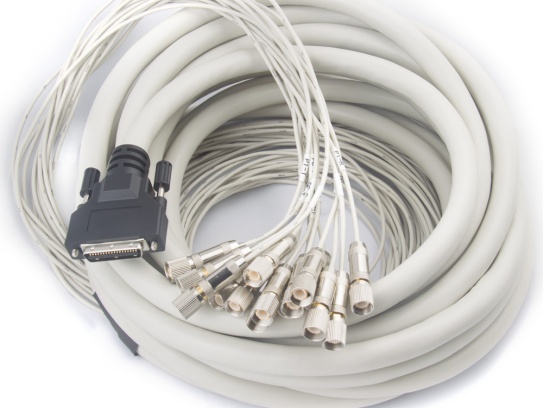
Meta Description: Discover our premium Flexible Micro-Coaxial Assemblies—engineered for high-frequency signal integrity, durability, and versatility in aerospace, medical, telecom, and robotics applications. What Are Flexible .
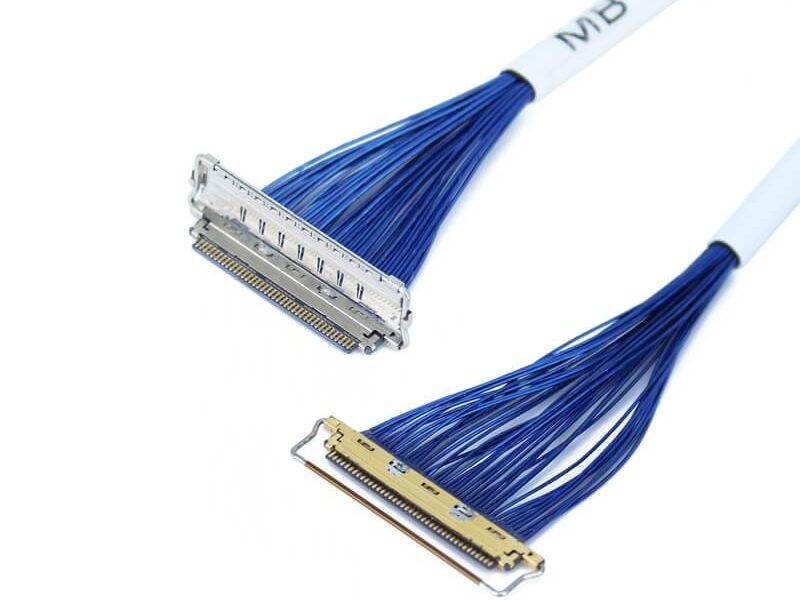
In LVDS (Low Voltage Differential Signaling) display systems, Micro-coaxial Cable (also referred to as Micro Coax Cable) stands out as an optimal solution for high-resolution, high-reliability signal transmission. Designed to meet the str.
Feel free to reach out to us for any inquiries or orders