What Is Signal Integrity Micro Coaxial Cable and Why It Matters for Data Center High-Speed Links - Micro Coaxial Cable factory-(FRS)
Micro Coaxial Cable factory-(FRS)
INFO
As data centers push toward 400G/800G and even 1.6T interconnects, traditional PCB traces and bulky coax are no longer sufficient. Signal integrity micro coaxial cable assemblies have emerged as a critical enabler for maintaining performance in these high-density, high-frequency environments.
📡 What Is a Signal Integrity Micro Coaxial Cable?
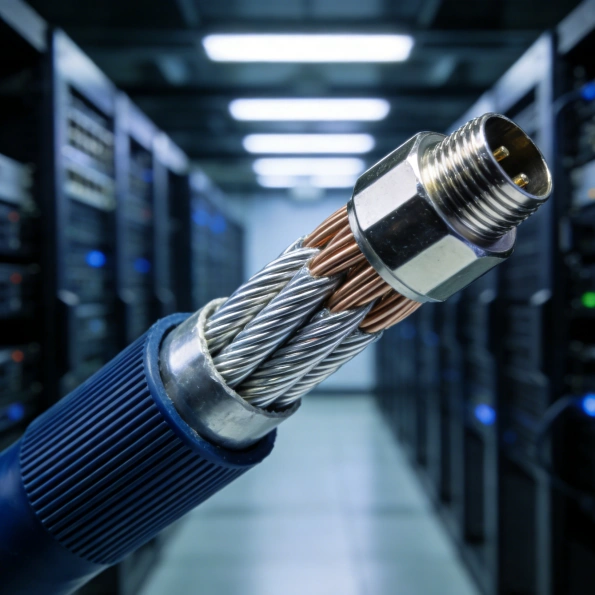
A signal integrity (SI) micro coaxial cable is a miniaturized coaxial cable engineered to preserve signal quality at multi-gigabit data rates. It features a center conductor, dielectric, shielding, and jacket, but is optimized for high-frequency performance, impedance stability, and minimal loss.
Miniaturization: With outer diameters as small as 0.22 mm, they are designed for dense routing.
Precise Construction: The center conductor typically ranges from AWG 30 to 46(0.30 mm to 0.048 mm). A smaller AWG number indicates a thicker conductor.
Controlled Impedance: Most are specified at 50 Ωfor differential high-speed links or 75–90 Ωfor specific RF/analog applications.
Superior Shielding: A continuous outer conductor and often a jacket provide excellent EMI protection and low crosstalk, outperforming FPC/FFC cables in high-speed scenarios.
💻 Why Data Centers Need Micro Coax for High-Speed Links
As data rates climb from 56 Gbps to 112 Gbps PAM4 and beyond, the physics of high-frequency transmission become unforgiving. The signal integrity micro coax cable directly addresses several key challenges in modern data centers:
Overcoming PCB Trace Loss At 56 Gbps PAM4 and higher, PCB traces suffer significant insertion loss. Replacing long PCB traces with short micro-coax jumpers between ASICs, retimers, and connectors drastically reduces loss, especially at frequencies from 10–40+ GHz.
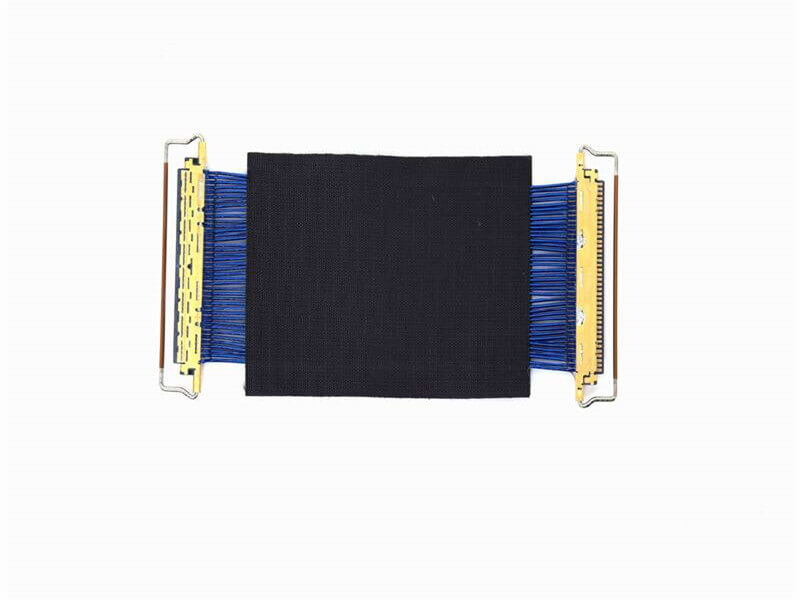
Enabling High-Density, Low-Profile Interconnects To support 400G/800G, ports must be smaller and closer together. Low-profile micro-coax cable assemblies, like the I-PEX CABLINE® series (as thin as 2.0 mm), can be placed under heat sinks near ASICs, enabling more ports per line card and improving airflow.
Maintaining Signal Fidelity SI micro-coax is designed to minimize critical impairments:
Insertion Loss (IL): Minimized through low-loss dielectrics and precise conductor geometry.
Return Loss (RL): Achieved with tight impedance control (e.g., 50 ± 5 Ω).
Crosstalk (NEXT/FEXT): Reduced via excellent shielding and differential pair routing.
Improving Thermal Management Smaller, more flexible cables (e.g., 46 AWG) allow for denser packing and better airflow compared to bulky twinax or bulky coax, which is crucial for thermal management in high-density switches.
Facilitating the Shift to Active Cabling Active micro-coax cables, such as the 112G PAM4 ACC using Spectra7’s GaugeChanger™ technology, use embedded analog chips to boost signals. This allows thinner 46 AWG cables to perform like thicker 36 AWG cables over longer distances, saving up to 90% in power compared to retimed optical solutions.
🔬 Key SI Metrics for Micro Coax in Data Centers
When selecting a micro-coax cable, data center engineers should evaluate the following key performance indicators (KPIs):
Frequency Range & Data Rate Ensure the cable is specified for the target Nyquist frequency (e.g., 28 GHz for 56 Gbps NRZ, 56 GHz for 112 Gbps PAM4).
Insertion Loss (IL) Compare insertion loss versus frequency in dB/length. Lower loss at the target frequency is critical for longer channels.
Return Loss (RL) & VSWR Look for RL better than -15 dB (VSWR < 1.4) at the highest operating frequency to minimize reflections.
Crosstalk (NEXT/FEXT) For multi-pair assemblies, low crosstalk is essential to prevent signal corruption. This is achieved through tight pitch, shielding, and good ground management.
Impedance & Skew The differential impedance should be tightly controlled (e.g., 100 Ω ± 10%). Intra-pair and inter-pair skew must be minimal (e.g., < 5 ps/m) for PAM4 signaling.
EMI Shielding Effectiveness High shielding effectiveness (e.g., >60–80 dB) is necessary to contain noise within the cable and prevent interference with adjacent channels.
Mechanical Robustness Key for high-cycle applications, this includes flex life (bend radius), temperature rating, and crush resistance.
🛠️ Design Best Practices for SI Micro Coax in Data Centers
Match the Medium to the Channel Segment Use micro-coax for the most lossy segments (near ASICs, between boards) and optical or twinax for longer runs between racks.
Optimize the “Last Inch” Pay close attention to the transition from the PCB to the connector. Mismatches here can cause significant reflections. Use connectors with well-defined reference planes and short, controlled stubs.
Manage the Ground Path Ensure a continuous, low-inductance ground path. Use paddle cards or ground fingers in connectors to shorten the return path and push resonance frequencies higher, improving performance at 25–30+ GHz.
Control Bend Radius and Placement Follow manufacturer guidelines for minimum bend radii to avoid impedance discontinuities and increased loss. Keep cables away from sources of interference and mechanical stress.
Simulate Before You Build Use 3D EM tools (e.g., HFSS) to model the entire channel, including cables, connectors, and PCB traces. This helps identify and mitigate impedance mismatches and crosstalk issues early in the design process.
Choose the Right Gauge Don’t default to the thickest cable. For very short, high-density links, a thinner gauge (e.g., 46 AWG) with an active chip can offer the best balance of performance, density, and thermal efficiency.
🚀 The Future: Pushing Beyond 112 Gbps PAM4
The industry is already moving towards 224 Gbps PAM4 for next-generation switches and routers. This will demand even better SI micro-coax solutions, including:
Advanced Materials: New dielectric and conductor materials with lower loss and better thermal stability.
Integrated Active Components: More widespread use of active cables and on-board equalization to extend reach.
Standardization: New connector and cable standards to ensure interoperability and performance at these extreme data rates.
In summary, signal integrity micro coaxial cables are a foundational technology for enabling the next generation of high-speed data center interconnects. By understanding their construction, key performance metrics, and design best practices, engineers can build faster, more reliable, and more efficient data center infrastructure.
High-flex micro-coaxial cables are critical components in applications requiring repeated bending, such as robotics, medical devices, and wearable electronics. However, improper handling of bend radius limits can lead to premature cable...
If you’re researching cables, especially for audio/video, networking, or electronics projects, you’ve likely encountered both “coaxial cable” and “micro coaxial cable.” They sound similar, and they ar...
In the world of signal transmission, the Signal-to-Noise Ratio (SNR) of coaxial cable assemblies is a critical metric that directly determines the clarity, reliability, and performance of data or radio frequency (RF) signals. Simply put...
Micro coaxial cables are widely used in high-frequency applications due to their compact size, flexibility, and reliable signal transmission. However, like any electronic component, they are susceptible to failures that can disrupt syst...
Frequency Range and BandwidthMicro coax typically operates in DC to 40+ GHz ranges. Key considerations:
Cutoff Frequency: Determined by the cable’s inner diameter (ID) and dielectric material. For example:0.81mm ID PTFE cable...
Coaxial cable assemblies are critical components in telecommunications, aerospace, industrial automation, and consumer electronics, transmitting high-frequency signals with minimal interference. However, corrosion—caused by moisture, ch...
In the demanding environment of aerospace engineering, where extreme temperatures, radiation exposure, and reliability are critical, the choice of transmission lines can make or break mission success. Micro-coaxial cables, with their mi...
In industries ranging from automotive electronics to aerospace and smart home installations, the demand for coaxial cables that perform reliably in narrow spaces has grown exponentially. Traditional coaxial cables, however, often strugg...
Proper grounding of micro coaxial cables is critical for achieving reliable signal integrity, preventing electromagnetic interference (EMI), protecting sensitive equipment, and ensuring user safety. Neglecting this fundamental ste...
Micro coaxial cables are the unsung heroes powering our smallest, most advanced electronics – from life-saving medical implants to cutting-edge aerospace systems and the latest smartphones. But their tiny size and delicate construction ...
The short answer is yes, coaxial cable assemblies can be recycled after use—but the process requires careful handling due to their composite structure. As the world grapples with the growing problem of electronic waste (e-waste), recycl...
In the era of miniaturized electronics and high-speed data transmission, micro coaxial cables have emerged as a critical component for applications requiring reliable signal integrity in compact spaces. These cables are a specialized ...
The dream of a quantum internet – enabling ultra-secure communication, powerful distributed quantum computing, and unprecedented scientific discovery – is rapidly taking shape. While quantum processors and photonics capture headli...
When designing or sourcing micro coaxial cable assemblies for high-speed data, RF, or video applications, one question comes up again and again:
What impedance values are possible—and how tight can the tolerance be?
This guide ans...
Ever wondered how long it takes for your high-speed digital signal or precise RF pulse to travel down a tiny micro coaxial cable? That travel time is called propagation delay, and it’s a critical factor in timing-sensitive applic...
For B2B buyers in 5G, aerospace, industrial IoT, and medical device industries, finding a reliable micro coaxial cable factory is more than a procurement task—it’s a critical step to avoiding costly project delays, signal integrity fail...
Coaxial cable assemblies are critical components in signal transmission systems, used in industries ranging from consumer electronics to aerospace. The voltage rating of a coaxial cable assembly refers to the maximum voltage it can safe...
Coaxial cable assemblies are the unsung heroes of modern connectivity, enabling the reliable transmission of radio frequency (RF) signals in everything from telecommunications networks and aerospace systems to medical devices and indust...
Meta Description: Explore the chemistry behind PTFE and FEP—materials that make micro coax ideal for 40GHz applications.Article Content:Why Fluoropolymers?Low Dielectric Loss: PTFE’s εᵣ=2.1 vs. PVC’s εᵣ=3.0 reduces signal attenua...
Introduction
In an era of rapid digital transformation, coaxial cables remain a critical component of global communication infrastructure. As we navigate through 2025, the coaxial cable market is experiencing significant dynamics dri...
Choosing the right micro-coaxial cable isn’t just a detail in drone design and operation; it’s a critical factor impacting video transmission reliability, control signal integrity, weight, and ultimately, the success of your...
Coaxial cables are a fundamental component in modern communication systems, widely used in applications ranging from television broadcasting to computer networking. The model numbers assigned to coaxial cables are not arbitrary; they en...
Introduction: The Battlefield Connectivity Imperative
Modern warfare demands unprecedented mobility from soldiers, who routinely carry 15+ kg of electronic gear. Traditional coaxial cables force critical compromises between durabili...
Coaxial cable assemblies are critical components in industries ranging from telecommunications and aerospace to medical equipment and industrial automation. Their ability to transmit high-frequency signals with minimal interference make...
In the world of high – performance electronics, especially in military, aerospace, and other critical applications, micro – coaxial cables play a pivotal role. These cables are designed to transmit high – frequency sig...
For enterprises that rely heavily on coaxial cables, prolonged delivery time can bring about a series of troubles, such as delayed projects and increased costs. However, the recent logistics reform has brought good news to the industry,...
As new consumer electronics and network devices—such as 4K/8K smart TVs, 5G CPE routers, and 4K security cameras—become increasingly prevalent, many users wonder if their existing coaxial cables or newly purchased ones can work seamless...
The relentless pursuit of lighter, faster, and more capable aerospace platforms demands technological advancements in every component, down to the wire. Micro-coaxial cables (micro-coax) stand at the forefront of this evolution, servin...
Fundamentals of Bend Radius in Micro-Coaxial CablesA. Definition of Bend RadiusThe minimum bend radius (MBR) is the smallest allowable curvature a cable can withstand without permanent deformation or electrical performance degrad...
In advanced medical devices, from high-frequency ultrasound probes to surgical robots, a single compromised signal can impact diagnostic accuracy or procedural safety. This is why leading OEMs prioritize micro coax cable for medical dev...
Satellite remote sensing has become an indispensable technology in modern society, driving advancements across industries such as environmental monitoring, meteorology, agriculture, disaster management, and national defense. At the core...
In the demanding arenas of defense, aerospace, and industrial applications, reliability isn’t optional – it’s mission-critical. Equipment deployed on battlefields, aboard aircraft, within satellites, or on rugged factory fl...
In the ever-evolving landscape of modern communication, coaxial cable stands as an indispensable pillar, facilitating the seamless transmission of signals across a vast array of applications. From television broadcasting to high-speed i...
In modern electronics, micro coaxial cables are vital for high – frequency signal transmission. However, temperature is a significant environmental factor influencing their performance.
Understanding Micro Coaxial Cables
Mic...
In the rapidly evolving landscape of smart lighting, where connectivity, miniaturization, and performance are paramount, micro-coaxial cables have emerged as a critical component. Unlike traditional wiring solutions, these ultra-thin, h...
In an era defined by rapid technological advancements and insatiable demand for high-speed connectivity, the coaxial cable production sector is undergoing a transformative shift. As industries ranging from telecommunications to aerospac...
Recently, our factory’s high-performance coaxial cable has been officially selected as a featured exhibit for the upcoming Shanghai International Industry Expo (SIIE) — a pivotal event that gathers top industrial brands, tech innovators...
High-Frequency Communication & 5G Antenna ModulesMicro coaxial cables are widely used in 5G base stations and mobile devices for high-frequency signal transmission due to their low signal loss, supporting efficient millimeter-wave...
In the realm of communication and electronics, coaxial cables stand as indispensable components, with their quality directly impacting the performance of entire systems. Today, a groundbreaking development has emerged: the quality compl...
Micro coaxial cables are increasingly vital in modern high-frequency and high-speed applications due to their unique structural and performance characteristics. Below are their key advantages:
1. High Bandwidth and Efficient Data Tr...
Micro Coaxial Cable: High-Quality Solutions for Precision Applications
Micro coaxial cables are essential components in high-performance electronic applications, providing reliable signal transmission in compact and flexible designs. A.
Meta Description: Discover our premium Flexible Micro-Coaxial Assemblies—engineered for high-frequency signal integrity, durability, and versatility in aerospace, medical, telecom, and robotics applications.
What Are Flexible .
Contact Us Micro Coaxial Cable factory-(FRS).
Feel free to reach out to us for any inquiries or orders