What is high temperature resistant micro coaxial cable for aerospace - Micro Coaxial Cable factory-(FRS)
Micro Coaxial Cable factory-(FRS)
INFO
When designing cable systems for aircraft, satellites, and spacecraft, engineers often search for information on “high temperature resistant micro coaxial cable for aerospace”. This article explains what these cables are, why they are critical, and what to consider when selecting a factory for custom manufacturing.
What Is a High Temperature Resistant Micro Coaxial Cable?
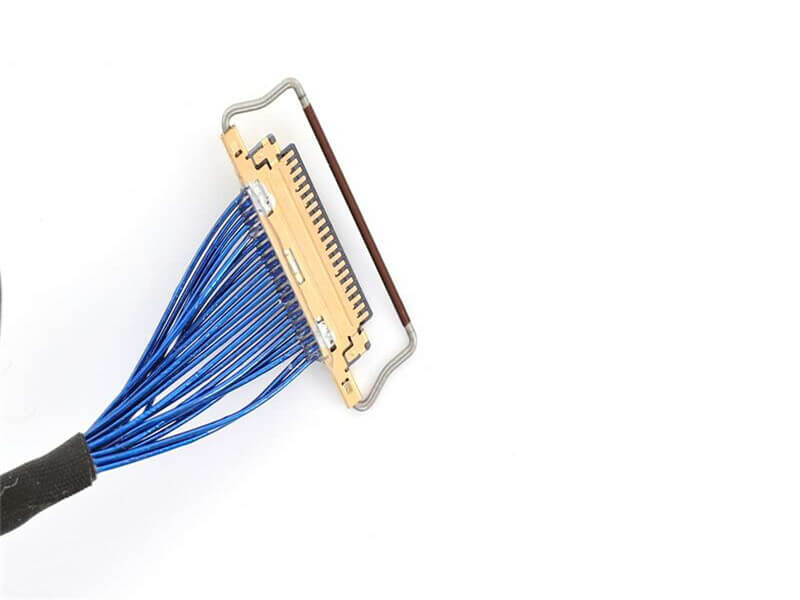
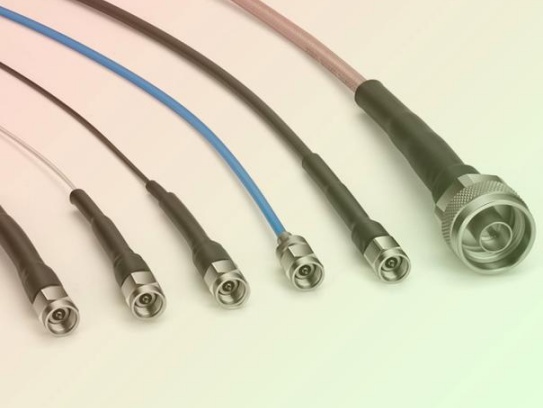
A high temperature resistant micro coaxial cableis a very small-diameter coaxial cable. It is engineered to maintain stable electrical performance in high-temperature environments, such as those found in aerospace, defense, and high-temperature industrial applications.
Key characteristics include:
Small Size: Typically uses very fine conductors, such as 36–50 AWG or smaller.
High-Temperature Materials: Employs fluoropolymers like PTFE, FEP, PFA, or ETFE for insulation and jacketing, which can withstand temperatures from 150°C to over 250°C.
Rugged Construction: Features a center conductor, dielectric, shield, and outer jacket to protect signal integrity in harsh conditions.
Why Use Micro Coaxial Cables in Aerospace?
Aerospace systems present a perfect storm of challenges that make robust cable design essential:
Extreme Temperatures: Components on or near engines, in avionics bays, or on re-entry vehicles can experience wide temperature swings, from -65 °C in shadow to over 200 °C in direct heat.
High Vibration and Mechanical Stress: Cables must be flexible and durable enough to withstand constant vibration and handling during launch and flight without signal degradation.
Tight Space and Weight Constraints: Aircraft and satellites demand high-density, lightweight cable assemblies to reduce overall weight, which improves fuel efficiency and payload capacity.
Harsh Environments: Exposure to jet fuel, hydraulic fluid, ozone, and high-intensity UV radiation requires cables with excellent chemical resistance and long-term aging performance.
As a result, coaxial cables for aerospace must be small, lightweight, flexible, and capable of reliable operation for many years in environments that would quickly degrade ordinary cables.
Key High-Temperature Materials
The performance of these cables hinges on their materials. Here are the primary options:
Material
Max. Operating Temp.
Key Features & Applications
PTFE(Polytetrafluoroethylene)
~260 °C
The workhorse for high-temp cables. Offers a low dielectric constant and stable performance. Used in MIL-W-16878 and MIL-W-22759 type cables.
FEP(Fluorinated Ethylene Propylene)
~200 °C
Easier to process and more flexible than PTFE. Its foamed version is used in lightweight microwave coaxial cables for aircraft.
PFA(Perfluoroalkoxy)
250 °C+
Combines high-temperature resilience with toughness and chemical resistance. Suitable for space and downhole applications.
ETFE / ECTFE
150–200 °C
Offers good mechanical toughness and flame resistance, making it suitable for cable jackets in confined spaces.
PEEK™ / ULTEM®
250 °C+
High-performance engineering thermoplastics for extreme environments, such as engine nacelles or high-temperature sensors.
The cable’s overall temperature rating is determined by the lowest-rated materialin its construction.
Construction & Performance Features
A high-temperature micro coaxial cable for aerospace is built for reliability and performance.
Typical Construction
Inner Conductor: Silver-plated or tinned copper, or high-strength alloys, in fine gauges (e.g., 36–50 AWG).
Dielectric: Solid or foamed PTFE, FEP, or PFA. Foamed dielectrics reduce weight and signal loss.
Shield: A braided layer of silver-plated or tinned copper, sometimes combined with an aluminum foil for 360° coverage.
Jacket: A fluoropolymer like PTFE, FEP, or PFA, chosen for its chemical resistance and low smoke properties.
Electrical & Mechanical Performance
Impedance: Most common are 50 Ω and 75 Ω, with tight tolerances for high-frequency digital and RF signals.
Operating Temperature: A typical range is −65 °C to +200 °C, with some designs rated for 260 °C or higher.
Frequency Range: Performance varies from a few GHz for general avionics to 18 GHz, 40 GHz, or even 70 GHz for specialized space-qualified cables.
Shielding Effectiveness: High shielding (e.g., >90 dB) is required to minimize electromagnetic interference (EMI) in densely packed systems.
Flexibility & Durability: Cables must be highly flexible with a small bend radius and resistant to vibration and flexing, especially for moving parts like control surfaces and robotic arms.
Key Standards and Specifications
Aerospace cables must meet stringent standards. When sourcing from a high temperature resistant micro coaxial cable factory, you will encounter specifications such as:
Aerospace Standards:
EN / PREN 4604-004: A European standard for 50 Ω, 200 °C, high-immunity micro coaxial cables (Type WS) used in signal transmission.
MIL-STD / MIL-C / MIL-W: U.S. military standards for high-temperature coaxial cables, such as MIL-W-16878 and MIL-W-22759.
UL / CSA Standards:
UL Style 10871: A standard for micro flex coaxial cables with PFA insulation, rated for −55 °C to +250 °C.
Application-Specific Standards:
DO-160: Environmental Conditions and Test Procedures for Airborne Equipment.
NASA / ESA Standards: Specific requirements for space applications, including outgassing and atomic oxygen resistance.
A qualified factory should be able to manufacture cables that meet these standards or provide test data to prove equivalent performance.
Aerospace Applications
These cables are used in a wide range of aerospace systems:
Aircraft Avionics & Flight Control: Connect radar, satellite comms, and flight control systems.
Spacecraft & Satellites: Used for RF downlinks, inter-stage comms, and internal data buses on satellites and launch vehicles.
High-Temperature Industrial Systems: Applied in ground-based simulators, test rigs, and industrial heating equipment that mirror aerospace conditions.
Medical & Test Equipment: Technologies developed for aerospace are also used in high-end medical and test gear that requires high reliability and performance.
Working with a Specialized Factory
Choosing the right high temperature resistant micro coaxial cable factoryis critical. Here are key considerations:
Technical Expertise: The factory should have a proven track record in high-temperature, high-frequency micro coaxial cables and understand relevant standards (EN 4604-004, MIL-STD, UL).
Material Know-How: They must be able to select and process the correct high-temp materials (PTFE, FEP, PFA, etc.) for your specific temperature range and application.
Advanced Manufacturing: Look for capabilities like fine-wire drawing (to 46–50 AWG), precision extrusion, and laser外径检测 to ensure consistent quality and performance.
Quality & Certifications: Certifications like ISO 9001, ISO 13485 (medical), and a robust quality management system are essential. The factory should provide test reports (VSWR, attenuation, etc.) for every batch.
Customization & Testing: The factory should offer design support and testing services, including environmental, mechanical, and EMI/EMC tests, to validate the final product.
FRS: Your Partner in High-Performance Cable Solutions
At FRS, we specialize in the design and manufacturing of high temperature resistant micro coaxial cablesfor aerospace and other mission-critical applications.
Our expertise includes:
Deep Material Knowledge: We expertly select and process PTFE, FEP, PFA, and other high-performance insulations and jackets to meet your exact thermal and electrical requirements.
Precision Manufacturing: Our advanced production lines are optimized for fine-wire coaxial cables (36–50 AWG and beyond), ensuring consistent quality for every meter produced.
Rigorous Quality Control: We adhere to strict quality control protocols and can provide comprehensive test data to meet the most demanding aerospace standards.
Whether you need a standard high-temp micro coax or a fully custom cable assembly, FRS is your reliable partner. Contact our engineering team todayto discuss your project requirements and discover how we can help you achieve reliable performance in the most extreme environments.
In recent years, our factory has achieved a significant reduction in the production cost of coaxial cables through a series of targeted measures. These efforts not only enhance our market competitiveness but also bring tangible benefits...
Ever wonder why signal timing is critical in high-speed electronics like 5G phones, radar systems, or advanced medical imaging? A key player hiding within your micro coaxial cables is propagation delay – the time it takes for an e...
Micro-coaxial cables (“micro-coax”) are the unsung heroes of modern electronics, carrying high-frequency signals critical for everything from 5G phones and medical devices to drones and high-speed data links. But their tiny ...
When working on high-speed consumer electronics, medical imaging, or 5G devices, you might be told you need a “micro coaxial cable impedance matching service.” This often leads to a simple question: “Isn’t the cable just 50 Ω or 75 Ω? W...
Micro coaxial cables are essential in high-frequency applications like telecommunications, medical imaging, aerospace systems, and broadcast equipment. However, long runs face challenges like signal degradation, electromagnetic interfer...
Venturing into the deep ocean is one of humanity’s greatest technological challenges. Deep-sea Remotely Operated Vehicles (ROVs) are our eyes and hands in these crushing depths, enabling scientific discovery, resource exploration,...
Introduction: The Critical Role of TDR in Micro-Coax IntegrityTime Domain Reflectometry (TDR) testing is the cornerstone of ensuring signal integrity and reliability in modern micro-coaxial cable networks. As devices shrink and data rat...
Confused about what makes a micro coaxial cable suitable for harsh environments? You’re not alone. Terms like “IP67,” “Mil-spec,” or “UV Resistant” are crucial, but understanding their ...
Overview and definition
Medical grade micro coaxial cable for ultrasound probes is a highly miniaturized, high‑density interconnect that carries high‑frequency ultrasound signals between the probe’s piezoelectric array and the imagin...
Understanding Velocity Factor (VF) is crucial for designing and implementing RF systems using micro coaxial cables. Also known as the velocity of propagation (VP), it represents the speed at which an electrical signal travels along...
Coaxial cables are the unsung heroes of modern connectivity, powering everything from home televisions and internet routers to security cameras and satellite systems. Their unique design—featuring a central conductor, insulating layer, ...
1. Television and Broadcast Systems75-5 coaxial cables are a staple in analog and digital television signal distribution due to their 75-ohm impedance, which matches the standard for TV tuners and broadcast equipment.Key Applications...
The choice between flexible and semi-rigid micro-coaxial cables hinges on balancing mechanical robustness, electrical performance, and application-specific requirements.
IntroductionMicro-coaxial cables are critical for high-frequen...
Installing cables, whether for electrical systems, data networks, or telecommunications, can be a challenging task without the right tools. The right cable pulling tools not only simplify the process but also reduce the risk of damage t...
In the realm of modern communication, coaxial cables stand as vital components, facilitating the transmission of high-frequency signals across various sectors such as telecommunications, broadcasting, and data centers. The conductivity ...
Coaxial cable assemblies are critical components in industries like telecommunications, aerospace, medical equipment, and industrial automation—their performance directly impacts the stability and reliability of entire systems. Finding ...
Coaxial cable assemblies are critical components in signal transmission systems, used across industries like telecommunications, aerospace, medical devices, and industrial automation. While both rigid and flexible variants serve the cor...
In the field of modern healthcare, medical imaging equipment stands as a cornerstone of accurate diagnosis and effective treatment. From X-ray machines that reveal bone fractures to high-resolution MRI scanners that map soft tissue stru...
Working with micro coaxial cables (common in electronics, drones, cameras, medical devices, and communications) requires precision tools due to their tiny size and delicate construction. Using the wrong tools can easily damage the cable...
Coaxial Cable Assemblies are the backbone of reliable signal transmission in industries ranging from telecommunications and aerospace to medical equipment and industrial automation. Unlike generic cables, these assemblies—comprising a c...
Introduction
The rollout of 5G network infrastructure has been a global phenomenon, promising faster data speeds, lower latency, and the ability to connect a vast number of devices simultaneously. As the demand for high – perfo...
Structure and Material CompositionSemi-rigid coaxial cables are defined by their robust, unyielding construction:
Inner Conductor: Made of high-purity copper or silver-plated copper for optimal conductivity.Dielectric Layer: A...
In the ever-evolving landscape of modern communication, coaxial cable stands as an indispensable pillar, facilitating the seamless transmission of signals across a vast array of applications. From television broadcasting to high-speed i...
Conductors: The Core of Signal TransmissionThe inner conductor is responsible for carrying electrical signals. Material choices prioritize conductivity, flexibility, and resistance to skin effect (signal loss at high frequencies).
...
The short answer is: Yes, coaxial cable assemblies are not only compatible with 5G network devices but also play a critical role in 5G signal transmission—provided they meet 5G’s unique technical requirements. Unlike 4G, 5G relies on hi...
In the dynamic world of theme parks, where innovation and guest experience reign supreme, reliable communication systems are the backbone of safe and seamless operations. From high-speed roller coasters to immersive dark rides, every at...
Signal integrity is a cornerstone of modern high-frequency and high-speed electronic systems, from 5G networks to aerospace avionics. Micro coaxial cables, with their compact design and precision engineering, must meet stringent require...
In the rapidly evolving landscape of advanced electronics, the demand for high-performance connectivity solutions has never been greater. Among the key components driving this demand, Micro-Coaxial Cables stand out as critical enablers,...
We are excited to announce that our factory has officially launched a professional coaxial cable installation service. This service is designed to meet the growing demand for high-quality, reliable coaxial cable installations across var...
Micro coaxial cables, the unsung heroes of compact, high-frequency electronics, are critical for transmitting signals with minimal degradation. Among their key performance parameters, insertion loss is paramount. Understanding the...
In the modern healthcare system, a stable and efficient network is not just a support system but a critical component that directly impacts patient care, medical workflow, and data security. Hospitals handle massive volumes of sensitive...
Why RG6 is the Standard Choice
RG6 coaxial cable is the preferred solution for modern satellite and cable TV installations because:
Thicker conductor (18 AWG) minimizes signal loss over long distances
Dense shielding (typicall...
In the rapidly evolving landscape of smart lighting, where connectivity, miniaturization, and performance are paramount, micro-coaxial cables have emerged as a critical component. Unlike traditional wiring solutions, these ultra-thin, h...
If you’re working with RF (radio frequency) systems, antennas, or small-scale electronics, chances are you’ve encountered RG-174 micro-coaxial cables. These thin, flexible cables are popular for their low loss and durability in tight s...
Nuclear power plants are marvels of modern engineering, generating vast amounts of clean energy. But behind the massive reactors and turbines lies a complex network of sensors, controls, and communication systems. Ensuring these systems...
In the rapidly evolving fields of telecommunications, broadcast engineering, and data transmission, coaxial cables remain a critical backbone for reliable signal delivery. Recognizing the industry’s need for transparency in manufacturin...
Tired of replacing delicate micro-coaxial cables far sooner than expected? A breakthrough in materials science is delivering unprecedented resilience, potentially quadrupling the usable life of these critical components. Discover ...
In today’s digital age, high-speed data transmission has become a core demand for industries ranging from telecommunications and security monitoring to data centers and aerospace. Whether it is 5G base station signal backhaul, 4K/8K hig...
When sourcing a 0.3mm diameter micro coaxial cable supplier, the right partner can significantly impact your product’s signal integrity, reliability, and time-to-market. This guide provides a practical roadmap for B2B buyers, cove...
Overview of I-PEX Micro Coaxial Cable Connectors
I-PEX is a global leader in micro coaxial cable solutions, specializing in high-performance IPEX micro coax connectors and micro coaxial cable assemblies. These products are designed for.
H1: Precision Instrument Micro-Coax – Engineered for Critical Signal Integrity
Meta Description: Discover Precision Instrument Micro-Coax: Miniature coaxial cable solution optimized for high-frequency signal transmissio.
Contact Us Micro Coaxial Cable factory-(FRS).
Feel free to reach out to us for any inquiries or orders