In advanced medical devices, from high-frequency ultrasound probes to surgical robots, a single compromised signal can impact diagnostic accuracy or procedural safety. This is why leading OEMs prioritize micro coax cable for medical devices | FDA approvedsolutions that combine compact design, biocompatibility, and EMI shielding for uncompromised reliability.
This article explores the engineering, regulatory, and application layers of these cables, providing the in-depth detail that experienced engineers and sourcing professionals seek.
What is a Micro Coax Cable?
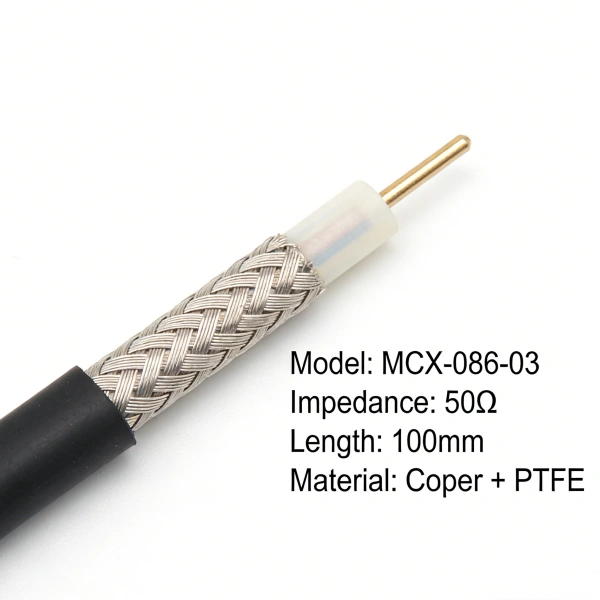
A micro coax cable is an ultra-fine coaxial cable engineered for high-frequency, low-loss signal transmission in space-constrained environments. Key characteristics include:
- Miniaturized Dimensions: Insulation OD often ≤1 mm, with finished assemblies as small as 0.3–0.5 mm in diameter.
- High-Frequency Performance: Supports signals from a few MHz to 40–50 GHz, depending on the design.
- Controlled Impedance: Tightly controlled (e.g., 50 Ω, 75 Ω) to minimize signal reflections.
- Precise Shielding: Employs multi-layer shielding (foil + braid) to ensure signal integrity in noisy clinical settings.
In short, it is a precision interconnect that preserves signal fidelity in the most confined medical device spaces.
Why Micro Coax is Indispensable in Modern Medical Devices
Micro coax cables serve as the high-fidelity data pathways for critical medical technologies:
- High-Resolution Imaging: Transmits RF echo signals in ultrasound probes and high-speed video in endoscopy, where image clarity is paramount.
- Minimally Invasive Surgery: Enables precise control and real-time data/imaging feedback in robotic and catheter-based systems navigating delicate anatomy.
- Patient Monitoring: Carries high-quality physiological signals (ECG, SpO₂) in compact, wearable, and bedside devices.
- Diagnostics & Lab Equipment: Connects high-frequency signal paths in MRI, CT, and automated test equipment, where data integrity is non-negotiable.
The demand for smaller, more flexible, and higher-bandwidth devices makes micro coax the default interconnect in many next-generation medical systems.
Anatomy of a Medical-Grade Micro Coax Cable
A high-performance medical micro coax cable is built with meticulous attention to detail:
- Center Conductor: Typically high-purity copper or silver-plated copper. Fine gauges (e.g., 40–52 AWG) are used to achieve small diameters while managing attenuation.
- Dielectric Insulation: Low-loss materials like PTFE, FEP, or ePTFE provide a stable dielectric constant and low capacitance. Wall thickness and concentricity are critical for impedance control.
- Shielding: A dual-layer shield (bonded foil + high-density braid) provides >85–120 dB of shielding effectiveness, crucial for immunity against hospital EMI/RFI.
- Inner & Outer Jackets: Medical-grade materials like medical PVC, PU, or silicone offer flexibility, chemical resistance, and biocompatibility. Smooth surfaces are easier to clean and resist biofilm formation.
- Termination & Assembly: Requires precision micro-termination (0.175–1.0 mm pitch) and strain relief. Automated, vision-assisted assembly is often necessary to ensure repeatability and high yield.
How Small Can Micro Coax Get?
Miniaturization is pushing the boundaries of cable engineering:
- 40–50 AWG: Used in high-density diagnostic imaging assemblies, with flex life exceeding 500,000 cycles.
- 48 AWG: Features an ultra-thin 0.03 mm conductor, ideal for intravascular ultrasound (IVUS) and minimally invasive tools.
- 52 AWG: Represents the frontier of miniaturization, used in ultra-compact cameras and sensors where traditional wires fail.
Design Implication: As the AWG number increases, the engineering challenges (e.g., maintaining dimensional stability, consistent impedance, and shielding effectiveness) grow exponentially, impacting cost and lead time.
Sterility, Biocompatibility & Cleanability
For patient safety, micro coax cables must meet stringent standards:
- Biocompatibility: Materials must comply with ISO 10993standards, especially for skin contact or internal use. Some cables achieve USP Class VIbiocompatibility.
- Sterilization Compatibility: Cables must withstand repeated sterilization cycles (EtO, gamma, autoclave) without degrading. Silicone and PTFE are common choices for their resilience.
- Cleanability: Smooth, low-particulate jackets (e.g., medical-grade silicone) are essential in sterile environments to prevent biofilm formation and cross-contamination.
EMI Shielding & Signal Integrity
Reliable signal transmission in a hospital environment is critical:
- Shielding Architecture: A dual-layer shield (foil + braid) is standard. For high-flex applications, a finely stranded center conductor and a flexible shielding structure are vital to prevent performance degradation.
- Performance Metrics: Key metrics include insertion loss, VSWR, phase stability vs. temperature/bend, and shielding effectiveness.
- Testing: Cables must be tested in their final configuration, as connector transitions and routing can significantly impact real-world performance.
Micro Coax Cable Assemblies vs. Bulk Cable
For most medical device projects, custom cable assembliesare required:
- Bulk Cable: The raw micro coax cable, typically sold on reels.
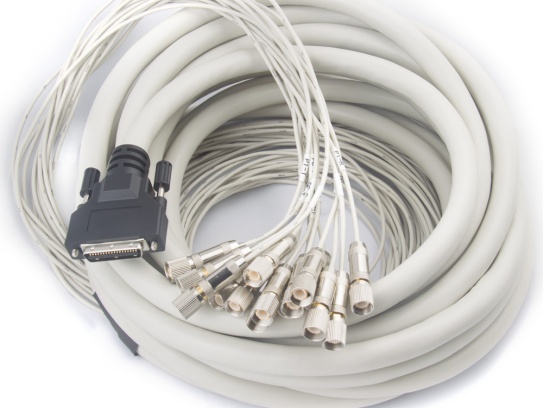
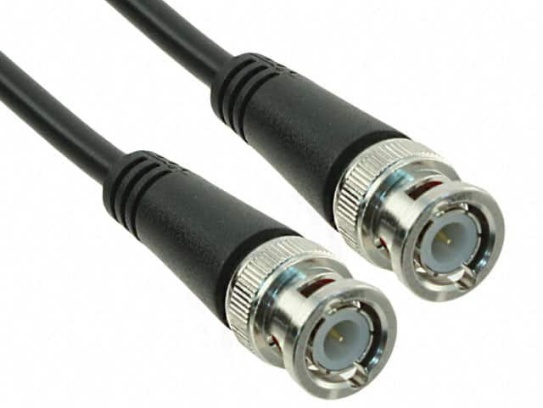
- Cable Assembly: The finished product, including the specified cable, precisely terminated connectors, strain relief, and labeling.
For regulated devices, the entire assembly must be manufactured under a quality management systemlike ISO 13485, with full traceability and documented validation.
🇺🇸 FDA Compliance: What “FDA Approved” Really Means
The term “FDA Approved” is often misunderstood in this context:
- FDA Oversight: The FDA regulates finished medical devices, not individual components like cables. A cable itself is not “FDA approved.”
- Supplier’s Role: A compliant supplier provides cables manufactured under an ISO 13485 QMS, using FDA-compliant materials, and can support biocompatibility and sterilization validations.
- Manufacturer’s Responsibility: The device manufactureris responsible for submitting a 510(k)or PMAto the FDA for their entire device, which includes the cable assembly as a subcomponent.
Therefore, a more accurate statement is: “Micro coax cable assemblies for medical devices, manufactured under an FDA-compliant quality system and supporting regulatory submissions.”
Key Applications of Medical Micro Coax
- Diagnostic Ultrasound Probes: 40–50 AWG micro coax assemblies transmit high-bandwidth RF echo signals, requiring high flex life and precise impedance control.
- Endoscopes & Minimally Invasive Tools: 48–52 AWG cables enable high-resolution imaging and precise control in ultra-thin instruments navigating the body.
- Surgical Robotics & Navigation: Multi-channel micro coax bundles provide deterministic signal paths for high-definition video and haptic feedback in multi-axis robotic arms.
- Patient Monitoring & Wearables: Ultra-flexible micro coax cables ensure stable signal transmission in compact, ergonomic designs for continuous patient monitoring.
Partnering with the Right Micro Coax Supplier
Selecting a supplier goes beyond comparing datasheets. Evaluate their capabilities in:
- Engineering Collaboration: Do they offer co-design support to optimize the cable for your specific application?
- Manufacturing Quality: Are they certified to ISO 13485and can they provide material and process documentation for regulatory submissions?
- Testing & Validation: Do they have the equipment to perform flex life, impedance, and shielding effectiveness testing to medical standards?
- Supply Chain Resilience: Can they ensure supply continuity and provide full lot traceability?
Choosing a partner that addresses these points ensures a smoother path to market and a more reliable product.
Conclusion
The micro coax cable for medical devices | FDA approvedis far more than a wire; it is a critical system component. By understanding its structure, performance parameters, regulatory context, and application demands, you can make informed decisions that enhance patient safety and device performance.
For engineers and sourcing professionals, the right micro coax partner is a strategic asset in bringing sophisticated medical devices to market efficiently and reliably.