Micro-coaxial cable assemblies are the backbone of high-speed, space-constrained interconnects in modern electronics. For OEMs, securing a reliable manufacturing partner is critical to product performance and time-to-market. This guide details what to look for in a micro coaxial cable assembly OEM service, covering technical specifications, applications, and how to avoid common production pitfalls.
What Is a Micro Coaxial Cable Assembly?
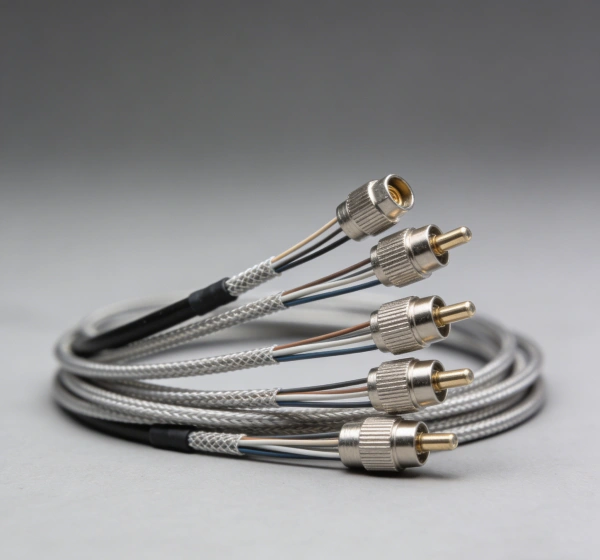
A micro coaxial cable assembly is a precision cable engineered for high-frequency signal transmission in extremely limited spaces. It typically consists of:
Center Conductor:Usually 32–46 AWG tinned copper wire.
Dielectric Insulation:Foam PE, PTFE, or FEP, which determines the cable’s impedance.
Shielding:A braided or spiral shield to block EMI/RFI.
Jacket:A thin outer layer (PVC, LSZH, or FEP) for protection.
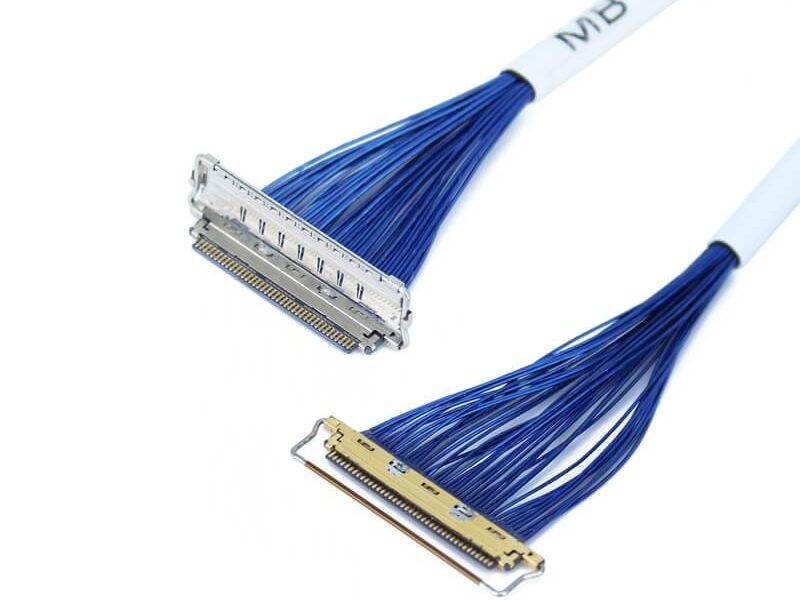
These components are terminated with fine-pitch connectors (0.25–0.5 mm pitch) and are 100% tested for electrical performance. This construction makes them ideal for high-density, flexible interconnects in medical, automotive, and consumer electronics .
Key Applications of Micro Coaxial Cable Assemblies
Micro-coax assemblies are essential in devices where space is at a premium and signal integrity is non-negotiable.
Consumer Electronics
Camera Modules:In smartphones and laptops, they connect image sensors to mainboards, handling MIPI/PCIe signals.
Foldable Devices & Hinges:Flexible micro-coax passes through hinges, enduring over 200,000 bends.
AR/VR Headsets:Transmit high-speed video and sensor data while keeping weight and bulk to a minimum .
Medical Devices
Endoscopes & Laparoscopes:Multiple micro-coax bundles transmit video from the tip while maintaining flexibility for navigation.
Ultrasound Probes:Require high-density bundles (sometimes >1,500 conductors) for signal integrity.
Catheters & Sensors:Ultra-thin coax (down to 46 AWG) links embedded sensors, often needing biocompatible materials and sterilization resistance .
Automotive & Industrial
ADAS Cameras:Used in parking and lane-assist cameras, requiring stable performance from -40°C to +105°C with excellent EMI shielding.
In-Vehicle Infotainment:Connects displays and cameras, often needing combined power and coax in one jacket.
Industrial Vision & Robotics:In factory automation, they connect high-speed cameras and sensors, demanding high flex-life and chemical resistance .
Typical OEM Technical Specifications
When sourcing, you will typically define or receive a specification sheet with these parameters:
What to Look for in a Micro Coaxial Cable Assembly OEM
Choosing the right partner goes beyond price. Here are key evaluation criteria:
Fine-Pitch Capability:Confirm they can reliably process your required pitch (e.g., 0.25 mm) and wire gauge (e.g., 46 AWG) .
Process Control:Ask for their defect rates for opens/shorts and their testing protocols (e.g., 100% automated testing) .
Material Traceability & Certifications:Ensure they use UL-recognized cables and can provide documentation for RoHS, REACH, and other standards .
Connectors & Tooling:A good OEM should have experience with major connector brands (e.g., I-PEX, Hirose) and possess the proper crimping and soldering tools .
Design Support:They should offer DFM (Design for Manufacturability) feedback on impedance control, bend radius, and strain relief to prevent issues before production .
Quality & Service:Look for clear warranty terms, responsive technical support, and transparent project management .
Common Pitfalls and How to Avoid Them
Proactively addressing these common issues can save significant time and cost.
Welding Defects (Opens/Shorts):Due to the tiny wire size, poor soldering is a major risk.
Solution:Ensure the OEM uses automated welding/termination equipment and performs 100% electrical testing .
Impedance Mismatch:Inconsistent stripping or dielectric damage leads to signal reflections.
Solution:Provide a clear impedance target (50/75 Ω) and require the OEM to use validated cable/connector combinations and controlled processes .
Mechanical Failures (Flex Life):Cables fail from fatigue at bend points or connector interfaces.
Solution:Specify the minimum bend radius, choose materials designed for high flex-life (e.g., FEP, PUR), and mandate proper strain relief design .
EMI Issues:Poor shielding can disrupt sensitive electronics.
Solution:Specify double shielding (foil + braid) and ensure 360° connector termination. Request shielding effectiveness test data for critical applications .
Supply Chain & MOQ Issues:Inconsistent quality or inability to scale production can halt your project.
Solution:Choose an OEM with multiple component sources, clear lead times, and transparent MOQs. Start with Engineering Test (EVT) and Design Validation Test (DVT) runs before mass production .
Request a Sample Build:Evaluate the sample for impedance, insertion loss, and mechanical fit before committing to mass production.
Validate Testing Protocols:Ensure the OEM performs 100% testing for opens/shorts and Hi-Pot, with documented results.
Plan for Flex & Strain Relief:Provide the expected bend radius and flex cycles. Let the OEM recommend the best cable and strain relief design.
Agree on Documentation:Confirm that you will receive test reports, material certifications, and reliable technical support.
Start Small, Then Scale:Begin with small pilot runs (EVT/DVT) to validate quality and process control before ramping up to mass production.
Final Summary
A high-quality micro coaxial cable assembly OEM service delivers more than just a cable; it provides a complete, reliable solution. This includes expert design support, strict process control, comprehensive testing, and dependable supply chain management. By focusing on a partner’s technical capabilities, quality systems, and collaborative approach, you can ensure your project meets its performance and reliability targets. Use this guide to ask the right questions and make an informed decision, turning a potential bottleneck into a competitive advantage.
In the era of miniaturized electronics and high-speed data transmission, micro coaxial cables have emerged as a critical component for applications requiring reliable signal integrity in compact spaces. These cables are a specialized ...
In the realm of modern communication, coaxial cables stand as vital components, facilitating the transmission of high-frequency signals across various sectors such as telecommunications, broadcasting, and data centers. The conductivity ...
Micro coaxial cables are vital components in modern electronics, connecting everything from high-resolution cameras in smartphones to intricate sensors in medical devices. Because they carry critical high-frequency signals, a counterfei...
Micro-coaxial cables are essential for transmitting high-frequency signals in devices like routers, TVs, and medical equipment. When these cables get damaged, choosing the right repair method—soldering or compression connectors—ca...
In the era of miniaturization, electronic devices are becoming increasingly compact while demanding higher performance—from wearable fitness trackers and medical implants to aerospace sensors and industrial IoT modules. At the heart of ...
Introduction: Precision in Motion Demands Resilience
In the intricate dance of modern electronics, where devices vibrate on factory floors, rumble down highways, endure turbulent flights, or operate within intricate medical instrumen...
Introduction: The Need for Speed at the Edge
Edge computing is revolutionizing how we process data. By bringing computation closer to where data is generated – sensors, IoT devices, cameras, machines – it slashes the time wasted send...
Micro coaxial cables are essential in modern electronics, enabling high-frequency signal transmission in compact devices from smartphones to satellites. However, their performance and longevity are heavily influenced by temperature. Und...
Micro coaxial cables are widely used in various electronic devices due to their excellent signal transmission capabilities and compact size. However, soldering micro coaxial cable connections can be a tricky task, especially for beginne...
Confused by technical jargon like “low-loss phase-stable micro-coaxial cable”? You’re not alone. This specialized cable plays a vital role in high-frequency electronics, but its name can be intimidating. Let’...
The question of whether coaxial cable assemblies can be modified after purchase is a common one among engineers, technicians, and hobbyists who work with RF (radio frequency), video, or data transmission systems. The short answer is: so...
Introduction: The Critical Role of TDR in Micro-Coax IntegrityTime Domain Reflectometry (TDR) testing is the cornerstone of ensuring signal integrity and reliability in modern micro-coaxial cable networks. As devices shrink and data rat...
In the semiconductor industry, where device miniaturization (e.g., 3nm–5nm process nodes) and testing precision continue to advance, micro-coaxial cables have emerged as critical components in ensuring reliable signal transmission durin...
In an era where seamless connectivity defines everything from home entertainment to critical industrial operations, signal interference remains a persistent headache. Whether it’s a pixelated TV screen, dropped security camera feeds, or...
In the high-stakes world of modern military operations, mission-critical communication is the cornerstone of coordination, intelligence gathering, and command execution. But what happens when a powerful electromagnetic pulse (EMP)...
In modern minimally invasive surgery and diagnostic imaging, the quality of the image you see on the screen is only as good as the cable that carries it. For endoscopic systems, that critical link is the micro coaxial cable for endoscop...
The short answer is yes—modern coaxial cable assemblies are specifically engineered to support high-frequency signal transmission, and they play an irreplaceable role in industries relying on precise, low-distortion high-frequency signa...
When selecting micro-coaxial cables for high-temperature applications, understanding the temperature tolerance of PTFE-insulated micro-coaxial cables is critical. Polytetrafluoroethylene (PTFE) is a popular insulation material due...
Selecting the right coaxial cable assemblies is critical for optimizing the performance, reliability, and longevity of radio systems. Whether for amateur radio, commercial communication, or industrial wireless applications, suboptimal c...
In the rapidly advancing field of medical technology, reliable connectivity is not just a convenience—it’s a matter of life and death. From high-resolution imaging systems to minimally invasive surgical tools, medical devices demand pre...
Recently, our factory’s high-performance coaxial cable has been officially selected as a featured exhibit for the upcoming Shanghai International Industry Expo (SIIE) — a pivotal event that gathers top industrial brands, tech innovators...
If you’re setting up a satellite dish, having the right wiring kit can make all the difference. A satellite dish wiring kit with premium cables isn’t just an add-on—it’s a key part of ensuring reliable signal, clear reception, and long-...
In the rapidly evolving landscape of electronic components, micro-coaxial cables stand as a critical backbone for high-speed data transmission, signal integrity, and miniaturized device connectivity. As industries like consumer electron...
The global rollout of 5G technology has ushered in a new era of connectivity, demanding unprecedented levels of speed, latency reduction, and network flexibility. At the core of this transformation lies the 5G cloud Radio Access Network...
In the dynamic landscape of modern communication and industrial systems, the demand for coaxial cable electrical insulation that delivers superior performance, durability, and adaptability has never been greater. As technology...
When working with delicate electronics or high-frequency signal applications, precision is non-negotiable. For 0.81mm micro-coaxial cables—commonly used in medical devices, aerospace systems, and telecommunications—a reliable crimping t...
In an era where data breaches and signal interception pose existential threats to businesses and critical infrastructure, the choice of transmission medium is no longer a matter of convenience—it is a cornerstone of network security. Wh...
The relentless evolution of robotics demands components that are not only powerful and precise but also adaptable and resilient. At the heart of this intricate dance of movement, sensing, and control lies a critical component often unse...
A significant milestone has been reached in our factory’s history as we proudly announce the successful mass production of our high – performance coaxial cables. This achievement is not just a result of months of hard work b...
In the realm of communication and electronics, coaxial cables stand as indispensable components, with their quality directly impacting the performance of entire systems. Today, a groundbreaking development has emerged: the quality compl...
As the Internet of Things (IoT) evolves from a niche concept to a global infrastructure, the demand for smaller, more reliable, and high-performance components has never been greater. Among these critical components, micro-coaxial cable...
1. Core Structure and Signal Transmission MechanismMicro-Coaxial CablesDesign: A miniature version of traditional coaxial cables, featuring:A central conductor (copper or silver-plated copper).Dielectric insulation (e.g., PTFE or ...
Coaxial cables are indispensable in high-speed data transmission, industrial automation, and telecommunications infrastructure—their performance directly determines the reliability of end-use systems. However, traditional coaxial cable ...
The manufacturing of coaxial cables involves complex processes with inherent risks, from high-voltage testing to mechanical operations. As industry regulations tighten and technological advancements emerge, manufacturers are adopting co...
In the ever-evolving landscape of modern communication, coaxial cable stands as an indispensable pillar, facilitating the seamless transmission of signals across a vast array of applications. From television broadcasting to high-speed i...
Micro-coaxial cables, the unsung heroes carrying critical signals in everything from smartphones and medical devices to aerospace systems and industrial robots, demand impeccable quality. When reliability and performance are non-negotia...
Introduction
In today’s high-speed digital world, micro-coaxial cables have become the unsung heroes of signal transmission. While most discussions focus on cable types or connectors, the critical role of precisely customized c...
In the fast-evolving world of medical technology, devices like implantable sensors, MRI machines, and surgical robots rely on precision-engineered components to function safely and accurately. Among these components, medical-grade micr...
The global transition toward smart grids is revolutionizing how we generate, distribute, and consume utilities. At the heart of this transformation are Advanced Metering Infrastructure (AMI) systems, commonly known as smart metering sys...
Embedded camera systems are the backbone of modern industries—from automotive ADAS and industrial machine vision to medical endoscopes and consumer electronics. At the core of these compact, high-performance systems lies a critical comp...
In LVDS (Low Voltage Differential Signaling) display systems, Micro-coaxial Cable (also referred to as Micro Coax Cable) stands out as an optimal solution for high-resolution, high-reliability signal transmission. Designed to meet the str.
IntroductionIn today’s fast-paced digital world, reliable and high-speed data transmission is critical for industries ranging from telecommunications to aerospace. Enter High-Speed Data Micro-Coax—a cutting-edge miniature coaxial cable e.
Contact Us Micro Coaxial Cable factory-(FRS).
Feel free to reach out to us for any inquiries or orders