The Rise of Custom-Configured Micro-Coaxial Cable Assemblies: Your Solution for Demanding Signal Needs - Micro Coaxial Cable factory-(FRS)
Micro Coaxial Cable factory-(FRS)
INFO
In the relentless push for smaller, faster, and more connected devices, reliable high-frequency signal transmission has become mission-critical. Whether it’s inside the latest medical imaging device, a 5G base station, or a cutting-edge aerospace sensor, signals need to travel flawlessly. This is where the demand for custom-configured micro-coaxial cable assemblies is experiencing a significant surge. Let’s explore why this trend is accelerating and how it solves real-world engineering challenges.
The Problem: Off-the-Shelf Often Falls Short
Standard cable assemblies have their place, but they frequently hit limitations:
Rigid Form Factors: Devices are shrinking. Pre-made assemblies might be too long, too short, or simply can’t bend into the tight spaces required by modern designs.
Precisely Tailored Performance: Specific applications demand specific performance characteristics – exact impedance matching, minimal signal loss (attenuation) at target frequencies, specific levels of shielding effectiveness to combat noise (EMI/RFI).
Unique Connection Challenges: Your device might need an uncommon combination of connector types (like MCX to SMA, SMP to MMCX) or require connectors mounted at peculiar angles.
Optimizing Cost & Lead Time: Ordering excessive lengths or waiting for infrequently stocked specialized assemblies is inefficient.
The result? Compromised performance, frustrating installation headaches, wasted space, project delays, and potentially higher costs.
The Solution: Tailored Micro-Coaxial Assemblies
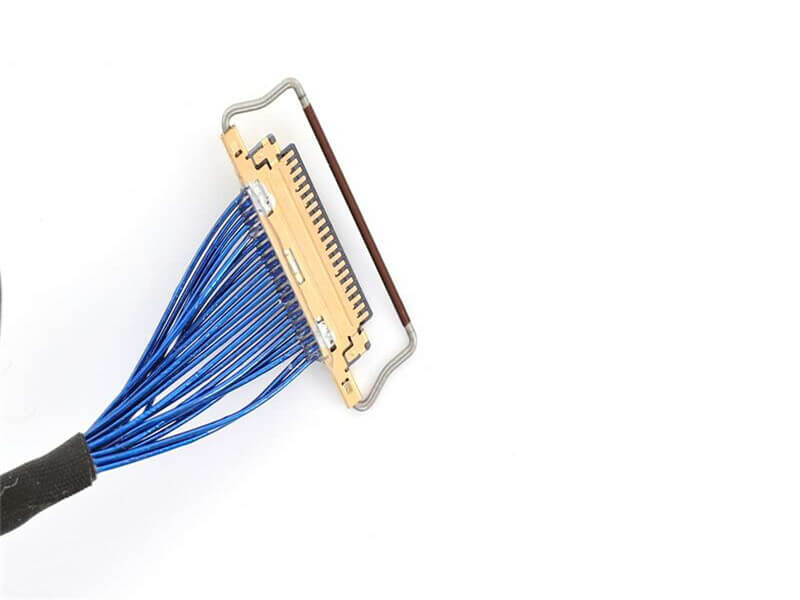
Enter the era of custom-configured micro-coaxial cables. These assemblies are built precisely to your specifications, addressing the shortcomings of generic options:
Exact Length & Form: Specify the precise length required. Eliminate slack that causes clutter or introduces interference risks. Design the bend radius and routing path explicitly for your application.
Precision Performance Tuning: Choose the specific micro-coax cable type that delivers the exact electrical characteristics you need for your signal frequency and environment (e.g., specific impedance like 50 Ohm or 75 Ohm, ultra-low loss, advanced shielding types like dual or triple-layer).
Connector Freedom: Specify any combination of industry-standard or specialized miniature connectors (MCX, MMCX, SMP, SMA, QMA, etc.), often with options for straight, right-angle, or even custom angled terminations.
Optimized Material & Protection: Select jackets and protective elements (boots, strain relief) based on your environmental needs – extreme temperature ranges, chemical resistance, abrasion resistance, flexibility requirements (high flex cycles), or flammability ratings.
Efficiency Gains: Reduce inventory waste by ordering only the lengths you need. Simplify installation with perfectly pre-terminated cables, slashing assembly time and potential errors on the production line.
Why the Rise? Driving Factors Behind the Trend
Several converging forces are fueling the adoption of customized micro-coax:
Miniaturization: Everything from smartphones and wearables to IoT sensors and surgical robots demands incredibly compact internal wiring solutions. Micro-coax excels in tiny spaces.
Higher Frequencies: The proliferation of 5G/6G, mmWave radar (automotive, industrial sensing), satellite communications, and high-speed data (USB4, Thunderbolt) requires cables that maintain signal integrity at GHz speeds. Micro-coax offers superior high-frequency performance.
Complex, Multi-Function Devices: Modern equipment often integrates multiple RF, high-speed digital, and power functions. Custom assemblies allow neat, optimized routing for each signal path.
Demand for Reliability: Especially in medical, aerospace, defense, and industrial automation, failure is not an option. Custom assemblies ensure every parameter is optimized for maximum reliability in the target environment.
Advanced Manufacturing: Cable assembly providers now leverage sophisticated design software and highly flexible manufacturing processes, making complex custom configurations cost-effective and readily available.
Choosing Your Custom Cable Partner: Key Considerations
Not all suppliers are equal. When sourcing custom micro-coaxial assemblies, look for:
Deep Micro-Coaxial Expertise: Knowledge of different cable types (RG178, RG316, semi-rigid, low-loss variants), their trade-offs, and connectors.
Design Support: Engineering collaboration to help define the optimal configuration for your needs.
Advanced Manufacturing: Precision stripping, crimping, and soldering capabilities, especially for miniature connectors.
Stringent Testing: Commitment to testing electrical performance (VSWR, attenuation, continuity) and mechanical specifications.
Flexibility & Speed: Ability to handle prototypes and low-to-medium volumes efficiently.
Quality Certifications: Relevant ISO certifications (e.g., ISO 9001, ISO 13485 for medical).
The Future is Custom-Configured
The “one-size-fits-all” approach to cabling is increasingly inadequate for the demands of modern, high-performance electronics. Custom-configured micro-coaxial cable assemblies are rising to the challenge, providing engineers with the precise tools they need to overcome space constraints, ensure signal integrity at high frequencies, enhance reliability, and streamline production. By leveraging this tailored solution, you unlock greater design freedom and ensure your devices perform at their absolute best.
Ready to Solve Your Connectivity Challenge? Explore custom micro-coaxial assembly options with a specialized provider today. Specify your exact requirements – length, cable type, connectors, performance specs – and build the optimal signal pathway for your next innovation.
Ensures optimal signal integrity for your application
Connectors
Any combination & angle (MCX, SMA, SMP etc.)
Pre-set connector types/angles
Solves unique connection challenges
Environment
Customizable jackets/boots for temp, chemicals, flex
Generic options
Enhanced reliability in harsh conditions
Cost/Lead Time
Order exact quantity needed
Minimum order quantities, stocking delays
Reduces waste, avoids project delays
Frequently Asked Questions (FAQ)
Q: Is custom micro-coax significantly more expensive than standard cables?
A: While unit price might be slightly higher for very low quantities, custom eliminates waste from cutting long stock cables and reduces assembly labor. Often, the total cost (parts + labor + waste) is comparable or even lower, especially when factoring in project delays avoided.
Q: How long does it take to get custom micro-coaxial assemblies?
A: Lead times vary based on complexity and supplier capacity. Reputable specialists focused on custom work often offer competitive turnaround times (days to a few weeks), especially for prototypes or medium volumes. Ask potential suppliers directly.
Q: Can custom assemblies handle very high flex cycles?
A: Yes! This is a key strength. You can specify high-flex micro-coaxial cable types combined with optimized termination techniques and strain relief specifically designed for applications requiring repeated bending (e.g., robotics arms, medical probes).
Q: What information do I need to provide for a custom quote?
A: Key details include: Required Length(s), Desired Cable Type/Specs (or key specs like impedance, frequency range, loss requirements), Connectors (Type A to Type B), Connector Angles, Jacket Material/Properties (temp rating, flex, chemical resistance), and Quantities needed.
Q: Are custom assemblies reliable?
A: When manufactured by a reputable supplier using proper techniques and quality materials/testing, custom micro-coax assemblies are extremely reliable – often more reliable than trying to adapt a generic cable that isn’t quite right for the job. Quality suppliers rigorously test each assembly.
Choosing the right conductor material is critical for the performance and reliability of micro coaxial cables, especially in demanding high-frequency applications. Silver-plated copper (Ag/Cu) and bare copper are the two primary options...
Tangled cables snaking behind your desk, jumbled wires under the entertainment center, or unruly cords cluttering your workshop—these are common nuisances that not only look messy but also pose tripping hazards and make maintenance a ha...
Coaxial cables are indispensable in a wide range of installations, including telecommunications, security systems, broadcasting, and home entertainment setups. However, the one-size-fits-all approach of standard cable lengths often fall...
In the realm of electrical engineering and communication systems, the need to interface different types of transmission lines is a common challenge. Among the most prevalent scenarios is the conversion between coaxial cables and twisted...
In the complex web of modern electronics and communication systems, signal integrity is the backbone of reliable performance. From the data centers powering global networks to the medical devices monitoring vital signs, and from aerospa...
Micro coaxial cables (micro coax) are the unsung heroes inside countless modern gadgets. From your smartphone and laptop camera to critical medical equipment and automotive systems, these tiny cables carry vital high-frequency signals l...
Coaxial cable assemblies are critical components in industries like telecommunications, aerospace, medical equipment, and industrial automation—their performance directly impacts the stability and reliability of entire systems. Finding ...
In the intricate web of wireless communication systems, coaxial cable assemblies serve as the critical lifeline, bridging transmitters, receivers, antennas, and other key components. Their role in ensuring reliable signal transmission—f...
Industrial control systems (ICS) are the backbone of modern manufacturing, energy, transportation, and infrastructure sectors, relying heavily on stable and reliable signal transmission to ensure operational efficiency and safety. Among...
Repeated bending is the silent killer of micro-coaxial cables. If you design wearables, medical devices, robotics, or any product requiring constant movement, achieving 100,000+ flex cycles is critical. Rigorous testing reveals wh...
Time Domain Reflectometry (TDR) is a powerful electrical test method that sends a fast voltage step down a transmission line and analyzes the reflections caused by impedance changes. In micro coaxial cable quality control, TDR is used t...
Is your military communication system acting up? A damaged micro-coaxial cable could be the culprit. These tiny cables are the unsung heroes of military tech, carrying vital signals in radios, radar systems, and encrypted communica...
Why VR headsets need low loss micro coaxial cable
High‑resolution, high‑frame‑rate VR depends on moving massive amounts of image data across very short, highly constrained interconnects inside the headset. Traditional FPC/FFC or roun...
The relentless demand for higher bandwidth, faster speeds, and miniaturized electronics is pushing traditional coaxial cable technology to its limits. Within the intricate confines of next-generation micro-coaxial cables, a critical bot...
You’re investing in noise-canceling (ANC) headphones for one primary goal: pristine audio in a noisy world. While features like driver size and ANC chip tech get much attention, a crucial component hidden inside plays a massive ro...
Micro coaxial cable soldering service is a specialized capability that joins ultra‑fine coaxial conductors to connectors or PCB pads with precise impedance control, mechanical reliability, and high‑frequency signal integrity. It is wide...
In the realm of in-wall cable installation, having the right tools can make a world of difference between a smooth, efficient process and a frustrating, time-consuming ordeal. Wall fish tools, specifically designed for navigating the ti...
A coaxial cable is a type of cable widely used in communication and data transmission. Its core structure consists of four concentric layers:Central Conductor: Typically a single or stranded copper wire for transmitting electrical sig...
Micro-coaxial cables (micro-coax) – those thin, often less than 3mm diameter cables – are the unsung heroes powering critical video, RF, and data signals in drones, cameras, medical devices, and countless electronics. But their delicate...
Introduction: The Critical Role of TDR in Micro-Coax IntegrityTime Domain Reflectometry (TDR) testing is the cornerstone of ensuring signal integrity and reliability in modern micro-coaxial cable networks. As devices shrink and data rat...
In the realm of communication and electronics, coaxial cables stand as indispensable components, with their quality directly impacting the performance of entire systems. Today, a groundbreaking development has emerged: the quality compl...
The demand for micro-coaxial cables is surging, driven by high-speed data transfer in devices like smartphones, medical equipment, automotive sensors, and aerospace systems. Alongside performance, manufacturers and end-users are increas...
Modern vehicles are evolving into complex networks of sensors and high-speed data links. At the heart of this transformation is the anti-interference micro coaxial cable, a critical component for ensuring the reliable operation of Advan...
We are excited to announce that our factory has officially launched a professional coaxial cable installation service. This service is designed to meet the growing demand for high-quality, reliable coaxial cable installations across var...
For ham radio operators and amateur communicators, the coaxial cable is far more than a “connecting wire”—it is the lifeline of signal integrity. A poorly chosen or installed coaxial cable can lead to significant signal loss...
As a silver plated micro coaxial cable manufacturer, we are introducing our new 0.4 mm OD micro coaxial cable series, engineered to meet the demanding requirements of high-density medical devices. This new series addresses the industry&...
Attention all our valued customers and partners! Our factory hereby announces a price adjustment for coaxial cables, which will take effect from [specific date]. This adjustment is of great significance to your procurement plans, so ple...
As a professional Micro Coaxial Cable Manufacturer, we understand the critical role these cables play in ensuring reliable high-frequency signal transmission. This guide will help you navigate the key considerations for selecting the ri...
In an era where smart home technology is reshaping modern living, the role of robust and reliable connectivity cannot be overstated. At the heart of seamless smart home integration lies coaxial cable—a time-tested solution that con...
In the world of broadcasting, nothing frustrates listeners or viewers more than a distorted signal. Interference can ruin the entire experience, whether it’s static on a radio, pixelation on a TV, or dropped audio in a live stream. Achi...
High-Frequency Communication & 5G Antenna ModulesMicro coaxial cables are widely used in 5G base stations and mobile devices for high-frequency signal transmission due to their low signal loss, supporting efficient millimeter-wave...
As a professional Micro Coaxial Cable Manufacturer, we provide high-performance micro coaxial cable and cable assembly solutions. We offer comprehensive OEM/ODM services, supporting custom diameters, shielding structures, impedance, and...
In response to the growing global demand for sustainable waste management and the urgent need to reduce electronic waste (e-waste), our factory is proud to announce the official launch of our Coaxial Cable Recycling Program. This initia...
Coaxial cables remain a cornerstone of high-frequency signal transmission in industries ranging from telecommunications to broadcasting and security systems. Their ability to minimize interference and maintain signal integrity makes the...
For drone manufacturers, gimbal integrators, and FPV enthusiasts, the video feed is the most critical system. Signal loss, noise, or a broken cable can instantly turn a high-end aerial camera into a useless brick. This is why selecting ...
In the first three quarters of 2025, our factory’s coaxial cable products have achieved record-breaking sales performance, with the total sales volume increasing by 65% compared with the same period last year and the sales revenue...
In the fast-paced world of telecommunications, broadcasting, and industrial connectivity, coaxial cables remain the backbone of reliable signal transmission. As a leading Coaxial Cables factory with over a decade of expertise,...
IntroductionAs autonomous vehicles (AVs) evolve, LiDAR (Light Detection and Ranging) systems have emerged as a cornerstone technology for enabling safe navigation. These systems rely on precise data transmission to map environments in r...
Introduction
In high-speed digital communications and RF applications, signal degradation is a critical challenge. Micro-coaxial materials have emerged as a game-changer, minimizing signal loss and preserving data integrity. This art...
In the realm of modern connectivity, long-distance cable runs are a fundamental aspect of various industries, from telecommunications and networking to audio-visual setups. However, as signals travel over extended cable lengths, they en...
Overview of I-PEX Micro Coaxial Cable Connectors
I-PEX is a global leader in micro coaxial cable solutions, specializing in high-performance IPEX micro coax connectors and micro coaxial cable assemblies. These products are designed for.
IntroductionIn today’s fast-paced digital world, reliable and high-speed data transmission is critical for industries ranging from telecommunications to aerospace. Enter High-Speed Data Micro-Coax—a cutting-edge miniature coaxial cable e.
Contact Us Micro Coaxial Cable factory-(FRS).
Feel free to reach out to us for any inquiries or orders