
Micro Coaxial Cable factory-(FRS)
Ultra‑fine coaxial cables with an outer diameter of 0.3 mmoccupy a critical space where size, signal integrity, and mechanical reliability converge. They are widely used to carry high‑speed differential links such as MIPI/LVDSin displays and cameras, as well as tightly packed interconnects in medical imaging probes, wearables, UAV gimbals, and industrial vision systems. Selecting the right 0.3 mm diameter micro coaxial cable supplieris not just about meeting a mechanical envelope; it determines whether your product can achieve the required bandwidth, EMI resilience, and lifetime performance in high‑density, dynamic environments.
A 0.3 mm micro coaxial cable is typically a single‑ended coax built to extremely tight dimensional and electrical tolerances. The conductor is often silver‑plated copperor copper alloy, insulated with low‑loss fluoropolymers such as PFA/FEP, shielded with a fine braid and/or foil, and jacketed for mechanical protection. In practical designs, 0.3 mm variants are frequently specified with 50 Ωimpedance for high‑speed differential links, with typical insertion loss around ≤0.3 dB/cm @ 5 GHzin well‑controlled constructions. These characteristics make the format suitable for MIPI/LVDSand other high‑speed, low‑amplitude differential signals where impedance continuity and minimal skew are essential.
From a mechanical standpoint, 0.3 mm OD micro coax is designed for high flexibility and repeatable dynamic flexing. Engineering practice for ultra‑fine coax commonly targets a minimum bend radius of 5–8× the outer diameterto limit attenuation growth and shield deformation. Materials and process control—conductor plating thickness, dielectric concentricity, and shield tension—are decisive in maintaining consistent impedance and insertion loss across production lots and dynamic use cases.
Working with a specialist 0.3 mm diameter micro coaxial cable supplierbrings four decisive advantages: process control, connector and termination expertise, test data integrity, and scalable delivery. Ultra‑fine coax fabrication is unforgiving: at 50 AWGand below, tiny variations in conductor size, dielectric thickness, or shield geometry can cause measurable shifts in impedance and attenuation. Specialist suppliers maintain rigorous in‑line dimensional control and material traceability so that each meter of cable meets the same electrical fingerprint.
Termination is equally critical. Micro‑coax assemblies for I‑PEX/HRSand similar fine‑pitch connectors require precision stripping, alignment, and welding to avoid shield opens, solder wicking, and dielectric damage. Specialist vendors use automated or semi‑automated micro‑welding platforms, vision alignment, and process monitoring to ensure repeatable, high‑yield terminations that survive flex and vibration.
Testing is where quality becomes provable. A capable supplier offers TDRimpedance maps, VNAinsertion/return loss sweeps, shielding effectiveness, and flex‑life data—not just paper guarantees. This data transparency allows you to correlate real‑world performance with simulation and system requirements, reducing the risk of field failures.
Finally, scalability matters. Specialist suppliers can support small‑batch prototypingand volume productionwith the same line and process controls, shortening development cycles and avoiding the “prototype‑good, production‑variable” trap that plagues ultra‑fine coax projects.
In display and camera links, 0.3 mm micro coax assemblies are used to carry MIPI/LVDSor similar high‑speed differential pairs through hinge or narrow‑channel routing. A representative 30‑pin, 0.4 mm pitchLVDS assembly built with 40 AWGmicro coax demonstrates how these cables perform electrically: 50 Ω ±5%impedance, ≤0.3 dB/cm @ 5 GHzinsertion loss, dual‑layer shielding, and an operating range of −40°C to +105°C. While this example is 0.4 mm pitch, the same design principles and performance targets scale down to 0.3 mmOD constructions for even tighter spaces.
For medical imaging and sensing, ultra‑fine coax must combine small size with low noise and high shielding. Low‑noise coax used with accelerometers and piezo sensors, for example, employs graphite‑coated dielectricand high‑coverage silver‑plated copper shielding to suppress triboelectric effects, with typical specs such as 50 Ωimpedance, ~120 pF/mcapacitance, and shielding coverage up to 95%. These principles carry over into endoscopic and catheter applications where both mechanical flexibility and signal fidelity are non‑negotiable.
Start with a DFM/DFTreview. Share your PCB stackup, connector pitch, bend radius, and expected flex profile so the supplier can propose a construction that meets both electrical and mechanical goals. Provide a target BOMand performance envelope (impedance, IL/RL, EMI) and ask for a compliance matrixthat maps each requirement to test methods and acceptance limits.
Request engineering samplesbuilt on the same process you will qualify in volume. Validate with TDR spot checks, VNA sweeps, and, if applicable, eye‑diagram testing at your system’s target data rate. For dynamic applications, perform benchtop flex and vibration tests to confirm that insertion loss drift and shield integrity remain within spec over the product’s life.
Clarify the quality systemand documentation flow. Medical and aerospace projects may require ISO 13485or ISO 9001processes, full lot traceability, and FA/root‑cause reporting on any failures. For commercial products, ensure the supplier’s change‑control process is robust and that you receive updated test data with every lot.
Finally, align on scalability and cost. A specialist supplier should be able to move from NPI to volumewithout re‑qualification, offer transparent pricingwith clear MOQs and lead times, and provide a data package that supports your own compliance and reliability documentation.
Choosing the right 0.3 mm diameter micro coaxial cable supplierdetermines whether your high‑speed, miniature interconnect performs as designed in the real world. Prioritize suppliers with deep process control, proven termination expertise, rigorous test data, and the ability to scale from prototype to volume without compromising quality. By defining clear specifications, validating early with real samples, and aligning on quality and scalability, you can reduce risk, shorten time‑to‑market, and build confidence in your product’s signal integrity and reliability.
Our factory offers high-quality products at competitive prices
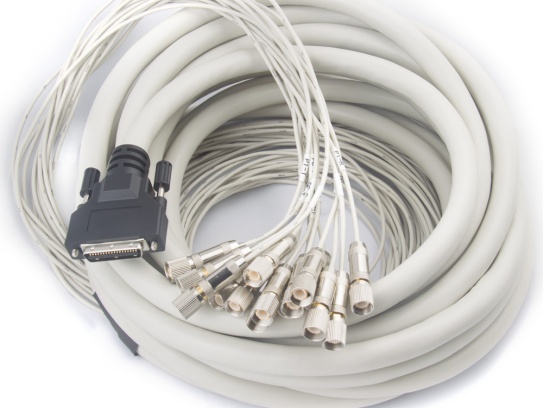
Meta Description: Discover our premium Flexible Micro-Coaxial Assemblies—engineered for high-frequency signal integrity, durability, and versatility in aerospace, medical, telecom, and robotics applications. What Are Flexible .
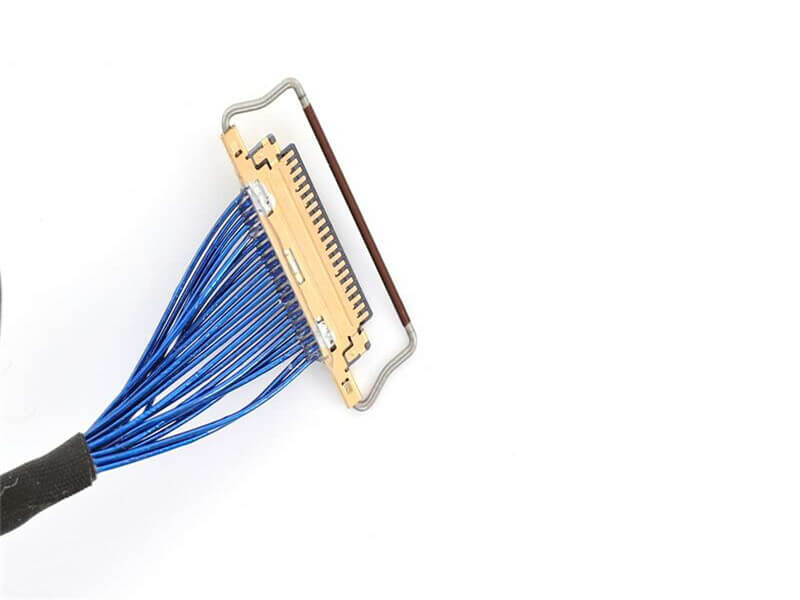
Overview of I-PEX Micro Coaxial Cable Connectors I-PEX is a global leader in micro coaxial cable solutions, specializing in high-performance IPEX micro coax connectors and micro coaxial cable assemblies. These products are designed for.
Feel free to reach out to us for any inquiries or orders