
Micro Coaxial Cable factory-(FRS)
The global rollout of 5G technology has ushered in a new era of connectivity, demanding unprecedented levels of speed, latency reduction, and network flexibility. At the core of this transformation lies the 5G cloud Radio Access Network (cloud RAN), a revolutionary architecture that decouples baseband processing from radio units, centralizes computing resources, and enables dynamic resource allocation. However, the performance of 5G cloud RAN hinges on the reliability and efficiency of its underlying transmission infrastructure—and this is where micro-coaxial cables emerge as a critical component. Designed to meet the stringent demands of 5G’s high-frequency bands, dense deployment environments, and low-latency requirements, micro-coaxial cables are redefining how data flows within cloud RAN ecosystems.
Micro-coaxial cables, characterized by their ultra-small diameter (typically ranging from 0.8mm to 2.0mm) and precision-engineered construction, offer a suite of technical benefits that make them uniquely suited for 5G cloud RAN applications. Unlike traditional coaxial cables or even twisted-pair cables, micro-coax combines compactness with exceptional signal integrity, addressing two of the most pressing challenges in modern RAN design.
First and foremost is their low signal loss at high frequencies. 5G networks operate primarily in millimeter-wave (mmWave) and sub-6GHz bands, where signal attenuation becomes a significant concern. Micro-coaxial cables are constructed with high-purity copper conductors, dielectric materials with low dielectric constant (such as PTFE or FEP), and optimized shielding layers. This design minimizes signal degradation over distance, ensuring that critical data—from user traffic to control signals—reaches its destination with minimal latency and error. In cloud RAN, where baseband units (BBUs) are centralized and connected to remote radio units (RRUs) via long-distance links, low-loss micro-coax is essential for maintaining the network’s quality of service (QoS).
Second, their compact size and flexibility enable seamless integration into dense deployment environments. 5G cloud RAN requires RRUs to be installed in a variety of locations—from rooftop antennas to street-level small cells—often in spaces with limited physical footprint. Micro-coaxial cables’ small diameter allows them to be routed through tight spaces, alongside other components, without compromising on performance. Their flexibility also simplifies installation, reducing labor costs and minimizing the risk of damage during deployment. This is particularly valuable in urban areas, where space constraints are a major barrier to 5G rollout.
Third, micro-coaxial cables offer superior electromagnetic interference (EMI) shielding. Cloud RAN environments are filled with electronic equipment, all emitting and receiving signals—this creates a noisy electromagnetic landscape that can disrupt data transmission. Micro-coax features multiple shielding layers (such as braided copper and aluminum foil), which block external EMI and prevent internal signals from interfering with other components. This shielding ensures that even in high-interference scenarios—such as near power lines or other communication towers—the cable maintains stable signal transmission, a critical requirement for 5G’s ultra-reliable low-latency communication (URLLC) services.
Finally, micro-coaxial cables are durable and temperature-resistant. 5G RRUs and other network components are often exposed to harsh environmental conditions, including extreme temperatures, humidity, and physical wear. High-quality micro-coax is constructed with rugged outer jackets (such as PVC or LSZH) that resist corrosion, abrasion, and UV radiation. It can operate reliably across a wide temperature range—from -40°C to +85°C—making it suitable for both indoor and outdoor deployments. This durability reduces maintenance costs and extends the lifespan of the network infrastructure, a key consideration for telecom operators looking to maximize their return on investment (ROI).
Micro-coaxial cables play a pivotal role in several critical segments of the 5G cloud RAN architecture, ensuring seamless communication between distributed components. Below are their most important applications:
The fronthaul network is the backbone of 5G cloud RAN, connecting remote radio units (RRUs) to centralized baseband units (BBUs). This link carries massive amounts of data—including user plane traffic and control plane signals—at high speeds. Micro-coaxial cables are ideal for fronthaul applications due to their low latency and high bandwidth capabilities. Unlike fiber optics, which can be costly and difficult to install in some environments, micro-coax offers a cost-effective alternative that delivers the performance required for 5G’s 10Gbps+ fronthaul rates. Additionally, micro-coax supports the CPRI (Common Public Radio Interface) and eCPRI protocols, which are standard in cloud RAN deployments, ensuring compatibility with existing network equipment.
Modern 5G RRUs are highly integrated devices, containing multiple components such as power amplifiers, filters, and transceivers. These components require high-speed, short-distance interconnections to function efficiently. Micro-coaxial cables’ small size and low signal loss make them perfect for this purpose. They can be routed between tightly packed components without introducing interference, ensuring that the RRU operates at peak performance. This internal interconnection is critical for maintaining the RRU’s signal quality and reducing power consumption—two key factors in 5G network efficiency.
Small cells are essential for extending 5G coverage in urban areas, indoor spaces (such as malls and airports), and other high-traffic locations. These compact devices require lightweight, easy-to-install cabling solutions. Micro-coaxial cables fit the bill, as they can be quickly deployed in tight spaces and do not require the heavy infrastructure needed for fiber or traditional coaxial cables. Their durability also makes them suitable for indoor and outdoor small cell installations, ensuring reliable performance in diverse environments. For telecom operators, micro-coax enables faster small cell rollout, accelerating the expansion of 5G coverage.
Massive Multiple-Input Multiple-Output (MIMO) is a key 5G technology that uses dozens of antennas to increase network capacity and spectral efficiency. Each antenna in a massive MIMO array requires a dedicated cable connection to the RRU. Micro-coaxial cables’ small diameter allows telecom operators to connect multiple antennas without overcrowding the RRU enclosure. Their low signal loss ensures that each antenna receives and transmits signals with minimal degradation, maximizing the performance of the massive MIMO system. This is crucial for delivering the high data rates and low latency that 5G promises to end-users.
While other cabling solutions—such as twisted-pair cables, fiber optics, and traditional coaxial cables—have their place in telecommunications, micro-coaxial cables offer unique advantages that make them superior for 5G cloud RAN:
Our factory offers high-quality products at competitive prices
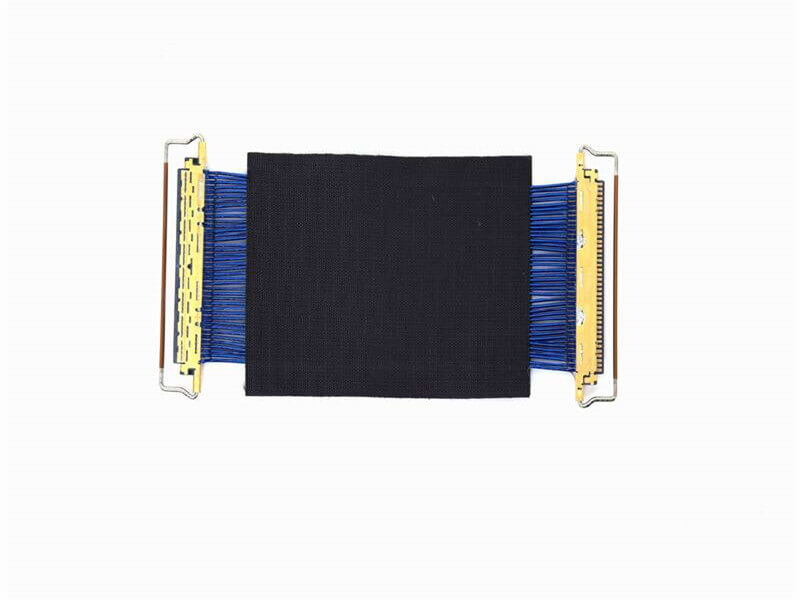
Micro Coaxial Cable: High-Quality Solutions for Precision Applications Micro coaxial cables are essential components in high-performance electronic applications, providing reliable signal transmission in compact and flexible designs. A.
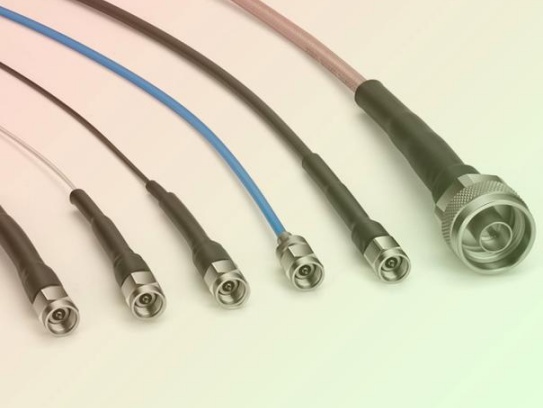
H1: Precision Instrument Micro-Coax – Engineered for Critical Signal Integrity Meta Description: Discover Precision Instrument Micro-Coax: Miniature coaxial cable solution optimized for high-frequency signal transmissio.
Feel free to reach out to us for any inquiries or orders