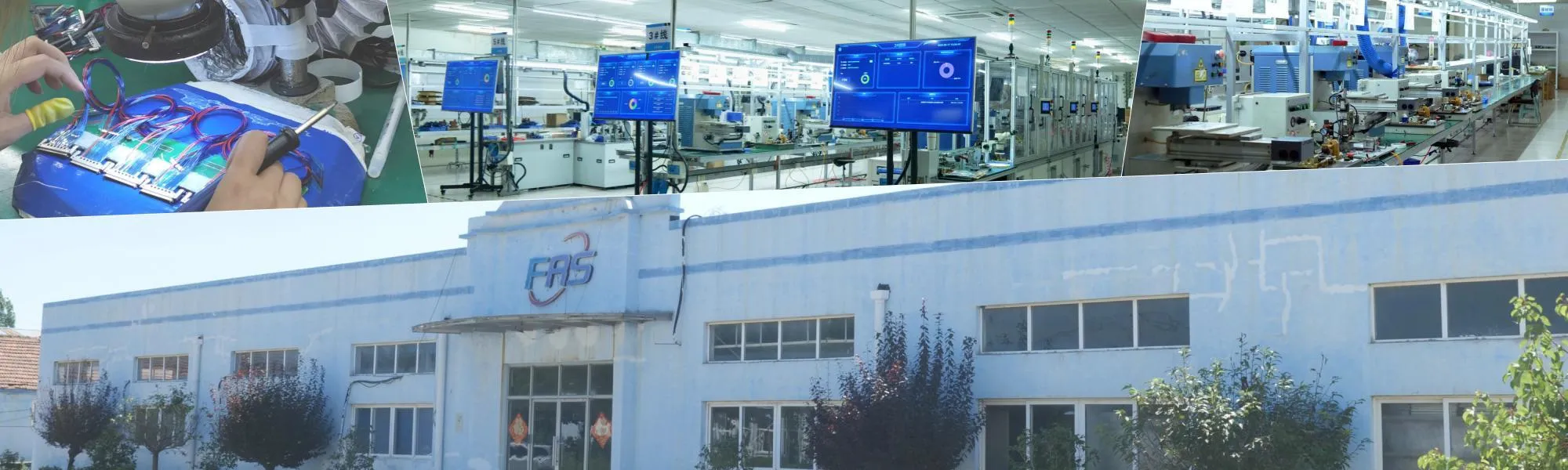
Micro Coaxial Cable factory-(FRS)
Coaxial cable assemblies are critical components in a wide range of industries, including telecommunications, aerospace, defense, medical equipment, and consumer electronics. Their performance directly impacts the reliability, signal integrity, and overall functionality of the systems they are integrated into. Given their importance, implementing rigorous quality control (QC) processes is essential to ensure that coaxial cable assemblies meet industry standards, customer specifications, and performance requirements. This article delves into the key quality control processes for coaxial cable assemblies, covering every stage from raw material inspection to final product validation.
The foundation of high-quality coaxial cable assemblies lies in the quality of the raw materials used. Incoming Material Inspection is the first line of defense to prevent defective components from entering the production process. This stage involves thorough checks of all key materials, including coaxial cables, connectors, adapters, shielding materials, and insulating compounds.
For coaxial cables, inspectors verify parameters such as conductor diameter and material (e.g., copper, silver-plated copper) to ensure they meet conductivity and flexibility requirements. The insulating layer, typically made of PTFE, PE, or FEP, is checked for thickness uniformity, dielectric constant stability, and resistance to temperature and chemical exposure. The shielding layer, which can be braided, foiled, or a combination, is inspected for coverage density (to minimize signal leakage), conductivity, and adhesion to the insulating layer.
Connectors and adapters are scrutinized for dimensional accuracy using precision tools like calipers and micrometers. Threads, mating surfaces, and contact pins must adhere to strict tolerances to ensure secure connections and minimal signal loss. Material certifications, such as RoHS compliance for environmental safety and ISO standards for material quality, are also verified during IMI. Any material that fails to meet the predefined criteria is rejected, preventing costly rework or product failures later in the production cycle.
In-Process Quality Control ensures that each step of the coaxial cable assembly production process adheres to quality standards. This stage is proactive, identifying and correcting issues before they escalate to finished products. Key production steps and their corresponding QC checks include:
The coaxial cable is cut to the required length using automated cutting machines. QC inspectors verify the length accuracy to within ±0.5mm, as incorrect lengths can lead to installation problems or signal mismatches. Stripping, which removes the outer jacket, shielding, and inner insulation to expose the conductor, is checked for precision. The stripped sections must be clean (free of debris or remaining insulation) and have consistent dimensions to ensure proper connector attachment. Inspectors use magnification tools to examine the stripped ends for any damage to the conductor or shielding.
Connector attachment is a critical step that directly affects signal integrity. Depending on the connector type and application, attachment methods include crimping, soldering, or screw-on. For crimping, QC checks ensure that the crimp tool is calibrated correctly, and the crimp joint has sufficient strength (tested via pull-force tests) and electrical conductivity. Soldered connections are inspected for solder flow (complete coverage of the contact area), absence of cold solder joints (which cause high resistance), and no solder bridges (which can short-circuit components).
Screw-on connectors are checked for proper threading and torque (using torque wrenches) to ensure a secure fit without damaging the connector or cable. Throughout this process, samples are taken at regular intervals (e.g., every 50 units) for detailed inspection, ensuring consistency across the production batch.
Shielding effectiveness is vital for coaxial cable assemblies to prevent electromagnetic interference (EMI) and radio frequency interference (RFI). During IPQC, the integrity of the shielding layer is verified, especially at the connector interface where shielding is often most vulnerable. Inspectors check that the shielding is properly connected to the connector’s ground pin or shell, ensuring a continuous ground path. In some cases, continuity tests are performed to confirm that there are no breaks in the shielding.
Electrical performance is the most critical aspect of coaxial cable assemblies, as even minor deviations can lead to signal degradation or system failure. A series of specialized tests are conducted to evaluate electrical parameters, including:
Characteristic impedance (Z₀) is the ratio of voltage to current in a transmission line and must match the impedance of the connected components (e.g., 50Ω or 75Ω for most applications). Using a network analyzer, inspectors measure the impedance along the length of the cable assembly. Deviations beyond ±5% are typically unacceptable, as they cause signal reflections and loss.
VSWR measures the efficiency of power transfer through the cable assembly. A VSWR of 1:1 indicates perfect power transfer, while higher ratios (e.g., 1.5:1) indicate signal reflections. Tests are conducted across the assembly’s operating frequency range using a VSWR meter or network analyzer. Most industries require a VSWR of ≤1.3:1 for high-performance applications.
Insertion loss refers to the amount of signal power lost as the signal travels through the cable assembly. It is measured in decibels (dB) using a network analyzer and should be minimized. Factors affecting insertion loss include cable length, conductor material, and frequency. Inspectors compare measured insertion loss values to industry standards (e.g., MIL-STD-1588) or customer specifications to ensure compliance.
Return loss is the measure of signal reflection at the connector interfaces and is closely related to VSWR. It is expressed in dB, with higher values indicating lower reflection (better performance). A return loss of ≥20dB is generally required for most applications to ensure minimal signal degradation.
To test shielding effectiveness, the cable assembly is placed in an anechoic chamber or shielded room. A signal generator emits EMI/RFI signals, and a receiver measures the amount of signal that penetrates the assembly’s shielding. The shielding effectiveness is calculated as the difference between the emitted signal and the received signal, with values of ≥60dB considered excellent for critical applications like aerospace and defense.
Coaxial cable assemblies often operate in harsh environments, so mechanical durability and environmental resistance are key quality indicators. Mechanical and environmental tests include:
This test evaluates the strength of the connector-cable joint. A force gauge applies a specified pulling force (e.g., 50N for 1 minute) to the connector, and the assembly is inspected for any separation or damage. Failure to withstand the pull force indicates a defective joint that could fail in service.
For applications where the cable assembly is subject to bending (e.g., in robotics or medical devices), flexibility tests are performed. The assembly is bent repeatedly at a specified angle (e.g., 90°) and radius for a set number of cycles (e.g., 10,000). After testing, electrical performance is re-evaluated to ensure no degradation.
Environmental tests simulate the conditions the assembly will encounter in the field, including:
Before packaging, a final visual inspection is conducted to ensure the assembly meets aesthetic and dimensional requirements. Inspectors check for scratches, dents, or other damage to connectors and cables, proper labeling (e.g., part number, length, batch code), and correct packaging (to prevent damage during shipping). Any assembly with visual defects is rejected or reworked.
Comprehensive documentation is a key part of QC processes. Each batch of coaxial cable assemblies comes with a Certificate of Conformity (CoC) that includes test results, material certifications, and inspection records. This documentation provides traceability, allowing customers to verify the quality of the product and facilitating troubleshooting if issues arise.
To ensure consistency and continuous improvement of QC processes, reputable manufacturers adhere to internationally recognized Quality Management Systems (QMS) such as ISO 9001. ISO 9001 requires strict process controls, employee training, and regular audits to maintain compliance. Additionally, industries like aerospace and defense may require compliance with specialized standards such as MIL-STD-790 (quality assurance) and MIL-STD-1588 (coaxial cable assembly specifications), ensuring that products meet the highest reliability standards.
At FRS, we understand that the performance of your systems depends on the quality of your coaxial cable assemblies. That’s why we have integrated every aspect of the rigorous quality control processes outlined above into our production workflow, ensuring that every product leaving our factory meets or exceeds industry standards and customer expectations.
Our Incoming Material Inspection team meticulously verifies all raw materials, partnering only with trusted suppliers who provide full material certifications. During production, our IPQC processes monitor every step—from cable cutting and stripping to connector attachment—with regular sampling and testing to maintain consistency. Our state-of-the-art testing lab is equipped with advanced network analyzers, VSWR meters, and environmental test chambers to conduct comprehensive electrical, mechanical, and environmental tests, ensuring that each assembly delivers reliable signal integrity and durability.
FRS is proud to hold ISO 9001 certification and compliance with MIL-STD specifications, reflecting our commitment to quality and continuous improvement. We believe in full transparency, providing detailed test reports and Certificates of Conformity with every order, so you can have complete confidence in the products you receive.
Whether you need coaxial cable assemblies for telecommunications, aerospace, medical equipment, or any other critical application, FRS combines technical expertise, rigorous QC, and customer-centric service to deliver solutions that meet your unique requirements. Choose FRS as your trusted partner for high-quality, reliable coaxial cable assemblies—where quality is not just a process, but a promise.
Our factory offers high-quality products at competitive prices
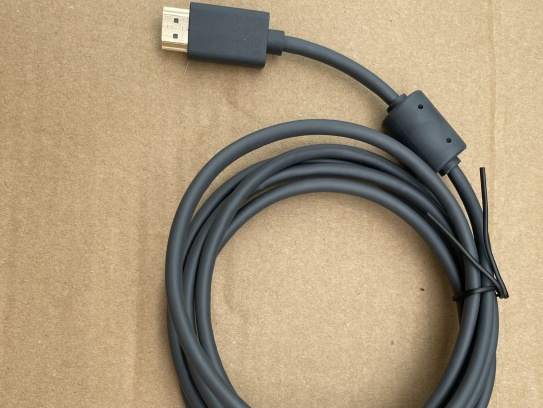
OverviewMicro-Coax for HD Video is a cutting-edge coaxial cable engineered to deliver uncompromised high-definition video quality across professional and industrial applications. Designed for reliability, precision, and versatility,.
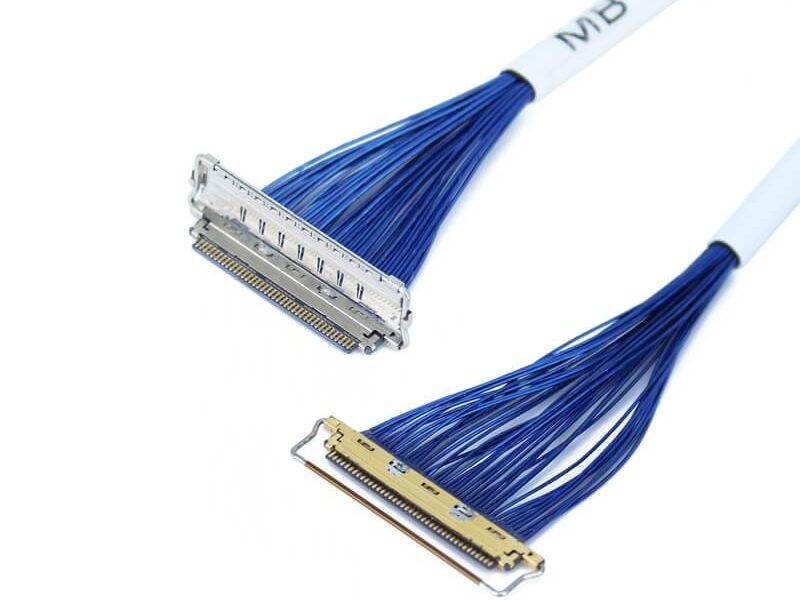
In LVDS (Low Voltage Differential Signaling) display systems, Micro-coaxial Cable (also referred to as Micro Coax Cable) stands out as an optimal solution for high-resolution, high-reliability signal transmission. Designed to meet the str.
Feel free to reach out to us for any inquiries or orders