What is Flame Retardant Micro Coaxial Cable for Electronics and Where Is It Used? - Micro Coaxial Cable factory-(FRS)
Micro Coaxial Cable factory-(FRS)
INFO
In modern electronics, reliable signal transmission is paramount. As devices become smaller and more densely packed, the cables connecting them must follow suit. This is where flame retardant micro coaxial cable for electronicsbecomes essential. It combines the precision of micro coax with critical fire safety, making it indispensable in today’s compact and high-performance electronic systems.
What is Flame Retardant Micro Coaxial Cable?
At its core, it’s a specialized cable designed to transmit high-frequency signals (like video, RF, or data) with minimal loss, while also resisting the spread of fire.
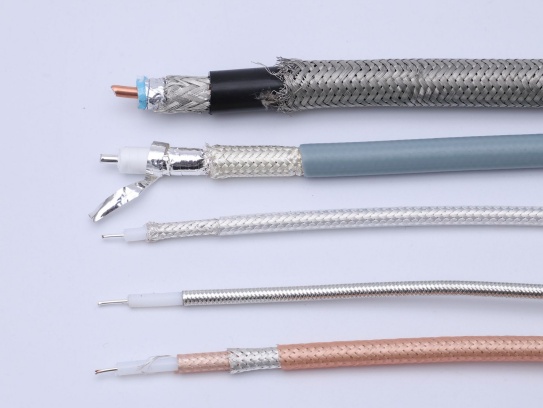
Micro Coaxial Cable:Characterized by a very small diameter and precise impedance control. It features a central conductor, an insulating dielectric, a metallic shield, and an outer jacket. Its small size is crucial for tight spaces in devices like smartphones, medical scanners, and test equipment.
Flame Retardant Jacket:The key differentiator. This outer layer is made from materials that self-extinguish or burn very slowly when the ignition source is removed. This is vital for meeting safety regulations and preventing fires from spreading through cable bundles in equipment racks or building shafts .
Decoding “Flame Retardant”
“Flame retardant” describes a cable’s ability to limit the spread of fire, not its ability to continue operating during a fire (which is the function of “fire-resistant” or “circuit integrity” cables) .
Two main types of flame-retardant jackets are used, each with distinct properties:
Feature
Halogen-Containing (e.g., PVC)
Low Smoke Zero Halogen (LSZH / LSOH)
Flame Retardancy
Good
Good to excellent
Smoke & Gas
Produces dense, corrosive smoke and toxic halogen acids (HCl).
Produces very little smoke and is non-corrosive.
Best For
Industrial settings, non-public areas.
Public venues, transportation, and any space where human evacuation is a priority.
🔬 Anatomy of a Flame Retardant Micro Coax
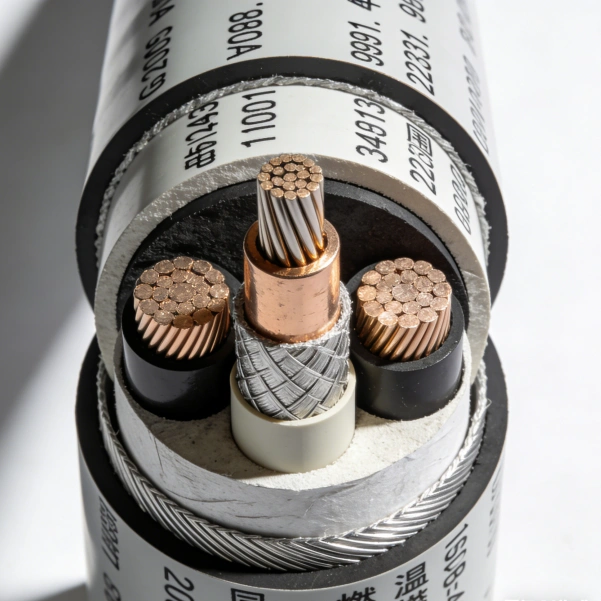
While designs vary, a typical cable includes these layers :
Center Conductor:High-purity copper (solid or stranded, often tinned) for optimal conductivity.
Dielectric Insulation:Foamed polyethylene (PE) is common for its low loss and stable electrical properties.
Shielding:A combination of an aluminum foil and a braided copper layer provides excellent protection against electromagnetic interference (EMI). Shielding effectiveness can exceed 90 dB.
Inner Jacket (Optional):Some cables include an additional thin layer for mechanical protection.
Flame-Retardant Outer Jacket:The critical final layer, made of PVC, FRPE, or LSZH compounds.
Key Performance Parameters
Engineers select these cables based on several critical electrical and mechanical specifications :
Impedance:Most are 50 Ω (for RF/telecom) or 75 Ω (for video). Mismatched impedance causes signal reflections and loss.
Attenuation:Signal loss per unit length, which increases with frequency. It’s specified in dB/100m or dB/ft.
Frequency Range:The maximum frequency the cable can reliably carry, from a few MHz to 6 GHz or higher for some RF/microwave cables.
Voltage Rating:Typically low (e.g., 30V AC for internal electronics), as they are not power cables.
Temperature Range:Common operating ranges are -40°C to +85°C, with some specialized cables rated for +105°C or higher.
Shielding Effectiveness:A high value (e.g., >90 dB) is crucial in noisy electronic environments to maintain signal integrity.
Flame Rating:Certified to standards like UL VW-1, IEC 60332-1-2, or CPR Euroclasses (e.g., Cca, B2ca) .
Where Is It Used?
The “micro” size and “flame retardant” properties make this cable the go-to solution for applications where space is limited and safety is critical.
1. Consumer Electronics
Internal Connections:Links antennas, tuners, and displays in TVs, set-top boxes, and game consoles.
High-Speed Data:Used in laptops and tablets for Wi-Fi, Bluetooth, and camera modules.
Portable Devices:Connects internal RF sections in smartphones, tablets, and handheld test tools .
2. Communication & Networking
Antenna Feeder Cables:Connects base station antennas in 4G/5G, WISP, and other wireless systems.
Indoor Riser Cables:LSZH variants are used in data centers and commercial buildings to meet fire codes.
Video Transmission:75 Ω flame-retardant microcoax is used for CCTV, security systems, and broadcast equipment .
3. Medical & Test Equipment
Imaging Systems:Connects components in MRI, CT, and ultrasound scanners where flammable gases may be present.
Patient Monitoring:Used in devices where both signal integrity and fire safety in clinical environments are paramount.
Test & Measurement:Ensures reliable signal delivery in dense ATE (Automated Test Equipment) setups .
4. Transportation (Rail, Marine, Aviation)
Railway Rolling Stock:Cables must meet stringent EN 45545-2 fire safety standards for interior and exterior use.
Marine & Offshore:Used in navigation, communication, and control systems where fire can spread rapidly.
Aerospace:Found in in-flight entertainment, navigation, and communication systems, often with specialized low-smoke, flame-retardant jackets .
5. Industrial & Building Infrastructure
Building Wiring:LSZH microcoax is installed in public spaces like airports, tunnels, and hospitals.
Industrial Control:Connects sensors and modules in environments with potential fire hazards from other equipment .
How to Choose the Right Cable
Selecting the correct cable involves a systematic approach:
Determine Impedance:Match the cable to your system (50 Ω for RF, 75 Ω for video).
Match Attenuation to Frequency & Length:Calculate the maximum cable length for your required frequency to avoid excessive signal loss.
Select the Right Flame Rating:
Confined Industrial Areas:Standard FR-PVC may suffice.
Public or High-Occupancy Areas:LSZH is typically required for safety.
Rail/Aviation:Must meet specific Euroclass or FAR25 standards.
Verify Shielding:For high-EMI environments, look for >90 dB shielding effectiveness.
Check Environmental Specs:Ensure the temperature range and flexibility meet your application’s needs.
Confirm Compliance:Check for necessary certifications like UL, CSA, or EN, especially for regulated industries .
Coaxial Cable Assemblies are the backbone of reliable signal transmission in industries ranging from telecommunications and aerospace to medical equipment and industrial automation. Unlike generic cables, these assemblies—comprising a c...
Micro-coaxial cables are the unsung heroes of modern electronics, transmitting high-frequency signals in devices like routers, medical equipment, and aerospace systems. However, over time, these tiny cables can degrade due to wear, envi...
The question of whether coaxial cable assemblies can be modified after purchase is a common one among engineers, technicians, and hobbyists who work with RF (radio frequency), video, or data transmission systems. The short answer is: so...
In today’s world, cables are the lifelines of our electrical and communication systems. They transmit power, data, and signals, enabling the smooth operation of countless devices and infrastructure. However, cables are constantly ...
5G technology promises incredible speed, massive capacity, and ultra-low latency. To deliver on this promise, especially for mid-band and crucially for high-band (millimeter wave or mmWave) frequencies, network operators are deploying v...
MRI machines are critical diagnostic tools in healthcare, relying on precision engineering to deliver accurate imaging results. At the heart of these systems are micro-coaxial cables, which transmit high-frequency signals with minimal ...
Micro coaxial cables are the lifelines of modern electronics, transmitting critical signals in devices from medical implants to aerospace systems and industrial robots. But place them near motors, power lines, wireless transmitters, or ...
In high-speed digital and analog systems, maintaining signal integrity is paramount to ensure reliable data transmission. Among the key components that contribute to this integrity, termination resistors play a critical role in preventi...
The price of coaxial cables varies significantly across different models, influenced by design specifications, performance capabilities, and application requirements. Understanding these differences helps users make cost-effective decis...
Coaxial cables have long been the backbone of various communication and transmission systems, playing an indispensable role in ensuring stable signal transmission. In recent years, with the continuous development of technology, the dema...
In the realm of professional cable installation, the difference between a seamless, reliable setup and a problematic, short-lived one often lies in the tools and accessories used. Whether dealing with electrical, data, coaxial, or fiber...
Particle accelerators, like the famous Large Hadron Collider (LHC) at CERN or smaller synchrotrons and linear accelerators worldwide, are engineering marvels pushing the boundaries of physics. They smash particles together at nearly the...
Coaxial cables are widely used in communication systems, but their performance varies significantly depending on whether they are designed for baseband or broadband transmission.
IntroductionCoaxial cables are categorized into two t...
Introduction
In a foldable phone, two or more rigid printed circuit boards must move relative to each other through a hinge while maintaining stable, high‑speed connections for the display, camera, sensors, and antennas. Traditional ...
Medical devices are critical tools where performance, reliability, and patient safety are non-negotiable. As these devices become increasingly sophisticated, smaller, and more portable, the components within them must keep pace. Micro c...
In an era where seamless connectivity defines everything from home entertainment to critical industrial operations, signal interference remains a persistent headache. Whether it’s a pixelated TV screen, dropped security camera feeds, or...
Micro-coaxial cables (“micro-coax”) are the unsung heroes of modern electronics, carrying high-frequency signals critical for everything from 5G phones and medical devices to drones and high-speed data links. But their tiny ...
Micro coaxial cables are critical components in countless modern devices, from smartphones and medical instruments to aerospace systems and automobiles. Ensuring their reliability and performance demands strict adherence to specific man...
In today’s technology-driven world, Coaxial Cable Assemblies serve as the backbone of signal transmission in countless industries—from telecommunications and aerospace to medical equipment and industrial automation. These assemblies, wh...
The global smart grid market is projected to reach USD 42.56 billion by 2032, driven by the urgent need for energy efficiency, renewable integration, and real-time grid management. At the core of this transformation lies a critical yet ...
Implantable medical devices (IMDs) represent a revolution in healthcare, restoring function, monitoring vital signs, and saving lives. From pacemakers and neurostimulators to cochlear implants and advanced biosensors, these devices rely...
In high-speed, high-density electronic systems, micro coaxial cableis often the critical link that determines whether your product performs reliably in the field or fails during EMI/EMC testing.
At FRS, we design and manufacture high...
In the rapidly evolving landscape of medical diagnostics, precision, reliability, and miniaturization have become the cornerstones of technological advancement. Among the countless components that power cutting-edge diagnostic equipment...
Introduction: The Unseen Backbone of Ultra-High Definition
As we transition from the crisp clarity of 4K to the immersive hyper-realism of 8K, the engineering challenges behind the screen become exponentially complex. We often focus ...
Why Low-Loss Matters
In professional audio setups, signal integrity is everything. Low-loss coaxial cables minimize signal degradation over long distances, preserving high-frequency response and reducing noise. These cables feature:
...
In high-speed, high-precision robot applications, a cable failure in the joint can halt an entire production line. This is why leading robot joint factories are increasingly specifying high flex micro coaxial cabledesigned for over 20 m...
The coaxial cable market has witnessed an unprecedented surge in sales this quarter, driven by exponential growth in global connectivity needs. As industries and consumers alike demand faster, more reliable data transmission, coaxial ca...
With the continuous advancement of communication technology, the application scenarios of coaxial cables are becoming more and more extensive, and higher requirements are put forward for their installation quality. In response to the ne...
In the ever – evolving landscape of modern medicine, medical robotics has emerged as a revolutionary force, transforming the way surgeries are performed. At the heart of this transformation are micro – coaxial cables, playin...
In today’s digital age, a stable and high-quality network connection is essential for both daily life and work. Coaxial cables, with their excellent signal transmission performance and anti-interference capabilities, remain a popular ch...
In the high-precision world of manufacturing micro-coaxial cables for critical applications (5G, medical devices, aerospace, consumer electronics), every millimeter counts. These cables, often incorporating expensive materials like silv...
Structural Advantages for Medical UseThe core architecture of micro-coaxial cables—comprising a central conductor, dielectric insulation, shielding layer, and protective jacket—is optimized for medical environments:
Miniaturizati...
In the complex and high-stakes world of military operations, navigation systems serve as the backbone of strategic decision-making, troop deployment, and mission success. From airborne surveillance platforms to naval vessels and ground-...
Signal integrity is a cornerstone of modern high-frequency and high-speed electronic systems, from 5G networks to aerospace avionics. Micro coaxial cables, with their compact design and precision engineering, must meet stringent require...
In the realm of radio frequency (RF) systems, where precision and reliability are paramount, micro-coaxial cables have emerged as a critical component for transmitting high-frequency signals with minimal loss and interference. These com...
Coaxial cables are indispensable in high-speed data transmission, industrial automation, and telecommunications infrastructure—their performance directly determines the reliability of end-use systems. However, traditional coaxial cable ...
Choosing the right cable for your project can be confusing, especially when faced with terms like “micro coaxial” and “standard coaxial.” While both transmit signals efficiently, they serve very different purpose...
In the realm of public safety communications, reliability and performance are non-negotiable. Coaxial cables have long been a cornerstone in ensuring seamless and secure transmission of data, voice, and video, playing a crucial role in ...
In the world of high – performance electronics, especially in military, aerospace, and other critical applications, micro – coaxial cables play a pivotal role. These cables are designed to transmit high – frequency sig...
Meta Description: Discover premium RF micro coaxial cables engineered for high-frequency signal transmission in compact devices. Explore specs, applications, and benefits for telecom, medical, and aerospace industries.
.
In LVDS (Low Voltage Differential Signaling) display systems, Micro-coaxial Cable (also referred to as Micro Coax Cable) stands out as an optimal solution for high-resolution, high-reliability signal transmission. Designed to meet the str.
Contact Us Micro Coaxial Cable factory-(FRS).
Feel free to reach out to us for any inquiries or orders