In high-speed, high-density electronic systems, micro coaxial cableis often the critical link that determines whether your product performs reliably in the field or fails during EMI/EMC testing.
At FRS, we design and manufacture high-performance micro coaxial cable assembliesthat combine compact size, excellent signal integrity, and robust EMI shielding. This guide explains what makes micro coax the right interconnect for your most demanding applications and how to choose and design with it successfully.
🎯 What Is a Micro Coaxial Cable?
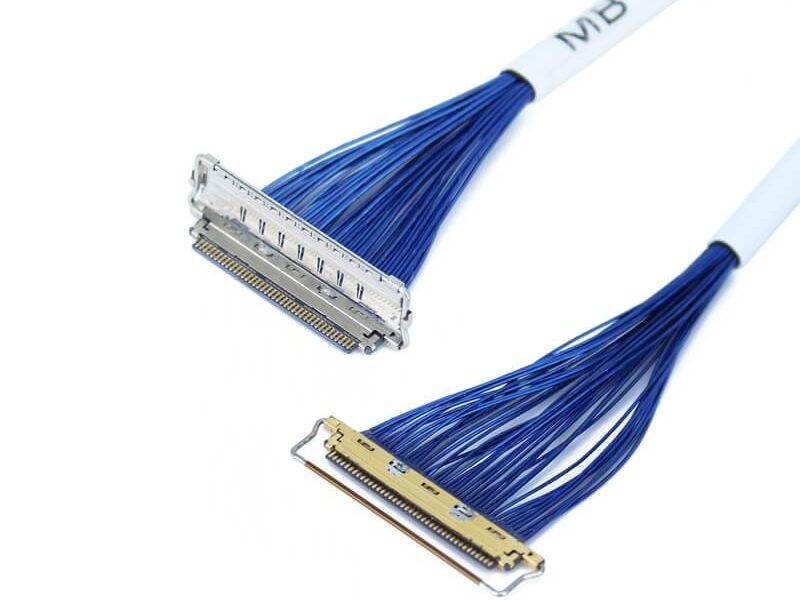
A micro coaxial cableis a miniaturized version of a standard coaxial cable, featuring a center conductor, dielectric insulation, shielding, and an outer jacket.
- Structure: Each conductor is surrounded by its own shield, creating a complete coaxial structure for every signal line.
- Size: The outer diameter is typically 0.3–1.0 mm, allowing for dense routing in tight spaces.
- Shielding: Each core has a dedicated shield, and the overall bundle can have an additional layer, providing superior EMI protection compared to multi-core cables or FFC/FPC.
- Impedance: It is designed for precise, consistent impedance, commonly 50 Ω(single-ended) or 100 Ω(differential), which is essential for high-speed data transmission.
In short:A micro coaxial cable is a high-performance, shielded interconnect optimized for high-speed, high-frequency, and high-densityapplications.
💡 Why Use Micro Coaxial Cable Instead of Standard Cables?
1. Superior Signal Integrity
- Controlled Impedance: Maintains a stable impedance (e.g., 100 Ω differential for MIPI, USB, HDMI) to minimize reflections and signal distortion.
- Low Loss: Employs low-loss dielectrics (like PTFE/FEP) and finely stranded conductors to reduce attenuation, even at multi-gigabit frequencies.
- Reduced Crosstalk: The individual shielding of each core significantly lowers crosstalk compared to unshielded multi-core or ribbon cables.
2. Excellent EMI Shielding
- Individual Shielding: Each core is shielded, preventing interference between adjacent signals.
- Overall Shielding: A braided shield and/or foil over the entire bundle provides robust protection against external EMI/RFI.
- 360° Grounding: Proper termination of the shield to the connector backshell ensures a continuous RF ground path, which is vital for passing EMC tests.
3. Space and Weight Savings
- Miniaturization: Its small diameter allows for routing in extremely confined spaces, such as within hinges or along moving parts.
- Lightweight: Replacing bulky multi-pair cables with micro coax bundles reduces overall system weight—a critical factor in aerospace and UAV applications.
4. Mechanical Flexibility
- Controlled Bend Radius: Designed to be flexed within specified limits without damaging the shielding or dielectric, making it suitable for movable assemblies.
- Durability: High-quality constructions can withstand thousands of flex cycles, which is essential for cable tracks and robotic arms.
5. High Data Rate Capability
- Multi-Gigabit Performance: A single micro coax can reliably support 5–10 Gbps(USB 3.x). With advanced designs, performance can reach 20–40 Gbpsper channel for protocols like USB4, PCIe, and high-speed MIPI.
🔬 How Micro Coaxial Cable Achieves High Performance
1. Conductor and Stranding
- High-Purity Copper: Silver-plated or tinned copper is used to reduce resistance and skin-effect losses at high frequencies.
- Stranding: Fine stranding provides the necessary flexibility while maintaining conductivity.
2. Dielectric Material
- Low-Loss Dielectrics: Materials like PTFE, FEP, or foamed PEare chosen for their low dielectric constant (εr) and low dissipation factor (Df), which minimizes signal loss at high frequencies.
3. Shielding Architecture
- Dual-Layer Shielding: A combination of aluminum foil(for 100% coverage) and a tinned copper braid(for flexibility and low resistance) is common.
- Cable Bundles: For multi-pair assemblies, an additional overall braid or foil wrap provides another layer of isolation.
4. Connector and Termination
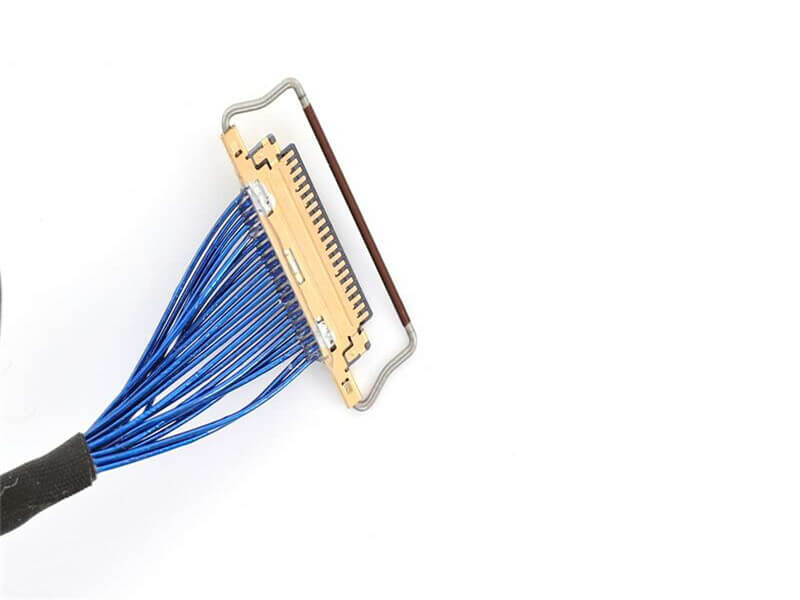
- Precision-Made: Micro coaxial connectors (e.g., I-PEX CABLINE®, Hirose, JAE) are designed for minimal stubs and precise impedance matching.
- Controlled Impedance: The transition from the cable to the connector must be smooth to avoid signal reflections. FRS uses automated, high-precision termination to ensure this.
📊 Key Performance Parameters
When evaluating a high-speed, EMI-shielded micro coaxial cable, focus on these critical specs:
- Impedance: Match your system (e.g., 50 Ωfor RF, 75 Ωfor video, 100 Ωdifferential for LVDS/MIPI). Mismatches cause reflections and signal integrity issues.
- Attenuation (Insertion Loss): The signal loss per unit length (dB/m). It increases with frequency, so check loss at your operating frequency (e.g., 1 GHz, 5 GHz, 10 GHz).
- Return Loss & VSWR: Measure how well the cable is impedance-matched. Poor return loss leads to an “eye diagram closure” and higher bit error rates (BER).
- Shielding Effectiveness: Expressed in dB, this indicates how well the cable blocks external noise and contains its own emissions. Look for cables with high shielding effectiveness at your operating frequency.
- Operating Frequency Range: Ensure the cable is specified to cover your entire operating range with acceptable loss. Micro coax can operate from DC to 40 GHz+, depending on the design.
- Temperature Rating: Verify the cable can withstand your application’s environment. FRS cables offer standard ratings like -20°C to +80°C, with options for extended ranges.
- Flex Life & Bend Radius: For moving applications, check the minimum bend radius and rated flex cycles. This is crucial for hinges, robotic arms, and medical devices.
🔌 Common Micro Coaxial Connector Types
The performance of your micro coaxial cable assemblyis only as good as its connection. Here are the main connector families:
- Board-to-Board (BTB) Micro-Coax Connectors: Used for high-density connections between PCBs, common in laptops and medical devices.
- FPC/FFC-to-Board Connectors: Often used with micro coax jumpers for LCD/display and camera module interconnects.
- RF/Microwave Micro-Coax Connectors: Includes SMA, SMB, and MMCX types for test equipment and wireless systems. FRS offers models like a 0.81 mm, 50 Ω micro coax with an SMA connector, rated for 0–3 GHz.
- Custom LVDS/High-Speed Display Connectors: Used in high-resolution displays and industrial monitors. FRS provides custom LVDS cable assemblies for stable, low-EMI video transmission.
🏭 FRS Micro Coaxial Cable: Built for Performance
FRS is a specialist in micro coaxial cableand high-speed cable assemblies, with deep experience in RF, microwave, video, and high-speed digitalinterconnects.
1. Product Examples
- 0.81 mm Micro Coax Assembly: A prime example of a high-speed, EMI-shielded micro coaxial cable. It features a 50 Ωimpedance, an operating frequency of 0–3 GHz, and a durable PVC jacket. Ideal for wireless, telecom, and aerospace applications.
- LVDS / High-Speed Video Cable Assemblies: FRS manufactures custom LVDS cables for industrial, medical, and military applications, ensuring stable signal transmission and low EMI.
2. Manufacturing & Quality
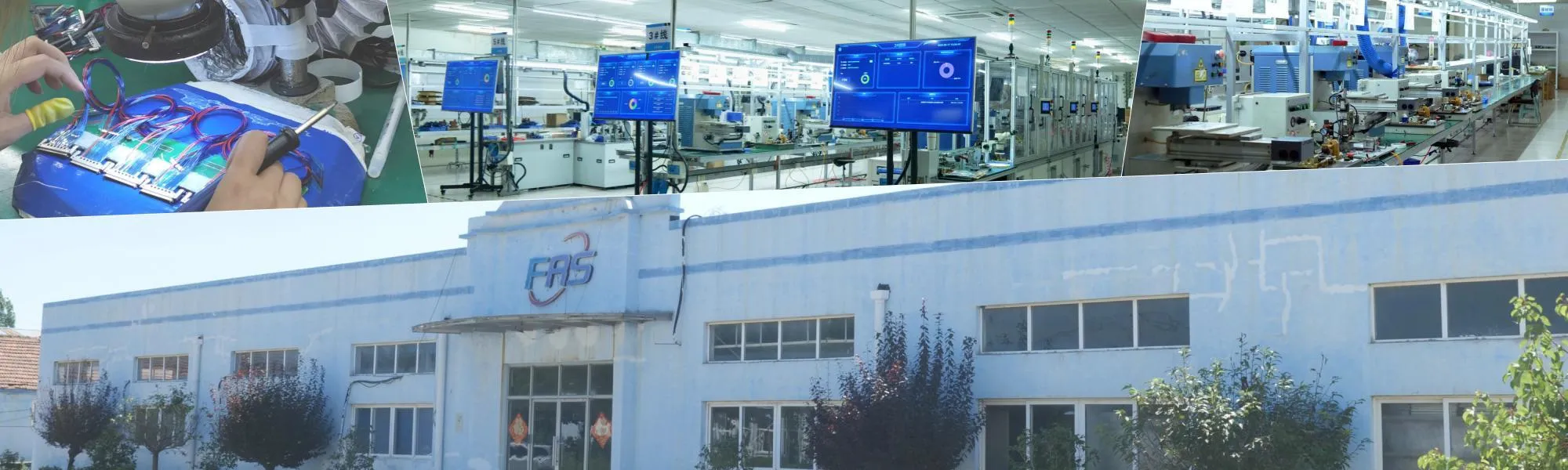
- Automated Production: FRS utilizes advanced equipment for high-precision extrusion, shielding, and termination to ensure consistency and performance.
- Rigorous Testing: Every cable assembly undergoes 100% electrical testing for continuity, insulation resistance, and high-voltage performance.
- Certifications: FRS products are manufactured in compliance with RoHS and REACHstandards, ensuring they are environmentally responsible.
3. Customization Capabilities
FRS provides comprehensive OEM/ODM servicesto meet your exact needs:
- Cable: Diameter, impedance, shielding, and jacketing.
- Connectors: Type, plating, and pinout.
- Performance: Custom designs for specific frequency, temperature, or flex-life requirements.
🎯 Key Application Areas
1. Telecom & Wireless Infrastructure
Micro coax is used in 5G/6G backhaul, microwave links, and satellite systems where low loss and high shieldingare critical. FRS’s 0.81 mm cable is a proven solution for these applications.
2. High-Speed Video & Display
For LVDS, eDP, HDMI, and DisplayPort, micro coax ensures signal integrity over long distances. FRS’s LVDS cable assemblies are trusted in industrial and medical displays.
3. Medical & Healthcare
In devices like endoscopes and patient monitors, miniaturization, biocompatibility, and reliabilityare paramount. FRS provides custom micro coax solutions that meet these stringent demands.
4. Aerospace, Military & Automotive
These sectors require cables that perform in extreme conditions. FRS offers ruggedized micro coax assemblies for avionics, defense, and automotive systems, including ADAS and in-vehicle infotainment.
5. Industrial & Test Equipment
For applications like machine vision and automated test equipment (ATE), FRS provides high-flex micro coax harnesses that maintain signal integrity in dynamic environments.
🛠️ How to Select the Right Micro Coaxial Cable
1. Define Your Key Parameters
- Signal Type & Data Rate: Is it analog RF, high-speed digital (e.g., 5 Gbps USB 3.0), or video (e.g., LVDS)?
- Frequency Range: What is the maximum operating frequency?
- Required Cable Length: Longer cables have higher loss.
- Impedance: Match your system (50 Ω, 75 Ω, or 100 Ω differential).
- Environmental Conditions: Consider temperature, moisture, chemicals, and mechanical stress.
2. Evaluate Cable Specifications
- Attenuation vs. Frequency: Ensure the loss at your max frequency is within acceptable limits.
- Shielding Effectiveness: For noisy environments, prioritize cables with high shielding effectiveness.
- Mechanical Properties: Check the bend radius and flex life if the cable will move.
3. Choose the Right Connector
- Match the Interface: Select a connector that is compatible with your PCB footprint and mating hardware.
- Ensure Impedance Continuity: The connector must be designed to maintain the cable’s characteristic impedance.
- Consider Shielding: Some connectors offer integrated EMI shielding features for enhanced performance.
4. Prototype and Test
- Build Samples: Work with a supplier like FRS to create prototype assemblies.
- Perform SI/PI Analysis: Simulate the channel to identify potential issues.
- Run EMI/EMC Tests: Validate the design in a certified lab to ensure it meets all regulatory requirements.
🤝 Partner with FRS for Your Next Project
FRS is your strategic partner for high-speed, EMI-shielded micro coaxial cablesolutions. Our expertise in RF/microwave, video, and high-speed digital interconnectsensures your product performs reliably in the most demanding applications.
Contact FRS todayto discuss your project requirements and discover how our custom micro coaxial cable assemblies can help you achieve your design goals.