
Micro Coaxial Cable factory-(FRS)
In high-frequency and microwave circuit design, selecting the appropriate transmission line is critical to ensuring signal integrity, minimizing losses, and optimizing system performance. Two widely used transmission line structures—coaxial cables and microstrip lines—each offer distinct advantages and limitations.
1.Structure and Application Scenarios
Coaxial Cable:
Coaxial cables consist of a central conductor surrounded by a dielectric insulator, an outer conductive shield, and a protective jacket. This concentric structure provides excellent electromagnetic interference (EMI) shielding, making coaxial cables ideal for environments with high noise or cross-talk risks. They are commonly used in telecommunications, RF systems, and test equipment where signals must travel over relatively long distances (e.g., meters to kilometers).
Microstrip Line:
A microstrip line is a planar transmission line fabricated on a printed circuit board (PCB), comprising a signal trace on the top layer and a ground plane on the bottom layer, separated by a dielectric substrate. Its compact, lightweight design suits integrated microwave circuits, antenna feeds, and high-density PCB layouts. Microstrip lines are preferred for on-board interconnects, radar systems, and wireless communication modules.
2.Frequency Range and Loss Characteristics
Coaxial Cable:
Coaxial cables support a broad frequency range, typically from DC to tens of GHz, depending on the cable type (e.g., RG-58 for lower frequencies, semi-rigid coax for microwaves). However, they exhibit higher attenuation per unit length compared to microstrip lines, especially at higher frequencies, due to conductor and dielectric losses. For long-distance transmission, repeaters or signal amplifiers may be required.
Microstrip Line:
Microstrip lines are optimized for high-frequency applications (MHz to tens of GHz) but face limitations at very high frequencies due to radiation losses and dispersion effects. Their losses are generally lower than coaxial cables for short distances, but substrate material properties (e.g., dielectric constant, loss tangent) significantly impact performance. Low-loss substrates like Rogers RO4000 series are often chosen to minimize attenuation.
3.Impedance Matching and Power Handling
Coaxial Cable:
Standard coaxial cables (e.g., 50 Ω or 75 Ω) provide well-defined characteristic impedance, simplifying impedance matching in RF systems. They also handle higher power levels (hundreds of watts) due to robust shielding and larger conductor sizes, making them suitable for high-power transmitters and broadcast systems.
Microstrip Line:
Microstrip impedance depends on trace width, substrate thickness, and dielectric constant. While impedance control is achievable with precise PCB design, variations in manufacturing tolerances can introduce mismatches. Power handling is limited by trace width and substrate thermal properties, restricting microstrip lines to low-to-medium power applications (e.g., consumer electronics, IoT devices).
4.Cost and Integration Complexity
Coaxial Cable:
Coaxial cables are relatively expensive, especially for high-frequency variants, and require additional connectors (e.g., SMA, N-type) for termination. Their bulkiness complicates integration in compact systems, and bending radii must be carefully managed to avoid performance degradation.
Microstrip Line:
Microstrip lines are cost-effective for mass production, as they are fabricated directly on PCBs without extra components. Their planar structure simplifies integration with other circuits, such as amplifiers, filters, and antennas. However, designing microstrip-based systems demands expertise in electromagnetic simulation and layout optimization.
5.Environmental and Mechanical Considerations
Coaxial Cable:
The shielded structure of coaxial cables ensures resilience against external moisture, temperature fluctuations, and physical stress. They are suitable for harsh environments, outdoor installations, and military applications.
Microstrip Line:
Microstrip lines are sensitive to environmental factors unless protected by conformal coatings or enclosures. Mechanical stability depends on PCB material, making them less robust in high-vibration or extreme-temperature scenarios.
Our factory offers high-quality products at competitive prices
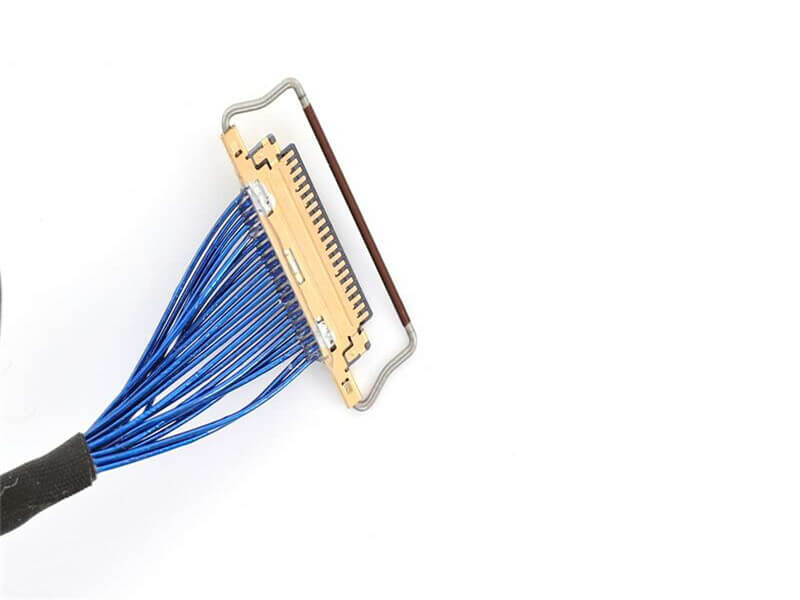
Overview of I-PEX Micro Coaxial Cable Connectors I-PEX is a global leader in micro coaxial cable solutions, specializing in high-performance IPEX micro coax connectors and micro coaxial cable assemblies. These products are designed for.
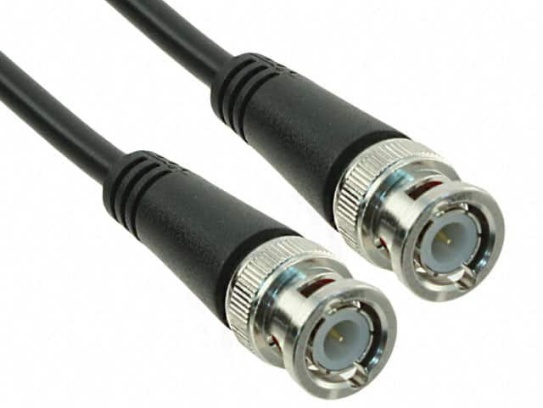
IntroductionIn today’s fast-paced digital world, reliable and high-speed data transmission is critical for industries ranging from telecommunications to aerospace. Enter High-Speed Data Micro-Coax—a cutting-edge miniature coaxial cable e.
Feel free to reach out to us for any inquiries or orders