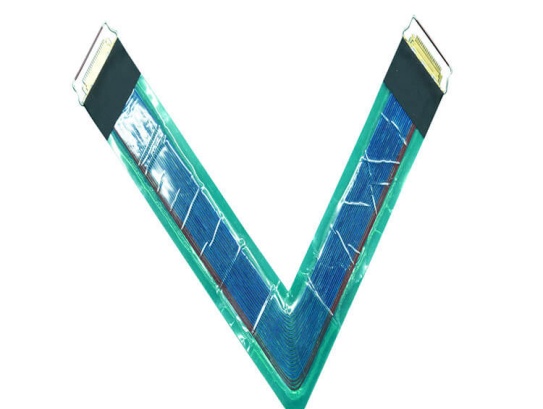
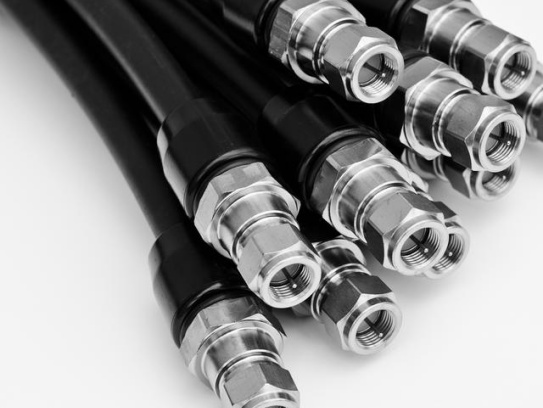
Introduction The High-Temperature Resistant Micro-Coaxial Cable is a cutting-edge connectivity solution engineered to deliver exceptional performance in extreme thermal environments. Combining precision engineering with advanced materials, this cable is designed to meet the rigorous demands of industries where reliability, signal integrity, and durability under high temperatures are non-negotiable. Ideal for aerospace, automotive, industrial automation, and medical equipment applications, this micro-coaxial cable ensures stable signal transmission even in the harshest operating conditions.
Key Features
Superior High-Temperature Tolerance
Operating Range: Withstands continuous temperatures from **-65°C to +250°C** and short-term peaks up to **+300°C**, making it suitable for extreme environments such as engine compartments, industrial furnaces, and aerospace systems.
Material Excellence: Utilizes fluoropolymer insulation (e.g., PTFE or FEP) and a high-temperature resistant outer jacket (silicone or specialized thermoplastics), ensuring minimal degradation and maintained flexibility under thermal stress.
Precision Signal Transmission
Low Loss Design: Optimized impedance stability (50Ω or 75Ω) and minimal signal attenuation across a broad frequency range (DC to 6 GHz+), critical for high-frequency applications like RF communication, radar systems, and sensitive instrumentation.
Micro-Coaxial Architecture: Ultra-thin design (outer diameters as small as 0.5mm–2.0mm) enables easy integration into space-constrained systems while maintaining high flexibility for routing in complex assemblies.
Mechanical Resilience: Reinforced conductors and abrasion-resistant jackets ensure longevity in high-vibration or repetitive-motion scenarios.
Chemical and Environmental Resistance
Resists oils, fuels, solvents, and UV radiation, making it suitable for outdoor, automotive, and industrial settings.
Technical Specifications
Conductor: High-purity silver-plated copper or alloy core for optimal conductivity.
Insulation: PTFE/FEP for thermal stability and low dielectric loss.
Shielding: Dual-layer (foil + braided shield) for maximum interference protection.
Jacket: Silicone or high-performance thermoplastic (e.g., PFA).
Voltage Rating: Up to 600V AC/DC.
Bend Radius: As low as 5x cable diameter for tight installations.
Industrial: High-temperature sensors, robotics, furnace instrumentation, and process control.
Medical: Sterilization equipment, MRI systems, and surgical tools requiring reliable signal paths in autoclave conditions.
Telecom/Data: Miniaturized RF devices, base stations, and high-density interconnect systems.
Advantages Over Standard Coaxial Cables
Thermal Endurance: Outperforms standard PVC or PE-jacketed cables, which typically fail above 105°C.
Space Efficiency: Micro-coaxial design saves critical space in compact devices.
Long-Term Reliability: Maintains electrical and mechanical properties over extended thermal cycles.
Customization Options Tailored solutions are available, including:
Custom lengths and connector terminations (SMA, BNC, etc.).
Specialized shielding configurations.
Compliance with MIL-STD, RoHS, or ISO 13485 standards.
Why Choose Our High-Temperature Resistant Micro-Coaxial Cable? This product is the result of decades of expertise in high-performance cabling. By prioritizing thermal resilience, signal fidelity, and mechanical robustness, we empower industries to push the boundaries of technology in extreme conditions. Whether for mission-critical aerospace systems or next-generation EVs, our cables ensure uninterrupted performance where others falter.
Meta Description: Discover the differences between shielded and unshielded micro coaxial cables. Learn which type suits your project for optimal performance, EMI protection, and cost-efficiency.
When selecting micro coaxial ...
Is your critical signal transmission failing under extreme heat? Micro coaxial cables, the vital conduits for high-frequency signals in demanding applications like aerospace, automotive sensors, industrial automation, and downhole ...
Structured cable systems form the backbone of modern networks, with countless cables and connections working together to ensure seamless data transmission. Amidst this complexity, patch panels emerge as the unsung heroes, bringing order...
Micro-coaxial power lines pack impressive power transfer into tiny spaces. But pushing high voltages through these miniature channels creates a critical challenge: preventing dangerous electrical discharges and ensuring safe, reliable ...
If you are designing next-generation hardware, you know the drill: consumers want devices thinner than a credit card, yet they demand 8K video streams and blazing-fast data transfers. Cramming high-frequency performance into a shrinking...
Coaxial cable assemblies are critical components in various industries such as telecommunications, aerospace, medical equipment, and automotive electronics. Their performance and reliability are closely tied to proper packaging, which n...
In an era where seamless connectivity defines everything from home entertainment to critical industrial operations, signal interference remains a persistent headache. Whether it’s a pixelated TV screen, dropped security camera feeds, or...
Choosing the best micro coaxial cables for your test and measurement (T&M) setup isn’t just about connecting point A to point B. It’s about preserving signal integrity, ensuring measurement accuracy, and prot...
AbstractHigh-frequency signal transmission is critical in modern communication systems, radar, and high-speed data applications. However, signal attenuation and distortion at high frequencies pose significant challenges. Micro-coaxial ...
For those who rely on seeing in the dark – soldiers, security personnel, hunters, or wildlife observers – night vision goggles (NVGs) are indispensable tools. The magic happens in the low-light sensors at the heart of these device...
Introduction
Modern high‑resolution displays push video interfaces to their limits. To deliver 4K@120Hz, 8K@60Hz, 10‑bit/12‑bitcolor, and HDRwith minimal artifacts, display modules require interconnects that combine very high bandwid...
Coaxial cables are vital for transmitting high-frequency signals in various applications, from home TV setups to professional communication systems. Proper maintenance and care can significantly extend their lifespan, ensure consistent ...
Coaxial cables have played a pivotal role in the evolution of network communication systems. Among them, Thicknet (Thick coaxial cable) and Thinnet (Thin coaxial cable) were widely used in early Ethernet implementations, particularl...
Micro coaxial cable assemblies are vital for high-frequency signal transmission in devices like smartphones, medical imaging equipment, automotive radar, and 5G test gear. However, obtaining a precise price quotation online can be chall...
In the realm of signal distribution systems, cable splitters and taps play pivotal roles in ensuring efficient and reliable transmission of audio, video, and data signals. While both devices serve the purpose of dividing signals, they f...
The maximum transmission distance of micro coaxial cables depends on factors such as cable specifications, signal types, and environmental conditions. Below is a structured analysis based on industry data and testing results:
...
In the complex landscape of industrial operations, the reliability of connectivity solutions directly impacts productivity, safety, and operational efficiency. Harsh industrial environments—characterized by extreme temperatures, moistur...
When engineers specify micro coaxial cable assemblies, one of the first and most critical questions is: “What impedance values can you actually achieve?”The answer determines signal integrity, return loss, and overall system performance...
Coaxial cable assemblies are essential components in countless electronic and communication systems, serving as the backbone for transmitting high-frequency signals with minimal interference. From consumer electronics to industrial mach...
The Game-Changing Technology
Flexible micro-coaxial cables are revolutionizing electronics by allowing devices to bend and fold without breaking internal connections. These hair-thin cables (often thinner than 0.2mm) maintain strong ...
Coaxial cables are the backbone of many communication systems, from home internet setups to industrial networking and broadcasting. Ensuring their signal integrity is crucial for maintaining reliable data transmission, minimizing interf...
In modern automotive technology, radar systems play a crucial role in ensuring safety, from adaptive cruise control to collision avoidance. At the heart of these systems lies a seemingly simple yet vital component: the coaxial cable. Th...
Understand Your ApplicationThe first step in choosing a coaxial cable is identifying its primary purpose:
TV/Antenna Signals: RG6 cables are ideal for satellite TV, cable TV, and digital antennas due to their high shielding an...
Coaxial cables remain a cornerstone of high-frequency signal transmission in industries ranging from telecommunications to broadcasting and security systems. Their ability to minimize interference and maintain signal integrity makes the...
Overview and definition
A micro coaxial cable with an I-PEX 20373 connector is a miniaturized, shielded interconnect built to carry high‑speed differential or single‑ended signals between tightly spaced PCBs or modules. The I‑PEX 203...
Purchasing micro-coaxial cables for your electronics project or product line? Ensuring they comply with the Restriction of Hazardous Substances (RoHS) directive is not just good practice – it’s often a legal requirement, es...
In the realm of modern communication and electronic systems, coaxial cable assemblies stand as a cornerstone technology, playing a pivotal role in transmitting signals with reliability and efficiency. Among the key performance metrics t...
Coaxial cables have been a cornerstone of wired communication systems for decades, prized for their ability to transmit high-frequency signals with minimal interference. From broadcasting and telecommunications to military and aerospace...
The relentless drive towards smaller, faster, and more powerful electronic devices isn’t just about packing more computing power into your pocket. It’s also placing immense pressure on the unsung heroes within these devices:...
In today’s high-density, high-frequency electronic designs, selecting the right interconnect solution is crucial. When space is tight and signal integrity matters, engineers increasingly turn to Micro Coaxial Cable. At FRS, we specializ...
In the era of smart manufacturing, industrial automation systems demand components that balance miniaturization, high performance, and durability. Micro-coaxial cables (often abbreviated as micro-coax) have emerged as a critical solutio...
In high-speed, high-density electronic devices, the quality of interconnection often determines the final performance. Micro coaxial cable bulk supplyis no longer just a commodity; it is a critical factor for ensuring stable signal tran...
In the dynamic world of theme parks, where innovation and guest experience reign supreme, reliable communication systems are the backbone of safe and seamless operations. From high-speed roller coasters to immersive dark rides, every at...
In the era of miniaturized electronics and high-frequency communication, the demand for efficient signal transmission in confined spaces has reached unprecedented heights. Whether you are designing the next-generation 5G antenna module,...
High-Frequency Communication & 5G Antenna ModulesMicro coaxial cables are widely used in 5G base stations and mobile devices for high-frequency signal transmission due to their low signal loss, supporting efficient millimeter-wave...
Micro coaxial cables, the unsung heroes of compact, high-frequency electronics, are critical for transmitting signals with minimal degradation. Among their key performance parameters, insertion loss is paramount. Understanding the...
Choosing the right micro-coaxial cable isn’t just a detail in drone design and operation; it’s a critical factor impacting video transmission reliability, control signal integrity, weight, and ultimately, the success of your...
Introduction to SMA and MCX ConnectorsSMA (SubMiniature version A) and MCX (Micro Coaxial) connectors are widely used in RF and high-frequency applications, including telecommunications, aerospace, and IoT devices. These connectors ensu...
As new consumer electronics and network devices—such as 4K/8K smart TVs, 5G CPE routers, and 4K security cameras—become increasingly prevalent, many users wonder if their existing coaxial cables or newly purchased ones can work seamless...
What Defines a Coaxial Cable?A coaxial cable (“coax”) has a concentric layered design that ensures signal integrity:
Central Conductor: A solid or stranded copper core for signal transmission.Dielectric Insulator: Surrounds th...
IntroductionThe High-Temperature Resistant Micro-Coaxial Cable is a cutting-edge connectivity solution engineered to deliver exceptional performance in extreme thermal environments. Combining precision engineering with advanced mate.
Meta Description: Discover the advanced features and benefits of Industrial Micro-Coaxial Wiring—engineered for precision, durability, and high-speed signal transmission in industrial environments.
What is Industrial Micro-Co.
Contact Us Micro Coaxial Cable factory-(FRS).
Feel free to reach out to us for any inquiries or orders