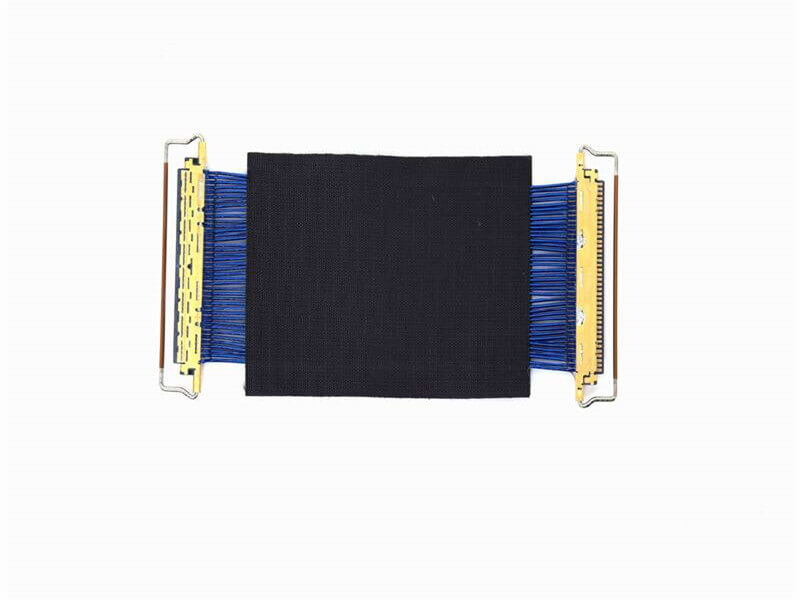
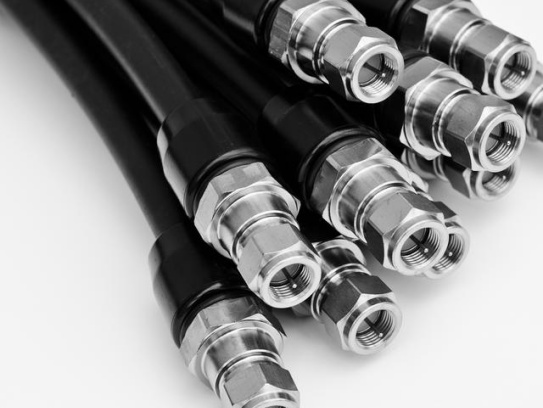
When engineers specify micro coaxial cable assemblies, one of the first and most critical questions is: “What impedance values can you actually achieve?”The answer determines signal integrity, return loss, and overall system performance. This guide breaks down the achievable impedance ranges, the factors that influence them, and how to ensure your assembly meets your exact application requirements.
Standard Impedance Options
Most micro coaxial cable assemblies are manufactured to standard impedance values to ensure compatibility with common high-speed protocols and RF systems. The two most common are 50Ω and 75Ω.
- 50Ω Micro Coax
- The Industry Standard: This is the most widely used impedance for RF, microwave, high-speed digital, and test & measurement applications.
- Why 50Ω?: It offers a proven balance between power handling capability and signal loss, making it ideal for data rates from hundreds of Mbps up to tens of Gbps (e.g., PCIe, USB, MIPI, Thunderbolt).
- Availability: Readily available in various AWG sizes (from 32 AWG down to 50 AWG) and with numerous connector options.
- 75Ω Micro Coax
- The Broadcast & Video Standard: Primarily used for video transmission, broadcast equipment, and specific RF applications where 75Ω is the defined system impedance.
- Key Advantage: Optimized for minimal signal attenuation in video and CATV systems, ensuring clean signal transfer with minimal reflection.
In a nutshell:If your project involves high-speed data, RF, or general-purpose test, 50Ω is the default. For video-centric applications, 75Ω is the standard choice.
Custom Impedance Capabilities
While 50Ω and 75Ω cover most applications, specific projects may require a custom impedance. Professional manufacturers can achieve this through precise process control.
- Typical Custom Range: Many suppliers can support impedance values from 42.5Ω to over 75Ω, depending on the cable structure and materials used.
- High-Precision Tolerances: Achieving consistent impedance requires tight manufacturing tolerances. For example, some manufacturers can hold an impedance tolerance of ±3% to ±5%, with dimensional tolerances on insulation as tight as ±0.01 mm.
- Key Influencing Factors: Custom impedance is determined by:
- Conductor Diameter: The size of the inner wire.
- Insulation Material: The dielectric constant (Dk) of the insulator.
- Shielding Geometry: The diameter and coverage of the shield.
- Process Control: Precision in extrusion and assembly.
- Customization Example: A manufacturer can produce a cable with a target impedance of 60Ωby using a specific AWG conductor and a precisely extruded insulation layer with a defined dielectric constant. This is validated through 100% impedance testing and TDR (Time-Domain Reflectometry) measurements.
Impact of Connectors and Termination
The impedance of a cable assembly is not just about the cable itself. The connectors and termination methods play a crucial role in maintaining signal integrity.
- Matched Impedance Connectors: Connectors are designed to present a specific impedance (e.g., 50Ω) to the cable. Using a connector with a mismatched impedance will create a discontinuity and cause reflections.
- Consistent Transition Design: The transition from the cable to the connector must be carefully designed. This includes controlling the pin length, dielectric, and grounding scheme to ensure a smooth impedance transition.
- Assembly Process Control: Automated, controlled assembly processes (e.g., precise stripping, termination, and soldering) are essential to minimize variation and maintain impedance consistency across all assemblies in a production run.
How to Select the Right Impedance
Choosing the correct impedance ensures your system performs as intended. Follow these steps:
- Check System Requirements: Review your system’s datasheet or standard. It will specify the required impedance (e.g., 50Ω for PCIe, 75Ω for SDI video).
- Define Your Application:
- High-Speed Data / RF / General Test: Choose 50Ω.
- Video / Broadcast: Choose 75Ω.
- Specialized Systems: If a non-standard impedance is specified (e.g., 60Ω or 100Ω differential over paired micro-coax), you will need a custom solution.
- Consult Your Manufacturer: Provide your target impedance, frequency range, and connector types. An experienced manufacturer can advise on the best cable construction to meet your needs and confirm achievable tolerances.
Conclusion
Achieving the right impedance in a micro coaxial cable assembly is a balance of standard options, custom engineering, and meticulous process control. For most applications, the choice is clear: 50Ω for data/RFand 75Ω for video. When a unique impedance is required, partnering with a manufacturer capable of precision design and validation is key. By understanding these fundamentals, you can ensure your cable assemblies deliver the signal integrity your high-performance application demands.