Coaxial Cable for Energy Storage Systems - Micro Coaxial Cable factory-(FRS)
Micro Coaxial Cable factory-(FRS)
INFO
In the rapidly evolving world of energy storage systems (ESS), efficiency, reliability, and safety are non-negotiable. Whether it’s for large-scale grid storage, renewable energy integration, electric vehicle charging infrastructure, or residential battery systems, every component must perform optimally under demanding conditions. One such critical component that often goes overlooked is the cabling infrastructure. Specifically, coaxial cable has emerged as a superior solution for transmitting power and data within these systems with minimal loss and maximum integrity.
Why Coaxial Cable in Energy Storage?
Energy storage systems involve the complex interplay between batteries, inverters, controllers, and monitoring systems. These systems require not only high-power transmission but also real-time data communication to monitor performance, health, and safety parameters. Traditional wiring methods may struggle to meet the dual demands of power and signal integrity, especially in high-interference environments.
This is where coaxial cable shines. Originally developed for transmitting high-frequency signals, coaxial cable’s unique design offers exceptional electrical characteristics that make it ideal for modern ESS applications:
1.High Efficiency with Low Loss: The shielded design of coaxial cable ensures that power is transmitted with minimal energy loss. This is crucial in energy storage, where efficiency directly impacts overall system performance and cost-effectiveness.
2.Superior Electromagnetic Interference (EMI) Shielding: ESS environments are often saturated with EMI generated by power inverters, rapid switching circuits, and large battery banks. Coaxial cable’s inherent structure—a central conductor surrounded by a dielectric insulator, a metallic shield, and an outer jacket—provides excellent protection against both incoming and outgoing interference. This ensures data signals for system monitoring and control remain clean and uncorrupted.
3.Impedance Matching & Signal Integrity: For systems that integrate data communication alongside power lines (e.g., for state-of-charge monitoring or temperature sensing), maintaining signal integrity is paramount. Coaxial cables offer controlled impedance (typically 50 or 75 ohms), which prevents signal reflections and losses, ensuring accurate data transmission over longer distances within the storage unit.
4.Durability and Safety: The robust construction of quality coaxial cables, often featuring materials like fluorinated ethylene propylene (FEP) for the dielectric and tinned copper braiding for the shield, offers resistance to heat, chemicals, and abrasion. This enhances the long-term reliability and safety of the ESS, reducing the risk of shorts or failures.
Key Applications in Energy Storage Systems
The use of coaxial cable within an ESS is versatile and critical in several key areas:
•Battery Module Interconnects: Coaxial cables can be used to create efficient and low-loss connections between individual battery cells or modules within a larger pack, ensuring balanced charging and discharging.
•DC Power Transmission: The high-current capability of thicker coaxial cables makes them suitable for handling the DC power flow between the battery bank and the inverter.
•System Monitoring and Control (BMS): Nearly every modern ESS relies on a sophisticated Battery Management System (BMS). Coaxial cables provide the reliable signal pathways needed for voltage, current, and temperature sensors to communicate with the central BMS controller without errors caused by electrical noise.
•Grid Communication Interfaces: For large-scale grid storage systems, coaxial cables can be implemented in communication links that report status to grid operators and help in grid stabilization efforts.
Choosing the Right Coaxial Cable
Not all coaxial cables are created equal. Selecting the right one for an energy storage application depends on several factors:
•Power Rating: The cable must be sized appropriately to handle the maximum current without overheating.
•Voltage Rating: ESS voltages can range from 48V in residential systems to over 1000V in utility-scale applications. The cable must have a voltage rating exceeding the system’s maximum operating voltage.
•Shielding Effectiveness: Look for cables with high shield coverage percentage (often 95% or higher) for the best EMI protection.
•Temperature Rating: Cables must withstand the heat generated by the batteries and electronics without degrading.
•Flexibility and Durability: Especially within battery packs, cables may need to be routed tightly and should resist vibration and wear.
Future-Proofing with Robust cabling
As energy storage technology advances towards higher densities, faster charging cycles, and more integrated smart grid functions, the underlying infrastructure must keep pace. Investing in high-quality coaxial cabling is an investment in the system’s longevity, efficiency, and safety. It mitigates potential points of failure and ensures that the system can operate at its peak potential for years to come.
Engineered for Performance, Backed by Expertise: FRS
When the integrity of your energy storage system depends on every component, you shouldn’t compromise on quality. The theoretical advantages of coaxial cable—low loss, superior shielding, and robust durability—are only realized in practice when the products are manufactured to the highest standards.
This is where FRS excels.
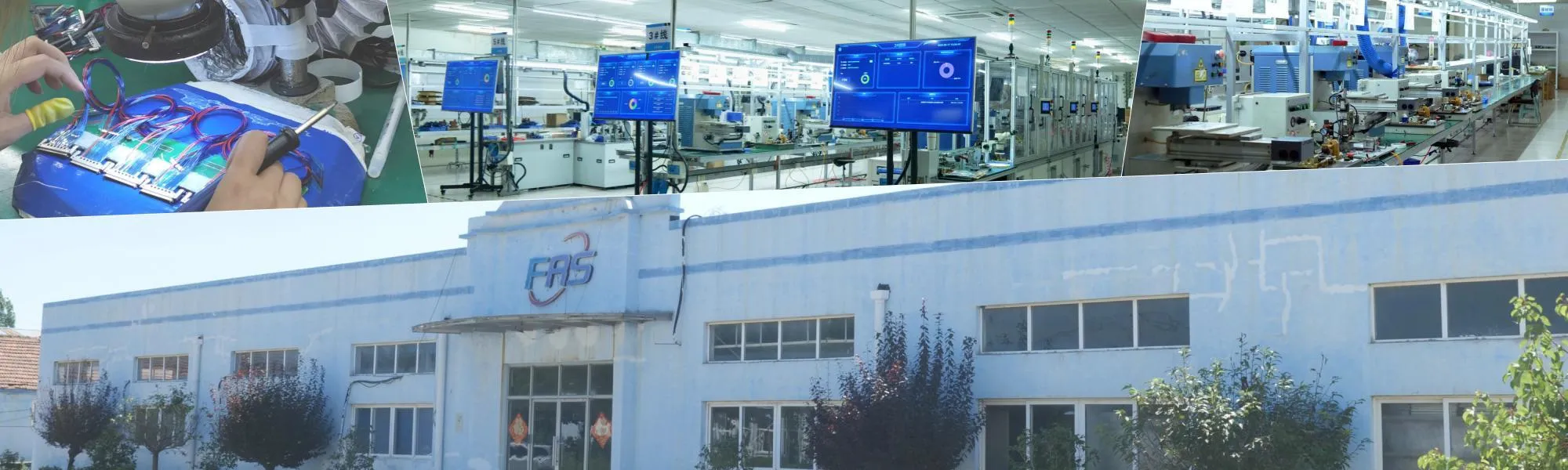
At FRS, we understand the critical role that cabling plays in the demanding environments of modern energy storage. Our state-of-the-art manufacturing facility is dedicated to producing precision-engineered coaxial cables that are built to last. We don’t just make cable; we craft solutions. Each of our coaxial cables is designed with a meticulous focus on:
•Premium Materials: We use only high-purity conductors, advanced dielectric materials, and high-coverage shielding to ensure optimal electrical performance and resilience.
•Rigorous Testing: Every batch of FRS coaxial cable undergoes stringent testing for impedance, attenuation, shielding effectiveness, and voltage breakdown to guarantee it meets our exacting specifications and your application’s demands.
•Customization: We recognize that every energy storage system is unique. FRS offers extensive customization options, including specific lengths, connector types, jacket materials, and shielding configurations to perfectly integrate into your design.
For your next energy storage project, specify coaxial cable that delivers unparalleled performance and reliability. Specify FRS. Choose FRS—Where Power and Data Integrity Meet.
Signal attenuation – the gradual weakening of a signal as it travels through a cable – is a critical factor in any high-frequency electronic system. When working with micro coaxial cables, their small size makes understanding and calcu...
Medical devices are critical tools where performance, reliability, and patient safety are non-negotiable. As these devices become increasingly sophisticated, smaller, and more portable, the components within them must keep pace. Micro c...
The race towards practical quantum computing hinges on overcoming immense technical hurdles. Among the most critical is the challenge of reliably controlling and measuring fragile quantum bits (qubits), the fundamental units of quantum ...
Coaxial cables have played a pivotal role in the evolution of network communication systems. Among them, Thicknet (Thick coaxial cable) and Thinnet (Thin coaxial cable) were widely used in early Ethernet implementations, particularl...
In today’s interconnected world, reliable signal transmission is the backbone of industries ranging from telecommunications to security systems. At the heart of this reliability lies the coaxial cable—a critical component designed to ca...
Repeated bending is the silent killer of micro-coaxial cables. If you design wearables, medical devices, robotics, or any product requiring constant movement, achieving 100,000+ flex cycles is critical. Rigorous testing reveals wh...
When selecting cables for your test equipment, the 50Ω micro coaxial cableis often the critical component that determines whether your measurements are accurate, repeatable, and reliable. Unlike general-purpose hookup wires, a purpose-b...
In the modern era of information transmission, coaxial cables have long been a crucial component in various fields, from home entertainment systems to large – scale industrial communications. User feedback, as a direct reflection ...
In the complex web of modern electronic systems, ensuring seamless signal compatibility is a fundamental challenge. Signals come in diverse forms—analog and digital, with varying frequencies, amplitudes, and protocols—yet they often nee...
The short answer is yes—coaxial cable assemblies can function in low-temperature environments, but their reliability and performance depend entirely on material selection, structural design, and compliance with low-temperature stan...
In the rapidly advancing field of medical technology, reliable connectivity is not just a convenience—it’s a matter of life and death. From high-resolution imaging systems to minimally invasive surgical tools, medical devices demand pre...
Meta Description: Understand critical vibration testing standards (MIL-STD, IEC) for micro coaxial cables. Ensure reliability in aerospace, automotive, medical & consumer tech. Learn requirements here.
H1: What Are the V...
Micro coaxial cables – those tiny, high-frequency workhorses – are absolutely critical within the intricate networks of modern aircraft, spacecraft, and satellites. Choosing or manufacturing cables that meet rigorous aerospace standards...
AbstractSignal interference remains a critical challenge in high-frequency applications using micro-coaxial cables, impacting performance in 5G devices, medical imaging systems, and aerospace electronics.
IntroductionMicro-coaxia...
Micro-coaxial cables are essential for transmitting high-frequency signals in devices like routers, TVs, and medical equipment. When these cables get damaged, choosing the right repair method—soldering or compression connectors—ca...
Definition of Military-Grade Micro Coaxial CablesMilitary-grade micro coaxial cables are miniaturized coaxial cables built to comply with stringent military specifications (e.g., MIL-STD-202, MIL-DTL-17). They typically feature:
...
Coaxial Cable Assemblies are the backbone of modern communication, aerospace, defense, medical, and industrial systems, enabling the reliable transmission of high-frequency signals with minimal loss. From satellite communications to med...
Coaxial cable assemblies are critical for transmitting high-frequency signals in applications like telecommunications, satellite TV, and industrial automation. Poor installation can lead to signal attenuation, interference, or even comp...
Why Industrial-Grade Coaxial Cables Matter
Industrial environments demand cables that withstand extreme conditions – from factory floors to outdoor installations. Standard coaxial cables often fail under constant vibration, tem...
In the complex and harsh operating environment of military vehicles, every component plays a critical role in ensuring mission success and personnel safety. Among these components, Coaxial Cable Assemblies for military vehicles stand ou...
In the dynamic world of drone technology, efficient and reliable communication is the linchpin for successful operations. Coaxial cable has emerged as a crucial component in ensuring seamless data transfer and stable connections for dro...
The successful completion of the Environmental Impact Assessment (EIA) for coaxial cable systems marks a pivotal advancement in the telecommunications industry’s journey toward sustainability. This assessment, conducted in ali...
Medical robots are transforming healthcare, enabling minimally invasive surgeries with superhuman precision, enhancing diagnostics, and improving patient outcomes. At the heart of these sophisticated machines lies an often-overlooked bu...
In the realm of electronic connections, coaxial cables with gold-plated connectors stand out for their enhanced conductivity, playing a vital role in numerous applications.
Coaxial cables have a unique structure that enables them to ...
The realm beneath the ocean’s surface holds immense potential, from deep-sea resource exploration and environmental monitoring to underwater infrastructure inspection and defense applications. Submersible drones (or ROVs – R...
In an era where data breaches and signal interception pose existential threats to businesses and critical infrastructure, the choice of transmission medium is no longer a matter of convenience—it is a cornerstone of network security. Wh...
In the world of telecommunications, broadcasting, and security systems, coaxial cables have long been the backbone of reliable signal transmission. However, one persistent challenge has plagued professionals in these industries for deca...
In the rapidly evolving landscape of electronic components, micro-coaxial cables stand as a critical backbone for high-speed data transmission, signal integrity, and miniaturized device connectivity. As industries like consumer electron...
IntroductionArctic research stations face extreme cold, where temperatures plummet below -50°C. Standard electronics often fail under such conditions, disrupting critical data collection. To solve this, scientists now rely on cold-resis...
Structure and Material CompositionSemi-rigid coaxial cables are defined by their robust, unyielding construction:
Inner Conductor: Made of high-purity copper or silver-plated copper for optimal conductivity.Dielectric Layer: A...
Forget bulky cables and signal dropouts. If you’re navigating the rapidly evolving landscape of factory automation – deploying robotics, vision systems, or complex sensor networks – you’ve likely encountered the critica...
In the relentless push for smaller, faster, and more connected devices, reliable high-frequency signal transmission has become mission-critical. Whether it’s inside the latest medical imaging device, a 5G base station, or a cutting-edge...
Key Parameters Defining Transmission Performance1.1 Frequency Range and BandwidthMicro-coaxial cables are optimized for high-frequency signal transmission, typically supporting frequencies from DC to 40 GHz or higher. Their bandwi...
In high-speed, high-density electronic devices, the quality of interconnection often determines the final performance. Micro coaxial cable bulk supplyis no longer just a commodity; it is a critical factor for ensuring stable signal tran...
Within the intricate world of high-frequency electronics and RF systems, consistency is paramount. For signals traveling multiple pathways simultaneously – such as in phased array antennas, beamforming networks, power combiners/dividers...
For ham radio operators and amateur communicators, the coaxial cable is far more than a “connecting wire”—it is the lifeline of signal integrity. A poorly chosen or installed coaxial cable can lead to significant signal loss...
In film production, reliable signal transmission is key to capturing high-quality audio and video. Coaxial cables play a vital role here, but choosing the right one and using it properly can be tricky. This guide breaks down everything ...
In the harsh and complex marine and offshore environments, reliable communication is crucial for safety, operations, and coordination. Coaxial cables play a vital role in ensuring seamless signal transmission in these settings. This art...
In the relentless drive for smaller, faster, and more powerful electronics, a silent hero quietly enables success: the micro coaxial cable. These miniature marvels are far more than just tiny wires; they are the critical arteries ...
IntroductionThe High-Temperature Resistant Micro-Coaxial Cable is a cutting-edge connectivity solution engineered to deliver exceptional performance in extreme thermal environments. Combining precision engineering with advanced mate.
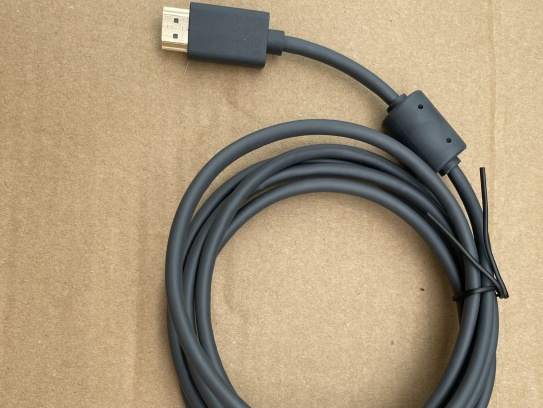
OverviewMicro-Coax for HD Video is a cutting-edge coaxial cable engineered to deliver uncompromised high-definition video quality across professional and industrial applications. Designed for reliability, precision, and versatility,.
Contact Us Micro Coaxial Cable factory-(FRS).
Feel free to reach out to us for any inquiries or orders