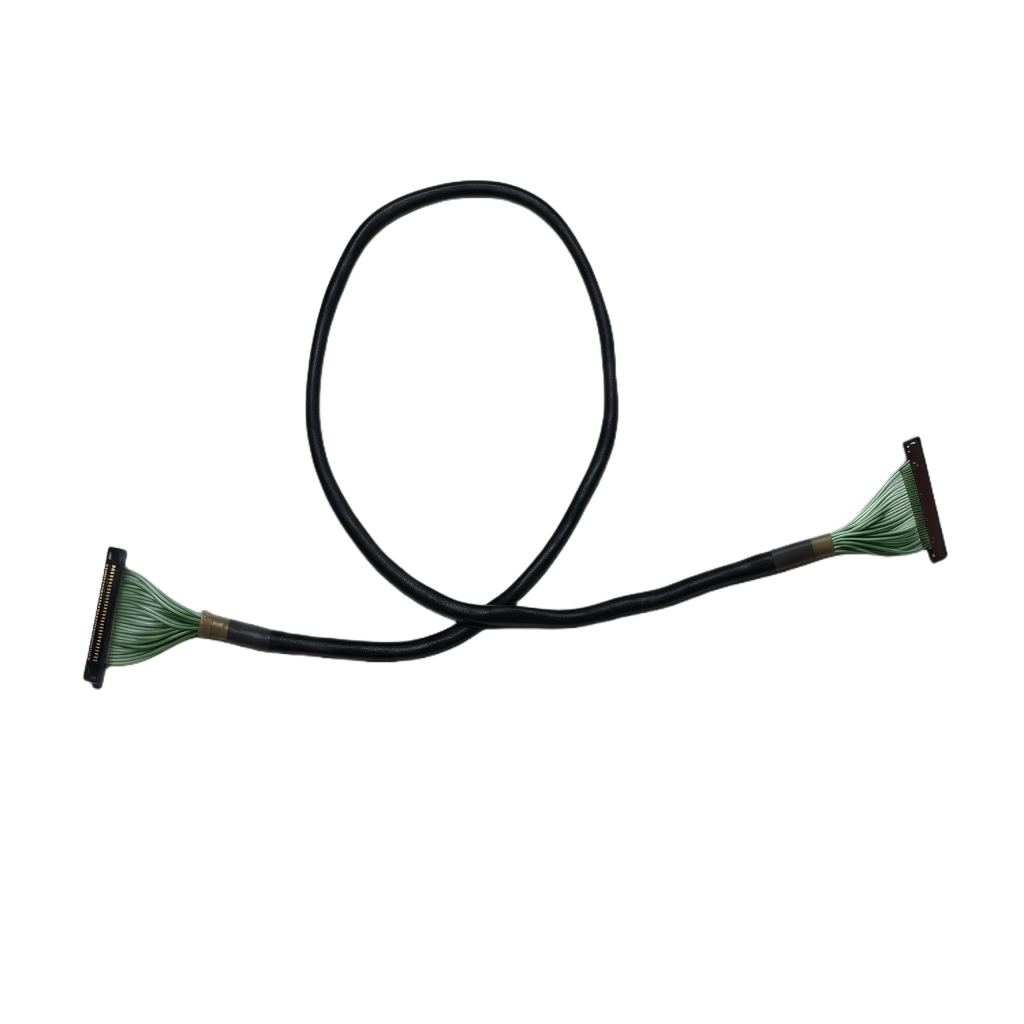
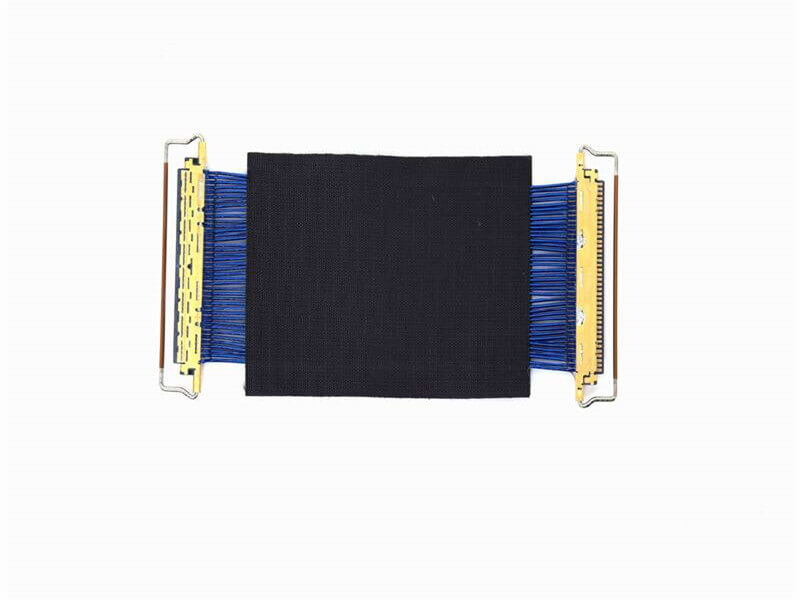
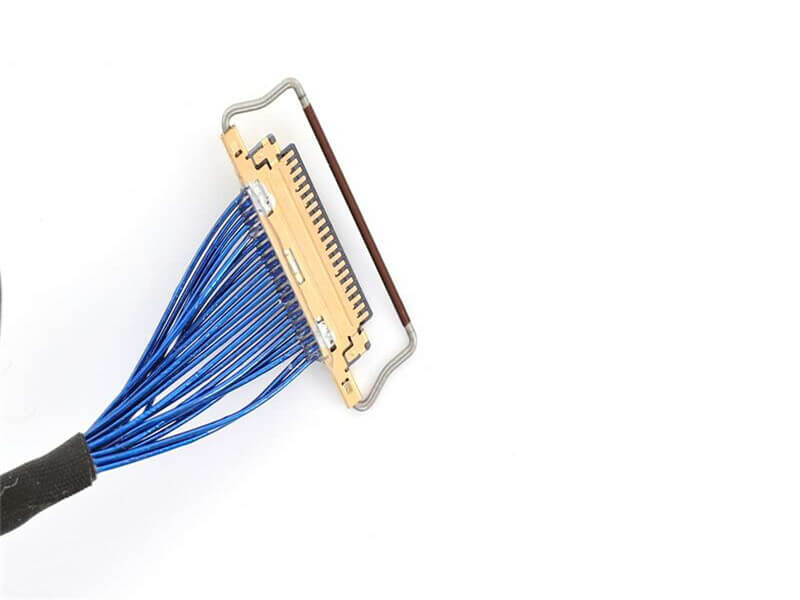
Your car’s advanced safety features – automatic emergency braking, adaptive cruise control, blind-spot monitoring – rely heavily on invisible eyes: radar sensors. These sensors, increasingly operating at high frequencies like 76-81 GHz, demand extreme precision. At the heart of this precision lies a critical yet often overlooked component: the micro-coaxial cable connecting the radar antenna to the electronic control unit.
Why Micro-Coaxial Cables are Essential:
Radar sensors send out radio waves and analyze the reflected signals to determine the distance, speed, and angle of objects around the vehicle. To achieve the high resolution needed for accurate detection – distinguishing a pedestrian near a guardrail, for example – modern radars use high frequencies. However, signals at 76-81 GHz are delicate and easily degraded. Standard wiring simply can’t handle them effectively. That’s where specialized micro-coaxial cables step in.
The Critical Requirements for High-Frequency Automotive Coax:
These tiny cables aren’t your average wires. They must meet incredibly stringent demands to ensure your radar sensor performs flawlessly, life after life, mile after mile:
Ultra-Low Signal Loss (Insertion Loss):
The Problem: At 76-81 GHz, signal strength diminishes rapidly as it travels through any cable.
The Requirement: Micro-coax cables must have extremely low insertion loss (measured in dB per meter/inch). Even tiny losses can significantly reduce the radar’s range and detection accuracy. Premium cables often use specialized foamed or low-density dielectric materials inside to minimize this loss. Think of it as needing perfectly clear glass for high-resolution photography.
Exceptional Phase Stability:
The Problem: Radar sensors, especially those using Multiple-Input Multiple-Output (MIMO) techniques for high angular resolution, depend on precise timing (phase) relationships between signals travelling through different cables. If the cable distorts this timing, the radar’s calculated angle of an object becomes wrong.
The Requirement: The cable must maintain consistent electrical length and introduce minimal phase shift variation. Any bending, temperature change, or vibration should cause minimal disturbance to the signal’s phase. Consistency is king for accurate positioning.
Precise & Stable Impedance:
The Problem: Radar sensors are designed assuming the cable has a specific characteristic impedance (usually 50 Ohms). Mismatches cause signal reflections.
The Requirement: The cable must maintain an impedance of 50 Ohms along its entire length and remain stable regardless of movement, bending, or temperature shifts. Any significant deviation creates “echoes” (signal reflections) that interfere with the desired return signal, blurring the radar’s vision.
Superior Shielding Effectiveness:
The Problem: The high-frequency signals inside the cable are vulnerable to interference from other electronic components (EMI/RFI) within the car. Simultaneously, the cable itself must not leak signals that could interfere with other systems.
The Requirement: Robust shielding (often multiple layers: foil, braid) is crucial to contain the signal within the cable and block external noise. Think of it as a high-tech Faraday cage scaled down for micro-coax.
Miniaturization & Flexibility:
The Problem: Radar sensors are mounted in tight spaces like bumpers, grilles, and side mirrors. Wiring paths are complex and confined.
The Requirement: The cable diameter must be very small (typically 0.8mm to 1.3mm) while maintaining performance. It also needs high flexibility to navigate tight bends and harnesses without damage. Small size must not compromise capability.
Automotive-Grade Durability & Longevity:
The Problem: Vehicles face extreme conditions: temperature swings from -40°C to +125°C+ (or even +150°C under the hood), constant vibration, exposure to fluids, humidity, and chemicals.
The Requirement: Micro-coax components (cable, connectors) must be constructed from materials that withstand decades of automotive abuse. They require robust jacketing materials resistant to fluids, abrasion, and UV radiation (if exposed). Connectors must seal tightly against moisture and dust and retain solid electrical contact despite vibration.
High Propagation Speed & Low Delay Skew:
The Problem: Advanced radar techniques (like MIMO) often require comparing signals travelling through multiple cables. Differences in signal travel time (delay skew) between cables can corrupt data.
The Requirement: Cables should offer high signal propagation speed and, crucially, extremely low delay skew (variation in propagation time) between matched cables within a harness set.
What Happens if Requirements Aren’t Met?
Using cables that don’t meet these high-frequency and automotive demands leads to:
Reduced Radar Range: Higher signal loss shortens the sensor’s reach.
Reduced Detection Accuracy: Poor phase stability and reflections cause errors in determining an object’s exact location and speed.
Increased False Alarms/False Negatives: Noise and interference can create phantom objects or mask real ones.
System Failures: Mechanical failures (cracks, connection losses) or corrosion lead to sensor malfunctions.
Compromised Safety: Ultimately, degraded radar performance means compromised ADAS features and reduced vehicle safety.
The Takeaway for Engineers & Buyers:
When designing or selecting micro-coaxial assemblies for next-generation 76-81 GHz automotive radar sensors, prioritizing these high-frequency performance characteristics and rugged automotive reliability is non-negotiable. The demands are far beyond standard cables. Specifying cables engineered specifically to meet these stringent RF and environmental requirements is crucial for ensuring the radar sensors deliver the life-saving performance expected in modern vehicles.
Choosing the right micro-coax isn’t just about signal transmission; it’s about ensuring the vital “eyes” of your car see the world with the clarity and reliability needed to protect lives.
LiDAR (Light Detection and Ranging) technology has become indispensable in fields like autonomous driving, industrial mapping, and environmental monitoring. Its ability to generate high-precision 3D point clouds relies heavily on stable...
Micro coaxial cables – those tiny, high-frequency workhorses – are absolutely critical within the intricate networks of modern aircraft, spacecraft, and satellites. Choosing or manufacturing cables that meet rigorous aerospace standards...
The world of military technology operates at the bleeding edge, demanding unwavering reliability in the harshest environments. At the heart of countless critical systems – from radar and electronic warfare to satellite communications an...
Signal attenuation – the gradual weakening of a signal as it travels through a cable – is a critical factor in any high-frequency electronic system. When working with micro coaxial cables, their small size makes understanding and calcu...
Micro coaxial cables are the unsung heroes powering our smallest, most advanced electronics – from life-saving medical implants to cutting-edge aerospace systems and the latest smartphones. But their tiny size and delicate construction ...
Micro coaxial cable with PTFE (polytetrafluoroethylene) insulation is a high-performance interconnect solution designed for applications where space is limited, signal integrity is critical, and environmental conditions are demanding. I...
Coaxial cable assemblies are critical for transmitting high-frequency signals in applications like telecommunications, satellite TV, and industrial automation. Poor installation can lead to signal attenuation, interference, or even comp...
Ensuring the durability of micro coaxial cables is critical, especially their jacket abrasion resistance. These tiny cables (often less than 1mm OD) power essential applications like medical devices (endoscopes, catheters), robotics, dr...
Coaxial cable assemblies are the backbone of modern communication, broadcasting, and networking systems. From television signals to high-speed internet and industrial data transmission, their reliable performance depends heavily on prop...
Introduction to Micro Coaxial Cable Technology
In today’s interconnected world, where data integrity and signal fidelity are paramount, micro coaxial cables have emerged as a critical component in advanced electronic and communicatio...
Introduction: The Need for Speed at the Edge
Edge computing is revolutionizing how we process data. By bringing computation closer to where data is generated – sensors, IoT devices, cameras, machines – it slashes the time wasted send...
In the intricate realm of medical imaging, where precision and reliability are paramount, coaxial cables play a crucial yet often overlooked role. These unassuming cables are the unsung heroes that ensure the seamless transmission of vi...
AbstractSignal interference remains a critical challenge in high-frequency applications using micro-coaxial cables, impacting performance in 5G devices, medical imaging systems, and aerospace electronics.
IntroductionMicro-coaxia...
Imagine a cable at the heart of an MRI machine delivering crucial signals, or deep within a satellite enduring the harsh radiation of space. Ordinary cables fail in these extremes. That’s where radiation-resistant miniature coaxial cab...
In the relentless push for smaller, faster, and more powerful electronics – from cutting-edge medical devices and aerospace systems to next-gen telecommunications and high-resolution imaging – high-density micro-coaxial cable bundles&n...
In the realm of interior design, home theater setups, studio arrangements, or commercial displays, the battle against unsightly cables is a common challenge. Exposed wires can disrupt the visual harmony of a space, turning a carefully c...
Coaxial Cable Assemblies are the backbone of reliable signal transmission in industries ranging from telecommunications and aerospace to medical equipment and industrial automation. Unlike generic cables, these assemblies—comprising a c...
In an era where environmental sustainability has become a global priority, every industry is re-evaluating its products and processes to minimize ecological impact. The telecommunications and electronics sectors, in particular, are unde...
In the complex and high-stakes world of avionics, every component plays a critical role in ensuring the safety, reliability, and performance of aircraft systems. Among these components, coaxial cable assemblies stand out as essential li...
Installing cables, whether for electrical systems, data networks, or telecommunications, can be a challenging task without the right tools. The right cable pulling tools not only simplify the process but also reduce the risk of damage t...
Introduction to Coaxial Cables
Coaxial cable (or coax) remains one of the most reliable transmission mediums for high-speed internet and television signals. Originally developed in the 1880s and perfected throughout the 20th century,...
In the dynamic world of drone technology, efficient and reliable communication is the linchpin for successful operations. Coaxial cable has emerged as a crucial component in ensuring seamless data transfer and stable connections for dro...
In the ever-evolving landscape of technological advancements, the demand for more reliable and durable electronic components is constantly on the rise. Among these, micro-coaxial cables play a crucial role in various industries, from te...
In the fast-paced world of live event production, from concerts and sports matches to conferences and theater shows, reliable signal transmission is the backbone of a successful event. Among the various cables used, coaxial cable stands...
Marine communication serves as the unshakable lifeline for safe and efficient maritime operations. It connects vessels to onshore control centers, coordinates navigation paths to avoid collisions, enables real – time data sharing ...
As display resolutions, refresh rates, and color depths continue to climb, the demand for stable, high-bandwidth video transmission has never been greater. For many OEMs and system integrators, the micro coaxial cable for DisplayPort hi...
Why Recycling Matters Now
As global e-waste reaches record levels, the telecom and electronics industries are prioritizing micro-coaxial cable recycling. These thin, high-frequency cables (used in 5G networks, medical devices, and ae...
Against the backdrop of rising demand for stable signal transmission solutions in sectors such as 5G base station construction, residential security networking, and industrial data transmission, a series of targeted sales promotion acti...
The relentless pursuit of lighter, faster, and more capable aerospace platforms demands technological advancements in every component, down to the wire. Micro-coaxial cables (micro-coax) stand at the forefront of this evolution, servin...
In our interconnected world, micro coaxial cables are vital in various applications. Ensuring their signal quality is crucial for system functionality. This article offers key insights and practical guidance on testing.
Why is Testin...
(Perfectly optimized for SEO & user understanding)
When you picture an autonomous vehicle (AV), you likely imagine sophisticated cameras, spinning LiDAR sensors, powerful processors, and complex AI algorithms. Rarely do we think ...
As smart agriculture transforms traditional farming into data-driven precision operations, the demand for robust, high-performance connectivity solutions has never been greater. Micro-coaxial cables (micro-coax), with their compact desi...
For drone manufacturers, gimbal integrators, and FPV enthusiasts, the video feed is the most critical system. Signal loss, noise, or a broken cable can instantly turn a high-end aerial camera into a useless brick. This is why selecting ...
The rapid evolution of 5G technology has brought about a paradigm shift in wireless communication, with Multiple-Input Multiple-Output (MIMO) technology standing as a cornerstone for achieving the high data rates, low latency, and massi...
In industries ranging from power transmission to telecommunications, coaxial cables are often exposed to high – voltage environments. A passed high – voltage resistance test is not just a routine certification; it is a criti...
In the dynamic world of stadiums and arenas, where thousands gather to cheer for their favorite teams or enjoy live performances, a seamless audio-visual (AV) experience is non-negotiable. From giant video screens displaying instant rep...
The evolution of VR and AR headsets is driven by a constant push for higher resolutions (4K/8K per eye), faster refresh rates (90–120 Hz+), and sleeker, lighter designs. This progression places immense pressure on internal high-speed in...
In the fast-paced world of telecommunications, broadcasting, and industrial connectivity, coaxial cables remain the backbone of reliable signal transmission. As a leading Coaxial Cables factory with over a decade of expertise,...
Introduction
In high-speed digital communications and RF applications, signal degradation is a critical challenge. Micro-coaxial materials have emerged as a game-changer, minimizing signal loss and preserving data integrity. This art...
IntroductionSpaceX’s ambitious satellite constellations, like Starlink, are revolutionizing global internet connectivity. But behind the scenes, a critical component is driving the success of these mega-constellations: micro-coaxial ca...
Micro Coaxial Cable: High-Quality Solutions for Precision Applications
Micro coaxial cables are essential components in high-performance electronic applications, providing reliable signal transmission in compact and flexible designs. A.
Overview of I-PEX Micro Coaxial Cable Connectors
I-PEX is a global leader in micro coaxial cable solutions, specializing in high-performance IPEX micro coax connectors and micro coaxial cable assemblies. These products are designed for.
Contact Us Micro Coaxial Cable factory-(FRS).
Feel free to reach out to us for any inquiries or orders