Micro coaxial cables – the tiny heroes powering high-speed signals in our electronics – are constantly evolving. As devices become more compact, powerful, and connected, these essential interconnects face new demands. Let’s explore the key trends shaping their future:
1. Pushing the Limits: Higher Frequencies & Faster Data Rates
The “Why”: Technologies like 5G/6G, advanced automotive radar (e.g., 77+ GHz), and high-definition imaging demand bandwidth micro coaxes must support.
The Trend: Continued development focused on minimizing signal loss (attenuation) and maintaining signal integrity at millimeter-wave (mmWave) frequencies.
How?: Innovations in dielectric materials (insulators), conductor smoothness, and shielding effectiveness are crucial. Think ultra-low-loss foam dielectrics and enhanced manufacturing precision for consistent impedance.
2. The Shrinking Act: Even Smaller & More Flexible
The “Why”: Wearables, miniaturized medical devices (like catheters, implants), compact IoT sensors, and foldable electronics require cables that fit into vanishingly small spaces and bend repeatedly without failure.
The Trend: Development of cables with diameters consistently below 0.5mm, featuring thinner insulations and shields without sacrificing performance or durability. Extreme flexibility is paramount.
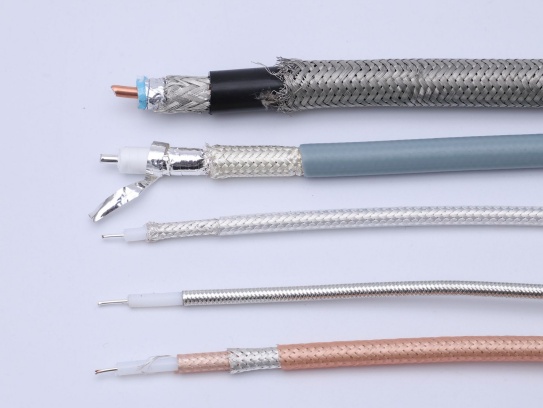
How?: Utilizing stronger, thinner materials for shields (e.g., sophisticated braid designs, optimized foil), advanced polymers for flexible yet protective outer jackets, and potentially new micro-connector designs.
3. Material Matters: Advanced Polymers & Composites
The “Why”: Higher frequencies and demanding environments (temperature extremes, chemicals, repeated flexing) expose material limitations.
The Trend: Shift beyond traditional PVC towards engineered materials offering specific advantages:
Ultra-Low Loss: Fluoropolymers (like PTFE, FEP) and advanced foamed Polyethylene (PE) formulations minimize signal degradation at high speeds.
High Temp/Reliability: Silicones, specific grades of FEP, and PEEK handle soldering heat and harsh operating environments (e.g., under vehicle hoods).
Enhanced Flexibility/Durability: Specialty thermoplastic elastomers (TPEs) or composites provide excellent bend life and resistance to abrasion/crushing. Silicone sheaths are becoming increasingly common where extreme softness is needed alongside reliability.
4. Signal Integrity is King: More Focus on Performance Consistency
The “Why”: As data rates climb and margins for error shrink, ensuring the signal arrives clean and uncorrupted is non-negotiable. Noise causes errors.
The Trend: Intensive focus during design and manufacturing on:
Impedance Control: Maintaining precise characteristic impedance (e.g., 50Ω, 75Ω) throughout the cable’s length and at terminations.
Shielding Effectiveness: Minimizing electromagnetic interference (EMI) ingress or egress with superior shield coverage (>95% braid + foil combinations are common).
Phase Stability: Ensuring signal timing consistency, especially critical for phased array applications like radar.
Low Skew: Matching signal propagation times between multiple cables in a bundle (vital for high-speed differential signaling used in USB4, DisplayPort, PCIe).
The “Why”: Micro coaxes are deployed in automotive (heat, vibration, fluids), aerospace (extreme temps, pressure), industrial automation (chemicals, abrasion), and implantable medical devices (biocompatibility, long-term stability).
The Trend: Designing cables specifically for these challenges:
Extended Temperature Ranges: Stable performance from deep freeze to under-hood heat.
Enhanced Chemical Resistance: Resisting oils, fuels, solvents, and bodily fluids.
Superior Mechanical Performance: High flex life for robotics/articulating arms, crush resistance for medical trocars, low outgassing for vacuum environments.
Biocompatibility: Essential for internal medical devices.
Why This Matters:
The evolution of micro coaxial cable technology is directly enabling the next generation of electronics. Whether it’s enabling safer autonomous vehicles through reliable radar and camera signals, powering life-saving diagnostic tools, or connecting the rapidly expanding universe of IoT sensors, these tiny cables play an outsized role. Understanding these trends helps engineers, designers, and procurement specialists anticipate the performance characteristics and specifications needed for their future products.
This ongoing miniaturization and performance push ensures micro coaxial cables will remain the dominant solution for reliable, high-speed signal transmission in space-constrained, demanding applications for years to come.
Coaxial cable assemblies are critical components in signal transmission systems, used across industries like telecommunications, aerospace, medical equipment, and industrial automation. Their bandwidth capacity—defined as the maximum fr...
Automotive electronics—from advanced driver-assistance systems (ADAS) and infotainment to powertrain controls—rely on coaxial cable assemblies to transmit high-frequency signals reliably. Unlike consumer electronics, automotive environm...
Micro coaxial cables (micro coax) are the hidden heroes of our digital lives. Found inside smartphones, laptops, cameras, drones, and countless other devices, these tiny cables carry crucial video signals (like HDMI or camera feeds) and...
Choosing the right insulation material is critical when designing or selecting micro coaxial cables, especially for demanding RF (radio frequency) and microwave applications. Polytetrafluoroethylene (PTFE) and fluorinated ethylene propy...
In the realm of structured cable systems, patch panels serve as the critical junction points that streamline connectivity, enhance manageability, and ensure scalability. These devices act as centralized hubs, enabling the organized inte...
Choosing the best micro coaxial cables for your test and measurement (T&M) setup isn’t just about connecting point A to point B. It’s about preserving signal integrity, ensuring measurement accuracy, and prot...
IntroductionMicro-coaxial cables are critical for high-frequency signal transmission, but their performance varies significantly across materials, shielding designs, and manufacturing tolerances. Selecting the optimal cable demands a d...
Working with micro coaxial cables (common in electronics, drones, cameras, medical devices, and communications) requires precision tools due to their tiny size and delicate construction. Using the wrong tools can easily damage the cable...
The short answer is yes—coaxial cable assemblies are not only usable but also a reliable choice for outdoor security systems, provided they meet specific environmental and performance standards. Outdoor security setups (such as IP ...
Underground installation of communication and signal transmission cables is a common practice in many industries, from telecommunications and broadcasting to industrial automation and security systems. However, choosing the right cable ...
In the realm of test and measurement (T&M), precision is non-negotiable. Whether calibrating radar systems, validating 5G components, or analyzing signal integrity in aerospace applications, the accuracy of results hinges on every l...
Micro coaxial cable assemblies are vital for high-frequency signal transmission in devices like smartphones, medical imaging equipment, automotive radar, and 5G test gear. However, obtaining a precise price quotation online can be chall...
In the era of miniaturization, electronic devices are becoming increasingly compact while demanding higher performance—from wearable fitness trackers and medical implants to aerospace sensors and industrial IoT modules. At the heart of ...
Definition of Military-Grade Micro Coaxial CablesMilitary-grade micro coaxial cables are miniaturized coaxial cables built to comply with stringent military specifications (e.g., MIL-STD-202, MIL-DTL-17). They typically feature:
...
For B2B buyers in 5G, aerospace, industrial IoT, and medical device industries, finding a reliable micro coaxial cable factory is more than a procurement task—it’s a critical step to avoiding costly project delays, signal integrity fail...
Micro coaxial cables are miniaturized coaxial cables distinguished by the following key features: 1. Compact Structure with Multi-Layer Shielding Micro coaxial cables consist of an inner conductor, insulation layer, shielding layer, a...
Micro coaxial cables are critical components in high-frequency applications such as medical devices, aerospace systems, telecommunications, and robotics. Their compact design and precision engineering make them highly susceptible to dam...
In the realm of interior design, home theater setups, studio arrangements, or commercial displays, the battle against unsightly cables is a common challenge. Exposed wires can disrupt the visual harmony of a space, turning a carefully c...
What is High-Frequency Signal Integrity?Signal integrity refers to the ability of a cable to transmit signals without distortion or degradation. At high frequencies (1 GHz to 100+ GHz), challenges include:
Attenuation: Signal lo...
Meta Description: Discover the critical phase stability requirements for aerospace micro-coaxial assemblies, including design considerations, testing methods, and industry best practices to ensure reliability in extreme environment...
In the relentless push for smaller, faster, and more connected devices, reliable high-frequency signal transmission has become mission-critical. Whether it’s inside the latest medical imaging device, a 5G base station, or a cutting-edge...
In the fast-paced world of live event production, from concerts and sports matches to conferences and theater shows, reliable signal transmission is the backbone of a successful event. Among the various cables used, coaxial cable stands...
As new consumer electronics and network devices—such as 4K/8K smart TVs, 5G CPE routers, and 4K security cameras—become increasingly prevalent, many users wonder if their existing coaxial cables or newly purchased ones can work seamless...
In the realm of modern communication and electronic systems, coaxial cables stand as vital components, facilitating the transmission of signals in various applications such as television, internet, and radio. However, these cables are h...
In the harsh and unforgiving environment of space—where extreme temperatures, intense radiation, and vacuum conditions prevail—reliable signal transmission is critical to the success of satellites, space probes, and orbital stations. Mi...
Fundamentals of Bend Radius in Micro-Coaxial CablesA. Definition of Bend RadiusThe minimum bend radius (MBR) is the smallest allowable curvature a cable can withstand without permanent deformation or electrical performance degrad...
Introduction: For mission-critical devices in medical implants, aerospace systems, industrial automation, and advanced communications, micro-coaxial cables deliver precious signals. Yet, their minute size makes them terrifyingly vu...
Implantable medical devices (IMDs) represent a revolution in healthcare, restoring function, monitoring vital signs, and saving lives. From pacemakers and neurostimulators to cochlear implants and advanced biosensors, these devices rely...
Choosing the right micro-coaxial cable isn’t just a detail in drone design and operation; it’s a critical factor impacting video transmission reliability, control signal integrity, weight, and ultimately, the success of your...
The short answer is yes—coaxial cable assemblies can be reliably used in underwater projects, but their performance depends entirely on targeted design, material selection, and compliance with underwater environmental constraints. Unlik...
Hypersonic vehicles – flying faster than Mach 5, blistering through the atmosphere – represent the cutting edge of aerospace technology. But behind the sleek exteriors and powerful engines lies a critical, often overlooked challenge: re...
Conductors: The Core of Signal TransmissionThe inner conductor is responsible for carrying electrical signals. Material choices prioritize conductivity, flexibility, and resistance to skin effect (signal loss at high frequencies).
...
n an era defined by lightning-fast connectivity and shrinking electronic devices, micro coaxial cables have emerged as unsung heroes powering the seamless flow of data. These miniature yet mighty cables are engineered to meet the escala...
In the world of virtual reality (VR), a seamless and immersive experience relies heavily on stable, high-speed data transmission. While many focus on headsets and sensors, the cables connecting these components play a crucial role. Coax...
In the fast-paced world of telecommunications, broadcasting, and industrial connectivity, coaxial cables remain the backbone of reliable signal transmission. As a leading Coaxial Cables factory with over a decade of expertise,...
1. High-Frequency Signal Fidelity Supports Ultra-High Frequency Transmission: Micro coaxial cables can reliably transmit high-frequency signals up to 40 GHz, meeting the bandwidth requirements of high-definition audio (e.g., 24-bi...
Within the intricate world of high-frequency electronics and RF systems, consistency is paramount. For signals traveling multiple pathways simultaneously – such as in phased array antennas, beamforming networks, power combiners/dividers...
Introduction
Micro-coaxial cables have become the backbone of modern high-frequency signal transmission, from medical devices to 5G networks. Since 2000, shielding techniques have undergone revolutionary changes to meet escalating de...
Recently, our factory’s high-performance coaxial cable has been officially selected as a featured exhibit for the upcoming Shanghai International Industry Expo (SIIE) — a pivotal event that gathers top industrial brands, tech innovators...
IntroductionArctic research stations face extreme cold, where temperatures plummet below -50°C. Standard electronics often fail under such conditions, disrupting critical data collection. To solve this, scientists now rely on cold-resis...
Meta Description: Discover premium RF micro coaxial cables engineered for high-frequency signal transmission in compact devices. Explore specs, applications, and benefits for telecom, medical, and aerospace industries.
.
IntroductionIn today’s fast-paced digital world, reliable and high-speed data transmission is critical for industries ranging from telecommunications to aerospace. Enter High-Speed Data Micro-Coax—a cutting-edge miniature coaxial cable e.
Contact Us Micro Coaxial Cable factory-(FRS).
Feel free to reach out to us for any inquiries or orders