Engineers and buyers often need micro coaxial cable samples to validate fit, signal integrity, and manufacturability before committing to volume orders. This guide explains how to secure free samples, what to specify to avoid back-and-forth, and which connector families and specs are most commonly available from manufacturers and distributors. Free or “freight-collect” samples are a common industry practice, and many suppliers clearly state sample availability on their product pages and FAQs.
Who offers free or low‑cost micro coax samples and what to expect
- B2B marketplaces and manufacturers frequently list micro coax and mini coax assemblies with notes such as “sample order available” or “free samples, freight collect.” Examples include I‑PEX/LVDS micro coax for displays and cameras, RF pigtails with U.FL/IPEX/MHFconnectors, and standard coax jumpers like RG174/RG316/RG178that are often stocked for quick ship. In many cases, you can request one or a few pieces to test before placing a larger order.
- Turnkey cable assembly vendors commonly support small MOQs for samples and small-batch runs. For micro coax, typical MOQs can be as low as 5–50 pcsdepending on the item, with some offering ≤10 pcsfor evaluation. This makes it easier to get functional prototypes without a large upfront commitment.
- Established distributors and component suppliers also carry micro coax cable assemblies and provide online sample request channels. Availability and fees vary by product and region, but the process is generally straightforward: add the part to your cart or use the “Request Sample” button on the product page.
What to prepare before requesting a sample
- Target connector family and series: Identify the exact connector series and key dimensions, such as I‑PEX CABLINE UA II(0.4 mm pitch), I‑PEX DW‑5(0.5 mm pitch), or JAE HD1S/Starconn equivalents. Include mating direction, height, and any mechanical locks.
- Pin count and length: Specify the number of conductors (e.g., 10/20/26/32/40/50), desired overall length, and whether both ends use the same connector or a mix (e.g., board‑to‑board, board‑to‑module).
- Electrical and mechanical constraints: State required impedance (50 Ωfor RF, often 100 Ω differentialfor LVDS/eDP), supported data rate (e.g., eDP HBR3 8.1 Gbps, USB 3.1 Gen2 10 Gbps), and any bend radiusor flex-life needs.
- Materials and durability: If your application involves high temperature, medical use, or repeated flexing, note preferred dielectrics (e.g., PFA, FEP), shielding (braid coverage, overall shielding), and jacketing.
- Quantity and logistics: Request 1–3 pcsfor bench validation; confirm whether the supplier offers free samplesor freight‑collectsamples, and provide a shipping account or preferred courier. If needed, ask for UL/CE/ROHSor ISO documentation.
Typical specs you can request in a free sample
- Connector and pitch: Examples include I‑PEX 20633‑310T‑01S(0.4 mmpitch, up to 50pins) for high‑density LVDS/eDP, and I‑PEX 20453‑040T(0.5 mmpitch, 40pins) for eDP display links.
- Cable and impedance: Choose micro coax gauges like AWG #38/#40/#42/#44/#46with specified impedance and shielding to match your channel loss budget.
- Length and routing: Provide the exact length and any service loops or strain‑relief needs. For high‑speed links, keep the overall length as short as practical and follow the connector’s minimum bend radius.
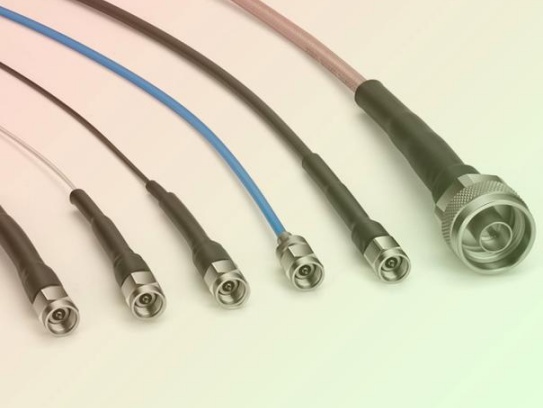
- Performance targets: If your application is RF/microwave, you may need a precision micro coax like Times Microwave TF‑047assemblies (50 Ω, up to 40 GHz, compact bend radius). For LVDS/eDP, ensure the chosen series supports your required HBRrate and differential impedance.
A quick path to free samples today
- Identify 3–5 candidate parts: For display/embedded boards, search for eDP 40‑pin I‑PEXor LVDS 0.4/0.5 mmmicro coax. For RF/wireless, look at U.FL/IPEX/MHFpigtails in 1.13 mmor RG178/RG316.
- Use the “Request Sample/Contact Supplier” buttons on B2B product pages to send a concise RFQ that includes connector series, pin count, length, and required data rate or impedance. Mention that you are requesting a free sampleand ask whether freight is collect.
- If you need a custom assembly, attach your dimensioned drawingor reference part numbers (e.g., I‑PEX 20453‑040T, 20633‑310T‑01S). Many vendors accept small MOQs for prototypes and can turn samples in a few days.
Common pitfalls and how to avoid them
- Assuming all micro coax is the same: Even small differences in pitch (0.4 mm vs. 0.5 mm), pin count, or mating heightcan make connectors mechanically or electrically incompatible. Always match the exact series.
- Ignoring the environment: For medical, aerospace, or outdoor gear, specify the right dielectric (PFA/FEP), jacket material, and shielding to ensure temperature, flex, and EMI performance.
- Overlooking the test plan: Before you request samples, define your pass/fail criteria (insertion loss, return loss, crosstalk, eye diagram at target data rate, impedance tolerance). This ensures the samples you receive can be evaluated objectively.
- Forgetting logistics: Free samples are common, but freight‑collectis typical. Have a courier account ready or ask if the supplier can use your UPS/DHL account to avoid delays.
Real‑world part examples to reference in your sample request
- I‑PEX 20633‑310T‑01S: LVDS micro coax, 0.4 mmpitch, up to 50pins, max height 1.37 mm(nom. 1.27 mm), supporting USB4/USB 3.1 Gen2/eDP HBR3—ideal for high‑density, high‑speed board‑to‑board links.
- I‑PEX 20453‑040T: eDP cable, 0.5 mmpitch, 40pins, 12 mmlength—suitable for LCD/controller/embedded board connections.
- I‑PEX DW‑5 20598‑006T‑02: 0.5 mmpitch, 6–10pins, compact height 1.0 mm(max 1.10 mm), horizontal mating—good for space‑constrained, small‑signal links.
- Amphenol Times Microwave TF‑047micro coax assemblies: 50 Ω, up to 40 GHz, compact bend radius—suitable for RF/microwave prototyping where high frequency and flexibility are both needed.