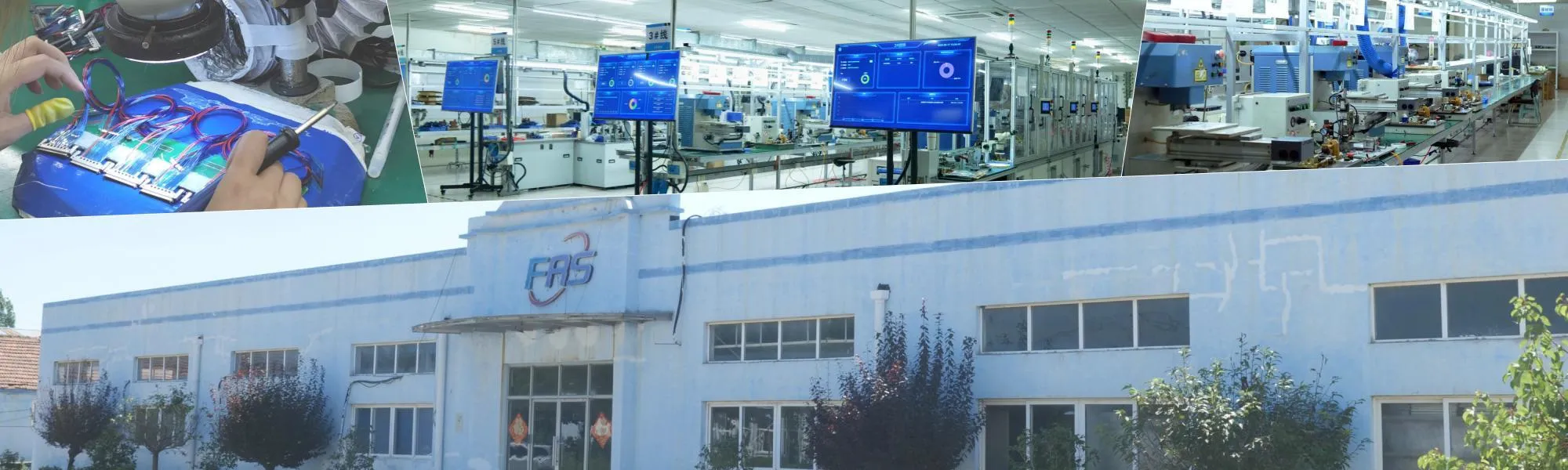
Micro Coaxial Cable factory-(FRS)
As 5G New Radio (NR) networks push into FR2 bands—spanning 24.25 GHz to 40 GHz and beyond—the performance of every interconnect in the RF front-end is under unprecedented scrutiny. Among these, the micro coaxial cable termination solutionis a critical yet often underestimated factor. In high-frequency systems, even minor impedance mismatches can lead to significant signal reflection, degrading modulation accuracy and overall link budget.
This article introduces a new termination approach engineered to achieve ultra-low VSWRfor 5G mmWave modules, addressing the signal integrity, manufacturability, and reliability challenges of next-generation designs.
5G mmWave systems, particularly in FR2, rely on high-gain, narrow-beam antennas and wideband transceivers. These systems demand interconnects that are:
Micro coaxial cables, with diameters as small as 0.81 mm, are increasingly used to connect antennas to transceivers in these dense environments .
A micro coaxial cable termination solution is not just a mechanical connection; it defines the electrical integrity of the entire RF path. A poorly executed termination can cause:
For a 5G mmWave module, where a single-digit dB loss in the RF front-end can be the difference between meeting or missing link margins, a high-performance termination is non-negotiable.
VSWR (Voltage Standing Wave Ratio) is a dimensionless number that quantifies impedance matching. It is defined as:
VSWR=1−∣Γ∣1+∣Γ∣
where Γis the reflection coefficient. A perfect match (no reflection) yields a VSWR of 1.0. In practical RF engineering, a VSWR of ≤ 1.2:1is considered excellent, while ≤ 1.5:1is often the acceptable upper limit for high-performance systems .
As frequency increases, the physical dimensions of connectors and cables shrink, making them more susceptible to manufacturing tolerances and dimensional errors. A tiny imperfection that is negligible at 3 GHz can become a significant source of reflection at 28 GHz or 39 GHz.
For a 5G mmWave transceiver, a VSWR of 1.5:1 at 28 GHz can translate to a reflection coefficient of approximately 0.2, wasting nearly 4% of the transmitted power and similarly impacting the received signal. In high-order modulation schemes like 64-QAM or 256-QAM, this can push the error vector magnitude (EVM) beyond specification limits.
Traditional crimp or solder terminations rely on precise manual or semi-automated processes. Achieving and maintaining a consistent 50 Ω impedance requires tight control over:
At mmWave frequencies, even a 50 µm deviation in the center conductor’s position can significantly alter the local impedance, increasing VSWR.
The termination must also manage losses from three main sources:
As frequencies climb into the mmWave range, dielectric and radiation losses become dominant. A termination that performs adequately at 6 GHz may suffer from unacceptable losses at 28 GHz .
For 5G infrastructure and high-volume consumer devices, the termination process must be scalable and repeatable. Manual soldering or complex crimping tools are slow and prone to variability, making them unsuitable for mass production. A robust micro coaxial cable termination solution must support high-throughput, automated assembly with minimal rework .
The new solution is built on three core pillars: precision geometry, advanced materials, and innovative contact design.
The new design employs a multi-layer, coaxial-to-planar transitionthat maintains a constant 50 Ω impedance from the cable to the PCB or module interface. Key features include:
Material selection is critical for achieving ultra-low VSWR and long-term reliability. The new solution incorporates:
The termination features a spring-contact arraythat provides both mechanical stability and electrical continuity. This design:
The new micro coaxial cable termination solution was tested across a range of frequencies, from 1 GHz to 40 GHz. The results demonstrate exceptional performance:
These results are particularly noteworthy because they are achieved with standard micro coaxial cables (e.g., 0.81 mm or 1.13 mm diameter) and do not require custom, semi-rigid cables .
In addition to VSWR, the solution also excels in other key metrics:
For phased-array antennas, phase stability is as important as amplitude matching. The new termination solution demonstrates:
In AiP and SiP designs, the micro coaxial cable termination solution connects the antenna array to the transceiver IC. The ultra-low VSWR ensures that the maximum amount of power is radiated, while the low phase variation maintains beam accuracy. This is particularly important for applications like 5G base stations and automotive radars, where beam-steering precision is critical .
High-frequency test equipment, such as vector network analyzers (VNAs) and spectrum analyzers, requires precise interconnects to ensure accurate measurements. The new termination solution provides the low VSWR and high repeatability needed for these applications, reducing measurement uncertainty and improving test throughput.
In satellite and aerospace systems, where size, weight, and reliability are paramount, the new solution offers a compact, lightweight, and robust termination option. The high reliability of the spring-contact design ensures long-term performance in harsh environments, making it ideal for space-constrained applications .
The solderless, spring-contact design enables high-throughput, automated assembly using standard pick-and-place equipment. This reduces assembly time and cost, making the solution suitable for high-volume production of 5G devices and infrastructure equipment .
The consistent performance of the new termination solution reduces the need for rework and improves overall yield. This is particularly important in high-density modules, where a single faulty termination can compromise the entire system.
The solution is designed to be compatible with existing PCB manufacturing processes, including standard surface-mount technology (SMT) and reflow soldering. This allows manufacturers to integrate the new termination into their existing production lines with minimal changes.
As 5G and 6G technologies evolve, there is a growing trend toward more advanced packaging technologies, such as heterogeneous integration and 3D packaging. The new micro coaxial cable termination solution is well-positioned to support these developments, providing a reliable interconnect solution for next-generation modules .
While the current solution is optimized for 5G mmWave frequencies (24–40 GHz), ongoing research and development are focused on extending its performance to higher frequencies, such as 60 GHz and beyond. This will enable new applications in areas like wireless backhaul and high-speed data transmission .
The modular design of the new solution allows for customization to meet the specific needs of different applications. Whether it’s a high-power base station module or a low-power IoT device, the termination can be tailored to provide the optimal balance of performance, size, and cost.
In the world of 5G mmWave modules, where every fraction of a dB matters, the quality of the micro coaxial cable termination solution can make or break system performance. The new ultra-low VSWR termination architecture introduced in this article addresses the key challenges of traditional terminations, providing a reliable, high-performance, and scalable solution for next-generation RF front-ends.
With its precision-engineered geometry, advanced materials, and innovative contact design, this solution sets a new standard for micro coaxial cable terminations, enabling the development of more efficient, reliable, and cost-effective 5G and future wireless systems. As the industry continues to push the boundaries of what’s possible, solutions like this will play a critical role in unlocking the full potential of mmWave communications.
Our factory offers high-quality products at competitive prices
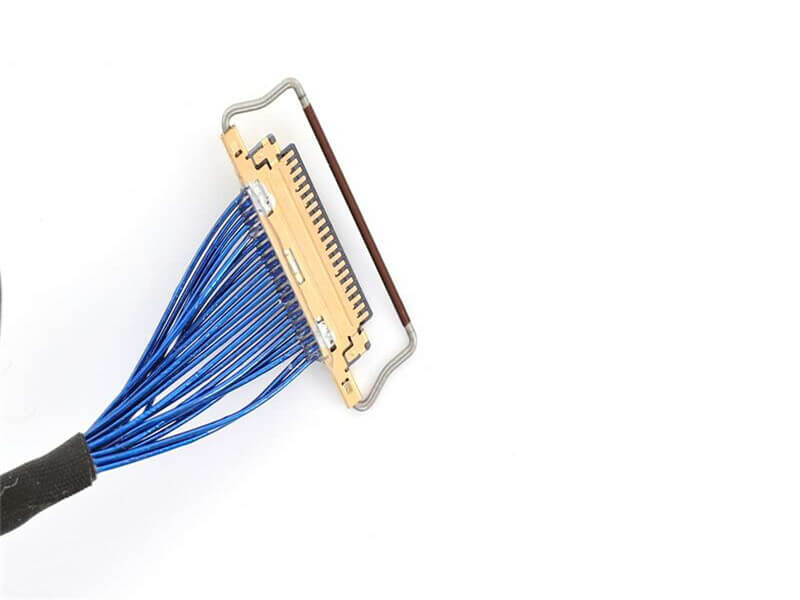
Overview of I-PEX Micro Coaxial Cable Connectors I-PEX is a global leader in micro coaxial cable solutions, specializing in high-performance IPEX micro coax connectors and micro coaxial cable assemblies. These products are designed for.
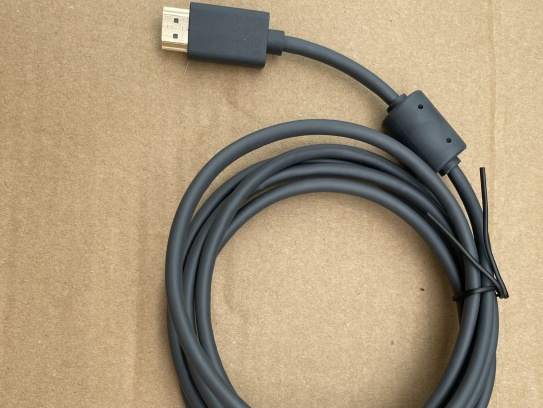
OverviewMicro-Coax for HD Video is a cutting-edge coaxial cable engineered to deliver uncompromised high-definition video quality across professional and industrial applications. Designed for reliability, precision, and versatility,.
Feel free to reach out to us for any inquiries or orders