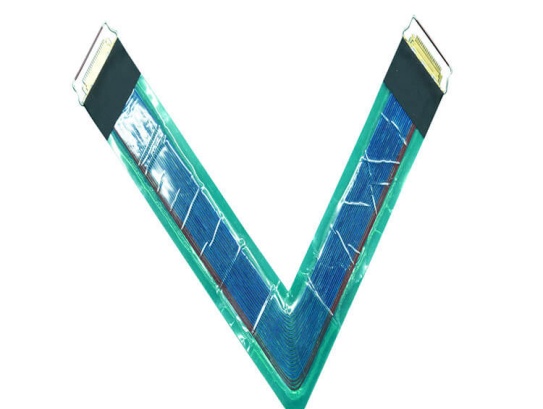
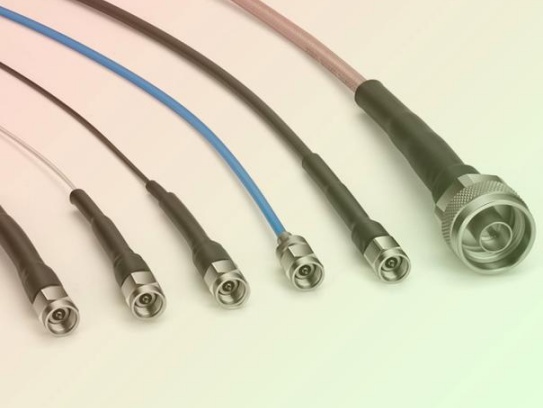
Micro coaxial cables are essential for transmitting high-frequency signals in compact devices like smartphones, medical equipment, wearables, and advanced sensors. A critical factor influencing their performance is the plating on the conductor – commonly silver or gold. Understanding their differences is crucial for optimal design.
Silver-Plated: Superior Conductivity. Silver is the most electrically conductive metal at room temperature. Silver plating minimizes signal attenuation (loss) across a wide frequency spectrum, particularly beneficial in applications exceeding 1 GHz (common in micro coax). This translates to stronger signals over longer runs or with complex cabling needs.
Gold-Plated: Good Conductivity, but Less than Silver. Gold’s conductivity is about 76% that of copper (whereas silver is ~106%). Gold-plated micro coax inherently has higher resistive loss compared to silver-plated versions at equivalent geometries and frequencies. Its advantage lies elsewhere (durability).
Silver-Plated: Susceptible to Oxidation. Silver forms a sulfide tarnish layer when exposed to atmospheric sulfur compounds or moisture. This tarnish increases surface resistance and degrades signal integrity over time, especially affecting very high frequencies due to the skin effect (where signal travels near the conductor surface). Performance degrades faster in harsh environments (high humidity, pollution, salt spray).
Gold-Plated: Excellent Corrosion Resistance. Gold is highly inert and does not oxidize or tarnish under normal conditions. This makes gold-plated micro coax exceptionally reliable for maintaining stable contact resistance and consistent signal performance over extended periods, even in challenging environments. Reliability is its primary strength.
3. Signal Integrity at Extreme Frequencies
Silver-Plated: Excellent for Ultra-High Frequencies… Initially. Before significant tarnish forms, silver’s high conductivity provides exceptional high-frequency performance. However, as tarnish develops, the surface resistivity increases, causing progressive high-frequency signal loss.
Gold-Plated: Consistent High-Frequency Performance. Gold maintains a stable, low-resistance surface regardless of exposure to air or mild contaminants. While its base conductivity is lower, its consistent surface properties ensure predictable signal integrity at high frequencies over the cable’s operational lifespan without degradation from oxidation.
4. Contact Resistance Stability
Silver-Plated: Variable. Contact resistance can increase significantly over time due to silver tarnishing. This is critical for connections relying on spring contacts or separable interfaces.
Gold-Plated: Highly Stable. Gold’s inert nature provides extremely stable and low contact resistance over time. This is vital for connectors with wiping contacts or in applications demanding constant, reliable electrical connections without intermittent failures.
5. Mechanical Durability (Limited by Base Metal)
Both silver and gold platings are relatively thin layers (microns) applied over a base conductor (usually copper or copper alloy). The mechanical durability (wear, kink resistance, flexibility) of the micro coax cable itself is predominantly determined by the base conductor, dielectric materials, and braid/shield construction, not primarily by the plating type.
6. Cost
Silver-Plated: Lower Cost. Silver is significantly less expensive than gold, making silver-plated micro coax the more cost-effective solution where very long life or extreme environments aren’t paramount.
Gold-Plated: Higher Cost. Gold is a very expensive precious metal. The material cost and more complex plating processes make gold-plated micro coax considerably more expensive than silver-plated alternatives.
Summary Table: Key Differences
Feature
Silver-Plated Micro Coax
Gold-Plated Micro Coax
Electrical Conductivity
Superior (Lowest signal attenuation)
Good (Higher loss than Silver)
Corrosion/Oxidation Resistance
Poor (Tarnishes readily, increases resistance)
Excellent (Inert, highly resistant)
High-Frequency Signal Integrity (Over Time)
Excellent initially, degrades with tarnish
Consistent & Stable
Contact Resistance Stability
Degrades over time due to tarnish
Exceptional Stability
Reliability in Harsh Environments
Reduced due to tarnishing
High (Preferred for mission-critical/long-life)
Cost
Lower
Significantly Higher
Conclusion: Choosing the Right Plating
Choose Silver-Plated Micro Coax When:
Minimizing initial signal attenuation is the absolute top priority.
Operating frequencies are very high (GHz range).
The environment is controlled (low humidity, low sulfur/pollution).
The application has a shorter expected lifespan or cost is a major constraint.
Connections are soldered or otherwise permanent/sealed, minimizing contact oxidation risk.
Choose Gold-Plated Micro Coax When:
Long-term reliability and stable signal integrity are paramount (critical systems).
The device operates in harsh environments (high humidity, industrial settings, salt air).
Connections involve separable interfaces or spring contacts prone to intermittent failures.
Maintaining stable low contact resistance is critical.
The cost differential is acceptable for the required performance guarantee.
The choice hinges on the application’s specific demands for performance stability over time versus initial signal loss and cost. Gold provides longevity and resilience where it matters most, while silver offers peak electrical performance under controlled conditions at a lower cost.
Micro coaxial cables are the unsung heroes of modern military electronics. Packing powerful signal capabilities into an ultra-thin profile, they’re essential for everything from missile guidance systems and radar to ruggedized com...
Overview and definition
Medical grade micro coaxial cable for ultrasound probes is a highly miniaturized, high‑density interconnect that carries high‑frequency ultrasound signals between the probe’s piezoelectric array and the imagin...
The short answer is yes—coaxial cable assemblies are not only usable but also a reliable choice for outdoor security systems, provided they meet specific environmental and performance standards. Outdoor security setups (such as IP ...
In the modern era of information transmission, coaxial cables have long been a crucial component in various fields, from home entertainment systems to large – scale industrial communications. User feedback, as a direct reflection ...
Coaxial cables, a staple of wired communication since the 1930s, continue to thrive in modern technology despite competition from fiber optics and wireless solutions. Their unique design—combining high bandwidth, durability, and electro...
The short answer is a resounding yes—coaxial cable assemblies are not only suitable for outdoor applications but have become indispensable in countless outdoor environments, from telecommunications networks to industrial facilities. The...
In modern electronics, reliable signal transmission is paramount. As devices become smaller and more densely packed, the cables connecting them must follow suit. This is where flame retardant micro coaxial cable for electronicsbecomes e...
In today’s interconnected global marketplace, where electronic components and systems flow across borders seamlessly, compliance with international environmental regulations has become a non-negotiable standard for manufacturers, suppli...
Bundling micro coaxial cables is essential for installations requiring high-density connectivity, such as in medical devices, aerospace systems, robotics, or telecommunications equipment. Incorrect bundling can cause signal interference...
In the complex and precise satellite communication system, the choice of transmission components is crucial, and our coaxial cable stands out as a reliable and high-performance option. It plays an indispensable role in ensuring the smoo...
In the complex web of electrical and data systems that power modern commercial buildings, cable management is a critical yet often overlooked component. Cable trays and ladders serve as the backbone of organized, safe, and efficient cab...
The question of whether coaxial cable assemblies are used in gaming consoles is one that resonates with tech enthusiasts, gamers, and industry professionals alike. To answer it directly: yes, coaxial cable assemblies play a crucial role...
In the complex landscape of industrial operations, the reliability of connectivity solutions directly impacts productivity, safety, and operational efficiency. Harsh industrial environments—characterized by extreme temperatures, moistur...
In today’s world, cables are the lifelines of our electrical and communication systems. They transmit power, data, and signals, enabling the smooth operation of countless devices and infrastructure. However, cables are constantly ...
Meta Description: Discover the critical phase stability requirements for aerospace micro-coaxial assemblies, including design considerations, testing methods, and industry best practices to ensure reliability in extreme environment...
Electromagnetic interference (EMI) and radio frequency interference (RFI) are invisible enemies lurking in modern electronics. From your smartphone to critical medical equipment, unwanted signals can wreak havoc, causing data...
In the high-speed, densely packed world of modern electronics – from your smartphone to medical devices and aerospace systems – micro-coaxial connectors are vital lifelines. These miniature marvels carry critical signals like RF, video,...
The short answer is yes—coaxial cable assemblies can function in low-temperature environments, but their reliability and performance depend entirely on material selection, structural design, and compliance with low-temperature stan...
In the realm of test and measurement (T&M), precision is non-negotiable. Whether calibrating radar systems, validating 5G components, or analyzing signal integrity in aerospace applications, the accuracy of results hinges on every l...
Choosing the optimal cable for high-frequency devices is critical to ensuring signal integrity, minimizing losses, and achieving reliable performance in applications ranging from 5G base stations to radar systems and medical imaging. Wi...
In the rapidly evolving landscape of advanced electronics, the demand for high-performance connectivity solutions has never been greater. Among the key components driving this demand, Micro-Coaxial Cables stand out as critical enablers,...
IntroductionQuantum computing is no longer a futuristic concept—it’s reshaping industries today. As this groundbreaking technology advances, it demands equally innovative hardware solutions. One surprising area seeing rapid evolution? ...
In today’s high-speed, high-frequency electronics landscape, reliable signal transmission is non-negotiable. Custom micro coaxial cablesare the critical link that ensures signal integrity, electromagnetic compatibility (EMC), and long-t...
Micro coaxial cables are the unsung heroes of modern electronics, silently transmitting critical signals in everything from medical devices and drones to high-speed data links and miniature cameras. But with so many variations available...
[City, Country – Date]– As high-speed interconnects continue to shrink in size, signal integrity and electromagnetic compatibility (EMC) are becoming critical design challenges. To address this, FRShas officially introduced new shieldin...
As a micro coaxial cable manufacturer, we frequently receive inquiries about signal loss in miniature cable assemblies. This is a critical issue, as these assemblies are used in high-frequency, high-density applications where even minor...
Coaxial cables have been a cornerstone of wired communication systems for decades, prized for their ability to transmit high-frequency signals with minimal interference. From broadcasting and telecommunications to military and aerospace...
Introduction
Micro-coaxial cables are vital components in industrial automation, telecommunications, and medical equipment. Proper maintenance ensures signal integrity, reduces downtime, and extends cable lifespan. Follow these pract...
In the era of Industry 4.0, smart manufacturing has become the core driver of industrial upgrading, relying on advanced technologies such as the Internet of Things (IoT), artificial intelligence (AI), and automation to realize efficient...
In today’s digital age, high-speed data transmission has become a core demand for industries ranging from telecommunications and security monitoring to data centers and aerospace. Whether it is 5G base station signal backhaul, 4K/8K hig...
Modern cars are becoming marvels of electronic intelligence, largely thanks to Advanced Driver Assistance Systems (ADAS) like automatic emergency braking, adaptive cruise control, and blind-spot monitoring. At the heart of many of...
You use Starlink for video calls, streaming, or staying connected off-grid. But have you ever wondered how thousands of satellites overhead work flawlessly in the brutal environment of space? One unsung hero is surprisingly sm...
As 5G networks continue to expand globally, the demand for reliable, high-performance Distributed Antenna Systems (DAS) has never been greater. DAS plays a critical role in extending 5G coverage, improving signal quality, and supporting...
In response to the growing demand for high-performance, specialized coaxial cables in industries such as data centers, broadcast media, and precision security systems, our factory is proud to launch a limited-edition coaxial cable model...
Tired of replacing delicate micro-coaxial cables far sooner than expected? A breakthrough in materials science is delivering unprecedented resilience, potentially quadrupling the usable life of these critical components. Discover ...
In the first three quarters of 2025, our factory’s coaxial cable products have achieved record-breaking sales performance, with the total sales volume increasing by 65% compared with the same period last year and the sales revenue...
Satellite remote sensing has become an indispensable technology in modern society, driving advancements across industries such as environmental monitoring, meteorology, agriculture, disaster management, and national defense. At the core...
The future of reliable connectivity in demanding environments just took a quantum leap forward. A groundbreaking patent for self-healing micro-coaxial cables has been officially filed, promising to dramatically reduce failures, ext...
With the continuous advancement of communication technology, the application scenarios of coaxial cables are becoming more and more extensive, and higher requirements are put forward for their installation quality. In response to the ne...
Coaxial cables are the unsung heroes of countless signal transmission systems, from cable television and satellite communications to security cameras and radio frequency (RF) networks. These cables are designed to carry high-frequency s...
IntroductionThe High-Temperature Resistant Micro-Coaxial Cable is a cutting-edge connectivity solution engineered to deliver exceptional performance in extreme thermal environments. Combining precision engineering with advanced mate.
H1: Precision Instrument Micro-Coax – Engineered for Critical Signal Integrity
Meta Description: Discover Precision Instrument Micro-Coax: Miniature coaxial cable solution optimized for high-frequency signal transmissio.
Contact Us Micro Coaxial Cable factory-(FRS).
Feel free to reach out to us for any inquiries or orders