What is Flame Retardant Micro Coaxial Cable for Electronics and Where Is It Used? - Micro Coaxial Cable factory-(FRS)
Micro Coaxial Cable factory-(FRS)
INFO
In modern electronics, reliable signal transmission is paramount. As devices become smaller and more densely packed, the cables connecting them must follow suit. This is where flame retardant micro coaxial cable for electronicsbecomes essential. It combines the precision of micro coax with critical fire safety, making it indispensable in today’s compact and high-performance electronic systems.
What is Flame Retardant Micro Coaxial Cable?
At its core, it’s a specialized cable designed to transmit high-frequency signals (like video, RF, or data) with minimal loss, while also resisting the spread of fire.
Micro Coaxial Cable:Characterized by a very small diameter and precise impedance control. It features a central conductor, an insulating dielectric, a metallic shield, and an outer jacket. Its small size is crucial for tight spaces in devices like smartphones, medical scanners, and test equipment.
Flame Retardant Jacket:The key differentiator. This outer layer is made from materials that self-extinguish or burn very slowly when the ignition source is removed. This is vital for meeting safety regulations and preventing fires from spreading through cable bundles in equipment racks or building shafts .
Decoding “Flame Retardant”
“Flame retardant” describes a cable’s ability to limit the spread of fire, not its ability to continue operating during a fire (which is the function of “fire-resistant” or “circuit integrity” cables) .
Two main types of flame-retardant jackets are used, each with distinct properties:
Feature
Halogen-Containing (e.g., PVC)
Low Smoke Zero Halogen (LSZH / LSOH)
Flame Retardancy
Good
Good to excellent
Smoke & Gas
Produces dense, corrosive smoke and toxic halogen acids (HCl).
Produces very little smoke and is non-corrosive.
Best For
Industrial settings, non-public areas.
Public venues, transportation, and any space where human evacuation is a priority.
🔬 Anatomy of a Flame Retardant Micro Coax
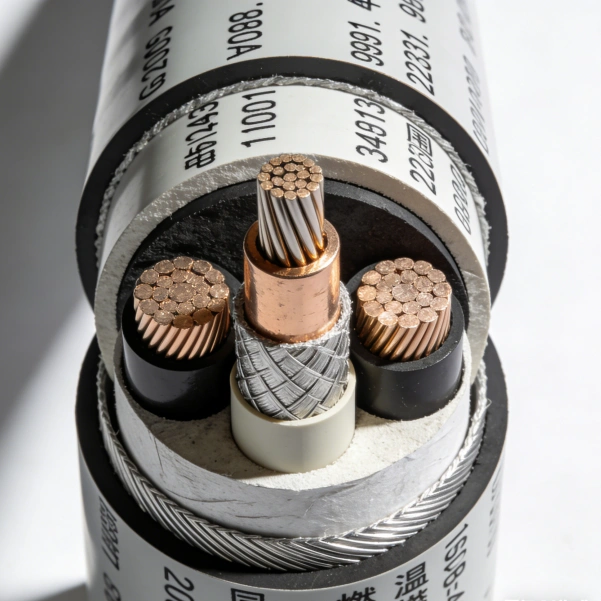
While designs vary, a typical cable includes these layers :
Center Conductor:High-purity copper (solid or stranded, often tinned) for optimal conductivity.
Dielectric Insulation:Foamed polyethylene (PE) is common for its low loss and stable electrical properties.
Shielding:A combination of an aluminum foil and a braided copper layer provides excellent protection against electromagnetic interference (EMI). Shielding effectiveness can exceed 90 dB.
Inner Jacket (Optional):Some cables include an additional thin layer for mechanical protection.
Flame-Retardant Outer Jacket:The critical final layer, made of PVC, FRPE, or LSZH compounds.
Key Performance Parameters
Engineers select these cables based on several critical electrical and mechanical specifications :
Impedance:Most are 50 Ω (for RF/telecom) or 75 Ω (for video). Mismatched impedance causes signal reflections and loss.
Attenuation:Signal loss per unit length, which increases with frequency. It’s specified in dB/100m or dB/ft.
Frequency Range:The maximum frequency the cable can reliably carry, from a few MHz to 6 GHz or higher for some RF/microwave cables.
Voltage Rating:Typically low (e.g., 30V AC for internal electronics), as they are not power cables.
Temperature Range:Common operating ranges are -40°C to +85°C, with some specialized cables rated for +105°C or higher.
Shielding Effectiveness:A high value (e.g., >90 dB) is crucial in noisy electronic environments to maintain signal integrity.
Flame Rating:Certified to standards like UL VW-1, IEC 60332-1-2, or CPR Euroclasses (e.g., Cca, B2ca) .
Where Is It Used?
The “micro” size and “flame retardant” properties make this cable the go-to solution for applications where space is limited and safety is critical.
1. Consumer Electronics
Internal Connections:Links antennas, tuners, and displays in TVs, set-top boxes, and game consoles.
High-Speed Data:Used in laptops and tablets for Wi-Fi, Bluetooth, and camera modules.
Portable Devices:Connects internal RF sections in smartphones, tablets, and handheld test tools .
2. Communication & Networking
Antenna Feeder Cables:Connects base station antennas in 4G/5G, WISP, and other wireless systems.
Indoor Riser Cables:LSZH variants are used in data centers and commercial buildings to meet fire codes.
Video Transmission:75 Ω flame-retardant microcoax is used for CCTV, security systems, and broadcast equipment .
3. Medical & Test Equipment
Imaging Systems:Connects components in MRI, CT, and ultrasound scanners where flammable gases may be present.
Patient Monitoring:Used in devices where both signal integrity and fire safety in clinical environments are paramount.
Test & Measurement:Ensures reliable signal delivery in dense ATE (Automated Test Equipment) setups .
4. Transportation (Rail, Marine, Aviation)
Railway Rolling Stock:Cables must meet stringent EN 45545-2 fire safety standards for interior and exterior use.
Marine & Offshore:Used in navigation, communication, and control systems where fire can spread rapidly.
Aerospace:Found in in-flight entertainment, navigation, and communication systems, often with specialized low-smoke, flame-retardant jackets .
5. Industrial & Building Infrastructure
Building Wiring:LSZH microcoax is installed in public spaces like airports, tunnels, and hospitals.
Industrial Control:Connects sensors and modules in environments with potential fire hazards from other equipment .
How to Choose the Right Cable
Selecting the correct cable involves a systematic approach:
Determine Impedance:Match the cable to your system (50 Ω for RF, 75 Ω for video).
Match Attenuation to Frequency & Length:Calculate the maximum cable length for your required frequency to avoid excessive signal loss.
Select the Right Flame Rating:
Confined Industrial Areas:Standard FR-PVC may suffice.
Public or High-Occupancy Areas:LSZH is typically required for safety.
Rail/Aviation:Must meet specific Euroclass or FAR25 standards.
Verify Shielding:For high-EMI environments, look for >90 dB shielding effectiveness.
Check Environmental Specs:Ensure the temperature range and flexibility meet your application’s needs.
Confirm Compliance:Check for necessary certifications like UL, CSA, or EN, especially for regulated industries .
Micro coaxial cables – those incredibly thin, shielded cables found inside your smartphone, VR headset, medical devices, drones, and high-speed electronics – carry critical signals. But connecting them properly (termination) is essentia...
In high-speed digital and analog systems, maintaining signal integrity is paramount to ensure reliable data transmission. Among the key components that contribute to this integrity, termination resistors play a critical role in preventi...
In the dynamic landscape of the global cable and wire industry, industry forums serve as pivotal platforms for knowledge exchange, technology showcase, and business collaboration. Recently, FRS Coaxial Cables Factory made a striking pre...
In the field of modern healthcare, medical imaging equipment stands as a cornerstone of accurate diagnosis and effective treatment. From X-ray machines that reveal bone fractures to high-resolution MRI scanners that map soft tissue stru...
In today’s world of shrinking electronics and high-speed data transfer, micro coaxial cables play a vital role. But what exactly are they, and how do they work? Whether you’re troubleshooting a device, designing a circuit, or just...
In modern embedded vision, the micro coaxial cableis the critical link that determines image quality, system reliability, and overall product size. As embedded camera systems evolve—from tiny IoT sensors to multi-camera rigs on autonomo...
In the semiconductor industry, where device miniaturization (e.g., 3nm–5nm process nodes) and testing precision continue to advance, micro-coaxial cables have emerged as critical components in ensuring reliable signal transmission durin...
FAQs About Micro Coaxial Cable MaintenanceQ: How often should I inspect micro coax cables?A: Inspect every 3–6 months in standard environments, or monthly in high-stress settings (e.g., industrial machinery).Q: Can I repair a damage...
The question of whether coaxial cable assemblies are resistant to water and moisture does not have a simple “yes” or “no” answer. Their resistance largely depends on design, materials, and manufacturing processes...
Voltage Standing Wave Ratio (VSWR) isn’t just a technical specification – it’s the heartbeat of signal integrity in critical applications. Nowhere is this truer than in the demanding worlds of medical devices and advanced au...
In high-speed systems, a micro coaxial cable signal delay solutionis not just about the physics of propagation. It’s a critical design element that ensures timing synchronization, data integrity, and electromagnetic compatibility ...
In the modern world of signal transmission, where reliable and high-quality data, audio, and video transfer are essential across countless industries, coaxial cable assemblies stand as a cornerstone technology. From powering the interne...
When working on high-speed consumer electronics, medical imaging, or 5G devices, you might be told you need a “micro coaxial cable impedance matching service.” This often leads to a simple question: “Isn’t the cable just 50 Ω or 75 Ω? W...
Coaxial cables are indispensable in telecommunications, broadcasting, and aerospace, where even minor quality flaws can lead to signal loss, system failures, or safety hazards. Hence, strengthening the coaxial cable quality inspection p...
Coaxial cable assemblies are critical components in industries like telecommunications, aerospace, and medical equipment, where signal integrity and reliability directly impact system performance. Certification serves as a guarantee tha...
Choosing between micro coaxial cables and regular coaxial cables depends on your project’s needs. Here’s a concise comparison to guide your decision: Key Differences Feature Regular Coaxial Cable Micro Coaxial Cable Size T...
Venturing beyond Earth’s protective magnetic shield means facing a relentless, invisible enemy: space radiation. For the intricate electronic systems powering satellites, rovers, and deep-space probes, this radiation isn’t j...
Selecting the right coaxial cable assemblies is critical for optimizing the performance, reliability, and longevity of radio systems. Whether for amateur radio, commercial communication, or industrial wireless applications, suboptimal c...
Choosing the perfect micro coaxial cable can feel overwhelming with so many options available. But fear not! Selecting the right one is crucial for ensuring your electronic devices or systems perform reliably. This guide breaks down the...
What is High-Frequency Signal Integrity?Signal integrity refers to the ability of a cable to transmit signals without distortion or degradation. At high frequencies (1 GHz to 100+ GHz), challenges include:
Attenuation: Signal lo...
We are thrilled to announce that our factory’s coaxial cable has been shortlisted for the Top 10 Products in the industry. This recognition is a testament to our commitment to quality, innovation, and meeting the diverse needs of ...
In response to the growing demand for high-performance, specialized coaxial cables in industries such as data centers, broadcast media, and precision security systems, our factory is proud to launch a limited-edition coaxial cable model...
In the world of theater, sound is not just an accessory—it’s a storytelling tool that breathes life into performances. A single note from a violin, a whispered line from an actor, or the roar of a crowd in a musical number must reach ev...
In today’s fast-paced manufacturing and electronics industries, finding a reliable local supplier of coaxial cable assemblies is crucial for businesses aiming to streamline production, reduce lead times, and maintain consistent product ...
In the ever – evolving field of coaxial cable manufacturing, the adoption of new materials has become a key driver of progress. Our company is proud to be at the forefront of this innovation by integrating a cutting – edge n...
In the relentless drive for smaller, faster, and more powerful electronics, a silent hero quietly enables success: the micro coaxial cable. These miniature marvels are far more than just tiny wires; they are the critical arteries ...
In the dynamic world of drone technology, efficient and reliable communication is the linchpin for successful operations. Coaxial cable has emerged as a crucial component in ensuring seamless data transfer and stable connections for dro...
When sourcing a 0.3mm diameter micro coaxial cable supplier, the right partner can significantly impact your product’s signal integrity, reliability, and time-to-market. This guide provides a practical roadmap for B2B buyers, cove...
IntroductionSpaceX’s ambitious satellite constellations, like Starlink, are revolutionizing global internet connectivity. But behind the scenes, a critical component is driving the success of these mega-constellations: micro-coaxial ca...
Coaxial cables are indispensable in high-speed data transmission, industrial automation, and telecommunications infrastructure—their performance directly determines the reliability of end-use systems. However, traditional coaxial cable ...
Coaxial cables are crucial for transmitting high-frequency electrical signals with minimal interference. This article offers an overview of their specifications and technical data.
1. Structure of Coaxial Cables
A coaxial cable ...
In the rapidly evolving landscape of the Internet of Things (IoT) and smart home technology, the choice of connectivity infrastructure plays a pivotal role. Coaxial cable, a time-tested and reliable option, has emerged as a crucial comp...
As a professional Micro Coaxial Cable Manufacturer, we understand the critical role these cables play in ensuring reliable high-frequency signal transmission. This guide will help you navigate the key considerations for selecting the ri...
In the field of electronic measurement, where precision and signal integrity are paramount, micro-coaxial cables have emerged as a critical component. Unlike standard coaxial cables, these miniature versions are engineered to deliver ex...
Proper installation of a coaxial cable is essential to ensure optimal performance, whether it’s for your TV, internet, or other communication systems. A well-installed coaxial cable can minimize signal loss, reduce interference, a...
The hinge is both the marvel and the mechanical nightmare of foldable smartphones. It enables the transformative experience of a device that shifts from phone to tablet, but it also presents a unique engineering challenge: how to reliab...
The future of reliable connectivity in demanding environments just took a quantum leap forward. A groundbreaking patent for self-healing micro-coaxial cables has been officially filed, promising to dramatically reduce failures, ext...
Micro-coaxial cables, the unsung heroes of our hyper-connected world, are vital for transmitting high-frequency signals in smartphones, medical devices, aerospace systems, and countless other advanced technologies. While their performan...
Introduction
As urban centers evolve into smart cities, the demand for reliable, high-speed connectivity surges. Micro-coaxial networks emerge as a critical backbone, enabling seamless data transmission for IoT devices, 5G networks, ...
Introduction
In semiconductor manufacturing, testing is where billion-dollar investments either prove successful or fail. Ultra-precise micro-coaxial cables serve as the nervous system of these critical testing procedures, ensuring a...
IntroductionThe High-Temperature Resistant Micro-Coaxial Cable is a cutting-edge connectivity solution engineered to deliver exceptional performance in extreme thermal environments. Combining precision engineering with advanced mate.
Micro Coaxial Cable: High-Quality Solutions for Precision Applications
Micro coaxial cables are essential components in high-performance electronic applications, providing reliable signal transmission in compact and flexible designs. A.
Contact Us Micro Coaxial Cable factory-(FRS).
Feel free to reach out to us for any inquiries or orders