When working on high-speed consumer electronics, medical imaging, or 5G devices, you might be told you need a “micro coaxial cable impedance matching service.” This often leads to a simple question: “Isn’t the cable just 50 Ω or 75 Ω? Why can’t I just buy it off the shelf?”
The short answer is: in the world of GHz signals, connectors, and tight PCB layouts, a serviceis often required to ensure that the entire signal path—from chip to connector to cable to PCB—is truly impedance-controlled and matched. This article explains what that service is, why it matters, and when you should use it.
What Is Impedance Matching, Really?
At its core, impedance matchingmeans designing the source, transmission line, and load so their impedances are equal. This minimizes signal reflections and maximizes power transfer.
- For DC or low-frequency signals:Simple resistance matching (e.g., a 50 Ω source driving a 50 Ω load) is usually sufficient.
- For high-frequency or high-speed digital signals:The cable itself acts as a transmission line. Mismatched impedance causes reflections that distort the signal waveform. The reflection coefficient (Γ) is calculated as: latex \Gamma = \frac{Z_L – Z_0}{Z_L + Z_0} where Z0is the cable’s characteristic impedance and ZLis the load impedance. A large mismatch creates strong reflections, degrading signal integrity.
In practical terms, this means a 50 Ω source driving a 75 Ω cable will see significant reflection, impacting rise time, amplitude, and timing accuracy.
Micro Coaxial Cables and Their “Target” Impedance
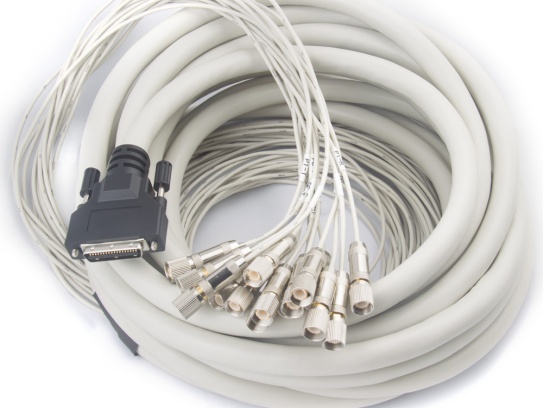
Micro coaxial cables are ultra-thin coax cables, often with an outer diameter (OD) under 1 mm, used to carry high-speed signals in compact devices.
- Single-Ended (RF/Clock):Typically targets 50 Ω.
- Differential (MIPI, LVDS, eDP):The differentialimpedance is controlled, commonly 90–100 Ω, while the single-ended impedance of each conductor is around 45–50 Ω.
The cable’s impedance is determined by its physical structure:
- Center conductor diameter
- Dielectric constant and thickness
- Inner and outer shield diameters
Even a small change in these parameters can alter the impedance, making “close enough” insufficient for multi-gigabit signals.
So, What Exactly Is a “Micro Coaxial Cable Impedance Matching Service”?
This service is a design and manufacturing solutionthat ensures the entire micro-coax interconnect—not just the raw cable—meets your system’s impedance target within tight tolerances.
It goes beyond simply selecting a standard cable. Professionals providing this service will:
- Analyze Your System Requirements
- Identify the interface (e.g., MIPI CSI-2, USB 3.2, RF 5 GHz) and its required impedance (single-ended or differential).
- Determine the frequency range, data rate, and acceptable loss and reflection limits.
- Select or Develop the Right Cable
- Choose an existing cable from a portfolio that meets the target impedance and mechanical needs (flexibility, diameter).
- If necessary, work with a factory to develop a custom cable with a specific dielectric, conductor size, and shielding structure to hit the exact impedance spec (e.g., 50 Ω ±5%).
- Ensure Connector and PCB Transitions Are Controlled
- The transition from PCB trace to connector is a major source of impedance discontinuities. The service ensures the PCB pad stack, connector footprint, and cable structure are designed as a continuous transmission line.
- This may involve connector footprint optimization, co-planar waveguide design, or the use of high-performance RF connectors.
- Perform Electrical Simulation
- Use tools like HFSS or ADS to model the entire channel (chip → PCB → connector → cable → connector → PCB) and predict return loss (S11), insertion loss (S21), and eye diagrams.
- Validate with Measurements
- Build prototypes and measure them with a Vector Network Analyzer (VNA) to verify impedance (TDR plots), frequency response, and crosstalk.
- The final cable assembly is specified with tolerances like 50 Ω ±5% or 100 Ω differential ±10 Ω.
- Provide a Complete, Controlled Product
- Deliver a finished cable assembly with a full data sheet, including geometry, impedance, attenuation, shielding effectiveness, and temperature range. This turns an unspecified “wire” into a reliable component.
What Goes Wrong Without Proper Impedance Control?
For low-speed or short cables, you might get away with a mismatch. But for high-speed designs, the consequences are severe:
- Signal Reflections & Ringing:Cause overshoot, undershoot, and “ringing” on clock and data edges, eating into your timing budget.
- Reduced Eye Height & Jitter:In high-speed serial links, reflections close the eye diagram, increasing bit error rate (BER) and potentially causing link drops.
- EMI and Crosstalk:Mismatched lines can act as antennas, radiating noise and making EMI compliance harder to achieve.
- Channel Loss & Attenuation:At high frequencies, an impedance mismatch can increase effective loss, limiting the maximum usable cable length.
- Unstable Measurements:In test and measurement, a mismatched cable can cause ripple in frequency response and inaccurate power readings.
In short, without proper impedance control, your product may fail in the lab or field, leading to costly respins and delays.
Key Applications That Demand This Service
1. Consumer Electronics (Smartphones, Tablets, Laptops)
- Interfaces:MIPI (camera/display), eDP, LVDS, RF antenna feeds.
- Why:These systems pack high-speed signals into tiny spaces. A service ensures the fragile 40–42 AWG micro-coax cables and 0.4 mm pitch connectors maintain signal integrity.
2. High-Speed Test & Measurement
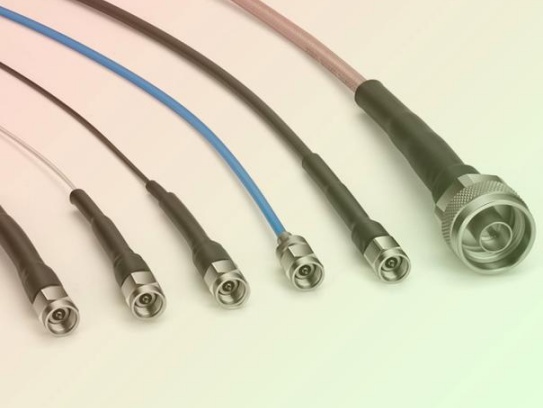
- Interfaces:RF/microwave test leads, oscilloscope probes, VNA cables.
- Why:Engineers need to trust their instruments. Precise impedance matching ensures accurate measurements by minimizing reflections and standing waves.
3. Medical Imaging (Probes, Endoscopes)
- Interfaces:High-frequency ultrasound, intravascular imaging.
- Why:Signal fidelity is critical for diagnosis. A service ensures the ultra-fine cables can be bent repeatedly without impedance drift, preserving image quality.
4. 5G, Telecom, and Automotive Radar
- Interfaces:Antenna feeds, mmWave front-ends, radar sensors.
- Why:These applications demand low-loss, stable impedance across wide bandwidths and harsh environments. Tight tolerances are non-negotiable.
When Do You Need a Dedicated Service?
You likely need a professional service if your project has anyof the following characteristics:
- High Data Rates:>1 Gbps per lane (e.g., MIPI, USB 3.x, PCIe).
- Precise Analog Signals:RF signals above ~100 MHz where VSWR and return loss are critical.
- Longer Micro-Coax Runs:Several centimeters or more inside a device.
- Harsh Mechanical Stress:Cables in hinges, foldable devices, or robotics that require high flex life.
- Multi-Channel Synchronization:Systems like Jetson Orin MIPI setups where channel-to-channel skew and impedance must be controlled.
- Certification Goals:You need guaranteed performance for EMI/EMC or high-speed compliance testing.
If your project is “low-speed” (e.g., I²C, UART) and uses short, generic cables, standard off-the-shelf parts are usually fine.
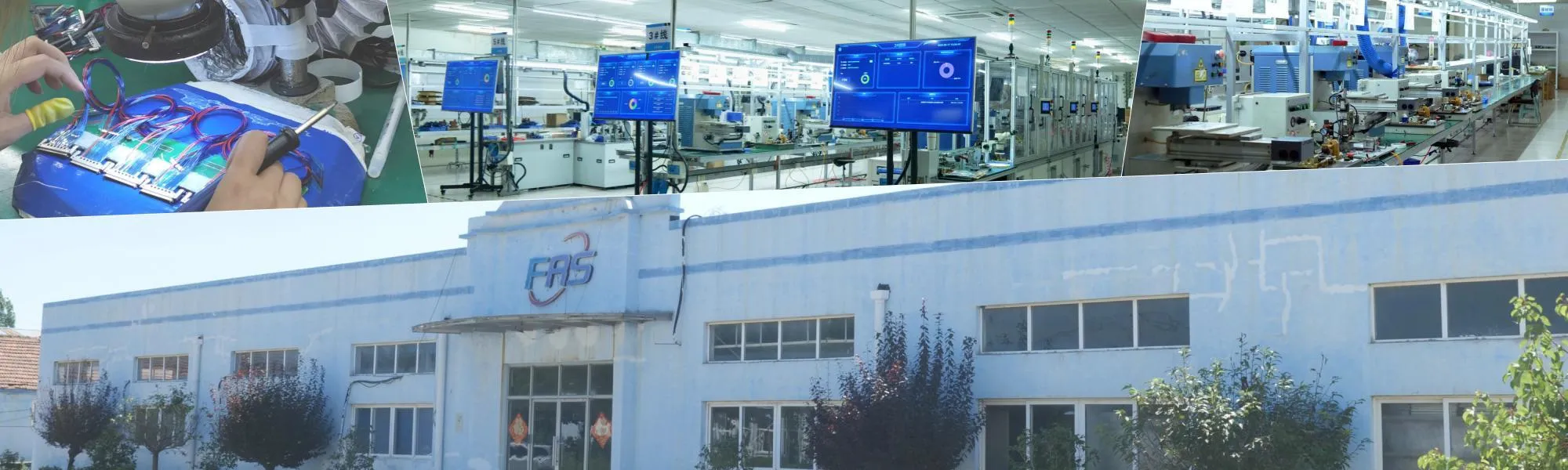
Partnering for Success: FRS Micro Coaxial Cable Impedance Matching Service
At FRS, we specialize in providing end-to-end micro coaxial cable solutions, with impedance matching at the core of our design and manufacturing process.
- Engineering-Driven Approach:Our engineers don’t just sell cables; they analyze your system, run simulations, and recommend the optimal cable and connector combination for your specific impedance and mechanical requirements.
- Precision Manufacturing:We control critical parameters—conductor size, dielectric, shielding, and jacketing—to ensure every meter of cable meets your impedance specification, whether it’s 50 Ω single-ended or 100 Ω differential.
- Comprehensive Validation:We provide TDR plots, S-parameter files, and sample test reports, giving you full visibility into the electrical performance of your cable assembly.
- Seamless Transition from Prototype to Mass Production:We support low-volume prototyping to validate your design and scale to high-volume manufacturing with consistent quality and on-time delivery.
If you’re facing challenges with signal integrity, EMI, or mechanical reliability in your micro-coax interconnects, let our impedance matching service help you get it right the first time.
Contact FRS todayto discuss your project requirements and discover how our expertise can streamline your development and manufacturing process.
Contact Us Right Now:
E-MAIL: sales@custom-cable-assemblies.com