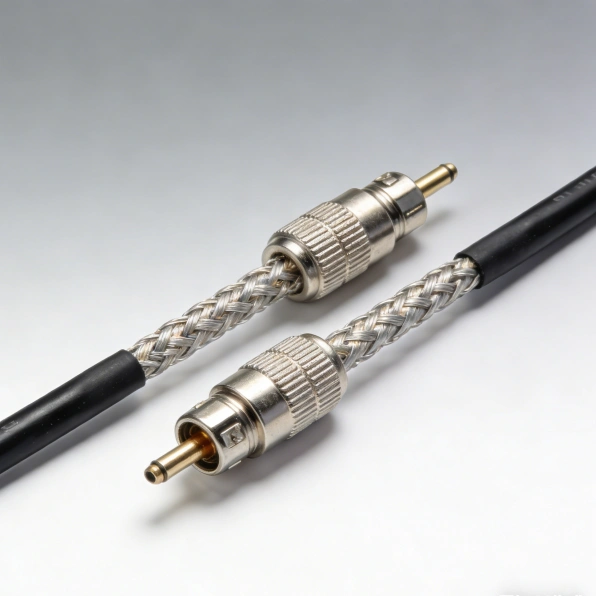
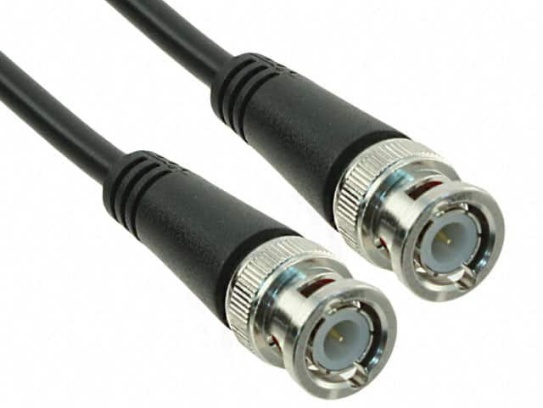
Automotive display systems—from instrument clusters to pillar‑to‑pillar 4K/8Kpanoramic displays and HUDs—depend on high‑speed, low‑loss interconnects that survive the vehicle’s harsh environment. An automotive‑grade micro coaxial cable is a miniaturized, shielded transmission line built to carry video SERDES data (and sometimes power) through tight spaces with stable 50 Ωcharacteristic impedance, robust EMI performance, and deterministic loss over temperature and flex. Unlike consumer HDMI/DP, which are bulky for automotive use, these cables are designed for the automotive ecosystem: small diameter, high density, sealed interfaces, and tolerance to vibration, temperature, and EMC. Typical SERDES families like FPD‑Link IIIand GMSLuse coax or shielded twisted‑pair (STP) to move video, control, and even power over a single cable, enabling long runs and simplified harnessing in modern cockpits.
How It Works in a Display System
A display link starts at the source SoC/TCON serializer, which encodes video and control into a high‑speed serial stream. Over a micro coax, the signal travels to the display’s deserializer (DES), which recovers the video and back‑channel data. The cable’s job is to preserve eye opening and timing: its characteristic impedance must match the driver/receiver (nominally 50 Ωfor coax), and the assembly must minimize reflections (return loss), attenuation (insertion loss), and mode conversion (differential‑to‑common‑mode). Many automotive SERDES also implement Power‑over‑Coax (PoC), where a bias tee/filter network on each end superimposes DC power on the coax while isolating it from high‑speed data using frequency‑domain separation (FDM). Typical practice places data in higher bands (e.g., tens to hundreds of MHz and up) and control/return on lower bands (a few MHz), with inductors and capacitors forming a passive filter that presents high impedance to the data path while passing DC. This reduces线束 weight and connector count while maintaining signal integrity.
Key Electrical and Mechanical Parameters
Impedance and return loss: Coax is typically 50 Ω(differential pairs are 100 Ω); connectors and the transition region can introduce small mismatches, so both cable and connector must be specified for low return loss across the operating band.
Insertion loss and usable bandwidth: Loss rises with frequency (skin effect and dielectric loss); a given cable length has a usable bandwidth before the eye degrades. As a rule of thumb from published data, a 15‑mcoax may have about 3 GHzusable bandwidth supporting data rates up to roughly 6 Gbps, while a 10‑mshielded twisted‑quad (STQ) may reach about 2.5 GHzand ~5 Gbps. Designers size the channel (cable, equalization, and protocol margin) to keep the equalizer within its linear region.
Mode conversion and symmetry: In differential links, intra‑pair skew and amplitude imbalance cause mode conversion, which degrades SNR; high‑quality assemblies keep mode conversion well below insertion loss (by 10 dB or more).
Crosstalk: In multi‑pair or multi‑coax harnesses, far‑end and near‑end crosstalk rise with frequency; connectors and routing must control coupling.
In‑line connectors and harnessing: Each mated connector adds mismatch and loss; more in‑line connectors mean more return‑loss ripple and insertion‑loss variation. Harness routing, strain relief, and retention features are critical for automotive life.
Environmental: Automotive cables and connectors must withstand wide temperature swings, vibration, and flex. Qualification includes temperature cycling and mechanical stress to ensure stable performance over the vehicle’s lifetime.
Connector and Ecosystem Options
FAKRA and mini‑FAKRA (HFM): Widely used for automotive video/RF. Mini‑FAKRA (HFM) offers higher density and performance, with some solutions rated up to 20 GHzand multi‑port footprints that reduce PCB edge usage by up to 48%, suitable for high‑resolution displays and multi‑camera links.
GMSL coax ecosystem: GMSL1does not include PoC; GMSL2/GMSL3add integrated PoC, supporting data rates up to 12 Gb/sper cable for camera/display links across the vehicle.
FPD‑Link III coax: Supports single‑ended coax topologies with FAKRAconnectors for video and control; systems can run 4 Gbps and beyonddepending on cable quality, equalization, and length.
High‑speed miniature coax families: Vendor solutions such as TE’s MATE‑AXand IMS MCA/MCAHtarget ~9–20 GHzperformance in compact footprints for next‑gen displays and high‑bandwidth links.
Design note: Always impedance‑match the entire channel—cable, connector, and PCB launch—and verify return loss, insertion loss, and crosstalk jointly with the SERDES’ equalization capabilities.
Design Guidelines and Trade‑offs
Choose the right medium and topology: For very high bandwidth over longer runs, coax often wins; for dense, lower‑bandwidth links, shielded twisted‑pair (e.g., STQ/HSD) can be more economical. Match the medium to the SERDES family and target data rate.
Impedance control and connector discipline: Maintain 50 Ω(coax) end‑to‑end; minimize un‑twisting or shield removal at connectors; follow vendor layout/launch geometry to suppress return loss spikes.
Loss budgeting: Start with insertion‑loss vs. frequency data for the candidate cable, add connector loss and equalizer limits, then back‑calculate the maximum data rate and required equalization. Use the rule of thumb that a 15‑mcoax is roughly limited to ~6 Gbps, and a 10‑mSTQ to ~5 Gbps, adjusting for your specific cable and equalizer.
Symmetry and skew: Control pair geometry, length, and dielectric consistency to suppress mode conversion; measure intra‑pair skew during prototyping.
EMI and crosstalk: Use twisted‑pair or shielded quads where appropriate; separate high‑speed lanes; favor connectors with low crosstalk and robust shielding.
PoC design: Size bias inductors for the required DC current without saturating; keep the filter’s high‑frequency impedance high (e.g., >1 kΩ) to avoid loading the 50 Ωdata path; follow the SERDES’ reference filter topologies and frequency plan.
Environmental qualification: Plan for temperature cycling, vibration, and flex; qualify the complete harness, not just the raw cable.
Real‑World Examples and Data Rates
Pillar‑to‑pillar ultra‑wide displays: A 45–60‑inch, 7680 × 2160display can require roughly 28 Gbpsaggregate link bandwidth. Coax‑based SERDES (e.g., GMSL) are commonly used to carry such high data rates across instrument and display zones within the vehicle.
Typical link budgets: Coax SERDES links in the 4–12 Gbpsclass are common for in‑vehicle video; FPD‑Link III systems can exceed 4 Gbpsdepending on equalization and length.
Mini‑FAKRA/HFM for displays: High‑density, high‑frequency mini‑FAKRA systems (e.g., up to 20 GHz) are used where many high‑resolution video paths must be routed through compact, sealed connectors and PCB footprints.
Troubleshooting and Validation
Eye diagram and BER: Validate at the maximum operating temperature and minimum supply; check that the equalizer can compensate the cable’s loss slope without running out of margin.
Return loss and TDR: Use TDR to pinpoint impedance bumps at connectors, splices, or routing transitions; fix geometry or connector choice if return‑loss violations occur.
Mode conversion and skew: Measure differential‑to‑common‑mode conversion; if excessive, re‑route to equalize lengths, improve symmetry, or add common‑mode chokes at the receiver.
Crosstalk: Separate high‑speed lanes and avoid routing parallel to noisy sources; verify near‑end/far‑end crosstalk against spec at the highest frequency of interest.
PoC integrity: Check DC bias delivered to the remote module under load; verify that the bias filter does not degrade the data eye or create excessive common‑mode noise.
When to Choose Micro Coax vs. STP or Other Media
Choose micro coax when you need:
Deterministic, repeatable 50 Ωtransmission with excellent EMI control in a small diameter.
Longer runs than typical twisted‑pair at multi‑gigabit data rates.
Support for PoCin a single‑cable solution.
Sealed, robust interfaces for under‑hood or high‑vibration zones.
Choose shielded twisted‑pair (STQ/HSD) when:
You prioritize harness flexibility and density for medium‑bandwidth links.
The channel length is moderate and the SERDES/equalizer can close the link within your BOM budget.
Choose other media (e.g., Ethernet, optical) for specific cases: Ethernet for control/data aggregation, fiber for ultra‑long runs or extreme EMI environments—but video SERDES over coax remains dominant for in‑vehicle display interconnects due to maturity, cost, and integration.
Coaxial cable assemblies are critical for transmitting high-frequency signals in industries like telecommunications, aerospace, and medical equipment. Physical damage—such as sheath cracking, connector breakage, or internal conductor di...
Imagine facing a tangled nest of identical, hair-thin micro-coaxial cables during a critical system upgrade or a frantic troubleshooting session. The seconds tick by as you meticulously trace connections, hoping you don’t misplug and ca...
The maximum transmission distance of micro coaxial cables depends on factors such as cable specifications, signal types, and environmental conditions. Below is a structured analysis based on industry data and testing results:
...
Choosing the best micro coaxial cables for your test and measurement (T&M) setup isn’t just about connecting point A to point B. It’s about preserving signal integrity, ensuring measurement accuracy, and prot...
Keeping micro coaxial connectors (like BNC, SMA, SMB, MCX, MMCX) clean is crucial for strong, reliable signals in cameras, medical devices, test equipment, and communications gear. Dirt, dust, oils, or oxidation can cause fuzzy pictures...
In today’s interconnected world, electronic devices and systems rely on stable signal transmission to function effectively. However, electromagnetic interference (EMI)—unwanted electrical or magnetic energy that disrupts signal integrit...
When working with electronics, robotics, or high-frequency communication systems, understanding the properties of cables is crucial. One common question is: What is the typical impedance of a micro coaxial cable? In this article, ...
IntroductionMicro-coaxial cables are critical for high-frequency signal transmission, but their performance varies significantly across materials, shielding designs, and manufacturing tolerances. Selecting the optimal cable demands a d...
The short answer is yes, coaxial cable assemblies can be recycled after use—but the process requires careful handling due to their composite structure. As the world grapples with the growing problem of electronic waste (e-waste), recycl...
Choosing the right insulation material is critical when designing or selecting micro coaxial cables, especially for demanding RF (radio frequency) and microwave applications. Polytetrafluoroethylene (PTFE) and fluorinated ethylene propy...
Micro coaxial cable soldering service is a specialized capability that joins ultra‑fine coaxial conductors to connectors or PCB pads with precise impedance control, mechanical reliability, and high‑frequency signal integrity. It is wide...
A coaxial cable is a type of cable widely used in communication and data transmission. Its core structure consists of four concentric layers:Central Conductor: Typically a single or stranded copper wire for transmitting electrical sig...
Your car’s “eyes” – the ADAS cameras – are only as good as the signals they send to the brain (the control unit). Imagine your smart cruise control not seeing a stopped car ahead because the camera feed was blurry or d...
In the semiconductor industry, where device miniaturization (e.g., 3nm–5nm process nodes) and testing precision continue to advance, micro-coaxial cables have emerged as critical components in ensuring reliable signal transmission durin...
Military applications demand electronic components that can withstand extreme conditions while maintaining uncompromised performance—coaxial cable assemblies are no exception. These critical components serve as the backbone of communica...
Micro coaxial cables are the tiny workhorses powering signals in countless devices: your smartphone’s camera, medical implants, drones, high-frequency test equipment, and complex aerospace systems. Choosing reliable micro coax is ...
Understanding the Challenge
Micro-coaxial cables (often called “micro-coax”) are essential for high-frequency signal transmission in medical devices, aerospace systems, and 5G infrastructure. However, signal degradation o...
Anti-static micro coaxial cables are critical components in high-precision electronics, telecommunications, and medical devices. Their assembly requires a controlled environment to prevent electrostatic discharge (ESD), which can damage...
Micro-coaxial cables are essential for transmitting high-frequency signals in devices like routers, TVs, and medical equipment. When these cables get damaged, choosing the right repair method—soldering or compression connectors—ca...
Industrial control systems (ICS) are the backbone of modern manufacturing, energy, transportation, and infrastructure sectors, relying heavily on stable and reliable signal transmission to ensure operational efficiency and safety. Among...
As global demand for high-speed data transmission grows—driven by 5G network expansions, data center upgrades, and smart home device proliferation—coaxial cable manufacturers face recurring “peak demand” periods. These peaks...
Technical Foundations of Coaxial Cables in SurveillanceA. Cable Types and SpecificationsSurveillance systems primarily use RG-59, RG-6, and RG-11 coaxial cables, differentiated by their impedance, shielding, and bandwidth:
...
1. Impedance in Micro Coaxial CablesImpedance, measured in ohms (Ω), defines the cable’s resistance to alternating current (AC) signals. Proper impedance matching minimizes signal reflections and ensures maximum power transfer.
St...
In the first three quarters of 2025, our factory’s coaxial cable products have achieved record-breaking sales performance, with the total sales volume increasing by 65% compared with the same period last year and the sales revenue...
Introduction:
Imagine sending a billion-dollar science laboratory to Mars. It needs to survive the journey, land safely, and then operate flawlessly in one of the harshest environments imaginable. Every component matters, especially ...
Imagine intricate electronic devices shrinking further, medical implants becoming smarter, and 5G networks reaching new heights of performance. At the heart of this miniaturization revolution lies a critical challenge: creating inc...
Moisture has long been a nemesis for coaxial cables, causing a range of issues that compromise their performance and longevity. When water infiltrates a coaxial cable, it can lead to signal attenuation, as the water interferes with the ...
High-Frequency Performance (Up to 110+ GHz)Micro coaxial cables are designed to transmit signals at frequencies far exceeding traditional coaxial cables, making them vital for cutting-edge wireless and millimeter-wave technologies.
...
In the realm of high-speed signal transmission, two cable types stand out for their widespread use in modern electronics: micro coaxial cable and LVDS (Low-Voltage Differential Signaling) cable. From smartphones and laptops to industria...
Coaxial cable assemblies are critical components in telecommunications, aerospace, automotive electronics, and industrial control systems. As global environmental regulations tighten and market demand for sustainable products grows, obt...
As the backbone of modern communication infrastructure, coaxial cables are undergoing a significant transformation driven by global environmental regulations and technological innovations. The promotion of eco-friendly materials in coax...
Addressing the Signal Integrity Challenges in AVsHigh-Frequency DemandsSensor Type:LiDAR: Operates at 905 nm or 1550 nm wavelengths, requiring cables handling 10–100 Gbps.79 GHz Radar: Demands cables stable up to 110 GHz for pr...
Introduction to SMA and MCX ConnectorsSMA (SubMiniature version A) and MCX (Micro Coaxial) connectors are widely used in RF and high-frequency applications, including telecommunications, aerospace, and IoT devices. These connectors ensu...
In the era of rapid development of 5G communication, satellite navigation, and high – speed data transmission, coaxial cables, as the core medium for signal transmission, face increasingly strict requirements for high – freq...
In the rapidly evolving landscape of the Internet of Things (IoT) and smart home technology, the choice of connectivity infrastructure plays a pivotal role. Coaxial cable, a time-tested and reliable option, has emerged as a crucial comp...
Coaxial cables are widely used for transmitting high-frequency signals in telecommunications, broadcasting, and networking. Their performance, particularly transmission speed (data rate), depends on factors like cable design, shieldin...
In the world of virtual reality (VR), a seamless and immersive experience relies heavily on stable, high-speed data transmission. While many focus on headsets and sensors, the cables connecting these components play a crucial role. Coax...
A leading national television network has recently selected our high-performance coaxial cables for its large-scale broadcast infrastructure upgrade, marking a significant milestone in our commitment to delivering reliable connectivity ...
In modern technology, micro coaxial cables are vital for seamless data transmission and signal integrity. With their concentric design, they handle high-frequency signals with low loss and interference. As tech advances, their demand su...
In the realm of industrial and commercial applications, cable repair and protection are critical for ensuring system reliability, safety, and longevity. Among the various solutions available, heat shrink tubing stand...
IntroductionIn today’s fast-paced digital world, reliable and high-speed data transmission is critical for industries ranging from telecommunications to aerospace. Enter High-Speed Data Micro-Coax—a cutting-edge miniature coaxial cable e.
OverviewMicro-Coax for HD Video is a cutting-edge coaxial cable engineered to deliver uncompromised high-definition video quality across professional and industrial applications. Designed for reliability, precision, and versatility,.
Contact Us Micro Coaxial Cable factory-(FRS).
Feel free to reach out to us for any inquiries or orders