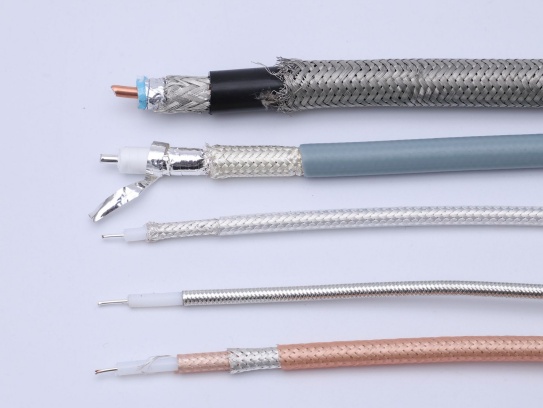
Industrial grade micro coaxial cable is an ultra‑thin, high‑performance RF interconnect built for demanding applications that require precise impedance control, high‑density routing, and long‑term reliability under mechanical and environmental stress. These cables are commonly used in medical imaging probes, industrial inspection systems, and high‑speed electronics where space is limited and signal integrity is critical. Typical constructions feature very fine conductors, low‑loss fluoropolymer dielectrics such as PFA, precision shielding, and robust jacketing to maintain stable performance in compact assemblies. Commercially available products can reach extremely small outer diameters down to 0.36 mm, offer characteristic impedances such as 50 Ω, and, in specific fluoropolymer constructions, sustain extended operating temperatures up to +200°C. Such specifications reflect the category’s emphasis on both miniaturization and durability in mission‑critical environments.
Key Differences from Standard Coax
Dimension
Industrial Grade Micro Coax
Standard Coax
Impedance
Typically 50 Ωfor high‑speed digital/RF; some video lines use 75 Ω
75 Ωfor CATV/video; 50 Ωcommon in RF/data
Diameter and flexibility
Very small OD for dense routing and tight bends
Larger OD; less flexible in dense assemblies
Operating temperature
Fluoropolymer‑based (e.g., PFA) up to +200°Cdepending on construction
Often limited to around +80°C(PVC) or +105°C(PE)
Shielding and construction
Precision spiral or braided shields for stable impedance and EMI control in dynamic environments
Foam PE or solid PE dielectrics; shielding optimized for cost and general use
Typical use
Medical probes, endoscopy, industrial inspection, high‑speed electronics, harsh environments
Broadcast/CATV, baseband video, general low‑frequency RF
These differences highlight industrial micro coax’s focus on miniaturization plus environmental resilience, while standard coax emphasizes cost‑effective delivery for broad, less demanding applications.
Construction and Performance Essentials
•Conductor and dielectric: Fine silver‑plated or tinned copper conductors are paired with low‑loss dielectrics such as PFAto enable tight impedance tolerance and stable velocity of propagation. The small core and dielectric geometry make the cable highly flexible yet mechanically robust when engineered correctly.
•Shielding: High‑coverage spiral or braided shields maintain consistent 50 Ω(or 75 Ω) impedance and suppress EMI across flexing and temperature. Shield geometry and coverage are as critical as conductor quality for high‑speed links.
•Jacket and environmental performance: Fluoropolymer jackets like PFAoffer broad chemical resistance and high‑temperature endurance, with some constructions rated up to +200°C. Industrial micro coax often targets compliance with UL AWM 1745and related standards for safety and performance consistency.
•Electrical parameters: Low capacitance and tight impedance control are essential for high‑speed links. As an example, a micro coax with 50 Ωimpedance and PFA dielectric shows about 110.2 pF/mcapacitance and roughly 0.45 dB/mattenuation at 10 MHz, illustrating the favorable trade‑offs between size and RF loss.
Applications and Why Size and Reliability Matter
•Medical and minimally invasive devices: Endoscopes, imaging probes, and patient‑monitoring systems require miniature interconnects that maintain signal integrity while withstanding sterilization and repeated flexing. The small OD and robust construction of industrial micro coax make it a natural fit.
•Industrial inspection and instrumentation: High‑density test fixtures, robotics, and process control gear benefit from cables that route through tight spaces without sacrificing impedance stability or EMI performance.
•High‑speed electronics and data links: Where differential pairs and controlled impedance are critical, micro coax assemblies preserve waveform quality in dense boards and harnesses. In the automotive world, the push toward miniaturized high‑speed interconnects—such as Mini‑FAKRAand other mini‑coax solutions—reflects the same drivers: higher bandwidth in less space, with frequencies now reaching into the 20 GHzclass for certain systems.
Industrial Grade Micro Coax vs. Common Video Coax
•Impedance and frequency use: 75 Ωvideo coax (e.g., SYWV‑75‑5) is optimized for broadband video distribution and can carry signals up to hundreds of megahertz with relatively low loss. By contrast, many industrial micro coax lines are 50 Ωto suit high‑speed digital/RF paths.
•Dielectric and loss behavior: Video coax commonly uses physical‑foam PE (SYWV) or solid PE (SYV) dielectrics. SYWV’s lower effective dielectric constant reduces attenuation, which is why it’s prevalent in CATV; micro coax often uses PFAfor environmental resilience, with loss characteristics scaled to its much smaller dimensions.
•Construction goals: Video coax emphasizes cost‑effective, stable transmission over long runs in residential and commercial video distribution. Industrial micro coax emphasizes mechanical durability, tight impedance tolerance over flex life, and operation across temperature and chemical extremes.
Selecting the Right Industrial Micro Coax
•Match the impedance first: Choose 50 Ωfor most high‑speed digital/RF interconnects; use 75 Ωwhen interfacing with video distribution or legacy 75 Ωsystems. Mismatched impedance causes reflection, eye‑diagram closure, and jitter.
•Prioritize the dielectric and jacket: For high temperature, chemical exposure, or repeated autoclave cycles, PFAjackets and precision‑engineered dielectrics are preferred. For cost‑sensitive, less demanding environments, PE/PVC‑based systems may suffice.
•Control the mechanical profile: Evaluate bend radius, flex life, and connector compatibility together. Smaller OD cables offer routing advantages but require tighter tolerance in termination and strain relief to avoid impedance shifts and shield damage.
•Verify compliance and quality: Look for recognized standards (e.g., UL AWM 1745) and supplier data on shielding coverage, capacitance, and attenuation across your operating frequencies. High‑coverage shields and consistent geometry are as important as the conductor material.
•Plan for assembly: Micro coax demands precise stripping, termination, and strain relief. Work with suppliers who can provide controlled‑impedance assemblies, tooling, and process validation for your specific connector family and cable OD.
Bulk and Wholesale Considerations
•Volume packaging and logistics: Industrial projects often require long‑length reels for cable harness builds. Confirm packaging, marking, and reel dimensions to fit your production line and inventory practices.
•Customization and value‑add: Wholesale procurement increasingly includes value‑added services such as custom lengths, pre‑terminated pigtails, and connector‑specific cable prep. Partner with manufacturers or distributors who can deliver both bulk cable and assemblies to reduce lead time and ensure consistency.
•Specification control for consistency: For multi‑site or multi‑vendor builds, lock down part numbers, test reports, and lot‑to‑lot performance criteria (impedance, attenuation, shielding) to avoid subtle differences that impact high‑speed yield.
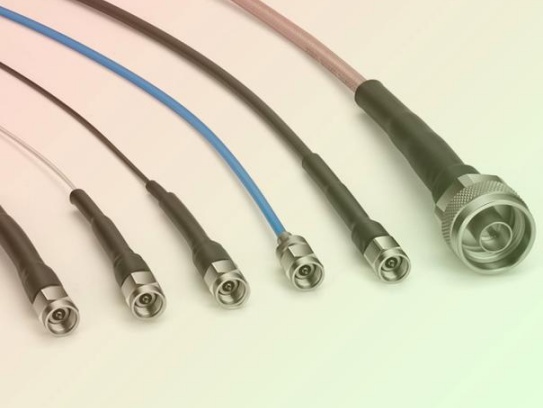
•Connector ecosystems: Many industrial micro coax assemblies integrate with IPEX/U.FL/MHFfamilies and their variants. Ensure your supplier can support the exact connector interface, cable OD, and crimp/solder termination specified for your platform.
•Sourcing at scale: Global B2B platforms provide access to a wide range of micro coax and IPEX micro coaxproducts, from bulk reels to pre‑terminated jumpers, enabling price and lead‑time comparisons across suppliers.
Frequently Asked Questions
•Can I use video coax for high‑speed digital links?Not ideally. Video coax is typically 75 Ωand optimized for broadband video up to hundreds of megahertz, while many high‑speed links require 50 Ωimpedance and tighter impedance control across flex and temperature. Mismatched impedance and dielectric loss can degrade signal integrity. Use industrial micro coax designed for the target data rate and environment.
•What temperature range should I expect?It depends on materials. General‑purpose video coax often uses PE/PVC jackets with maximum operating temperatures around +80°Cto +105°C. Industrial micro coax with PFAjackets can be rated up to +200°Cin specific constructions, suitable for autoclave, reflow, or engine‑bay environments.
•How small can these cables get?Commercial micro coax is available with ODs as small as 0.36 mm, enabling dense routing in medical probes and high‑density electronics. Always pair ultra‑small ODs with connectors and terminations validated for the same geometry.
•Is shielding important in micro coax?Absolutely. High‑coverage spiral or braided shields maintain stable 50 Ω(or 75 Ω) impedance and suppress EMI, especially when cables flex or operate near other high‑speed signals. Shield quality is as critical as conductor and dielectric choice.
•What about standards and compliance?Many industrial micro coax products target UL AWM 1745and related safety/performance standards. Always verify the specific file number, test conditions, and whether the cable meets your regulatory and environmental requirements.
Coaxial cable is a fundamental component for transmitting high-frequency electrical signals with minimal interference. It consists of four layers sharing a common axis: a center conductor, a dielectric insulator, a metallic shield, and ...
Electrical Performance Degradation AnalysisA. Insertion Loss and Return Loss MonitoringBaseline vs. Aged Comparison:
Frequency (GHz) New Cable (dB/m) Aged (5 years, 10k cycles)10 0.42 0.68 (+62%)30 1.15 2.10 (+83%)60 2.40 4.5...
Coaxial cable assemblies are critical components in signal transmission systems, used across industries like telecommunications, aerospace, medical equipment, and industrial automation. Their bandwidth capacity—defined as the maximum fr...
In the rapidly advancing field of medical technology, reliable connectivity is not just a convenience—it’s a matter of life and death. From high-resolution imaging systems to minimally invasive surgical tools, medical devices demand pre...
In the rapidly evolving landscape of defense, aerospace, and satellite communications, phased array radar systems stand as a cornerstone of modern technology. Unlike traditional mechanical-scan radars, phased array radars rely on thousa...
In today’s world of shrinking electronics and high-speed data transfer, micro coaxial cables play a vital role. But what exactly are they, and how do they work? Whether you’re troubleshooting a device, designing a circuit, or just...
In the complex and precise satellite communication system, the choice of transmission components is crucial, and our coaxial cable stands out as a reliable and high-performance option. It plays an indispensable role in ensuring the smoo...
Coaxial cables are indispensable in a wide range of installations, including telecommunications, security systems, broadcasting, and home entertainment setups. However, the one-size-fits-all approach of standard cable lengths often fall...
Imagine facing a tangled nest of identical, hair-thin micro-coaxial cables during a critical system upgrade or a frantic troubleshooting session. The seconds tick by as you meticulously trace connections, hoping you don’t misplug and ca...
Industrial control systems (ICS) are the backbone of modern manufacturing, energy, transportation, and infrastructure sectors, relying heavily on stable and reliable signal transmission to ensure operational efficiency and safety. Among...
The Next Frontier in IoT Connectivity
As IoT networks expand to 75 billion devices by 2025 (per Statista), legacy cabling solutions struggle with bandwidth demands. Micro-coaxial cables—featuring diameters under 1mm—are emerging as a...
In the realm of telecommunications, data centers, and industrial connectivity, coaxial cables play a pivotal role in transmitting high-frequency signals with minimal loss. However, the way these cables are terminated can significantly i...
In the ever-evolving landscape of mobile technology, the development of 6G is on the horizon. With the promise of significantly faster speeds, ultra-low latency, and enhanced connectivity, 6G aims to revolutionize the way we interact wi...
Coaxial cable assemblies are critical components in industries like telecommunications, aerospace, medical equipment, and industrial automation—their performance directly impacts the stability and reliability of entire systems. Finding ...
Imagine a cable at the heart of an MRI machine delivering crucial signals, or deep within a satellite enduring the harsh radiation of space. Ordinary cables fail in these extremes. That’s where radiation-resistant miniature coaxial cab...
Venturing beyond Earth’s protective magnetic shield means facing a relentless, invisible enemy: space radiation. For the intricate electronic systems powering satellites, rovers, and deep-space probes, this radiation isn’t j...
Micro coaxial connectors are essential components in modern electronics, enabling high-frequency signal transmission in compact devices. Here are the most common types:
1. MCX Connectors
Size: 30% smaller than SMB
Frequency: 0...
Introduction: The Critical Role of TDR in Micro-Coax IntegrityTime Domain Reflectometry (TDR) testing is the cornerstone of ensuring signal integrity and reliability in modern micro-coaxial cable networks. As devices shrink and data rat...
Micro coaxial cable assemblies are widely used in compact electronics, medical devices, industrial sensors, and automotive systems where space constraints and reliability are critical. Their IP (Ingress Protection) rating is essential f...
Venturing into the deep ocean is one of humanity’s greatest technological challenges. Deep-sea Remotely Operated Vehicles (ROVs) are our eyes and hands in these crushing depths, enabling scientific discovery, resource exploration,...
As the Internet of Things (IoT) evolves from a niche concept to a global infrastructure, the demand for smaller, more reliable, and high-performance components has never been greater. Among these critical components, micro-coaxial cable...
In high-resolution camera modules, where every 0.01 mm counts, the choice of interconnect is critical. The AWG42 micro coaxial cableis a proven solution for transmitting high-frequency video and control signals in ultra-compact spaces. ...
As global demand for high-speed data transmission grows—driven by 5G network expansions, data center upgrades, and smart home device proliferation—coaxial cable manufacturers face recurring “peak demand” periods. These peaks...
In today’s digital age, high-speed data transmission has become a core demand for industries ranging from telecommunications and security monitoring to data centers and aerospace. Whether it is 5G base station signal backhaul, 4K/8K hig...
In the ever-evolving landscape of modern communication, coaxial cable stands as an indispensable pillar, facilitating the seamless transmission of signals across a vast array of applications. From television broadcasting to high-speed i...
1. The Unique Advantages of Coaxial Cable in Office Network Infrastructure
1.1 High Bandwidth for Demanding Data Transmission
Coaxial cables excel in providing superior bandwidth compared to traditional twisted pair cables, making...
The global smart grid market is projected to reach USD 42.56 billion by 2032, driven by the urgent need for energy efficiency, renewable integration, and real-time grid management. At the core of this transformation lies a critical yet ...
Compact Structure and Precision EngineeringMicro coaxial cables are distinguished by their miniature size, typically with outer diameters ranging from 0.25 mm to 2 mm. Despite their small footprint, they maintain a layered structure s...
In the realm of utility infrastructure, underground direct burial cables stand as a critical component, offering a reliable and space-efficient alternative to overhead lines. Designed to withstand harsh environmental conditions while de...
Key Parameters Defining Transmission Performance1.1 Frequency Range and BandwidthMicro-coaxial cables are optimized for high-frequency signal transmission, typically supporting frequencies from DC to 40 GHz or higher. Their bandwi...
In the highly competitive coaxial cable industry, our factory’s products have recently garnered widespread acclaim from industry experts, and their positive evaluations have become a hot topic in the market.
A team of well-know...
In the relentless drive for smaller, faster, and more powerful electronics, a silent hero quietly enables success: the micro coaxial cable. These miniature marvels are far more than just tiny wires; they are the critical arteries ...
The short answer is a resounding yes—coaxial cable assemblies, especially high-performance Micro-Coaxial Cables, are not only compatible with DVR (Digital Video Recorder) systems but also serve as a critical component in ensuring reliab...
Tired of replacing delicate micro-coaxial cables far sooner than expected? A breakthrough in materials science is delivering unprecedented resilience, potentially quadrupling the usable life of these critical components. Discover ...
(Perfectly optimized for SEO & user understanding)
When you picture an autonomous vehicle (AV), you likely imagine sophisticated cameras, spinning LiDAR sensors, powerful processors, and complex AI algorithms. Rarely do we think ...
Introduction
Nuclear power plants are complex and highly sensitive facilities that require constant and accurate monitoring to ensure safe and efficient operation. Among the various components and technologies involved in this monito...
Signal integrity is a cornerstone of modern high-frequency and high-speed electronic systems, from 5G networks to aerospace avionics. Micro coaxial cables, with their compact design and precision engineering, must meet stringent require...
In film production, reliable signal transmission is key to capturing high-quality audio and video. Coaxial cables play a vital role here, but choosing the right one and using it properly can be tricky. This guide breaks down everything ...
In the realm of connectivity solutions, few components are as critical as coaxial cables. They serve as the backbone for transmitting high-frequency signals with minimal loss, making them indispensable in industries ranging from telecom...
In the era of rapid development of 5G communication, satellite navigation, and high – speed data transmission, coaxial cables, as the core medium for signal transmission, face increasingly strict requirements for high – freq...
Meta Description: Discover premium RF micro coaxial cables engineered for high-frequency signal transmission in compact devices. Explore specs, applications, and benefits for telecom, medical, and aerospace industries.
.
H1: Precision Instrument Micro-Coax – Engineered for Critical Signal Integrity
Meta Description: Discover Precision Instrument Micro-Coax: Miniature coaxial cable solution optimized for high-frequency signal transmissio.
Contact Us Micro Coaxial Cable factory-(FRS).
Feel free to reach out to us for any inquiries or orders