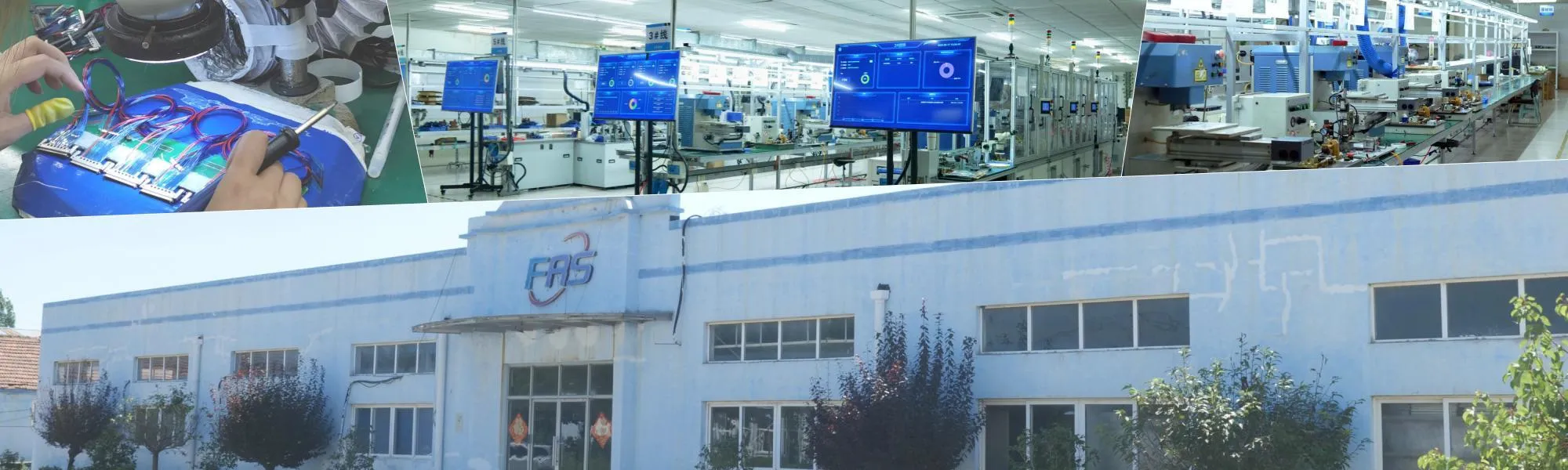
Micro Coaxial Cable factory-(FRS)
Micro coaxial cable is a miniaturized coaxial interconnect built to carry high‑speed, high‑frequency signals in extremely confined spaces. Each conductor is surrounded by a precise dielectric and a continuous outer shield, enabling tight impedance control and excellent electromagnetic shielding in a tiny form factor. Typical micro‑coax assemblies have an outer diameter of about 0.22–1.16 mm, with center conductors ranging from AWG 30–46(about 0.30 mmdown to 0.048 mm), and are widely used where size, signal integrity, and EMI control are critical, such as in mobile devices, medical imaging, and high‑speed test equipment. In many high‑speed links, each differential pair or signal lane is implemented as an individual micro‑coax to preserve isolation and impedance. This contrasts with FPC/FFC, which routes multiple conductors side‑by‑side with a common laminate dielectric and a single overall shield, making them more economical for lower‑speed or less noise‑sensitive paths
How micro coax and FPC differ in high‑speed signal applications
| Aspect | Micro coaxial cable | FPC/FFC |
|---|---|---|
| Shielding and crosstalk | Each signal has its own shield, suppressing intra‑ and inter‑pair coupling; excellent EMI control | Shared laminate and ground; more vulnerable to crosstalk and external EMI |
| Impedance control | Geometry tightly controlled for stable single‑ended or differential impedance (e.g., 50 Ω or 100 Ω differential) | Impedance depends on overall stackup and trace geometry; harder to control precisely at multi‑gigabit speeds |
| Insertion loss and bandwidth | Low loss with stable dielectric; practical links can reach multiple Gbps per lane and beyond | Higher loss at high frequency due to dielectric and line‑to‑line coupling; bandwidth limited by length and stackup |
| Mechanical behavior | Very small bend radius and good fatigue life; stable when flexed | Flexible but more prone to impedance shift and wear when repeatedly flexed; less predictable at high speed |
| EMI/EMC | Superior shielding continuity; easier to pass radiated emissions limits | Requires careful stackup, guard traces, and overall shielding; more iterations in EMC |
| Typical use | MIPI CSI‑2, LVDS, high‑speed camera/display links, RF modules, test fixtures | Low‑speed jumpers, non‑critical interconnects, cost‑sensitive assemblies |
These differences become decisive as data rates climb into the multi‑gigabit regime. For example, camera/display and embedded vision systems increasingly adopt micro‑coax to maintain eye‑opening and reduce EMI in compact, high‑density designs
When to choose micro coax and when FPC makes sense
Designing with micro coax for high‑speed success
Connector and ecosystem choices
Real‑world examples and achievable performance
Common pitfalls and how to avoid them
Conclusion
Micro coaxial cable is the high‑integrity choice when you must move multi‑gigabit signals through tight spaces with minimal loss and maximum EMI control. FPC/FFC remains valuable for cost‑sensitive, lower‑speed, or static connections. By understanding the physics, respecting the mechanical limits, and validating with real S‑parameters and eye diagrams, you can build high‑speed links that are both robust and manufacturable
Our factory offers high-quality products at competitive prices
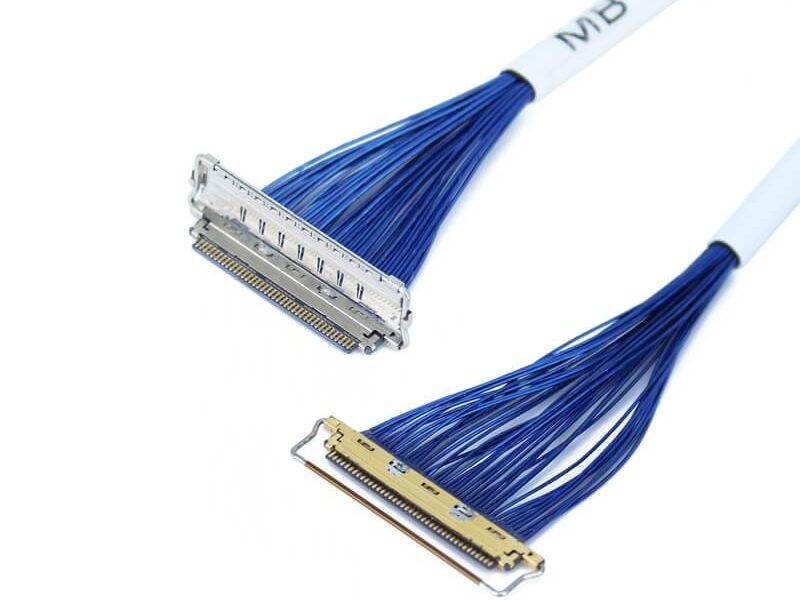
In LVDS (Low Voltage Differential Signaling) display systems, Micro-coaxial Cable (also referred to as Micro Coax Cable) stands out as an optimal solution for high-resolution, high-reliability signal transmission. Designed to meet the str.
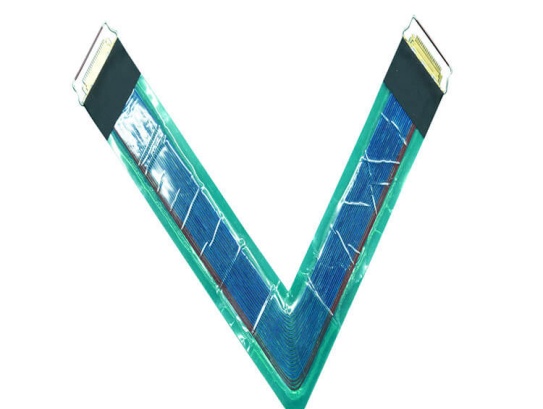
IntroductionThe High-Temperature Resistant Micro-Coaxial Cable is a cutting-edge connectivity solution engineered to deliver exceptional performance in extreme thermal environments. Combining precision engineering with advanced mate.
Feel free to reach out to us for any inquiries or orders