High Speed Micro Coaxial Cable for AI Vision: Lightweight for Portable AI Vision Devices - Micro Coaxial Cable factory-(FRS)
Micro Coaxial Cable factory-(FRS)
INFO
In AI vision systems, the demand for high-resolution, real-time image data is ever-increasing. From autonomous mobile robots (AMRs) and drones to handheld inspection devices and smart cameras, the interface between the image sensor and the AI processor is critical. While standards like MIPI CSI-2 are excellent for short connections on a PCB, they fall short for the extended, flexible, and reliable links needed in portable and mobile AI vision devices. This is where high speed micro coaxial cablebecomes essential.
This article explores the key requirements for high-speed micro coaxial cables in AI vision, their applications in portable devices, and how a specialized manufacturer like FRS can provide tailored solutions.
🎯 Why High Speed Micro Coaxial Cable is Non-Negotiable for AI Vision
AI vision involves more than just capturing an image; it requires a continuous, high-bandwidth data stream for tasks like object detection, depth estimation, and real-time tracking. Any data loss or latency can lead to incorrect decisions.
Bandwidth & Latency: High-resolution sensors (e.g., 4K, 12MP) at high frame rates (e.g., 60-120 fps) generate data streams of several Gbps. Micro coaxial cables are engineered to maintain signal integrity at these speeds over practical distances, which is crucial for applications like robot navigation or drone inspection where milliseconds matter.
EMI/EMC Immunity: Industrial and mobile environments are electrically noisy. The shielding in micro coaxial cables provides superior immunity against electromagnetic interference (EMI), ensuring a stable image feed for AI algorithms to function reliably.
Miniaturization & Routing: As devices become smaller, the internal space for cabling shrinks. Micro coaxial cables, with diameters as fine as 0.175–0.3 mm, allow for high-density, flexible routing in tight spaces, a key advantage over bulkier alternatives like CameraLink or CoaXPress cables.
🚀 Key Performance Indicators (KPIs) for AI Vision Cables
When selecting a high-speed micro coaxial cable, engineers should evaluate the following critical parameters:
Data Rate per Lane & Total Bandwidth
Gigabit Speeds: Many current solutions offer 4–8 Gbps per lane. Emerging standards like MIPI A-PHY are pushing this to 16 Gbps and beyond, supporting multi-gigabit, long-reach links over a single cable.
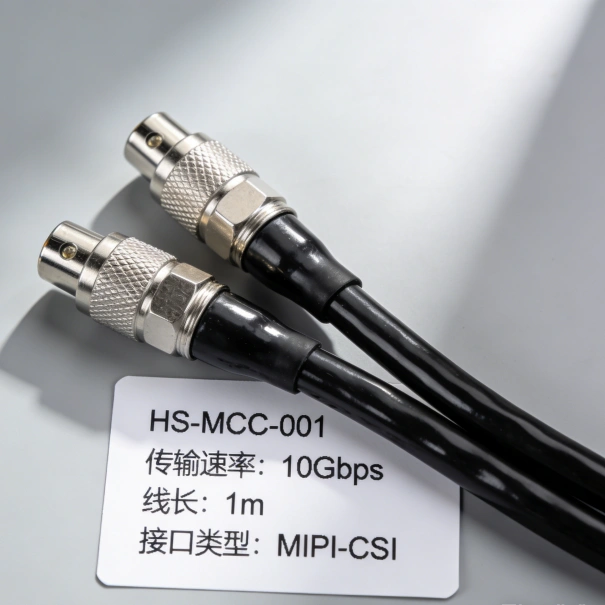
Aggregated Bandwidth: For multi-lane MIPI or sub-LVDS interfaces, the total bandwidth can easily exceed 10 Gbps, which the cable must support without signal degradation.
Cable Length vs. Signal Integrity
Short-Range (cm to 1m): FPC or micro-coax cables are common for board-to-board connections within a device.
Medium-Range (1m to 10m): Active cables or serializer/deserializer (SerDes) solutions like GMSL2 or MIPI A-PHY are used. For instance, some micro-coax solutions can reliably transmit 4-lane MIPI signals up to 1 meter, while GMSL2 can achieve 10-15 meters or more.
Long-Range (10m+): Standards like MIPI A-PHY are designed for this, supporting 8 Gbps per lane over tens of meters, even in noisy factory environments.
Bend Radius & Flex Life
For moving parts like robot arms or gimbals, the cable’s flex life is paramount. Cables with 10 million+ bending cycles are available, ensuring long-term reliability in dynamic applications.
Weight & Flexibility
In portable and drone applications, cable weight directly impacts battery life and payload. Lightweight designs, achieved through materials like aluminum conductors, can reduce weight by up to 30% compared to traditional cables, a significant benefit for mobile systems.
Connectors
Miniaturized & Reliable: Connectors like I-PEX, Hirose, or KEL USL series are industry standards, offering high pin density and secure locking mechanisms for high-vibration environments.
Ruggedized Options: For harsh outdoor or industrial use, automotive-grade connectors like FAKRA are used for their vibration resistance and IP67-rated sealing.
📱 Applications in Portable & Mobile AI Vision
Handheld & Wearable Devices
Use Case: Industrial inspection scopes, portable medical imaging tools, and AR/VR headsets.
Cable Needs: Ultra-lightweight, highly flexible cables with excellent EMI shielding for reliable data transmission in close proximity to the human body and other electronics.
Drones & UAVs
Use Case: Navigation, obstacle avoidance, and payload inspection (e.g., power lines).
Cable Needs: Extremely lightweight to reduce payload, high flex life for vibration, and long-distance capability (10-15m) for tethered or docking stations.
Autonomous Mobile Robots (AMRs) & AGVs
Use Case: Navigation, SLAM, and safety monitoring.
Cable Needs: Durable cables for continuous motion (e.g., in cable chains), long-distance links (10m+) to a central AI computer, and immunity to EMI from motors and other machinery.
Industrial & Collaborative Robots (Cobots)
Use Case: High-precision assembly, welding, and quality inspection.
Cable Needs: Cables that can withstand millions of bending cycles in articulated arms, often using a hybrid design with micro-coax for high-speed data and other wires for power and control.
🛠️ Engineering Tips for Optimal Cable Selection
Match the Standard: Ensure the cable’s impedance (typically 50Ω or 75Ω) and performance align with your interface standard (e.g., MIPI A-PHY, GMSL2, CoaXPress).
Simulate First: For high-speed designs, use signal integrity simulation tools to model the channel (cable, connectors, PCB traces) and avoid costly prototypes.
Prioritize Mechanical Design: In mobile applications, the cable’s bend radius and flex life are as critical as its electrical performance. Choose a mechanical layout that minimizes stress on the cable.
Plan for EMI/EMC Early: Use twisted-pair or shielded constructions and consider connector shielding to pass EMI/EMC certifications. Built-in diagnostics (like those in A-PHY) can also help monitor link health.
🤝 Partner with FRS for Your AI Vision Cable Needs
At FRS, we understand that every AI vision application has unique challenges. We specialize in designing and manufacturing high-performance high speed micro coaxial cableassemblies tailored to your specific requirements.
Custom Engineering: Our experienced engineers work with you from concept to production, providing expert guidance on material selection, impedance control, shielding, and mechanical design to ensure your system performs flawlessly.
Rugged & Lightweight Solutions: We offer a range of lightweight, flexible cables built to withstand the rigors of mobile and industrial environments, from high-flex robot cables to long-reach GMSL2/FAKRA harnesses.
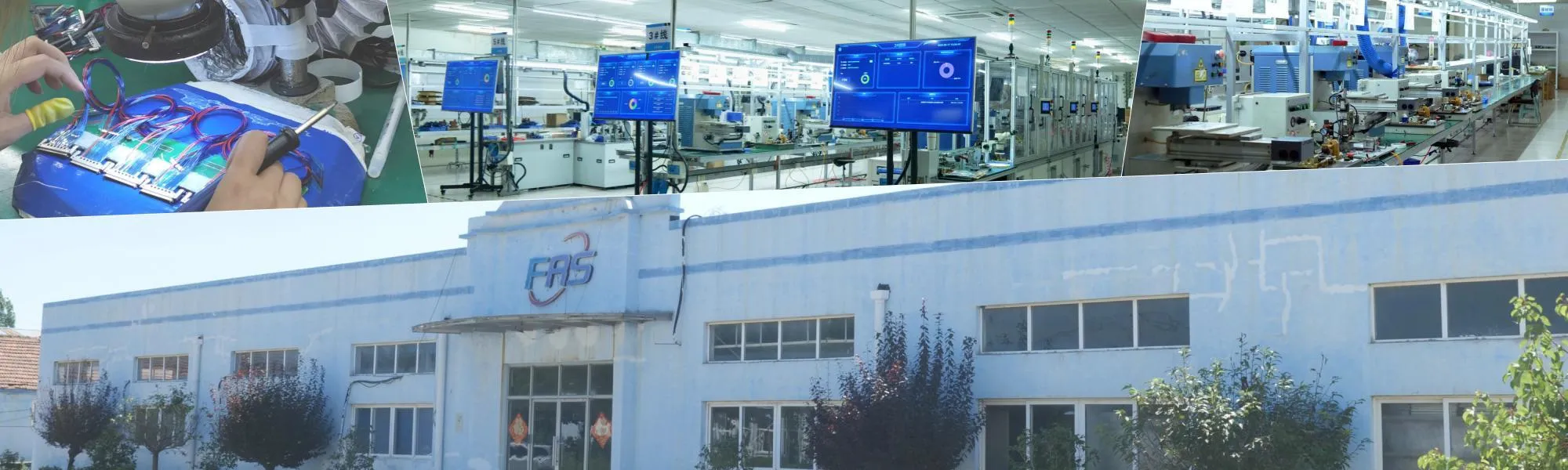
End-to-End Manufacturing: As a full-service provider, we manage the entire process—from cable extrusion and connector assembly to rigorous quality testing and reliable global delivery.
Whether you’re developing the next generation of inspection drones, a surgical robot, or a smart wearable device, FRS has the expertise and manufacturing capabilities to deliver the perfect high-speed interconnect solution for your AI vision system.
Contact FRS todayto discuss your project requirements and discover how our customized micro coaxial cable assemblies can give your AI vision devices the reliable, high-performance connectivity they need.
MRI machines are critical diagnostic tools in healthcare, relying on precision engineering to deliver accurate imaging results. At the heart of these systems are micro-coaxial cables, which transmit high-frequency signals with minimal ...
In the complex web of electrical and data systems that power modern commercial buildings, cable management is a critical yet often overlooked component. Cable trays and ladders serve as the backbone of organized, safe, and efficient cab...
Micro coaxial cables deliver critical signals in compact electronics, from medical devices and aerospace systems to smartphones and test equipment. Their tiny size belies their complexity and vulnerability. Installation errors are commo...
Coaxial cable assemblies are widely used in communication, aerospace, medical equipment, and other fields, and their connector performance directly affects signal transmission quality. Over time, dust, oil, oxidation, and other contamin...
Introduction:That dreaded moment: you notice interference in your video signal, crackling in your audio, or a complete drop in your network connection. Upon inspection, you find a nick, tear, or exposed wire in the outer shielding of yo...
Coaxial cables, a staple of wired communication since the 1930s, continue to thrive in modern technology despite competition from fiber optics and wireless solutions. Their unique design—combining high bandwidth, durability, and electro...
Coaxial cable assemblies are indispensable in industries like telecommunications, aerospace, automotive, and medical equipment. Their ability to transmit high-frequency signals with minimal interference directly determines the performan...
Introduction
Micro-coaxial cables are essential for transmitting high-frequency signals in compact spaces, but harsh environments with constant vibrations (e.g., aerospace, automotive, or industrial machinery) demand specialized desi...
The question of whether coaxial cable assemblies can be used in high-temperature settings is a critical one for industries ranging from aerospace and automotive to industrial manufacturing and energy exploration. The short answer is yes...
Micro-coaxial power lines pack impressive power transfer into tiny spaces. But pushing high voltages through these miniature channels creates a critical challenge: preventing dangerous electrical discharges and ensuring safe, reliable ...
The price of coaxial cables varies significantly across different models, influenced by design specifications, performance capabilities, and application requirements. Understanding these differences helps users make cost-effective decis...
Installing cables, whether for electrical systems, data networks, or telecommunications, can be a challenging task without the right tools. The right cable pulling tools not only simplify the process but also reduce the risk of damage t...
High-frequency micro coaxial cables are essential for connecting sensitive components in modern electronics like smartphones, radar systems, satellite communications, medical devices, and high-speed digital circuits. One of the most cri...
When setting up a CCTV system, choosing the right coaxial cable is crucial for ensuring optimal performance. Two commonly used cables in CCTV installations are RG6 and RG59. While they may look similar at first glance, there are signifi...
In the rapidly evolving landscape of defense, aerospace, and satellite communications, phased array radar systems stand as a cornerstone of modern technology. Unlike traditional mechanical-scan radars, phased array radars rely on thousa...
When engineers specify micro coaxial cable assemblies, one of the first and most critical questions is: “What impedance values can you actually achieve?”The answer determines signal integrity, return loss, and overall system performance...
Coaxial cable assemblies are critical components in countless electronic systems, from telecommunications and aerospace to medical devices and industrial machinery. These assemblies—comprising a central conductor, dielectric insulator, ...
The short answer is yes—but coaxial cable assemblies require specialized design, material selection, and mechanical optimization to maintain performance and reliability in high-vibration environments (e.g., aerospace, industrial automat...
In the relentless pursuit of higher bandwidth, lower latency, and greater density within modern data centers, the choice of cabling infrastructure is paramount. While fiber optics dominate for longer distances, within the racks and betw...
In the dynamic landscape of the global cable and wire industry, industry forums serve as pivotal platforms for knowledge exchange, technology showcase, and business collaboration. Recently, FRS Coaxial Cables Factory made a striking pre...
Coaxial cable assemblies are the backbone of countless industries, from telecommunications and aerospace to medical equipment and industrial manufacturing. They transmit high-frequency signals with minimal loss, making them indispensabl...
In the high-stakes environment of modern surgery, the endoscope serves as the surgeon’s eyes. As medical technology shifts toward 4K and even 8K resolution, the demand for flawless image transmission has never been higher. While the cam...
As 5G New Radio (NR) networks push into FR2 bands—spanning 24.25 GHz to 40 GHz and beyond—the performance of every interconnect in the RF front-end is under unprecedented scrutiny. Among these, the micro coaxial cable termination soluti...
When our factory’s coaxial cable was selected to be featured in the documentary *”Wires That Connect the World”*, it wasn’t just a moment of pride—it was a validation of the decades of dedication we’ve poured into crafting h...
1. Impedance in Micro Coaxial CablesImpedance, measured in ohms (Ω), defines the cable’s resistance to alternating current (AC) signals. Proper impedance matching minimizes signal reflections and ensures maximum power transfer.
St...
In the rapidly evolving fields of robotics and automation, the demand for high – performance components is ever – increasing. One such crucial component is the flexible coaxial cable. This article delves into the significanc...
We are excited to announce the release of our latest coaxial cable model, a product that embodies our commitment to innovation, quality, and meeting the evolving needs of the market.
In today’s rapidly advancing technological ...
The global micro-coaxial cable market is experiencing dynamic growth, driven by advancements in high-frequency signal transmission and miniaturized electronics. Recent research highlights key trends shaping this niche but critical secto...
Struggling with signal loss, distortion, or bandwidth limitations in your high-frequency applications? You’re not alone. As our world demands faster data transfer, higher resolution video, and more sophisticated wireless communica...
Micro-coaxial cables are the unsung heroes of our connected world. Packed into everything from cutting-edge smartphones and laptops to life-saving medical devices and high-frequency aerospace systems, they carry vital signals that power...
Imagine intricate electronic devices shrinking further, medical implants becoming smarter, and 5G networks reaching new heights of performance. At the heart of this miniaturization revolution lies a critical challenge: creating inc...
Autonomous vehicles (AVs) represent the cutting edge of transportation technology. They promise safer roads, reduced congestion, and unprecedented mobility. But beneath the sleek exteriors and sophisticated software lies a hidden, yet a...
Recently, our factory’s high-performance coaxial cable has been officially selected as a featured exhibit for the upcoming Shanghai International Industry Expo (SIIE) — a pivotal event that gathers top industrial brands, tech innovators...
1. Introduction to Micro-Coaxial Cables
1.1 What Are Micro-Coaxial Cables?
Micro-coaxial cables are compact, high-frequency transmission lines designed for precision signal delivery in space-constrained environments. Comprising a ...
IntroductionSpaceX’s ambitious satellite constellations, like Starlink, are revolutionizing global internet connectivity. But behind the scenes, a critical component is driving the success of these mega-constellations: micro-coaxial ca...
Imagine downloading a full HD movie in a blink, or medical scanners delivering crystal-clear images instantly during life-saving procedures. The relentless surge of data in our world – from streaming services and cloud computing to arti...
Choosing the right cable for your project can be confusing, especially when faced with terms like “micro coaxial” and “standard coaxial.” While both transmit signals efficiently, they serve very different purpose...
The Challenge with Traditional Micro-Coaxial Connectors
Micro-coaxial cables (often called “micro-coax”) are essential for high-frequency signal transmission in electronics, medical devices, and telecommunications. Howeve...
In the realm of wireless communication, wireless base stations serve as the vital hubs connecting devices to networks. And among the key components ensuring their smooth operation, coaxial cables play an indispensable role. This article...
Introduction
Modern airport security scanners rely on ultra-precise signal transmission to detect threats, from concealed weapons to explosive materials. At the heart of this technology lies an unsung hero: micro-coaxial cables. Thes...
OverviewMicro-Coax for HD Video is a cutting-edge coaxial cable engineered to deliver uncompromised high-definition video quality across professional and industrial applications. Designed for reliability, precision, and versatility,.
Meta Description: Discover our premium Flexible Micro-Coaxial Assemblies—engineered for high-frequency signal integrity, durability, and versatility in aerospace, medical, telecom, and robotics applications.
What Are Flexible .
Contact Us Micro Coaxial Cable factory-(FRS).
Feel free to reach out to us for any inquiries or orders