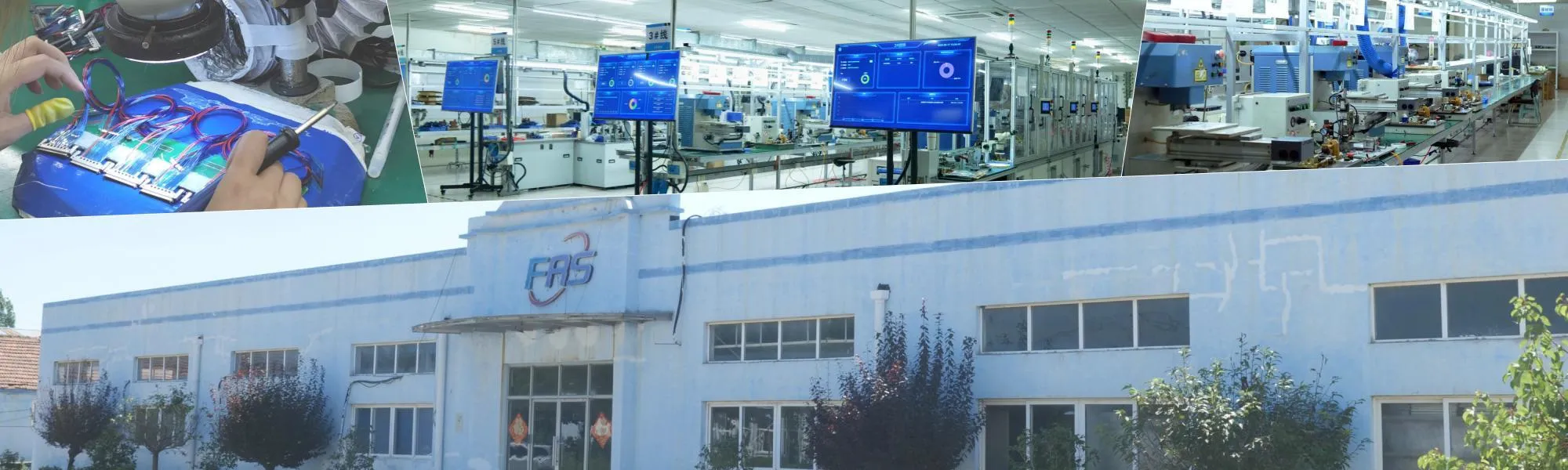
Micro Coaxial Cable factory-(FRS)
When sourcing a 0.3mm diameter micro coaxial cable supplier, the right partner can significantly impact your product’s signal integrity, reliability, and time-to-market. This guide provides a practical roadmap for B2B buyers, covering key parameters, application-specific considerations, and a supplier evaluation checklist.
1. Understanding 0.3mm Micro Coaxial Cables
These ultra-thin cables are designed for high-density, high-frequency signal transmission in space-constrained applications.
Definition: An ultra-thin coaxial cable with an outer diameter (OD) of approximately 0.3mm.
Construction: Comprises a center conductor, dielectric, shield, and jacket. The center conductor is often a fine stranded or single copper wire (typically AWG 36–46), with a dielectric like foamed PE or PTFE to minimize signal loss.
Key Features:
High Density: Ideal for tight spaces with many signal lines.
High-Frequency Performance: Suitable for high-speed differential signals (LVDS, eDP, USB, HDMI, RF) up to several GHz.
Mechanical Flexibility: Designed for bending and torsion in moving parts.
EMI Shielding: Essential for signal integrity in noisy environments.
2. Common Connector Interfaces
0.3mm micro coaxial cables are typically terminated with micro-coax connectors featuring a 0.3mm pitch. Common series include:
Hirose DF56 Series: Widely used for LVDS/EDP display cables in flat-panel TVs, monitors, and drone cameras. Available in 26P to 50P with a mated height as low as 1.25mm.
I-PEX MHF / 20634 / 2619 Series: Popular in laptop displays, medical imaging, and high-speed test equipment.
JAE, Molex, TE Micro-Fit Variants: Used for board-to-board or board-to-flex connections in industrial and automotive modules.
Tip: When requesting a quote, provide the exact connector series and part number(e.g., DF56-30P-0.3SD) to avoid confusion.
3. Typical Application Scenarios
Display & Video Transmission: For LVDS, eDP, and V-by-One signals in ultra-thin laptops, monitors, and VR/AR headsets. The fine pitch and high flexibility are crucial for hinge areas.
Drone & Camera Modules: Ideal for gimbal and 360° camera systems where cables must withstand constant vibration and repeated bending.
Medical Imaging: Used in endoscopes and portable ultrasound probes where the cable must be extremely thin, flexible, and biocompatible.
Industrial & Test Equipment: For high-density internal wiring in robotics, servo drives, and semiconductor ATE fixtures, where reliability under vibration and temperature cycling is critical.
4. Key Technical Parameters to Specify
To get accurate quotes and samples, provide your 0.3mm micro coaxial cable supplierwith these details:
Cable Outer Diameter (OD): Specify the target OD (e.g., 0.29mm, 0.32mm) and tolerance (e.g., ±0.02mm).
Conductor Size (AWG): Common choices are AWG 42, 44, and 46. Finer gauges (higher AWG number) offer more flexibility but higher attenuation.
Impedance: Most digital video uses 100Ω differential. RF applications may require 50Ω. Specify the tolerance (e.g., 100Ω ±10%).
Frequency Range & Data Rate: State the maximum frequency (e.g., 3GHz, 6GHz) and data rate (e.g., 5Gbps, 10Gbps) for insertion loss and return loss analysis.
Shielding Structure: Choose based on EMI needs. Options include single braid, dual braid, or braid + foil. Specify minimum shielding coverage (e.g., ≥85%).
Attenuation (Insertion Loss): Request data at your operating frequency (e.g., 1GHz, 3GHz, 6GHz) in dB/m or dB/100mm.
Operating & Storage Temperature: Specify the full range, such as -40°C to +85°C for industrial use or -20°C to +105°C for harsh environments.
Bending & Flex Life: For moving parts, specify the minimum bending radius (e.g., ≥3×OD) and required flex cycles (e.g., 10,000 cycles).
Connector & Pin Count: Provide the exact series, part number, and number of positions (e.g., DF56C-40S-0.3V, 40-pin).
Length & Tolerances: State the nominal length and tolerance (e.g., 150mm ±2mm).
Compliance & Flammability: Specify required standards like RoHS, REACH, UL, or IEC 62368.
5. Common Pitfalls & How to Avoid Them
Over-Specifying: Don’t demand the highest specs (e.g., 10GHz performance) if your application only needs 1-3GHz. This increases cost and lead time.
Ignoring Mechanical Stress: A cable that performs well statically may fail in a dynamic application. Always test for flex life under real-world conditions.
Mismatched Impedance: Using 50Ω cable for a 100Ω differential pair will cause signal reflections and degrade image quality. Ensure your supplier confirms the impedance.
Poor Documentation: Vague RF performance claims are a red flag. Insist on data sheets with test curves (S-parameters, TDR) traceable to a specific lot.
Underestimating Assembly Complexity: Micro-coax assembly is a specialized process. Choose a supplier with proven experience for your specific connector type to avoid high NPI costs and yield issues.
6. Supplier Evaluation Checklist
Use this list to qualify potential 0.3mm micro coaxial cable suppliers:
Proven Experience: Do they have a track record with your specific connector series (e.g., DF56, I-PEX) and application (e.g., drone, medical)?
Engineering Support: Can they provide pre-sales DFM (Design for Manufacturing) advice, stack-up simulations, or cross-references?
Certifications: Do they hold relevant certifications like ISO 9001, ISO 13485 (for medical), IATF 16949 (for automotive), and UL?
Quality Control: What are their in-process controls? Do they perform 100% electrical testing and TDR checks on every cable?
Testing Capabilities: Can they provide test reports for impedance, attenuation, shielding effectiveness, and flex life?
Sample Lead Time & Cost: For new projects, how quickly can they provide samples, and what are the costs?
MOQ & Scalability: What are the minimum order quantities, and can they scale to your full-volume production needs?
Communication: Is there a dedicated technical contact who understands your application and can provide timely updates?
7. Your Action Plan
Define Your Specs: Create a one-page document with all the parameters listed in Section 4.
Shortlist Suppliers: Identify 3-5 potential 0.3mm micro coaxial cable suppliersand send them your specification sheet.
Evaluate & Test: Compare their responses, request samples, and perform your own electrical and mechanical tests.
Select & Ramp: Choose the best supplier based on technical merit and commercial terms, and begin with a pilot run before full-scale production.
8. Why FRS is a Strong Choice for 0.3mm Micro Coaxial Cables
For B2B buyers, FRS combines manufacturing depth with engineering support tailored to 0.3mm micro coaxial cable projects. Here’s how FRS can add value:
Proven Manufacturing & Product Range
FRS manufactures standard micro-coaxial cable assemblies like the IPEX 20634-220T-02, designed for LVDS and other high-speed differential signals. With a track record in computer, LCD TV, communications, industrial control, and consumer electronics, FRS has the process maturity to deliver consistent 0.3mm cable assemblies in volume
Broad Connector & Pitch Compatibility
FRS supports a wide range of 0.3mm pitch micro-coaxial cable assembliescompatible with brands like JAE, Molex, Hirose, I-PEX, and more. This flexibility allows you to integrate their cables into existing designs or new projects with minimal re-engineering
Certified Quality Management
FRS operates under multiple certifications, including ISO 9001, IATF 16949, ISO 13485, UL, CE, and CCC. For medical device OEMs, ISO 13485is a key indicator of a supplier’s ability to meet stringent quality and documentation requirements
Engineering Support & Customization
FRS provides OEM/ODM servicesfor custom cable lengths, shielding, and connector combinations. Their engineering team can assist with 1:1 replacementsfor existing IPEX or Hirose cables or help develop new solutions from concept to pre-production, reducing your NPI risk
Scalability & Fast Lead Times
With a stated capacity of 50,000 pieces per monthand typical lead times of 7–14 days, FRS is equipped to support both prototyping and high-volume production, making them a stable long-term partner
Global Industry Recognition
FRS products are distributed on major platforms like Sekorm, giving international buyers easy access to datasheets, 3D models, and samples. This simplifies global procurement and shortens your supply chain
Professional Summary
Selecting the right 0.3mm diameter micro coaxial cable supplieris a strategic decision that goes beyond comparing datasheets. For high-density, high-frequency B2B applications, success depends on a supplier’s proven capability to manage micron-level tolerances, ensure impedance control, and guarantee mechanical reliability under real-world stress.
The most effective partners offer more than just manufacturing; they provide engineering collaboration, application-specific insights, and robust quality systems. FRS exemplifies this model, combining a wide product range, strong certifications, customization capabilities, and responsive engineering support.
By clearly defining your technical requirements and using a structured evaluation process, you can mitigate project risks, avoid costly redesigns, and establish a stable, long-term supply chain for your most demanding interconnect solutions with a partner like FRS.
Contact Us Right Now:
E-MAIL: sales@custom-cable-assemblies.com
Our factory offers high-quality products at competitive prices
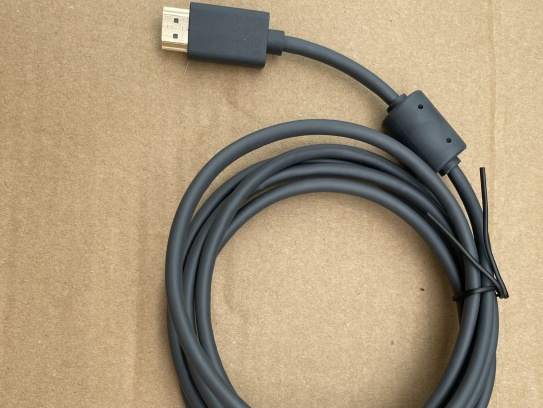
OverviewMicro-Coax for HD Video is a cutting-edge coaxial cable engineered to deliver uncompromised high-definition video quality across professional and industrial applications. Designed for reliability, precision, and versatility,.
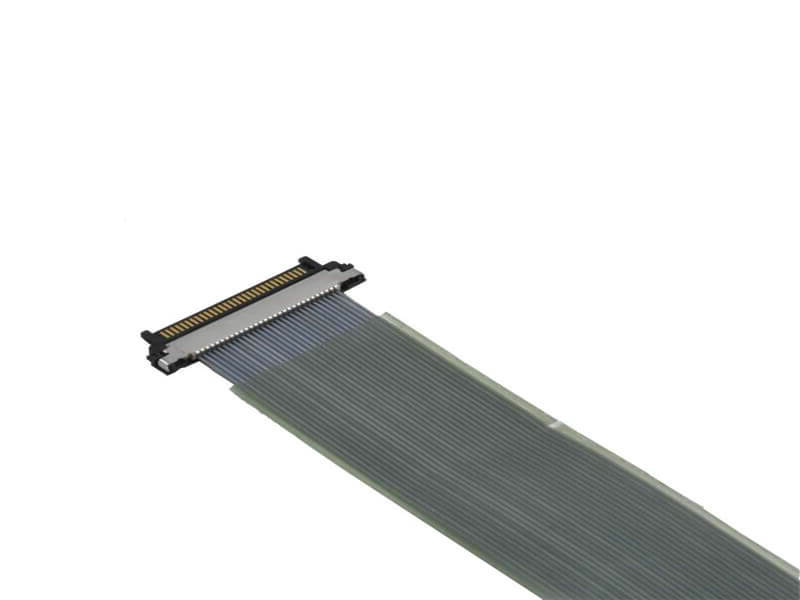
KEL’s Micro Coaxial Cable solutions are at the forefront of modern electronic connectivity, offering exceptional performance in high-speed data transmission, miniaturization, and reliability. These connectors are integral to various.
Feel free to reach out to us for any inquiries or orders