Micro-coaxial cable assemblies are the backbone of high-speed, space-constrained interconnects in modern electronics. For OEMs, securing a reliable manufacturing partner is critical to product performance and time-to-market. This guide details what to look for in a micro coaxial cable assembly OEM service, covering technical specifications, applications, and how to avoid common production pitfalls.
What Is a Micro Coaxial Cable Assembly?
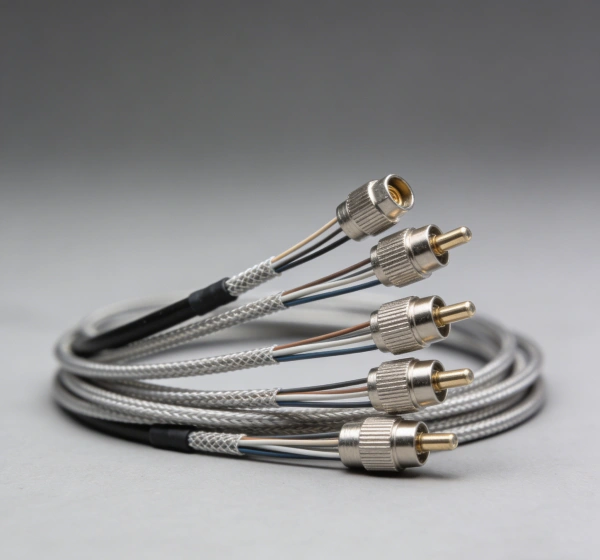
A micro coaxial cable assembly is a precision cable engineered for high-frequency signal transmission in extremely limited spaces. It typically consists of:
Center Conductor:Usually 32–46 AWG tinned copper wire.
Dielectric Insulation:Foam PE, PTFE, or FEP, which determines the cable’s impedance.
Shielding:A braided or spiral shield to block EMI/RFI.
Jacket:A thin outer layer (PVC, LSZH, or FEP) for protection.
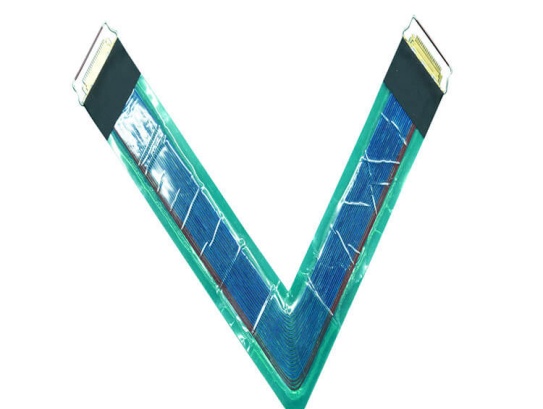
These components are terminated with fine-pitch connectors (0.25–0.5 mm pitch) and are 100% tested for electrical performance. This construction makes them ideal for high-density, flexible interconnects in medical, automotive, and consumer electronics .
Key Applications of Micro Coaxial Cable Assemblies
Micro-coax assemblies are essential in devices where space is at a premium and signal integrity is non-negotiable.
Consumer Electronics
Camera Modules:In smartphones and laptops, they connect image sensors to mainboards, handling MIPI/PCIe signals.
Foldable Devices & Hinges:Flexible micro-coax passes through hinges, enduring over 200,000 bends.
AR/VR Headsets:Transmit high-speed video and sensor data while keeping weight and bulk to a minimum .
Medical Devices
Endoscopes & Laparoscopes:Multiple micro-coax bundles transmit video from the tip while maintaining flexibility for navigation.
Ultrasound Probes:Require high-density bundles (sometimes >1,500 conductors) for signal integrity.
Catheters & Sensors:Ultra-thin coax (down to 46 AWG) links embedded sensors, often needing biocompatible materials and sterilization resistance .
Automotive & Industrial
ADAS Cameras:Used in parking and lane-assist cameras, requiring stable performance from -40°C to +105°C with excellent EMI shielding.
In-Vehicle Infotainment:Connects displays and cameras, often needing combined power and coax in one jacket.
Industrial Vision & Robotics:In factory automation, they connect high-speed cameras and sensors, demanding high flex-life and chemical resistance .
Typical OEM Technical Specifications
When sourcing, you will typically define or receive a specification sheet with these parameters:
What to Look for in a Micro Coaxial Cable Assembly OEM
Choosing the right partner goes beyond price. Here are key evaluation criteria:
Fine-Pitch Capability:Confirm they can reliably process your required pitch (e.g., 0.25 mm) and wire gauge (e.g., 46 AWG) .
Process Control:Ask for their defect rates for opens/shorts and their testing protocols (e.g., 100% automated testing) .
Material Traceability & Certifications:Ensure they use UL-recognized cables and can provide documentation for RoHS, REACH, and other standards .
Connectors & Tooling:A good OEM should have experience with major connector brands (e.g., I-PEX, Hirose) and possess the proper crimping and soldering tools .
Design Support:They should offer DFM (Design for Manufacturability) feedback on impedance control, bend radius, and strain relief to prevent issues before production .
Quality & Service:Look for clear warranty terms, responsive technical support, and transparent project management .
Common Pitfalls and How to Avoid Them
Proactively addressing these common issues can save significant time and cost.
Welding Defects (Opens/Shorts):Due to the tiny wire size, poor soldering is a major risk.
Solution:Ensure the OEM uses automated welding/termination equipment and performs 100% electrical testing .
Impedance Mismatch:Inconsistent stripping or dielectric damage leads to signal reflections.
Solution:Provide a clear impedance target (50/75 Ω) and require the OEM to use validated cable/connector combinations and controlled processes .
Mechanical Failures (Flex Life):Cables fail from fatigue at bend points or connector interfaces.
Solution:Specify the minimum bend radius, choose materials designed for high flex-life (e.g., FEP, PUR), and mandate proper strain relief design .
EMI Issues:Poor shielding can disrupt sensitive electronics.
Solution:Specify double shielding (foil + braid) and ensure 360° connector termination. Request shielding effectiveness test data for critical applications .
Supply Chain & MOQ Issues:Inconsistent quality or inability to scale production can halt your project.
Solution:Choose an OEM with multiple component sources, clear lead times, and transparent MOQs. Start with Engineering Test (EVT) and Design Validation Test (DVT) runs before mass production .
Request a Sample Build:Evaluate the sample for impedance, insertion loss, and mechanical fit before committing to mass production.
Validate Testing Protocols:Ensure the OEM performs 100% testing for opens/shorts and Hi-Pot, with documented results.
Plan for Flex & Strain Relief:Provide the expected bend radius and flex cycles. Let the OEM recommend the best cable and strain relief design.
Agree on Documentation:Confirm that you will receive test reports, material certifications, and reliable technical support.
Start Small, Then Scale:Begin with small pilot runs (EVT/DVT) to validate quality and process control before ramping up to mass production.
Final Summary
A high-quality micro coaxial cable assembly OEM service delivers more than just a cable; it provides a complete, reliable solution. This includes expert design support, strict process control, comprehensive testing, and dependable supply chain management. By focusing on a partner’s technical capabilities, quality systems, and collaborative approach, you can ensure your project meets its performance and reliability targets. Use this guide to ask the right questions and make an informed decision, turning a potential bottleneck into a competitive advantage.
Venturing beyond Earth’s protective magnetic shield means facing a relentless, invisible enemy: space radiation. For the intricate electronic systems powering satellites, rovers, and deep-space probes, this radiation isn’t j...
In the complex web of modern electronics and communication systems, signal integrity is the backbone of reliable performance. From the data centers powering global networks to the medical devices monitoring vital signs, and from aerospa...
In today’s technology-driven world, Coaxial Cable Assemblies serve as the backbone of signal transmission in countless industries—from telecommunications and aerospace to medical equipment and industrial automation. These assemblies, wh...
Forget Wi-Fi signals in the vacuum of space. Getting data from a rover on Mars, images from a telescope orbiting Jupiter, or commands to a lunar lander relies on a surprisingly fundamental technology: space-grade coaxial cable (coax)....
Coaxial cable assemblies are critical for transmitting high-frequency signals in applications like telecommunications, satellite TV, and industrial automation. Poor installation can lead to signal attenuation, interference, or even comp...
The question of whether coaxial cable assemblies can be modified after purchase is a common one among engineers, technicians, and hobbyists who work with RF (radio frequency), video, or data transmission systems. The short answer is: so...
The dream of a quantum internet – enabling ultra-secure communication, powerful distributed quantum computing, and unprecedented scientific discovery – is rapidly taking shape. While quantum processors and photonics capture headli...
Tangled cables snaking behind your desk, jumbled wires under the entertainment center, or unruly cords cluttering your workshop—these are common nuisances that not only look messy but also pose tripping hazards and make maintenance a ha...
The short answer is a resounding yes—coaxial cable assemblies are not only compatible with smart home devices but also play a crucial role in enhancing the performance, reliability, and stability of modern smart home ecosystems. As smar...
Micro coaxial connectors are essential components in modern electronics, enabling high-frequency signal transmission in compact devices. Here are the most common types:
1. MCX Connectors
Size: 30% smaller than SMB
Frequency: 0...
Micro coaxial cables are essential workhorses in modern electronics, carrying high-frequency signals in applications like 5G phones, medical devices, radar systems, and high-speed data links. As signals travel faster, a phenomenon calle...
Micro coaxial cables are the essential workhorses carrying signals in our compact electronics – from the latest smartphones and medical devices to intricate aerospace systems. But what makes one micro coax better than another? Often, th...
Meta Description: Discover the differences between shielded and unshielded micro coaxial cables. Learn which type suits your project for optimal performance, EMI protection, and cost-efficiency.
When selecting micro coaxial ...
In the dynamic landscape of the global cable and wire industry, industry forums serve as pivotal platforms for knowledge exchange, technology showcase, and business collaboration. Recently, FRS Coaxial Cables Factory made a striking pre...
Difficult wire runs present unique challenges in electrical installations, often characterized by tight conduits, multiple bends, extended lengths, or abrasive surfaces. In industrial settings, for instance, wires may need to navigate t...
1. Introduction: The Importance of Informed Decision-Making in Coaxial Cable Assemblies
Coaxial cable assemblies are critical components in industries ranging from telecommunications and aerospace to industrial automation, ensuring r...
When designing cable systems for aircraft, satellites, and spacecraft, engineers often search for information on “high temperature resistant micro coaxial cable for aerospace”. This article explains what these cables are, why they are c...
Micro coaxial cables are widely used in various electronic devices due to their excellent signal transmission capabilities and compact size. However, soldering micro coaxial cable connections can be a tricky task, especially for beginne...
Coaxial cable assemblies are critical for transmitting high-frequency signals in industries like telecommunications, aerospace, and medical equipment. Physical damage—such as sheath cracking, connector breakage, or internal conductor di...
In the intricate web of wireless communication systems, coaxial cable assemblies serve as the critical lifeline, bridging transmitters, receivers, antennas, and other key components. Their role in ensuring reliable signal transmission—f...
In the realm of wireless communication, wireless base stations serve as the vital hubs connecting devices to networks. And among the key components ensuring their smooth operation, coaxial cables play an indispensable role. This article...
In an era where data breaches and signal interception pose existential threats to businesses and critical infrastructure, the choice of transmission medium is no longer a matter of convenience—it is a cornerstone of network security. Wh...
IntroductionArctic research stations face extreme cold, where temperatures plummet below -50°C. Standard electronics often fail under such conditions, disrupting critical data collection. To solve this, scientists now rely on cold-resis...
In an era where reliable signal transmission and safety are paramount across industries, coaxial cable manufacturers have prioritized advancements in safety performance. This article explores the latest upgrades in coaxial cable technol...
High-Frequency Performance (Up to 110+ GHz)Micro coaxial cables are designed to transmit signals at frequencies far exceeding traditional coaxial cables, making them vital for cutting-edge wireless and millimeter-wave technologies.
...
In the competitive landscape of the coaxial cable industry, customer satisfaction stands as the cornerstone of business success. For coaxial cable customers, encountering issues with products or services can be frustrating, and the way ...
For enterprises that rely heavily on coaxial cables, prolonged delivery time can bring about a series of troubles, such as delayed projects and increased costs. However, the recent logistics reform has brought good news to the industry,...
The demanding environments of oil and gas pipelines require technology that doesn’t just perform, but does so safely and reliably, especially under extreme conditions. Among the unsung heroes ensuring data integrity and vital comm...
(Note: Replaced a placeholder with a hypothetical automaker name for concreteness and potential search relevance. Could easily substitute Ford, GM, VW, etc.)
Headline: Breaking: Toyota Patents Revolutionary Micro-Coaxial Wiring ...
Understand Your ApplicationThe first step in choosing a coaxial cable is identifying its primary purpose:
TV/Antenna Signals: RG6 cables are ideal for satellite TV, cable TV, and digital antennas due to their high shielding an...
Coaxial cables are indispensable components in numerous systems, ranging from communication networks to home entertainment setups, as they play a vital role in transmitting signals stably and efficiently. To ensure their long-term relia...
In today’s hyper-connected world, coaxial cables remain the backbone of reliable signal transmission across industries—from telecommunications and broadcasting to data centers and home entertainment. As technology evolves, so do the dem...
Micro-coaxial connectors are essential for high-frequency signals in devices like smartphones, WiFi routers, and medical equipment. A single faulty solder joint can cause frustrating signal loss, data drops, or device failure. Don’t let...
When designing thin, high-performance electronics, the micro coaxial cable with I-PEX 20373 connectoris a critical solution for routing high-speed differential signals like LVDS, eDP, and MIPI in ultra-compact spaces. This guide explain...
In an era defined by rapid technological advancements and insatiable demand for high-speed connectivity, the coaxial cable production sector is undergoing a transformative shift. As industries ranging from telecommunications to aerospac...
When our factory’s coaxial cable was selected to be featured in the documentary *”Wires That Connect the World”*, it wasn’t just a moment of pride—it was a validation of the decades of dedication we’ve poured into crafting h...
Modern vehicles are evolving into complex networks of sensors and high-speed data links. At the heart of this transformation is the anti-interference micro coaxial cable, a critical component for ensuring the reliable operation of Advan...
In the rapidly evolving fields of robotics and automation, the demand for high – performance components is ever – increasing. One such crucial component is the flexible coaxial cable. This article delves into the significanc...
In agricultural monitoring systems, reliable data transmission is key to making informed decisions about crop health, soil conditions, and equipment performance. Among the various transmission options, coaxial cables stand out for their...
Telecommunications and 5G NetworksMicro coaxial cables play a pivotal role in high-frequency communication systems:
5G mmWave Infrastructure:Used in base stations, small cells, and antennas for transmitting 24–100 GHz mmWave sig...
IntroductionThe High-Temperature Resistant Micro-Coaxial Cable is a cutting-edge connectivity solution engineered to deliver exceptional performance in extreme thermal environments. Combining precision engineering with advanced mate.
H1: Precision Instrument Micro-Coax – Engineered for Critical Signal Integrity
Meta Description: Discover Precision Instrument Micro-Coax: Miniature coaxial cable solution optimized for high-frequency signal transmissio.
Contact Us Micro Coaxial Cable factory-(FRS).
Feel free to reach out to us for any inquiries or orders