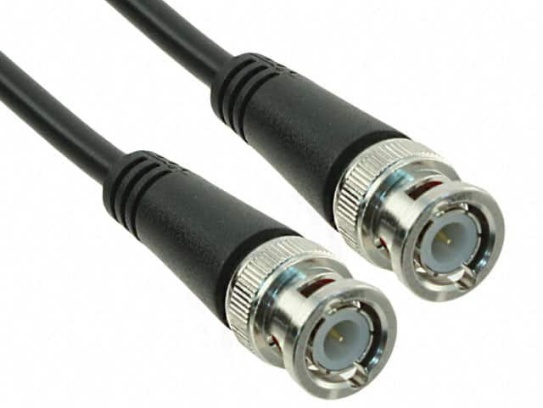
When shopping for coaxial cables, one of the most common questions is: “How much does one meter of coaxial cable cost?” While prices vary based on factors like quality, type, and brand, this guide breaks down everything you need to know to find a reliable and cost-effective solution.
Understanding Coaxial Cable Basics
Coaxial cables are widely used for transmitting audio, video, and data signals. They’re essential for TV setups, internet connections, and radio systems. The cost per meter depends on the following factors:
Cable Type:
RG6: The most common type for TV and internet (cost: 0.50–0.50–0.50–2 per meter).
RG58: Used for radio frequencies and short-distance applications (0.30–0.30–0.30–1.50 per meter).
RG174: Thin, flexible cables for tight spaces (0.80–0.80–0.80–3 per meter).
Material Quality:
Copper-core cables offer better signal quality but cost more (1–1–1–3 per meter).
Copper-clad aluminum (CCA) is cheaper but less durable (0.30–0.30–0.30–1 per meter).
Shielding:
Single-shielded cables are affordable (0.50–0.50–0.50–1.50 per meter).
Quad-shielded cables reduce interference but cost more (2–2–2–5 per meter).
Brand Reputation:
Premium brands like Belden or Commscope charge 20–50% more for guaranteed performance.
Average Cost of Coaxial Cable per Meter
Here’s a quick price breakdown for popular coaxial cables:
Type
Price Range (Per Meter)
Basic RG6
0.50–0.50 – 0.50–1.50
High-End RG6
1.50–1.50 – 1.50–3.00
RG58 (Standard)
0.30–0.30 – 0.30–1.00
RG174 (Flexible)
0.80–0.80 – 0.80–3.00
Note: Bulk purchases (e.g., 50–100 meters) often reduce the per-meter cost by 10–30%.
Overview and definition
Ultra-fine micro coaxial cable with a nominal 0.25 mm outer diameter (OD)is a miniature coaxial interconnect built to carry high‑speed, high‑frequency signals in extremely space‑constrained environments. It pr...
Micro coaxial cables – the tiny heroes powering high-speed signals in our electronics – are constantly evolving. As devices become more compact, powerful, and connected, these essential interconnects face new demands. Let’s explor...
FAQs About Micro Coaxial Cable MaintenanceQ: How often should I inspect micro coax cables?A: Inspect every 3–6 months in standard environments, or monthly in high-stress settings (e.g., industrial machinery).Q: Can I repair a damage...
Overview and definition
Medical grade micro coaxial cable for ultrasound probes is a highly miniaturized, high‑density interconnect that carries high‑frequency ultrasound signals between the probe’s piezoelectric array and the imagin...
Coaxial cable assemblies are critical components in industries ranging from telecommunications and aerospace to medical equipment and industrial automation. Their ability to transmit high-frequency signals with minimal interference depe...
Crimping micro coaxial connectors (like MMCX, MCX, or SMP) is essential for reliable signals in devices such as Wi-Fi routers, drones, GPS units, and smartphones. Proper crimping ensures strong connections without signal loss. Follow th...
In the intricate world of modern electronics, where signals zip around at lightning speeds, the humble cable plays a starring role. Especially critical are micro-coaxial cables – those thin, often overlooked wires connecting every...
IntroductionQuantum computing represents the next frontier in computational power, promising breakthroughs in cryptography, material science, and optimization. However, the extreme environments required for quantum systems—specifically ...
In the highly competitive coaxial cable market, after – sales service has gradually become a key factor for enterprises to gain an advantage. However, the traditional after – sales service system has exposed many shortcoming...
In the era of wireless connectivity and on-the-go technology, portable devices have become indispensable tools in both professional and personal life. From handheld communication radios and medical monitors to drones, VR headsets, and p...
Getting those critical radio frequency (RF) signals – whether in your satellite communication equipment, medical scanner, drone control link, or tiny IoT sensor – from point A to point B without degradation is non-negotiable...
Choosing the right conductor material is critical for the performance and reliability of micro coaxial cables, especially in demanding high-frequency applications. Silver-plated copper (Ag/Cu) and bare copper are the two primary options...
IntroductionMedical devices demand unparalleled precision, reliability, and safety. Off-the-shelf cables often fail to meet these stringent requirements, making custom industrial cable assemblies essential for seamless performance. Here...
Micro-coaxial cables are the silent workhorses inside countless electronic devices and systems, transmitting high-frequency signals reliably – until humidity strikes. If you’ve ever encountered signal loss, noise, or complete failure wi...
Coaxial cables are vital for transmitting high-frequency signals in various applications, from home TV setups to professional communication systems. Proper maintenance and care can significantly extend their lifespan, ensure consistent ...
Micro coaxial cables are the lifelines of modern electronics, transmitting critical signals in devices from medical implants to aerospace systems and industrial robots. But place them near motors, power lines, wireless transmitters, or ...
Frequency Range and BandwidthMicro coax typically operates in DC to 40+ GHz ranges. Key considerations:
Cutoff Frequency: Determined by the cable’s inner diameter (ID) and dielectric material. For example:0.81mm ID PTFE cable...
Last week, a highly anticipated online Q&A session on coaxial cables was successfully held, attracting hundreds of industry professionals, DIY enthusiasts, and individuals seeking to upgrade their home networks. The session featured...
Coaxial cables have long been the backbone of various communication and transmission systems, playing an indispensable role in ensuring stable signal transmission. In recent years, with the continuous development of technology, the dema...
Confused by technical jargon like “low-loss phase-stable micro-coaxial cable”? You’re not alone. This specialized cable plays a vital role in high-frequency electronics, but its name can be intimidating. Let’...
In the modern retail landscape, a robust and reliable network is the backbone of seamless operations, enhanced customer experiences, and efficient management. Shopping malls, as bustling hubs of commerce and entertainment, demand networ...
Introduction: The Battlefield Connectivity Imperative
Modern warfare demands unprecedented mobility from soldiers, who routinely carry 15+ kg of electronic gear. Traditional coaxial cables force critical compromises between durabili...
IntroductionQuantum computing is no longer a futuristic concept—it’s reshaping industries today. As this groundbreaking technology advances, it demands equally innovative hardware solutions. One surprising area seeing rapid evolution? ...
Coaxial cables are the unsung heroes of countless signal transmission systems, from cable television and satellite communications to security cameras and radio frequency (RF) networks. These cables are designed to carry high-frequency s...
In the realm of microwave radio communication, where signal integrity, compactness, and reliability are paramount, micro-coaxial cables have emerged as a critical component. Microwave radio systems operate at high frequencies ranging fr...
In the ever – evolving landscape of traffic management systems, the role of reliable communication infrastructure cannot be overstated. Coaxial cable has emerged as a crucial component in enabling the seamless operation of various...
When working with delicate electronics or high-frequency signal applications, precision is non-negotiable. For 0.81mm micro-coaxial cables—commonly used in medical devices, aerospace systems, and telecommunications—a reliable crimping t...
In the realm of radio frequency (RF) systems, where precision and reliability are paramount, micro-coaxial cables have emerged as a critical component for transmitting high-frequency signals with minimal loss and interference. These com...
In the dynamic world of modern manufacturing, multi-robot assembly lines represent the pinnacle of efficiency, speed, and precision. These complex systems, where multiple robotic arms collaborate seamlessly, demand flawless communicatio...
In modern technology, micro coaxial cables are vital for seamless data transmission and signal integrity. With their concentric design, they handle high-frequency signals with low loss and interference. As tech advances, their demand su...
For ham radio operators and amateur communicators, the coaxial cable is far more than a “connecting wire”—it is the lifeline of signal integrity. A poorly chosen or installed coaxial cable can lead to significant signal loss...
Coaxial cables have been a cornerstone of wired communication systems for decades, prized for their ability to transmit high-frequency signals with minimal interference. From broadcasting and telecommunications to military and aerospace...
Coaxial cables are a fundamental component in modern communication systems, widely used in applications ranging from television broadcasting to computer networking. The model numbers assigned to coaxial cables are not arbitrary; they en...
Superior Electromagnetic Interference (EMI) ResistanceThe primary purpose of shielding in coaxial cables is to block external EMI and prevent internal signal leakage.
How It Works:The shielding layer acts as a Faraday cage, abso...
Our factory’s coaxial cable R&D team has recently clinched a prestigious industry award, a well-deserved recognition of their relentless efforts and outstanding innovations in the field.
The award, presented by a leading au...
Overview and definition
A micro coaxial cable with an I-PEX 20373 connector is a miniaturized, shielded interconnect built to carry high‑speed differential or single‑ended signals between tightly spaced PCBs or modules. The I‑PEX 203...
(Note: Replaced a placeholder with a hypothetical automaker name for concreteness and potential search relevance. Could easily substitute Ford, GM, VW, etc.)
Headline: Breaking: Toyota Patents Revolutionary Micro-Coaxial Wiring ...
In the realm of modern connectivity, long-distance cable runs are a fundamental aspect of various industries, from telecommunications and networking to audio-visual setups. However, as signals travel over extended cable lengths, they en...
IntroductionHigh-frequency micro-coaxial cables are critical components in modern electronics, enabling reliable signal transmission in applications like telecommunications, medical devices, aerospace systems, and high-speed data networ...
Selecting the right dielectric material for micro coaxial cables is critical for high-frequency performance, reliability, and cost-effectiveness. Polytetrafluoroethylene (PTFE) and Polyethylene (PE) are the two dominant contenders. Unde...
Meta Description: Discover the advanced features and benefits of Industrial Micro-Coaxial Wiring—engineered for precision, durability, and high-speed signal transmission in industrial environments.
What is Industrial Micro-Co.
Micro Coaxial Cable: High-Quality Solutions for Precision Applications
Micro coaxial cables are essential components in high-performance electronic applications, providing reliable signal transmission in compact and flexible designs. A.
Contact Us Micro Coaxial Cable factory-(FRS).
Feel free to reach out to us for any inquiries or orders