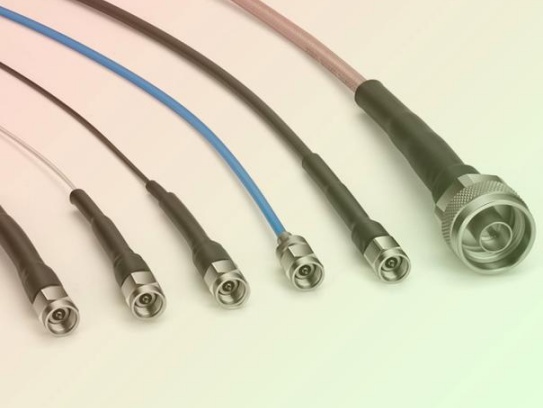
In the demanding arenas of defense, aerospace, and industrial applications, reliability isn’t optional – it’s mission-critical. Equipment deployed on battlefields, aboard aircraft, within satellites, or on rugged factory floors must perform flawlessly under punishing conditions. When it comes to transmitting vital signals and power, Military-Grade Micro-Coaxial Cables represent the pinnacle of resilience, explicitly designed to withstand extreme environments where standard cables would rapidly fail. This article explores why these specialized cables are the indispensable backbone of high-stakes connectivity.
Confronting the Harshest Conditions: What “Extreme” Demands
Extreme environments subject cables to a brutal combination of stresses:
Extreme Temperatures: Scorching heat inside jet engine bays or electronic enclosures (-65°C to +200°C+ range common). Bitter cold during arctic operations or high-altitude flight. Rapid thermal cycling causes expansion, contraction, and material degradation.
Intense Vibration & Shock: The relentless shaking experienced on armored vehicles, rocket launches, heavy machinery, or during weapon deployment can fracture conductors and insulation.
Aggressive Chemicals & Fluids: Exposure to hydraulic fluids, jet fuels, solvents, de-icing agents, salt spray, and industrial corrosives can dissolve or swell standard cable insulation and jackets.
Abrasion & Crush: Routed through tight spaces, bulkheads, or heavy equipment, cables face constant scraping, pinching, and crushing forces.
High Humidity & Moisture Ingress: Operation in tropical climates, maritime settings, or exposure to washdowns necessitates impervious sealing against moisture, preventing shorts and corrosion.
Intense Electromagnetic Interference (EMI): Proximity to powerful radar, communication systems, motors, and electronic warfare requires superior shielding to prevent signal disruption or leakage.
Standard commercial coaxial cables simply lack the engineered solutions to survive this onslaught.
The Fortress Within: Engineering Secrets of Military-Grade Micro-Coax
Military-grade micro-coax doesn’t just happen; it’s meticulously engineered for survival:
Advanced Dielectrics: Utilizing high-performance fluoropolymers (e.g., PTFE, FEP, PFA) or cross-linked polymers that maintain stable electrical properties across extreme temperature ranges (-65°C to +200°C or beyond) and resist chemical attack.
Robust Shielding: Triple shielding is often standard – combining braided shields (for flexibility and strength) and foil shields (for 100% coverage) – achieving exceptional EMI/RFI rejection (typically >90dB attenuation). This prevents external noise intrusion and internal signal leakage.
Armor-Like Jacketing: Outer jackets made from specialized materials like irradiation-crosslinked polymers offer extreme resistance to:
Abrasion (exceeding MIL-DTL-17 specs)
Fluids & Chemicals (Passing stringent tests like MIL-STD-202 Method 215 for fluids, ASTM D471 for oil/fuel immersion)
UV Radiation & Ozone (Ensuring longevity in outdoor/aerospace exposure).
Superior Phase Stability: Maintaining precise electrical length and signal timing characteristics despite temperature fluctuations is crucial for radar, phased arrays, and high-speed data links.
Controlled Impedance Precision: Tighter tolerances (e.g., 50 Ω ±1 Ω) than commercial coax ensure signal integrity at high frequencies (GHz range).
MIL-Spec Compliance: Designed and tested rigorously to meet or exceed demanding standards like MIL-DTL-17 (covering coaxial cables) and MIL-STD-202 (environmental test methods).
Where Resilience is Non-Negotiable: Key Applications
The ability of military-grade micro-coax to withstand extreme environments makes them vital in:
Ground Vehicles & Command Centers: Battlefield comms (tactical data links, SATCOM), surveillance systems (video feeds, radar), power distribution in EMI-heavy environments (vibration, shock).
When equipment operates at the edge of technological capability in extreme environments, the cables connecting it cannot afford to be the weakest element. Military-Grade Micro-Coaxial Cables, built to rigorous standards with premium materials and advanced construction, provide the proven solution. Their engineered capacity to withstand extreme temperatures, vibration, EMI, chemicals, and mechanical abuse makes them not just a component, but a strategic asset ensuring mission success and reliable operation where failure is not an option. For demanding applications across defense, aerospace, and industry, specifying these cables is an investment in performance, resilience, and ultimate dependability.
FAQ: Military-Grade Micro-Coax in Extreme Environments
Q: What truly defines a cable as “Military-Grade”?
A: Beyond robustness, it means design and testing comply with strict military specifications (like MIL-DTL-17, MIL-STD-202), guaranteeing performance against defined environmental, electrical, and mechanical requirements verified by standard test methods.
Q: Are MIL-Spec cables only for military use?
A: No! While developed for defense, their superior reliability makes them ideal for any mission-critical application facing extreme environments: aerospace, space, heavy industrial automation, oil & gas exploration, high-performance automotive, and medical robotics.
Q: How does shielding impact performance in harsh environments?
A: High-performance multi-layer shielding is crucial. It prevents Electromagnetic Interference (EMI) from external sources (radar, motors) from corrupting signals and stops sensitive signals within the cable from leaking out (important for security in military contexts). This is vital for signal integrity amidst electrical noise.
Q: Why are temperature ratings so critical?
A: Extreme heat accelerates aging and can melt insulation. Extreme cold makes plastics brittle. Military-grade cables use fluoropolymers or cross-linked materials maintaining flexibility and electrical stability across wide ranges (commonly -65°C to +200°C), ensuring performance from arctic cold to jet engine heat.
Q: How are these cables tested for extreme conditions?
A: They undergo rigorous testing mandated by specs like MIL-STD-202: prolonged exposure to fluids (oil, fuel), temperature cycling, humidity chambers, intense vibration/shock simulations, flexing tests, and abrasion resistance trials – all verifying survival in the target extreme environments.
In the world of electrical and networking installations, coaxial cables play a crucial role. They are widely used in applications such as cable television, satellite TV, CCTV systems, and high – speed internet connections. When it...
In today’s interconnected world, electronic devices and systems rely on stable signal transmission to function effectively. However, electromagnetic interference (EMI)—unwanted electrical or magnetic energy that disrupts signal integrit...
When it comes to sourcing coaxial cable assemblies for your project—whether it’s for telecommunications, aerospace, industrial automation, or consumer electronics—one of the most critical questions you’ll ask is: What is the cost per fo...
High-frequency applications, such as telecommunications, medical devices, and aerospace systems, demand cables that can transmit signals with minimal loss, interference, and distortion. One common question engineers and designers ask is...
Robotic arms are marvels of modern engineering, designed to perform precise, repetitive tasks in industries like manufacturing, healthcare, and automation. At the heart of their functionality lies their wiring system, particularly flex...
In the fast-paced world of telecommunications, where reliable, high-speed signal transmission is the backbone of global connectivity, Coaxial Cable Assemblies stand as a critical component. Unlike standard cables, these assemblies—compr...
Introduction: The Unsung Heroes of Clear Diagnosis
When we marvel at the detailed images produced by MRI machines, CT scanners, or ultrasound devices, we often focus on the sophisticated software and powerful magnets or transducers. ...
Coaxial Cable Assemblies are the backbone of reliable signal transmission in industries ranging from telecommunications and aerospace to medical equipment and industrial automation. Unlike generic cables, these assemblies—comprising a c...
In the complex web of modern electronic systems, ensuring seamless signal compatibility is a fundamental challenge. Signals come in diverse forms—analog and digital, with varying frequencies, amplitudes, and protocols—yet they often nee...
In the realm of signal transmission, shielded coaxial cable assemblies stand out as a reliable and high-performance solution across various industries. Unlike unshielded alternatives, these assemblies integrate a protective shielding la...
Introduction
Micro coaxial cables are indispensable in high-frequency signal transmission for aerospace, satellite systems, nuclear facilities, and medical equipment. However, ionizing radiation (gamma rays, X-rays, cosmic rays, char...
In the rapidly evolving technological landscape, electromagnetic interference (EMI) has become a major issue as electronic devices proliferate. Shielded coaxial cables are a proven solution, ensuring reliable signal transmission by prev...
In modern embedded vision, the micro coaxial cableis the critical link that determines image quality, system reliability, and overall product size. As embedded camera systems evolve—from tiny IoT sensors to multi-camera rigs on autonomo...
Bundling micro coaxial cables is essential for installations requiring high-density connectivity, such as in medical devices, aerospace systems, robotics, or telecommunications equipment. Incorrect bundling can cause signal interference...
In the realm of signal transmission, the presence of noise is a persistent challenge that can severely compromise the integrity and quality of signals. Noise can stem from various sources such as electromagnetic interference (EMI), radi...
Micro coaxial cables are essential workhorses in modern electronics, carrying high-frequency signals in applications like 5G phones, medical devices, radar systems, and high-speed data links. As signals travel faster, a phenomenon calle...
In recent years, our factory has achieved a significant reduction in the production cost of coaxial cables through a series of targeted measures. These efforts not only enhance our market competitiveness but also bring tangible benefits...
In the modern era of information transmission, coaxial cables have long been a crucial component in various fields, from home entertainment systems to large – scale industrial communications. User feedback, as a direct reflection ...
In today’s world, cables are the lifelines of our electrical and communication systems. They transmit power, data, and signals, enabling the smooth operation of countless devices and infrastructure. However, cables are constantly ...
Coaxial cables are indispensable in modern communication, security surveillance, and broadcast systems, enabling stable signal transmission in homes, enterprises, and industrial sites. As manufacturers expand globally—penetrating market...
Coaxial cables are indispensable in high-speed data transmission, industrial automation, and telecommunications infrastructure—their performance directly determines the reliability of end-use systems. However, traditional coaxial cable ...
In the realm of connectivity solutions, few components are as critical as coaxial cables. They serve as the backbone for transmitting high-frequency signals with minimal loss, making them indispensable in industries ranging from telecom...
In today’s high-speed, high-frequency electronics landscape, reliable signal transmission is non-negotiable. Custom micro coaxial cablesare the critical link that ensures signal integrity, electromagnetic compatibility (EMC), and long-t...
The relentless drive towards smaller, thinner, and lighter consumer electronics isn’t just an aesthetic preference – it’s a fundamental shift reshaping the internal landscape of our devices. This relentless miniaturization ...
If you’re setting up a satellite dish, having the right wiring kit can make all the difference. A satellite dish wiring kit with premium cables isn’t just an add-on—it’s a key part of ensuring reliable signal, clear reception, and long-...
In the world of virtual reality (VR), a seamless and immersive experience relies heavily on stable, high-speed data transmission. While many focus on headsets and sensors, the cables connecting these components play a crucial role. Coax...
The rollout of 5G technology is transforming how we connect, promising lightning-fast speeds, near-instantaneous response times (ultra-low latency), and the capacity to link billions of devices. However, harnessing the true power of 5G,...
In the era of rapid development of 5G communication, satellite navigation, and high – speed data transmission, coaxial cables, as the core medium for signal transmission, face increasingly strict requirements for high – freq...
Implantable medical devices (IMDs) represent a revolution in healthcare, restoring function, monitoring vital signs, and saving lives. From pacemakers and neurostimulators to cochlear implants and advanced biosensors, these devices rely...
In response to the growing demand for high-performance, specialized coaxial cables in industries such as data centers, broadcast media, and precision security systems, our factory is proud to launch a limited-edition coaxial cable model...
Introduction
Modern airport security scanners rely on ultra-precise signal transmission to detect threats, from concealed weapons to explosive materials. At the heart of this technology lies an unsung hero: micro-coaxial cables. Thes...
As smart agriculture transforms traditional farming into data-driven precision operations, the demand for robust, high-performance connectivity solutions has never been greater. Micro-coaxial cables (micro-coax), with their compact desi...
Purchasing micro-coaxial cables for your electronics project or product line? Ensuring they comply with the Restriction of Hazardous Substances (RoHS) directive is not just good practice – it’s often a legal requirement, es...
In the relentless push for smaller, faster, and more connected devices, reliable high-frequency signal transmission has become mission-critical. Whether it’s inside the latest medical imaging device, a 5G base station, or a cutting-edge...
In the rapidly evolving landscape of smart lighting, where connectivity, miniaturization, and performance are paramount, micro-coaxial cables have emerged as a critical component. Unlike traditional wiring solutions, these ultra-thin, h...
IntroductionArctic research stations operate in one of Earth’s harshest environments, where temperatures plummet below -50°C. To maintain critical communication and data transmission, these stations rely on cold-resistant micro-coaxial ...
AbstractShielding effectiveness (SE) is a critical metric for evaluating the performance of micro-coaxial cables in high-frequency and high-interference environments.
IntroductionMicro-coaxial cables are widely used in 5G communic...
AbstractPhase stability—the ability of a cable to maintain consistent signal phase characteristics under varying conditions—is a critical yet often overlooked parameter in micro-coaxial cable design. This article examines the factors in...
Medical robots are transforming healthcare, enabling minimally invasive surgeries with superhuman precision, enhancing diagnostics, and improving patient outcomes. At the heart of these sophisticated machines lies an often-overlooked bu...
In industries ranging from telecommunications to industrial automation, coaxial cables serve as the backbone of reliable signal transmission. Yet, one critical performance metric often determines their longevity and functionality in rea...
KEL’s Micro Coaxial Cable solutions are at the forefront of modern electronic connectivity, offering exceptional performance in high-speed data transmission, miniaturization, and reliability. These connectors are integral to various.
H1: Precision Instrument Micro-Coax – Engineered for Critical Signal Integrity
Meta Description: Discover Precision Instrument Micro-Coax: Miniature coaxial cable solution optimized for high-frequency signal transmissio.
Contact Us Micro Coaxial Cable factory-(FRS).
Feel free to reach out to us for any inquiries or orders